Host of the nation's largest military talk radio show, the Frontlines Report. The only US general to previously embed (a full year) with Kurdish Peshmerga.
Washington-based Iraqi political figure Entifadh Qanbar said Iran's influence over armed factions continued to constrain Baghdad's decision-making despite American efforts to weaken Tehran's regional reach.
"In reality, Iraq is currently governed by armed groups and the will of those forces," Qanbar told VOA, arguing that Iraqi Prime Minister Ali al-Zaidi had little ability to restrain them.
"Iraq will not emerge from Tehran's control unless a fundamental political change takes place," he said.
https://t.co/Z6jtCUZcOL
Tom Barrack has gone rogue again, pushing his own insane agenda and giving aid and comfort to genocidal maniacs. This has to be one of the most outrageous statements yet, about the mass killing, nuclear obsessed Islamist terrorist Iranian regime.
هل تعلم؟ ما الذي حدث بعد استفتاء استقلال إقليم كوردستان عام 2017؟
هل تعلم أن إيران وتركيا والعراق اتفقوا على غزو إقليم كوردستان، والسيطرة على العاصمة أربيل، وإلغاء الحكم الذاتي للإقليم بعد استفتاء عام 2017؟
أعلن الرئيس مسعود البارزاني عن موعد إجراء الاستفتاء الشعبي يوم 7 يونيو 2017.
وقفت غالبية دول العالم ضد استفتاء تقرير المصير لإقليم كوردستان، وهددت تركيا وإيران بالتدخل عسكرياً في حال إجرائه.
تجاهلت قيادة إقليم كوردستان التحذيرات، وأجرت الاستفتاء في 25 سبتمبر 2017، وصوّت 92.73% من سكان إقليم كوردستان لصالح استقلال كوردستان عن العراق.
بعدها، قامت تركيا وإيران بفرض الحصار على إقليم كوردستان وإغلاق المعابر البرية والخطوط الجوية.
في ليلة 15 أكتوبر 2017، بدأ الجيش العراقي والحشد الشعبي والحرس الثوري الإيراني بالتحرك نحو مدينة كركوك ال��وردستانية المتنازع عليها.
في فجر 16 أكتوبر، بدأت العمليات العسكرية ضد بيشمركة كوردستان، وكان الهجوم كبيراً، شاركت فيه عشرات الآلاف من المقاتلين، باستخدام الآليات الثقيلة التابعة للقوات المهاجمة.
بعد مناوشات على أطراف كركوك، تعرضت البيشمركة للخيانة، حيث انسحبت قوات تابعة للاتحاد الوطني وتركت البيشمركة وحدها في كركوك.
قررت قيادة البيشمركة الانسحاب من كركوك وباقي المناطق المتنازع عليها.
أثناء الانسحاب، حاول الجيش العراقي والحشد الشعبي دفع البيشمركة إلى مزيد من التراجع. قاومت البيشمركة قليلاً، لكنها لم تكن تريد الاشتباك.
بعد يومين، وصلت معلومات استخبارية إلى قيادة إقليم كوردستان تفيد بأن هدف الجيش العراقي والحشد الشعبي هو التقدم نحو مدينة أربيل لإسقاط القيادة الكوردية التي كانت وراء إجراء الاستفتاء، ومن ثم إلغاء صفة الإقليم عن كوردستان، بمساعدة من إيران وتركيا.
كانت معنويات القوات العراقية والحشد الشعبي مرتفعة جداً، لأنها سيطرت على كركوك، وظنت أن القوات الكوردية قد انهارت، وأن مسألة التقدم إلى أربيل ستكون سهلة جداً.
قررت القيادة الكوردية إعلان التعبئة العامة. وقتها، توجهت حشود ضخمة من البيشمركة الإقليم وبيشمركة روجافا وبيشمركة روجهلات والمتطوعين الكورد إلى نقاط التماس، واشتبكت مع القوات المهاجمة، حيث صدّت عشرات الهجمات، من محاور شمال كركوك إلى محاور شمال الموصل.
في 20 أكتوبر، شنّت القوات العراقية والحشد الشعبي والحرس الثوري الإيراني هجوماً كبيراً وضخماً على محور التون كوبري، وكان هدفهم التقدم نحو مدينة أربيل من هذا المحور، بالتزامن مع المعارك في عشرات النقاط الأخرى، في مخمور وزمار وربيعة وكامل منطقة شمال الموصل.
قامت البيشمركة بكسر الهجوم.
لم يكن الأمر مجرد تصدٍّ للهجوم، بل شمل تدمير الأرتال المهاجمة والقضاء على القوات التي كانت تحاول التقدم.
بعدها، ولأيام، شنّت القوات العراقية والحشد الشعبي هجمات كبيرة أخرى، في محاولة يائسة لكسر ولو محور واحد من محاور البيشمركة، لكنها كانت تتعرض للخسائر وتنسحب.
سارع التحالف الدولي إلى ال��وسط لإعلان هدنة ووقف إطلاق النار بين البيشمركة والقوات العراقية، وبدأ حوار فوري بسبب خوف التحالف الدولي من استنزاف الجيش العراقي والحشد الشعبي، الأمر الذي كان سيؤدي إلى إضعافهما وانهيارهما مجدداً في مناطق نشاط داعش. لذلك، طالب التحالف الدولي بوقف إطلاق النار والتركيز على محاربة داعش.
حالياً، الإقليم موجود، وقيادة الإقليم موجودة، ونتائج الاستفتاء لم يتم إلغاؤها.
خسرت البيشمركة المناطق المتنازع عليها، وستسترجعها، هذا أكيد، وحتى ذلك الوقت، لكل حادث حديث.
عاش الكورد، وعاشت كوردستان الكبرى.
Former U.S. General: "Destroying Iran's Aircraft and Navy Does Not Guarantee a Nuclear-Free Iran"
Brigadier General (Ret.) Ernest C. Audino, Senior Visiting Fellow at the Jerusalem Center for Security and Foreign Affairs (JCFA) and former Deputy Director of Operations on the U.S. Army Staff at the Pentagon, says military achievements against Iran are insufficient as long as the ultimate political objective remains unclear.
"We have shot down Iranian aircraft and sunk their naval vessels, but that does not guarantee a nuclear-free Iran," he said.
Audino argued that permanently achieving this objective would require confronting the survival of the Iranian regime itself. "I'm not talking about regime change. I'm talking about taking down this regime."
Why aren't Iranians back in the streets?
@sogandsf, Head of JCFA's Iranian Desk, explains why silence doesn't mean support for the regime.
With arrests, executions, and armed repression, protesting comes at an enormous cost. “Courage alone doesn't stop bullets.”
Former U.S. General: "Without a Clear Political Objective, Even Military Success Will Not Deliver Strategic Victory"
Brigadier General (Ret.) Ernest C. Audino, Senior Visiting Fellow at the Jerusalem Center for Security and Foreign Affairs (JCFA) and former senior Pentagon official, says the central problem with the American strategy toward Iran is that its ultimate objective remains undefined.
According to Audino, the United States has established a series of operational goals, ranging from destroying military capabilities to preventing Iran from acquiring nuclear weapons.
However, he argues that military achievements alone cannot deliver the desired strategic outcome.
"No matter how successful the military is in achieving its operational objectives, it cannot achieve overall political success until that goal is clearly defined."
Why do Israel’s defensible borders matter to the United States?
Yesterday, JCFA hosted a special briefing for diplomats and foreign media at the Carlton Hotel in Tel Aviv, featuring retired U.S. Brig. Gen. Ernest C. Audino, JCFA President Dr. @Dan_Diker, Brig. Gen. (Res.) Yossi Kuperwasser, and Col. (Ret.) Dr. @jneriah1.
The discussion focused on Israel’s security challenges after October 7 and why defensible borders are also a vital U.S. strategic interest in the Middle East.
The Kurdish Movement in Iran and the Need for Self-Reliance as the Path Forward
Six months ago, amid an atmosphere fraught with tension and complexity, I assumed the role of representative of the Democratic Party of Iranian Kurdistan (PDKI) in the United States. During this period, in my discussions with politicians, researchers, and media outlets, I have strived to clarify what the Kurdish people want and what strength and capacity exist in Rojhelat (Eastern Kurdistan). This experience has reinforced a core conviction within me: if we want others to believe in us and support us, we must first believe in our own power and demonstrate it through concrete action.
The history of the Kurdish struggle in Rojhelat is replete with examples of this conviction. Since the founding of the Democratic Party in 1945, this movement has confronted repression, assassinations, and internal divisions; at times, its very survival has hung in the balance. Yet, whenever deprived of external support, our nation's legitimate rights, belief in freedom, and popular support have kept this struggle alive. Above all, what has sustained us has been faith in our cause.
Since 1979, the Islamic Republic has navigated numerous crises, yet it has persisted in suppressing people at home and meddling across the region. Today, US and Israeli military strikes, combined with economic pressure, have put the regime in a precarious position. I believe the seriousness of this confrontation by the US and Israel and its impact on weakening the Iranian regime are noteworthy. Our responsibility is to understand how to leverage these circumstances and turn them into tangible gains for our nation.
To do this, we must accurately understand foreign powers' intentions. The United States prioritizes its own interests and security above all else. Washington focuses on preventing Iran from acquiring nuclear weapons, diminishing its military capabilities, and curtailing its threats. Trump has spoken of creating conditions for the regime to be overthrown by the Iranian people, and Netanyahu has explicitly identified the regime’s downfall as a goal. However, we must never forget that their interests will not align with our goals in every circumstance.
How, then, can we expect a foreign power to topple the regime, unite the opposition, build a democratic alternative, and secure the rights of Kurds, Arabs, Turks, Baluchs, and other marginalized nations in Iran? Where does our own responsibility lie? An American friend once asked me: *"Do you expect America to care more about Iran than you do?"* We must take this question seriously. No outside nation can decide in our place, organize us, or build our future for us.
From what I have observed, a significant portion of the Iranian opposition remains preoccupied with mutual delegitimization. From the monarchists to elements of the left and the MEK (Mujahideen), every faction views itself as the sole authentic representative of the Iranian people, yet refuses to recognize the standing and rights of those who disagree. The rights of subjugated nations are rarely even acknowledged. We cannot remain unwilling to reach a consensus and accept one another while expecting the United States to unite us and dismantle the regime.
We as Kurds must bear an even greater sense of this responsibility. We possess a legacy of resistance, organizing experience, and roots deeply planted among our people. Therefore, we should not tie our every move to a green light or guarantees from Washington, nor should we gamble away our legitimate national demands on a piece of paper. If we seek external support, we must demonstrate through action that we are serious in our struggle, capable of mobilizing the people, and possess a leadership ready to make decisions and shoulder the consequences.
The formation of the alliance among the political forces of Rojhelat represents one of the most vital achievements of this juncture. However, this alliance must move beyond joint statements and meetings; it must manifest in decisive action. The true value of unity reveals itself when, in moments of necessity, we are capable of taking collective decisions, advancing together, and shouldering the responsibility of leading our people.
For this, we need to renew and fortify our vanguard forces. A vanguard must know the history, values, and capabilities of its people, and comprehend their aspirations. It must learn from the past while looking to the future; it must assess current realities accurately and understand where it is headed. Loyalty to past struggles holds meaning only when we are capable of charting a viable path toward our goals.
The very essence of the *Peshmerga* ethos has always been the effort to change the status quo imposed on the Kurds. A wise vanguard understands the landscape, calculates relative forces and risks, but never surrenders to the prevailing reality. If we accept the conditions imposed upon us, what meaning remains for our struggle for change?
Nor should the experiences of Bashur (Southern Kurdistan) and Rojava (Western Kurdistan) be reduced merely to mistrust toward the United States. In those experiences, we see both the limits of foreign backing and the decisive value of our own power and resolve. Through defending their land and people and through sacrifices in the fight against ISIS, the Peshmerga and Kurdish forces in Rojava established themselves as indispensable partners of the international coalition. That standing was earned through struggle and a decisive presence on the ground.
Today, we must consolidate our unity, summon the courage to make decisions, and mobilize the power of our people toward achieving our national objectives. The lesson of these past six months for me is clear: if we stand on our own feet, believe in our own power and capability, and act with conviction, we can win allies and support. But if we do not believe in ourselves, how can we expect others to believe in us?
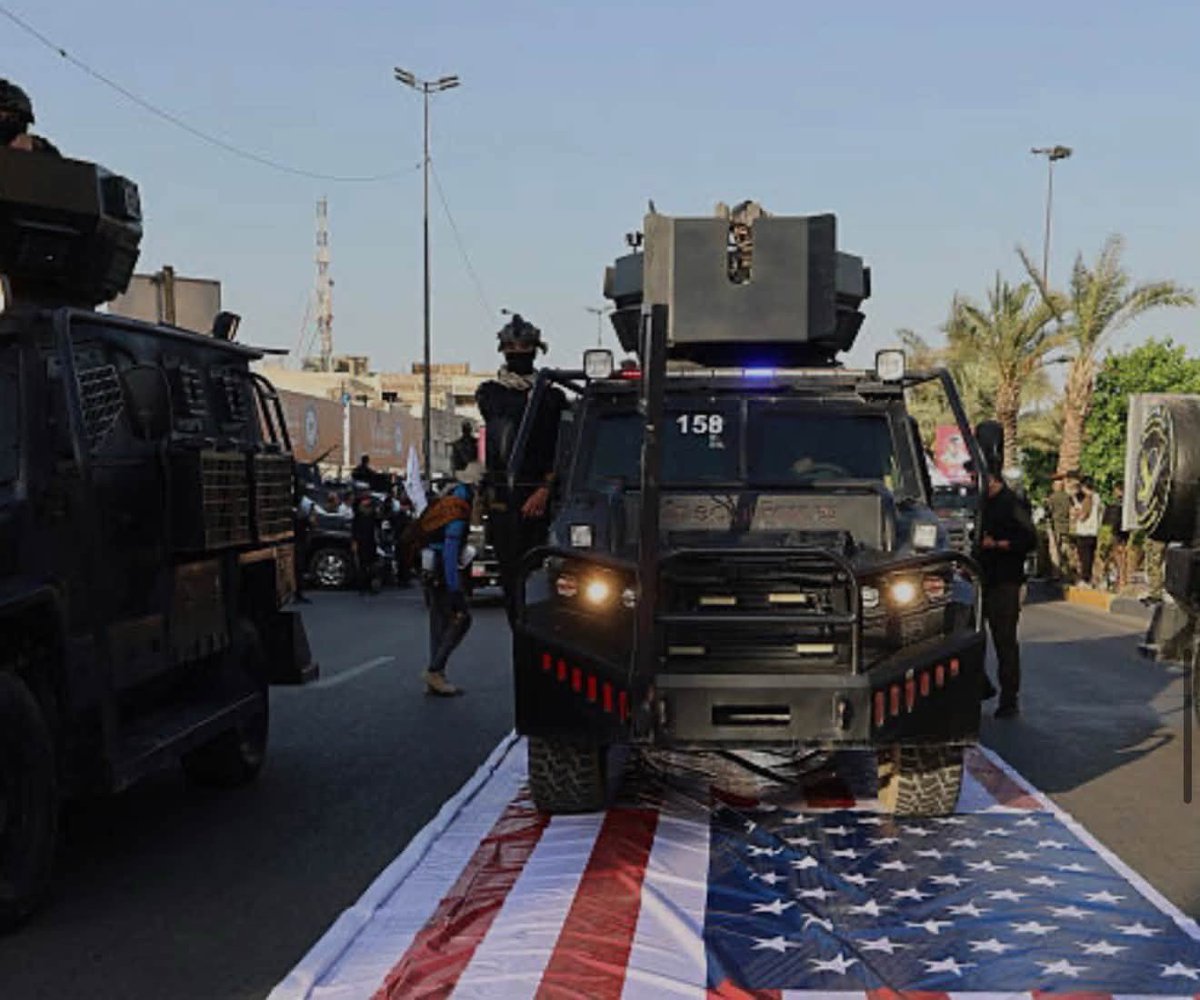
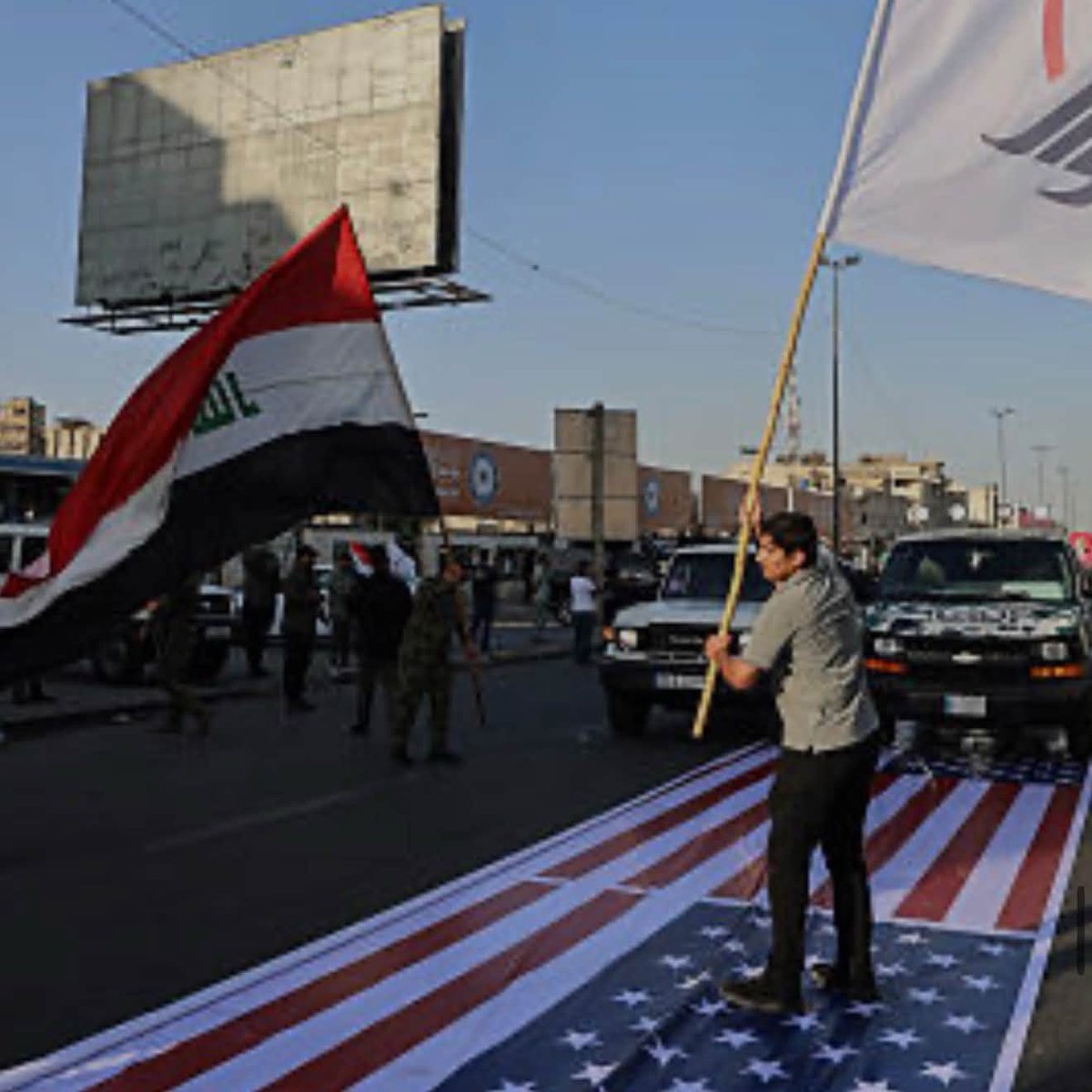
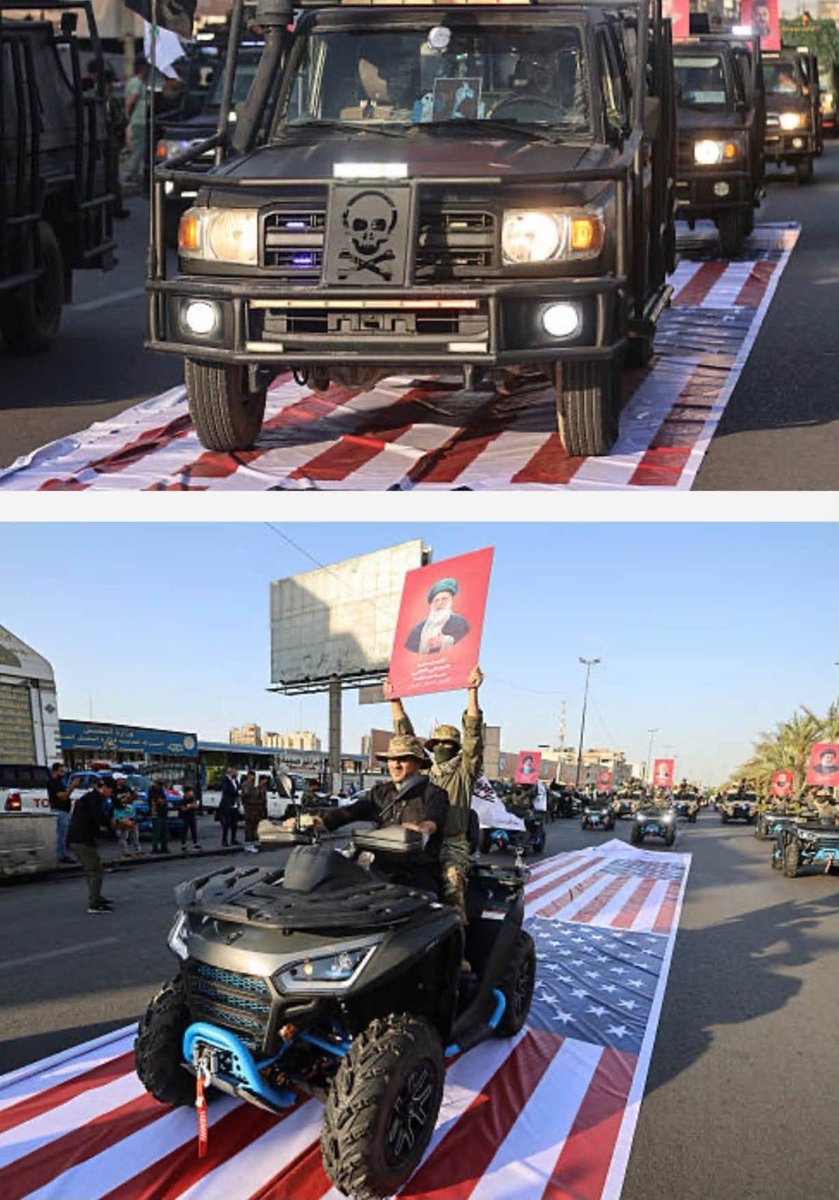
When Iraq declared "Sovereignty Days" to celebrate the departure of US troops and end of Operation Inherent Resolve, I winced. The OIR mission was present in Iraq at the request of the Iraqi government to fight ISIS.
I just knew there would eventually be some event where people were walking or driving over the flag and here it is. This time by the Popular Mobilization Forces, not just the militias. I know this doesn't represent all Iraqis, but the Iraqi government should have done better in avoiding this kind of blatant anti-Americanism from the official forces.
Iran’s proxy militias in Iraq are celebrating the U.S. withdrawal by desecrating the American flag!
This is just the beginning. Next, they will launch attacks against the United States and its allies from Iraqi territory, a massive serback for President Trump and the United States!
Whichever “genius” convinced President Trump to embrace this debacle must and should be held accountable by the President himself!
My salute to the Indian pilot Captain Smit Machchhar for his extraordinary bravery.
Despite being stabbed and seriously injured, he fought back, resisted, opened the cockpit door, and enabled passengers and crew to overpower the attacker — preventing a catastrophic mid-air disaster.
He saved the lives of 174 people, including Israeli citizens and other nationals.
I wish Captain Machchhar a speedy and full recovery.
He is a true hero.
Gen. Jack Keane says the U.S. and Israel already have the air power to dramatically shift the fight inside Iran.
His proposed strategy: Iranians take up arms against IRGC facilities while American and Israeli aircraft provide support from above and target regime reinforcements.
Keane argues the sight of successful uprisings in several locations could draw tens of thousands more people into the streets and accelerate pressure on the regime.
“We’re making it harder than what it is,” he tells @marklevinshow
تأملوا في هيبة الرئيس البارزاني وشجاعته.
في سنة 2005... كانت الولايات المتحدة تضغط على الرئيس مسعود البارزاني لدمج الكورد في العراق وتفريقهم.
وكان رد الرئيس بارزاني واضحاً:
«هذه الأراضي حُررت بدماء شهدائنا. والآن أنا عائد إلى كوردستان. فليأتِ كل من يملك القوة، وليأتِ كل من يملك الشجاعة، وليحاول دمجنا».
"Orderly Kurdish disintegration"
The "orderly" disintegration of the Kurdish and minorities self defense forces (Ex SDF), into a "Jihadi order" has been imposed in Syria.
Sorry, this is a post for historians when they will write their textbooks in the future.
We abandoned the Kurds and minorities to the Jihadists, period. There is no other versions.
Just retweet with your comments.
The best way to get energy prices down is to continue putting pressure on the Iranian regime. The IRGC is not going to stop its game playing over access to the Strait of Hormuz until it lacks the leverage to do so. Let's take that leverage away - for good.
The United States must remain firm, providing important support to sustain the Arab anti-Iran coalition, and also defeat the Houthis. Oman should join Kuwait, Bahrain, Saudi Arabia, and the UAE in understanding that cooperation with Iran in smuggling munitions to the Houthis is unacceptable.
https://t.co/8ho1xX5B1Z
The Revolutionary Guard is calling the shots in Iran. Whatever the civilians are saying means very little when the IRGC is in charge. If we are going to see regime change in Iran, we need to eliminate the IRGC.
The VP owes Israel and millions of its American supporters an apology. The Iranian terrorist regime rejected the MOU as it has undermined all agreements and deals. Iran killed it, not some "influence operation." It's called logic, experience, and knowledge.