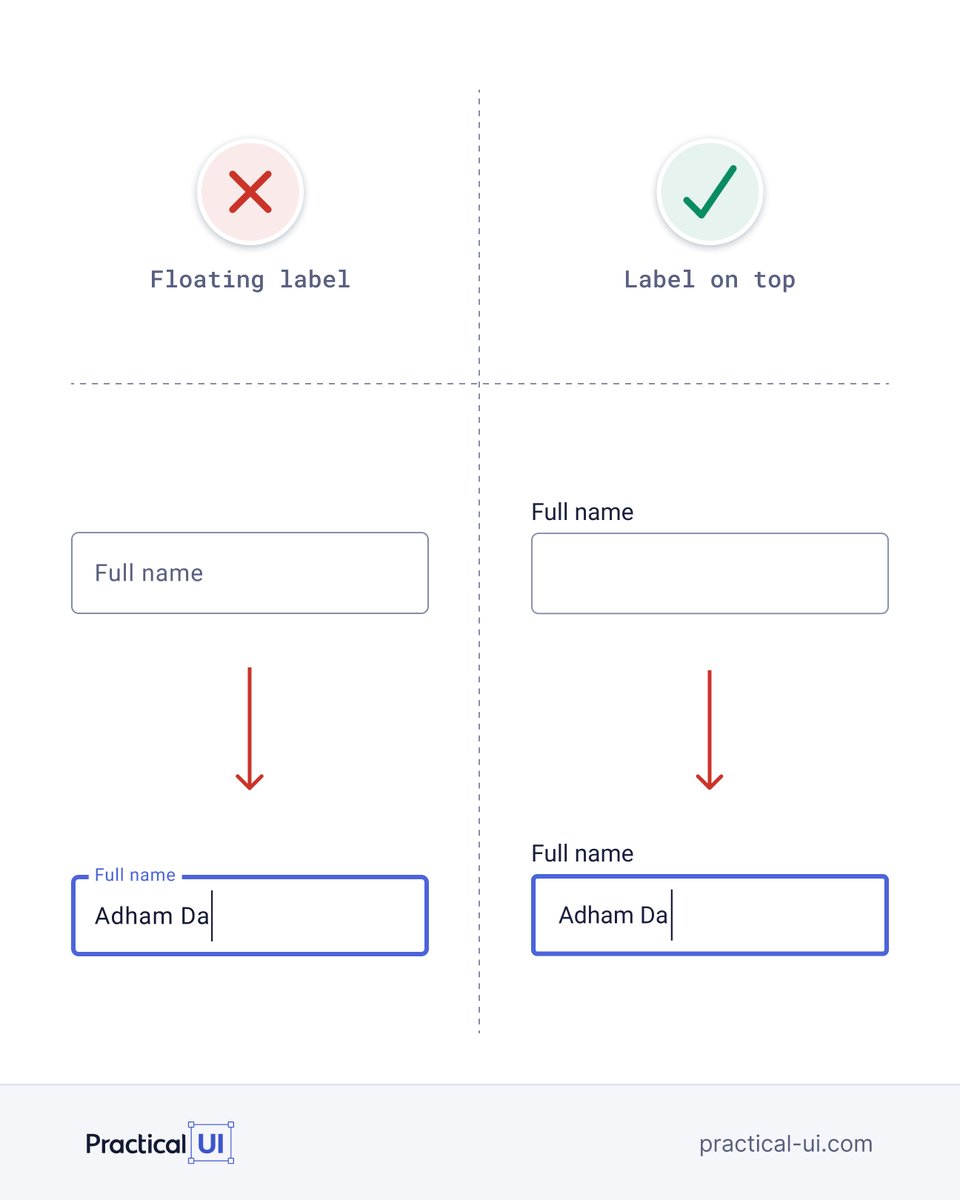
⚡️ UI design tip: Don't copy Google's floating form labels
Whenever I share form design tips, I’m always asked the same question. “Why don’t you just use Google’s Material Design floating labels? They’re the best.”
Sure, they look clean, take up less space, and have an innovative transition, but do they actually work better than conventional form labels?
No, they don’t. Here’s why:
❌ The field can look like it’s already filled, so some might mistakenly skip it.
❌ The animation can be distracting and disorientating for some.
❌ Once active, the shrunken label is hard to read.
❌ Long labels get cut off.
✅ Instead, just display a short descriptive label above the field. Simple.
It’s interesting that problematic design patterns like this can become so widespread.
Is this another case of designers favouring form over function? 🤔
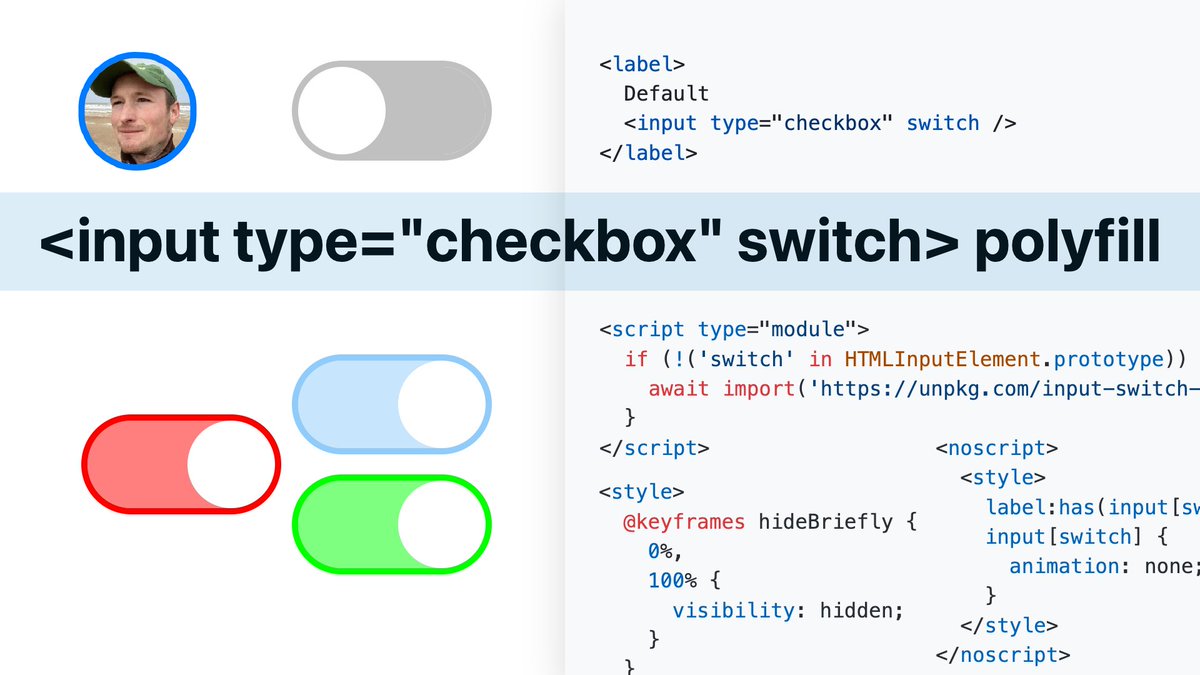
A polyfill for the HTML switch element. Thomas Steiner shares a polyfill, bringing near-native <input type="checkbox" switch> to browsers beyond Safari, with accessibility mapping, high-contrast tweaks, and FOUC-safe loading. #html#polyfill
https://t.co/V1M9AHpeYz
Firefox 147 just landed & it's pretty huge in terms of web features:
🎉 CSS anchor positioning
🎉 The navigation API
🎉 View transition types
🎉 Brotli support in Compression/DecompressionStream
🎉 CSS module imports
And more!
https://t.co/gRfnRPs7VO
After many long years, the most widely used React framework in the world has React Server Components support! And the migration story is iterative, not "big bang" 💥
I think React Router's take on RSC is really great. Here's what you need to know.
"Joining the OpenJS Foundation […] places Lit alongside other critical projects in the JavaScript ecosystem like Node.js, Electron, and Webpack. It's a recognition of the project's maturity, stability, and importance to the web platform."
https://t.co/zzdT36OLr9
As an experiment, we (the Firefox team) wanted to try a new way to get feedback on which Interop proposals matter most.
So, here's a web app where you can rank the proposals you care about, giving us data we can use when reviewing which ones to champion.
https://t.co/pu2Ovpxd66
@jaffathecake Browser marketing today feels like a kindergarten brawl, everyone mocking each other instead of showcasing what they actually do well. And is funny as hell to see Chromium-based browsers throwing shade on Chrome, but I guess they target people they don't really know maybe?
As of Chrome 131 you have more options to style `<details>` and `<summary>`.
You can now use of the `display` property on these elements, and also use a `::details-content` pseudo-element to style the part that expands and collapses.
https://t.co/PCTwbUpOxB
@harkal Το ακόμη καλύτερο είναι ότι το site της εταιρείας που ανέλαβε το λογότυπο είναι ένα Wordpress φτιαγμένο με Elementor page builder. Μάλλον το φτιάξανε χτες και αυτό 😂
https://t.co/m4UWateU94
@SamualTNorman@EisenbergEffect As far as I know it's the Firefox UI (tabs, menus, etc) built with Web Components while dev tools built with React among other technologies. Also, parts of the Chromium dev tools are built with Web Components.
https://t.co/19bCRUzHYC
Having the computed value of CSS variable directly in the variable tooltip in @FirefoxDevTools is sooo good! Hope you'll enjoy this as much as I do, and be ready for more!