Happy to see this partnership in action. Looking forward to many more collaborations that strengthen #TVET and #skills development across the region.
@giz_gmbh@bodo_immink
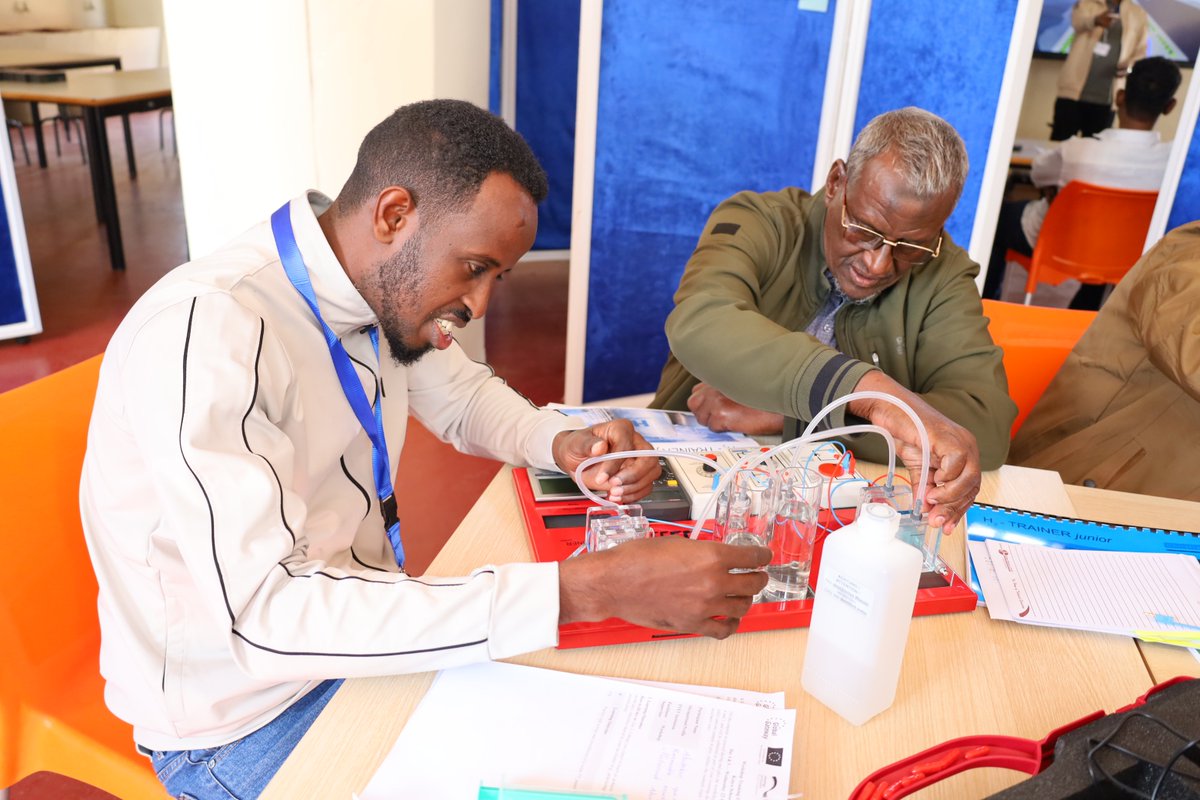
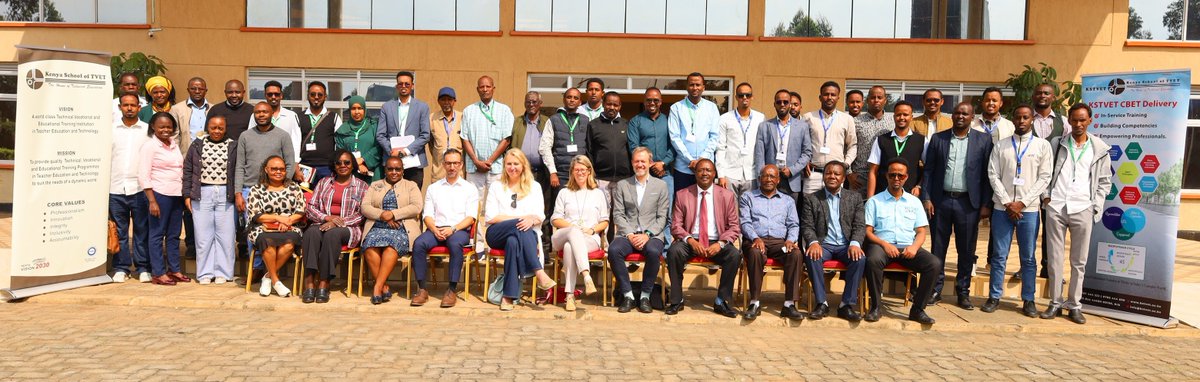
A proud moment as @kstvet , @EU_in_Somalia, @giz_gmbh Somalia, and TVET trainers from Somalia come together in Kenya for a 10-day capacity-building programme. The training targets key gaps identified through the 2026 TNA and equips trainers with CBET,@statehouseke@edwintarno
A proud moment as @kstvet , @EU_in_Somalia, @giz_gmbh Somalia, and TVET trainers from Somalia come together in Kenya for a 10-day capacity-building programme. The training targets key gaps identified through the 2026 TNA and equips trainers with CBET,@statehouseke@edwintarno
Let me tell you a story of what is happening in my country, Eswatini. In September 2023 the taxman ERS took members of parliament to a retreat, where they discussed how much they need to hit the target of revenue collection to fund capital projects. So they identified a few….
In my address titled "The Political Economy of Obedience," delivered last month at the Josef Korbel School of Global Affairs at the University of Denver, I identified five key mechanisms through which African populations have been trained into political compliance. I am sharing a summary here because they explain precisely what we are watching play out in real time every day on this continent.
The first is colonial education. The curriculum inherited from the French, the Brits or the Portugese administration was not designed to produce critical citizens. It was designed to produce a particular kind of political subject. one who understood authority as something to be respected rather than questioned, and who experienced his own political traditions as a source of shame rather than institutional possibility. As I said in Denver, the most effective political prisons are not made of concrete. They are made of curriculum. The Togolese school I attended taught us the genealogy of French kings with more precision than the history of the governance systems that predated French colonial presence on our territory.
The second is the economy of obedience itself. Authoritarian systems endure not primarily through permanent terror but because they structure the relationship between political compliance and material survival so that obedience becomes, for most people most of the time, the rational choice. Access to employment, scholarships, market licenses, import authorizations, health clinic access: none of it politically neutral, all of it conditioned on loyalty. People in these systems do not collaborate with power because they are morally deficient. They collaborate because the scaffolding of their daily lives has been designed to make non-collaboration economically catastrophic.
The third is the family as a site of control. In conditions of economic precarity, the individual who considers a dissident act must calculate not only her own risk but the risk she imposes on her parents, her siblings, her children, her cousins etc. I have watched people of intelligence and moral clarity retreat from political engagement not because they were afraid for themselves but because they could not justify the devastating exposure their activism would bring to their families. The authoritarian state does not need to threaten everyone. It only needs to ensure that the threat to one is visible and comprehensible to all.
The fourth is religion. In many parts of Africa, religious institutions have been deployed, not by their most honest practitioners but by their most politically convenient ones, to transmit a theology of earthly resignation and otherworldly reward that discourages political engagement. The pastoral instruction to render unto Caesar what is Caesar's sits very comfortably with the interests of Caesars who have no intention of rendering anything to anyone. Liberation theology, which in Latin America produced an extraordinary tradition of religiously grounded political resistance, has had a far more contested reception in much of African Christianity and Islam, partly because of the direct entanglement of many religious institutions with state power, which has made spiritual authority and political compliance structurally allied.
The fifth is media. In authoritarian African contexts, state and privately owned media aligned with power do not typically practice crude propaganda. They practice something more subtle and more durable: the selection of what is visible and what is invisible; the framing of social problems as natural phenomena rather than political choices; and the treatment of opposition voices as marginal or foreign-funded. The film industry participates in this discipline in its own way, through the systematic promotion of narratives that depict poverty and wealth as conditions of fate or personal failure, stories in which the distance between the poor and the rich has everything to do with luck, talent or divine favour and nothing to do with power, policy or the deliberate engineering of inequality.
The cumulative effect, over decades, is a population whose political imagination has been narrowed to the point where alternatives are genuinely difficult to conceive, not because the alternatives do not exist, but because the political ecosystem has ensured they remain invisible.
These are the operating manual of authoritarian systems on this continent. And authoritarianism today is not limited to regimes with a known dictator who has held power for decades. It extends equally to regimes that perform a change of leadership through placebo elections conducted every four to five years, producing a new face every eight to ten years while the same system of impunity, patronage and repression remains structurally intact.
I would argue that these are in fact the more dangerous form of authoritarianism because their citizens are deceived into believing they are living under a democracy when they are in reality governed by plutocrats. The citizen under an obvious dictatorship at least knows what he is fighting. The citizen under a rotating plutocracy has been convinced there is nothing to fight at all. He votes, he watches a new face take the oath, and he mistakes the performance of transition for the substance of change. He ends up with no voice, no justice, no agency, and worse, no drive to fight for his own dignity. For one can only fight for liberation after acknowledging one's condition of oppression.
TVET doesn’t have a training problem, it has a coordination problem.
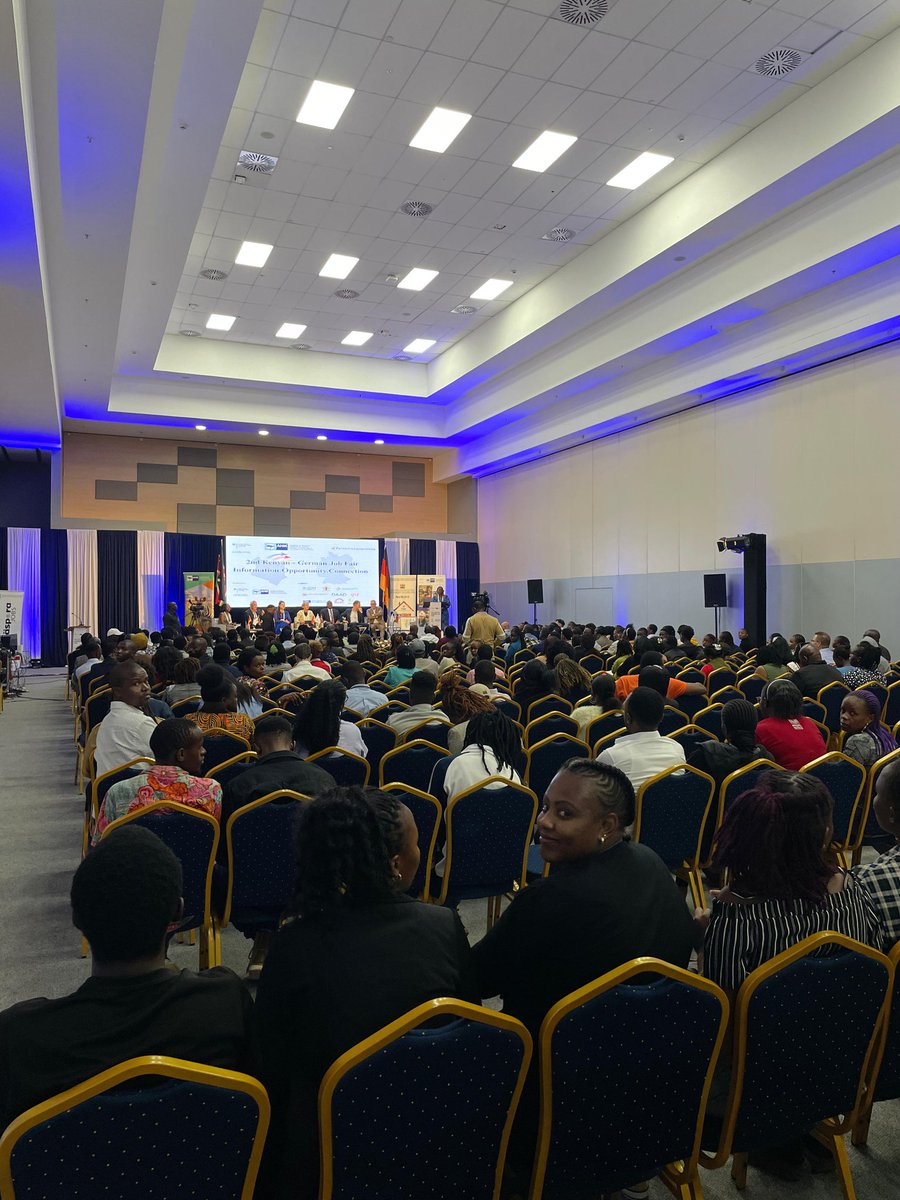
I’ll be speaking at eLearning Africa 2026 🇬🇭 on how Kenya is building a digital ecosystem to connect training, industry, and talent.
Fragmentation to integration.
#TVET#EdTech#SkillsDevelopment
David Munyua, a 30 y/o full-time Veterinarian and a part-time darter born in Murang'a. A man who had not engaged a dart till three years ago. Munyua was in a bar having a beer with a friend. The friend got up to play darts and Munyua thought " this looks fun" so he got up too and joined the party. The following day Munyua bought a board. He got better and better and as a result the same friend suggested that he join small small tournaments which he did. Munyua wasn't even playing for the PDC or World Championship, he was there because of the friendships and sportsmanship. And now he is the best player in Africa, having won the African World's qualifiers and representing Africa in the World Darts Championship.
Today, Munyua went up against World No.18, De Deckers. His remarks before the game were "Nobody is guaranteed victory beforehand in sports, so I'll give it my all." Munyua went down 2 sets to the Belgian, but did he give up? No because in his mind he wanted to show the whole world that there's talent in Africa. Munyua snatched a 3-2 win in the dying stages of the game causing what is one of the biggest upsets in the darts history. If you watched the game, were you not entertained?
Kenya to the world, Africa to the world!
I dare you to dream!
#PDCWorldDartsChampionship
iOS vs Android:
Most people agree that iOS is better than Android.
It’s smoother, prettier, cooler.
But what happens when Gemini makes Android the smarter OS?
Apple is years behind on AI. iOS is polished, but locked down. Android is messy, but wide open.
That chaos is fuel. Gemini wired into Android could mean an OS that answers emails for you, books meetings, orders food, debugs code while you sleep.
Apple spent 20 years perfecting “it just works.”
But what happens when everything just works automatically?
The iPhone’s biggest advantage disappears. Google’s biggest weakness turns into a weapon.
And suddenly, the “inferior” OS isn’t inferior anymore.
I don't think this is inconceivable.
- Sent from an iPhone
1/3 Yesterday, Mr. Timothy Nyongesa Katiambo, Acting Director General of TVET Authority, welcomed Mr. Emmanuel Choge, TVET & Digitalization Expert from GIZ, for a courtesy visit. GIZ is a key partner in promoting youth employment through Dual TVET training in Kenya.
*The Government Trap & Silicon Savannah’s Missed Moment
Kenya’s government, while a potential anchor client, does not operate as an ecosystem enabler. It behaves more like an extractor—driving decisions for control, gatekeeping, or rent-seeking rather than catalyzing industry growth.
In contrast, other countries have allowed their local and global SaaS players to experiment, iterate, and scale, using public sector partnerships as sandboxes to sharpen globally competitive solutions. Kenya once had that window—when the world saw us as “Silicon Savannah.” But we lost sight of the value of enabling innovation, focusing instead on controlling it. That shortsightedness has led to missed opportunity, brain drain, and a tech sector that’s stagnating under the weight of its own potential.
People with jobs cry that they can't find skilled workers, yet you, the youth with skills, are saying....there are no jobs. What is the missing puzzle?