🌴 Giveth Weekly: Nature
Meet @KokonutFDN: the first nonprofit leveraging Purpose-Based Natural Assets to power public goods with trees.
Support sustainable impact: https://t.co/33LnBOsM8J
What if blockchain could fund forests, not just finance?
The Kokonut Framework reimagines Web3 as infrastructure for regenerative agriculture and community resilience. 🧵
I've just added 6 out of 18 Kokonut Advisors who will be contributing to the @KokonutNetwork Vision & Mission.
This is just WAVE 1, which is mostly composed of experts based in the D.R.
For WAVE 2 & 3, we're going global by bringing on board Regional & International experts 🌐
We're pleased to introduce Kokonut Adelphi, a Nounish Syntropic Farm — an ecological initiative designed by @gerkery19, @WasabiNetwork & Orlando Amargós, Head of Syntropic Agriculture at Kokonut. With over 40 years of experience and academic training in Spain, Venezuela, and Japan, Orlando brings deep expertise to the project.
Abstract about Kokonut Network
Kokonut Network is a decentralized ecosystem for designing and deploying syntropic agroforestry farms using Web3 infrastructure. Its open-source framework enables communities to create farm projects tailored to various funding models—such as grants, DAOs, cooperatives, or investors—and aligned with different impact goals, including public goods, financial returns, or a combination of both.
Kokonut Adelphi x Public Nouns
The development of this project demonstrates the viability and impact of using syntropic farms as tools to achieve diverse outcomes. The goal of this proposal is not only to secure grant funding from Public Nouns, but also to challenge the status quo by showing that grants can fulfill both the needs and desires of the grantor. The proposal aligns with the three core pillars of the @PublicNouns Mission.
Leveraging Ethereum Tools for Local Impact
Kokonut Adelphi aligns with the Ethereum Localism Narrative, utilizing Ethereum-based tools for:
- Capital Allocation @0xSplits
- Community Governance @gardens_fund
- Impact Measurement @karmahq_
- Impact Tokenization @hypercerts
- Third-Party Attestations @Atlantis_p2p
- Trees Tracking @SilviProtocol
This flywheel taps into cutting-edge technologies to drive sustainable farming while benefiting the Ethereum ecosystem and local communities.
Kokonut Adelphi Specific Objectives
- Regenerate soil through the application of biochar, remineralization, and ground cover to improve fertility and reduce erosion.
- Cultivate a diverse agroecological production with short, medium, and long-cycle crops, including strategic fruit and forest species.
- Conserve native and endangered species by establishing a specialized nursery for the propagation and reintroduction of native flora.
- Implement a sustainable animal production system, featuring free-range laying hens and the use of byproducts for fertilization.
- Train farmers and local communities in agroecological and sustainable practices, fostering environmental education and the adoption of best practices.
- Expand the project by acquiring additional land for the conservation of flora and fauna, promoting long-term sustainability.
Kokonut Adelphi Financial Value Flywheel (Applying the Pareto Principle):
- 40% is allocated to landowners for land use, farm management, and day-to-day operations.
- 40% is directed to public goods through a Splits Contract deployed on Ethereum Mainnet, with adjustable weights updated annually based on a Retrospective Impact Assessment.
- 20% goes to the Kokonut Network to support continuous improvement of the Kokonut Framework and its expansion to new locations.
How does this initiative support Public Goods?
This initiative directly supports Public Goods by allocating 40% of all farm-generated profits—including from vegetable harvests, fertilizer production, and impact tokenization—to a Splits Contract on Ethereum. These funds are transparently distributed to support impactful public causes.
How is it non-excludable?
The project advances the Kokonut Framework, an open-source, forkable, and freely available tool. Anyone, anywhere in the world, can use it to design, develop, and scale community-owned, ecologically regenerative syntropic farms, with no restrictions.
How is it non-rivalrous?
Kokonut Adelphi is non-rivalrous because the framework is open-source and replicable. One farm using the framework doesn’t limit or reduce others from doing the same. On the contrary, each new farm adds to a growing ecosystem, increasing the availability of organic food and regenerative practices globally.
Public Nouns Awareness Initiatives
- Co-branded Flag: Public Nouns x Kokonut Adelphi flag displayed at the farm.
- Uniforms & Protective Gear: Branded gear for all Kokonut Adelphi contributors.
- Branded Produce Packaging: Public Nouns-inspired designs on vegetable and fruit packaging.
- Retail Promotion Materials: In-store banners and posters featuring Public Nouns.
- Documentary Feature: Public Nouns brand integrated into a short film documenting the development of Kokonut Adelphi.
- Naming Rights: Official project title — “Kokonut Adelphi: A Nounish, Community-Owned Syntropic Farm.”
Proposal-Specific Outcomes
- Public Goods Splits Contract: 40% of Kokonut Adelphi’s quarterly profits will fund a Splits Contract. Allocation weights will be updated through conviction voting, leveraging the wisdom of the crowd via proposals submitted on Kokonut Green Gardens.
- Kokonut Green Gardens Governance: Establishment of a community-driven governance hub using conviction voting to transparently manage the Public Goods Funding Splits Contract.
- Enhanced Kokonut Framework: Updates to the Kokonut Framework focused on the Public Goods funding use case, making it more adaptable and scalable.
- Perpetual Value Flywheel Pilot: This initiative will stress-test a sustainable value flywheel that can be replicated by other Nouns branches to create purpose-driven assets.
Example: A future collaboration with Purple DAO @ccarella@yes2crypto1 could direct Public Goods funds toward scholarships for Web3 developers.
Feedback Loop
- Tracking Kokonut Adelphi: You can follow the development, budget usage, and task completion of Kokonut Adelphi via its dedicated page on the Kokonut Data Hub.
- Grant Deliverables & Updates: All deliverables, milestones, and updates related to Kokonut Adelphi’s general objectives will be published on the Kokonut Network Karma GAP Profile.
- Foundation Funding Reports: For allocations received by the Kokonut Foundation, detailed reports on the use of funds will be posted on the Kokonut Foundation Karma GAP Profile.
- GREEN FUND Governance: Allocations received by the GREEN FUND will be stewarded by the Kokonut Green Gardens Council. All proposals and initiatives will be transparently funded using Quadratic Voting.
- Retrospective Impact Assessment: A yearly Retrospective Impact Assessment will be conducted to evaluate the use of Public Goods Funding. This report will be shared within the Kokonut Green Gardens Community to help inform voters during the process of updating weights and selecting new beneficiaries in the Splits Contract.
Thanks for reading this TLDR of the Kokonut Adelphi x Public Nouns Perpetual Value Flywheel.
Updated Infrastructure Map & Planting Areas for Kokonut Adelphi showcasing the work to be implemented in Phase I & Phase II
- Biofactory for Fertilizer Production in House
- Nurseries to Grow Native, Endemic Species
Impact the local community in education & reforestation 🧑🎓🌱
6/ Kokonut Onchain Network (https://t.co/Ucz47qDEQz ) ~ The Kokonut Genesis Bio-factory has demonstrated a strong economic, social, and environmental impact through its operations. Economically, the bio-factory operates with a monthly budget of $800, covering salaries, supplies, and maintenance. It has contributed to local economic development by employing 37 temporary workers during its development phase and maintaining five permanent employees, along with one security guard. The initiative provides stable income for six families and holds potential for future expansion and job creation. In addition to employment, workers receive training, meals, and insurance benefits, strengthening the community's economic resilience.
Environmentally, the project actively employs soil regeneration practices, using crops such as corn, broccoli, parsley, and peanuts to enhance soil fertility. The application of bioles (liquid organic fertilizers) reduces reliance on chemical alternatives. Key production metrics include 962 gallons of Humic Acid, 624 gallons of Liquid Microorganisms, 518 gallons of Neem Solution, 858 gallons of Organic Urea, 264 gallons of Sargassum Solution, and 20 lbs of Silicate Solution. Additionally, organic components such as ash/charcoal (60 bags), biochar (90 sacks), minerals (700 lbs), and manure (75 bags) contribute to improving soil health. Ongoing assessments aim to measure organic matter content, water retention, and biodiversity of insects and microorganisms to further understand the environmental impact.
The project has achieved profitability within its first year, providing direct economic benefits while supporting sustainable agricultural practices. Looking ahead, the next steps include measuring bioles application per hectare, quantifying biomass generation for carbon sequestration, and conducting annual soil quality assessments to evaluate long-term environmental impact. Further details and updates can be found through documented proof of impact, including successful beetroot and watermelon harvests, as well as the growth of banana plants.
Catch us tomorrow at the Project Spotlight hosted by @climate_program for the @OctantApp Epoch 7 —Climate Round.
Get the latest updates about the Kokonut Ecosystem and how we're going to tackle our 2025 milestones toward our goal of creating Perpetual Natural Assets 🌱💚
It wasn't a goal in the approved proposal, but we still think it's a nice touch to highlight our Sponsors through our work.
Our produce is hitting the market with Arbitrum logos in our packaging feels like a great way to say thanks for the support.
We have more surprises soon🌱
@QuipEcos Next week we will release a video + landing page about Kokonut Adelphi, alongside its revenue allocation, growth plan, and tentative crop selection.
Say tuned. 🌱🫡💚
Any source of funding is amplified by design once it goes thru the Kokonut Framework value flywheel.
You just can't match this level of impact with any other ReFi Framework out there.
We haven't gone technical yet 😉😇
You could have the best ideas in the world, but if you don't control your infrastructure, your future is uncertain and full of attack vectors.
Apply to AI, Software, HR, and many other components of any organization.
This is why we're building our Ecosystem from scratch 🌱🌴♻️
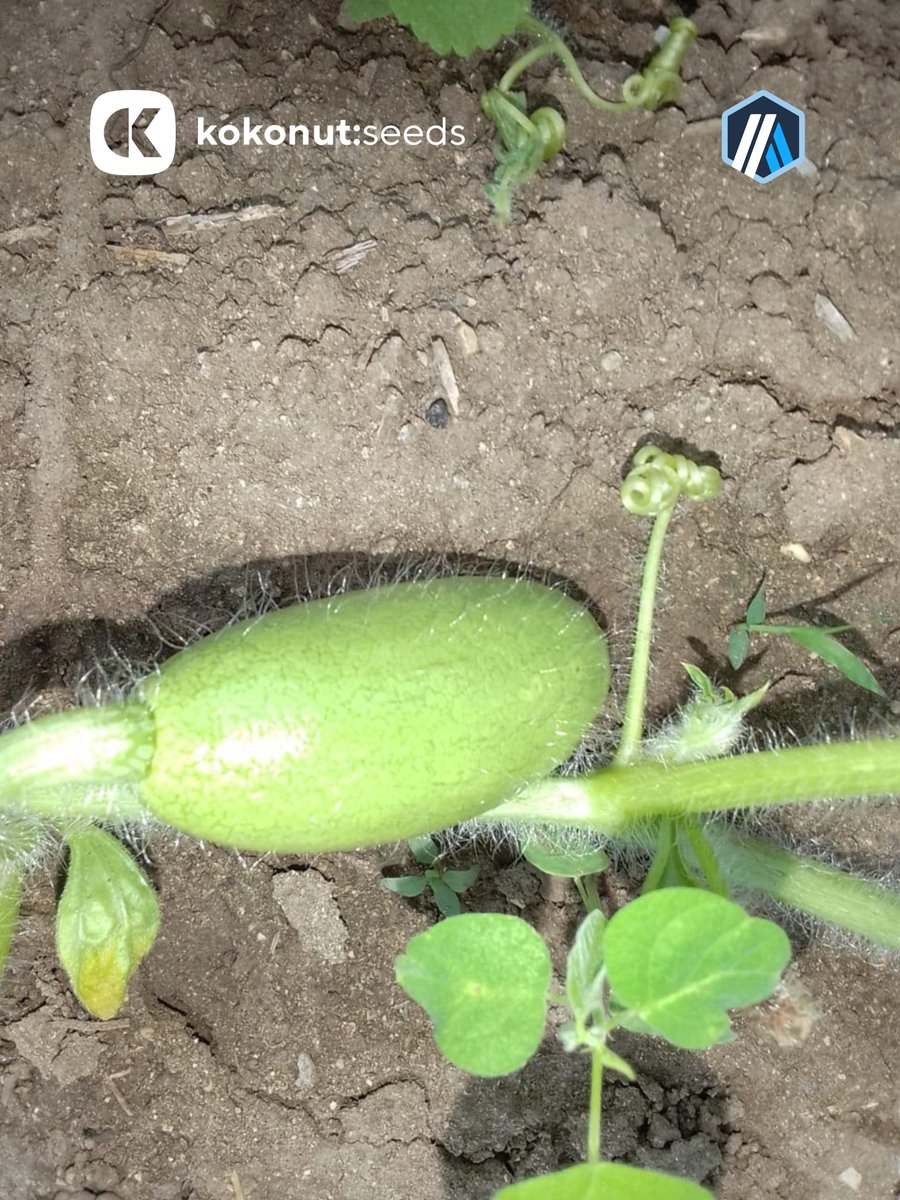
Watermelons are coming GREEN & FLUFFY 🍉🌱
The value per $1 input/output ratio of Kokonut Framework is unmatched when you explain that impact with tools like @EcoBenefitFrame@jhruth
We were honored to lead the ReFi in Arbitrum Grant program, empowering incredible projects like this to continue their mission of making the world a better place through regenerative finance🌱🌍
Web3 allows us to design new frameworks of value without borders, and with limitless customization, we can create new primitives that can be optimized to cater to different players' needs & wants. At the same time, we keep the barrier of entry low and modular thanks to Web3 Interoperability.