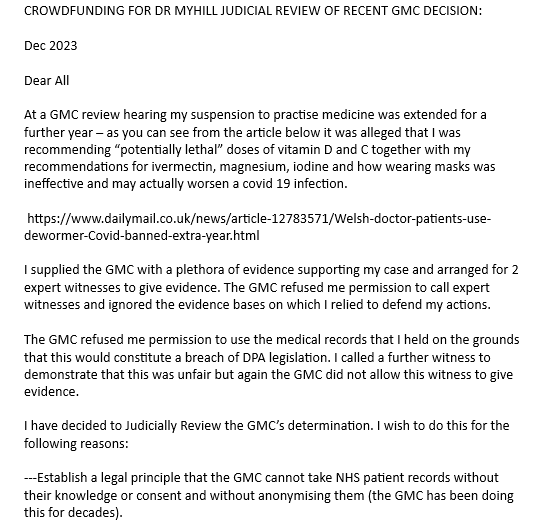
Please donate to my GMC Judicial Review Fighting Fund. See https://t.co/qpbkLbtque
Please donate to
Sarah Myhill Limited
Sort code 20 61 08
Account number: 50760242
Many thanks, Sarah
I want to have gone into my doctor’s office at my college 19 years ago, when I felt like I had a fever..
See a specialist, get diagnosed with some condition and have them give me a bunch of those marvelous shiny color brochures…
New post on my blog:
https://t.co/exmHqTG29W
The latest version of @Sigasi Studio can warn you about forgotten reset values in clocked VHDL processes. Such a useful feature!
https://t.co/JyljIaoQUd
We're delighted to provide the McMaster Interdisciplinary Satellite Team (MIST) at McMaster University in Canada with free https://t.co/D4fXgVljFs subscriptions to support the development of their nanosatellites!
https://t.co/dX0m5oQ4ox
https://t.co/veJL52rIun
Xilinx recommends to keep the number of unique control sets below 7.5 % of total slices to avoid impacting timing and placement. In Vivado, you can query the number unique control sets in your design using the "report_control_sets -verbose" command.
A sometimes overlooked metric in Xilinx #FPGA designs is the number of unique control sets—a control set being defined as the combination of a clock, a clock-enable and a reset signal. Too many control sets prevent the efficient packing of logic into slices.
When it comes to #FPGA timing closure, it's a good idea to keep an eye on the number of logic levels in your design. In Xilinx (oops, AMD) Vivado you can do this using:
report_design_analysis -logic_level_distribution -extend
Do it post synthesis to save time! (1/4)
A public service reminder to always keep your #FPGA logic under reset while its clock-generating circuit (PLL or MMCM) is not locked. This is especially important for stateful logic like FSMs.
@zipcpu And so does quality. When a client comes up with a made up number like that, I ask if he would accept the roof on his house to be only 95% waterproof ;-)