According to the @freep, @dananessel has sued the current presidential administration 54 times since January 2025 and had offered amicus briefs on an additional 69 cases.
Doesn’t she have work to do in Michigan?
Like looking into the slush fund that is the Michigan Economic Development Corporation.
The Michigan Court of Claims has granted a preliminary injunction in the Mackinac Center Legal Foundation’s lawsuit challenging unconstitutional earmarks hidden in the state budget process. https://t.co/roDB2hqJOU
The @MEAOnline gave @GovWhitmer a “Champion of Education” award.
Mackinac Center’s Dr. Molly Macek says the record tells a different story: declining student achievement, higher spending, and weakened accountability and literacy reforms. Read Molly’s latest in The Detroit News: https://t.co/4cICjoITUx
Michigan housing costs are going up, now requiring a six-figure income to own even a basic starter home. Local government rules are blocking builders, but should the state of Michigan be preempting these regulations? In many ways, it already does says Mackinac Center's @JarrettSkorup
Watching @ZohranKMamdani's oafish, unprovoked attack on Ken Griffin blow up in his face in real time tells us so much about how contemporary leftism has been reconfigured by its elite practitioners.
Firstly, Mamdani is not a "have-not." He is a Bowdoin graduate, the son of a Columbia professor and an internationally celebrated filmmaker, whose path to a New York City mayoralty ran through exactly the credentialed-creative pipeline that produces most of his voters.
His base is not the working class. It is the downwardly mobile but college-educated, who were promised a particular kind of life by their degrees and are furious it didn't arrive, and who have decided the people standing between them and that life are not the radicalized professors who sold them seductive fictions or the ideologically captured universities that took their money, but a hedge fund manager in Miami.
This is what I'd call Privilege Populism. The aesthetics of class struggle, performed by people whose parents or grandparents technically already won the class struggle, but with the appropriated symbolism recast in the direction of people who won it slightly more.
It is war between the "haves" versus "have-mores," as some others have put it.
The Mamdani's inciting video, gleeful in its innumeracy about about whether a $500 million pied-à-terre tax can actually fund anything it claims to, defiant in its ignorance about the dynamic effects of such taxation on human behavior and wealth outmigration, is the genre's mature form.
Griffin's response is the part worth watching. He didn't argue or issue a statement offering a philosophical defense of capitalism. He simply pointed to his Miami construction project and said: this is the way.
Then he said the part that should make every blue-state mayor uncomfortable: that what's happening in New York is "triggering the trauma I went through in Chicago."
I watched that trauma play out for twenty years. Progressive politicians perform to excite the grievances and resentments of credentialed creatives, the productive class that subsidizes the city quietly relocates, the tax base hollows out, and the people who stay behind look at the resulting societal decline around them and misinterpret it as proof that they must vote even further to the left than before in order to improve things.
In a warped but unignorable way, liberal mismanagement of states like Illinois and New York helped nurse the conservative governance triumphs of Florida and Texas.
The Privilege Populists never figure this out, because the point is never truly to improve the lives of the "have-nots." It's to *perform* therapeutic acts of Resistance for them, on camera, against "villains" who can afford to leave and do.
Michigan Democrats say the state's renewable energy mandate will lead to lower costs and less reliance on foreign countries. The reality is precisely the opposite.
There is a perennial political desire for elected officials to show that they are doing something for their districts. Yet the state government is created for the benefit of all Michiganders. https://t.co/rnv8ZaYvhh
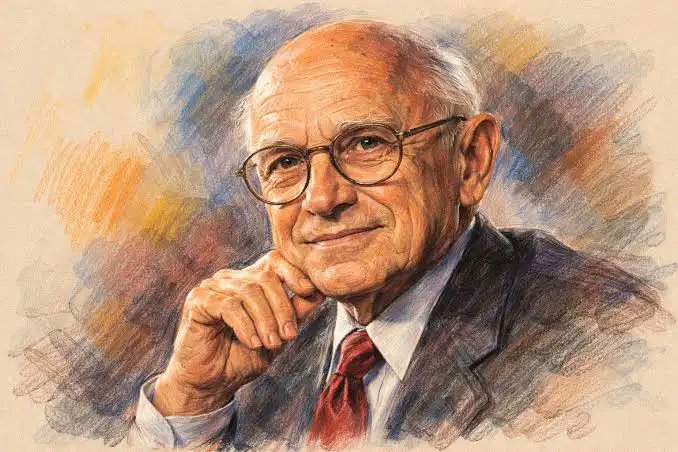
Milton Friedman (prix nobel d'économie) a dit un truc il y a 50 ans qui est encore plus vrai aujourd'hui. Et quasiment personne ne le comprend.
🧵
On lui pose la question : "Sans régulation sur les médicaments, des gens pourraient mourir en prenant des produits dangereux. Vous ne trouvez pas ça grave ?"
Sa réponse est un des retournements logiques les plus brillants de l'histoire de l'économie.
Oui, dit Friedman. Un médicament non régulé peut tuer des gens. C'est visible. C'est dans les journaux. C'est un scandale. Tout le monde le voit.
Mais ce que personne ne voit, c'est les gens qui meurent parce qu'un médicament qui aurait pu les sauver a été bloqué pendant 10 ans par le processus de régulation. Ce mort là, personne ne le compte. Personne ne fait sa une. Personne ne connaît son nom. Parce qu'il est mort de l'absence de quelque chose qui n'a jamais existé.
C'est l'asymétrie fondamentale de la régulation.
Le régulateur a deux types d'erreurs possibles. Erreur 1 : approuver un médicament dangereux. Résultat : scandale public, procès, le régulateur perd son poste. Erreur 2 : bloquer un médicament qui aurait sauvé des vies. Résultat : rien. Personne ne sait. Personne ne proteste. Les morts silencieux n'ont pas de porte-parole.
Du coup, le régulateur rationnel optimise pour éviter l'erreur 1. Toujours. Il rajoute des études. Des phases. Des comités. Des délais. Chaque couche de "sécurité" supplémentaire le protège, lui, au détriment des patients qui attendent.
Friedman estimait que la FDA avait probablement tué plus de gens en retardant des bons médicaments qu'elle n'en avait sauvé en bloquant des mauvais. C'est impossible à prouver précisément. Mais la logique est imparable.
Un exemple concret. Le bêta-bloquant Propranolol était disponible en Europe des années avant d'être approuvé aux États-Unis. Pendant ces années, des Américains mouraient de crises cardiaques qui auraient pu être évitées. Combien ? On ne le saura jamais. Parce qu'on ne compte pas les morts de l'inaction.
C'est le même principe partout. Pas que dans la médecine.
En France, les taxis autonomes sont bloqués par la régulation. Chaque année de retard, ce sont des accidents de la route qui auraient pu être évités. Mais personne ne compte ces morts là. On compte uniquement le premier accident d'un taxi autonome, qui fera la une de tous les journaux.
L'IA dans la médecine est ralentie par des processus d'approbation qui prennent des années. Des diagnostics qui pourraient être faits en secondes par un algorithme attendent des validations pendant que des patients attendent des mois pour un rendez-vous.
Le nucléaire a été bloqué pendant des décennies par la peur. Combien de gens sont morts de la pollution des centrales à charbon qui ont tourné à la place ? Personne ne les compte.
Le pattern est toujours le même. On voit le risque de l'action. On ne voit jamais le risque de l'inaction. Et comme le risque de l'inaction est invisible, le régulateur choisit toujours l'inaction. Parce que l'inaction ne produit pas de scandale.
Friedman résumait ça en une phrase : "Les gens qui ont été sauvés par la FDA sont visibles. Les gens qui sont morts à cause des retards de la FDA sont invisibles. Et dans une démocratie, le visible gagne toujours contre l'invisible."
La prochaine fois que quelqu'un vous dit "il faut plus de régulation pour protéger les gens", posez une seule question : combien de gens meurent en attendant que la régulation les autorise à vivre ?
La réponse est toujours plus grande que ce qu'on imagine. Mais personne ne la calcule. Parce que les morts de l'inaction n'ont pas de visage.
@ProsecutorsPod If you have no legal theory or even remotely consistent principles, then run for office or work for a politician. Countries need a rule of law to survive - not partisan lawyers masquerading as judges.
This is the (absurd) process someone has to go through in order to build in Detroit - a city which has lost two-thirds of its population and desperately needs development.
This deal may be the biggest disaster of all. State of Michigan officials pledged $27 BILLION in taxpayer incentives. Elected representatives hid the details for TWO YEARS. Hundreds of homes were demolished.
And the deal never even got off the ground.
https://t.co/YTzfuL5olt
@JamesHohman You mean to say the government is enriching their friends at the expense of the taxpayer? Standard operating procedure for the pols. Thanks for sharing.