We're devoted to building non-invasive sensors and wearables to monitor your health.
While we're building, we'll highlight interesting work done by others.
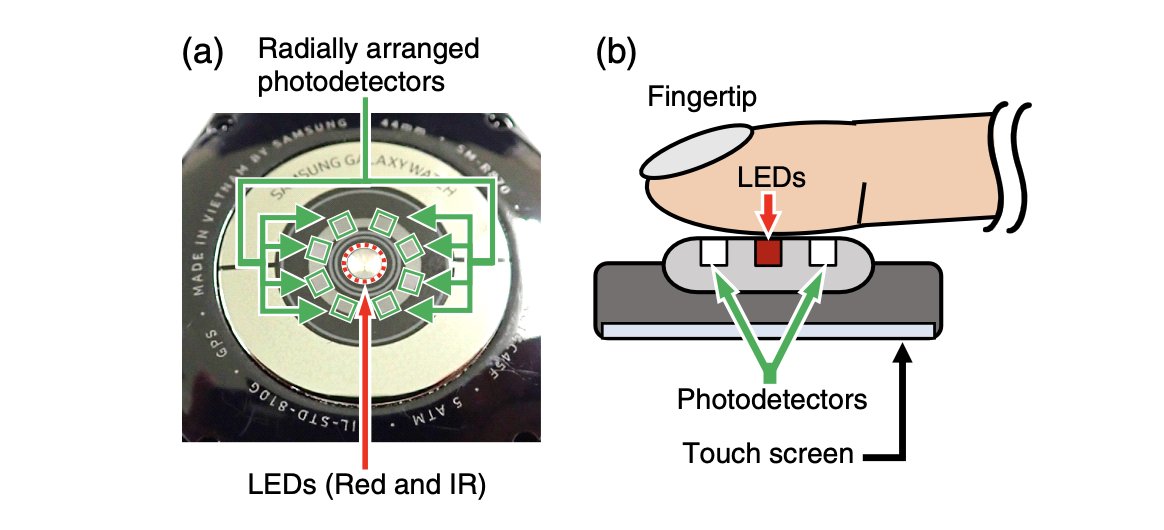
This week: Japanese researchers measure blood glucose from your finger using a smartwatch.
🧵 (1/5)
For the same ~$900 price tag, Myo could continuously stream and store GBs of raw data from at least 5 muscles and build this composite.
We'll try this, publish the results, then give our devices to people like Bryan so they can get a deeper understanding of their bodies without needing to jump through so many hoops.
🧵 (5/5)
Two days ago, @bryan_johnson claimed his “muscles have the oxygen capacity of 18-year-old elite athletes”.
The problem? He left out some key details, and happened to reveal a gap in wearable health monitoring that we’re filling at Myo.
🧵 (1/5)
https://t.co/MJSKyo1Yms
My muscles have the oxygen capacity of 18-year-old elite athletes.
Most people can barely reach 10% muscle oxygen saturation, but elite athletes can sustain it for longer periods. Important because muscle = longevity (1,2).
Here's what you need to know.
🧵
To get a clearer picture of global SmO2, one idea would be to create a “composite oxygenation score” with sensors on different muscle groups.
Hardware seems to be a main blocker for this. It’s not clear if a consumer device exists where this would be practical.
Trying this with a few MOXYs, for example, would be expensive and require significant technical effort.
One sensor is ~$900, and the algorithms/systems to collect and understand this data seem beyond the scope of a company like MOXY or longevity fans like Bryan.
🧵 (4/5)
Beyond the smartwatch, the researchers also measured data with a smartphone camera + an extra LED. Data here was moderately correlated (r = 0.66) with the reference CGM.
They also give a deep dive into the math behind their signal processing, which we may go over in a separate thread.
If you're interested in reading the paper, you can do so here: https://t.co/RMXulSYcXL
🧵 (5/5)
We're devoted to building non-invasive sensors and wearables to monitor your health.
While we're building, we'll highlight interesting work done by others.
This week: Japanese researchers measure blood glucose from your finger using a smartwatch.
🧵 (1/5)
The researchers made some key assumptions to build their index, including:
1. The pulse amplitude of Hb rises as blood glucose increases.
2. Each heartbeat consumes more oxygen when glucose levels are elevated.
However, in people with altered glucose tolerance, such as those with diabetes, these assumptions may not hold.
Other limitations, like noise and accuracy with PPG measurement, were also discussed.
🧵 (4/5)