Something most people don't know:
India holds the largest written record of any civilisation.
1 crore manuscripts. 3 lakh inscriptions in stone.
We gave the world zero. Wrote down surgery and calculus centuries before the West did.
Today, less than 1% can be read or searched. The rest is quietly turning to dust.
In the age of AI, knowledge a machine can't read is knowledge the world will never use.
MIDF is working to change that.
Help us keep India's memory alive. Donate below
The US has suspended access to its most advanced AI models for every foreign national on earth - overnight, without notice.
For a country of India’s civilisational weight and geostrategic position, with its own unique security challenges, there is simply no alternative to building sovereign AI capability.
This moment makes that clearer than any policy argument ever could.
Raavan was the ultimate master of the Veena & Gandharva Veda (the science of celestial music). He knew that if he could sustain this brutal, hyper accelerated acoustic frequency w/o breaking a single rule of grammar, the sheer vibration of the sound wave would force the cosmos to bend.
He ultimately trapped the kinetic energy of Mahadev’s dance inside a structural cage of Sanskrit phonetics.
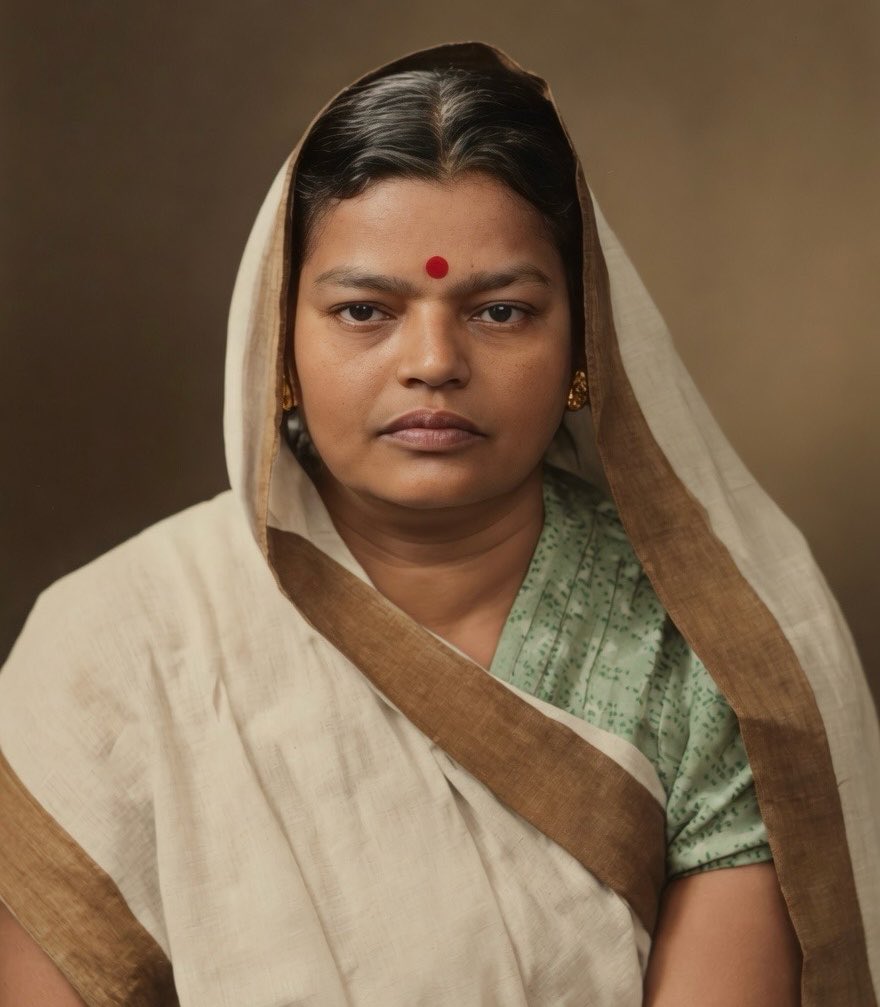
Her name was Subhadra Kumari Chauhan.
She was born on August 16 1904 in Nihalpur village, Allahabad. At nine years old she wrote her first poem. It was published in a national magazine.
At 16 she married and moved to Jabalpur. At 18 she was pregnant and leading protesters through the streets of Nagpur holding the Indian flag.
She was arrested. She became the first woman satyagrahi to be sent to jail in India.
She delivered her first daughter Sudha safely at home after her release. Then went back to the streets.
In 1942 the British came for her again. Her husband had already been arrested. She had five children. The youngest was a toddler with a cleft palate who could barely speak.
She prepared her eldest daughter to look after the younger ones. Left food for them. Then walked to prison carrying her sick youngest child in her arms.
Inside jail she gave up her own food to prisoners facing harsher punishment. She was released months later with a life threatening condition and underwent immediate surgery.
She later described all of this with humor. She said the garlands placed around her neck on the way to jail were so many that she made a pillow of them in her prison cell. They reminded her of the flowers on her wedding night.
Between arrests, pregnancies, court dates and protests she wrote 88 poems and 46 short stories.
Her most famous poem was Jhansi Ki Rani. The one every Indian child has read in school.
Khoob ladi mardaani woh toh Jhansi wali Rani thi.
She wrote it about a queen. She lived it herself.
On February 15 1948 she died in a car accident near Seoni, Madhya Pradesh, while returning from a legislative assembly session in Nagpur. She was 43 years old. A mother of five. A poet. A prisoner. A freedom fighter.
Today is Mother’s Day.
Most Indians know her poem. Almost none know her name.
Follow for stories India deserves to remember.
The infallibility of the vedas is not denied by Adi Shankaracharya here. As a thumb rule, it is always better to accept that the logic of mimamsakas is so watertight that our fragmented attention cannot even dream of countering it. Hindutva smritikaras on X (not a sly on the OP but there are many like that) better drop the pretense of being equal to them in stature.
Anyway so, in his discourse on pramanas in Vichar Piyush, Karpatri Ji explains that the contradiction between shabda and pratyaksha is resolved by categorizing the scriptural statement as a Gunavada - a type of Arthavada (a corroborative or praising statement) that conveys meaning based on a partial similarity of qualities (Aanshik Gunasamya). When the literal meaning of a scriptural sentence is directly contradicted by visual perception (pratyakshataya asiddha), it is not taken literally. Instead, its meaning is extracted metaphorically (Lakshana).
Karpatri Ji illustrates this resolution using the scriptural statement "Adityo Yupah" (the sun is the sacrificial post). The statement asserts a direct identity between the sun and the wooden sacrificial post (Yupa). This is obviously unproven and contradicted by direct perception. To resolve this, the principle of Lakshana (metaphorical implication) is applied. The statement is interpreted to mean that the sacrificial post possesses radiance or brightness similar to the sun (Ujjwalatvadi-guna-yogena-adityatmakatvam). Therefore, the text is not making a literal claim that contradicts perception, but is rather praising the Yupa by comparing its qualities to the sun.
To provide a complete picture of how scriptural statements interact with perception, Karpatri Ji also details two other categories: Anuvada (Translation/Reiteration) and Bhutarthavada (Statement of Unseen Facts). The OP refers to this last category but wrongly interprets it as "infallibility is only for the unseen."
My comprehensive rebuttal to this article and controversy in general
Link : https://t.co/Z7cyQSpiVk
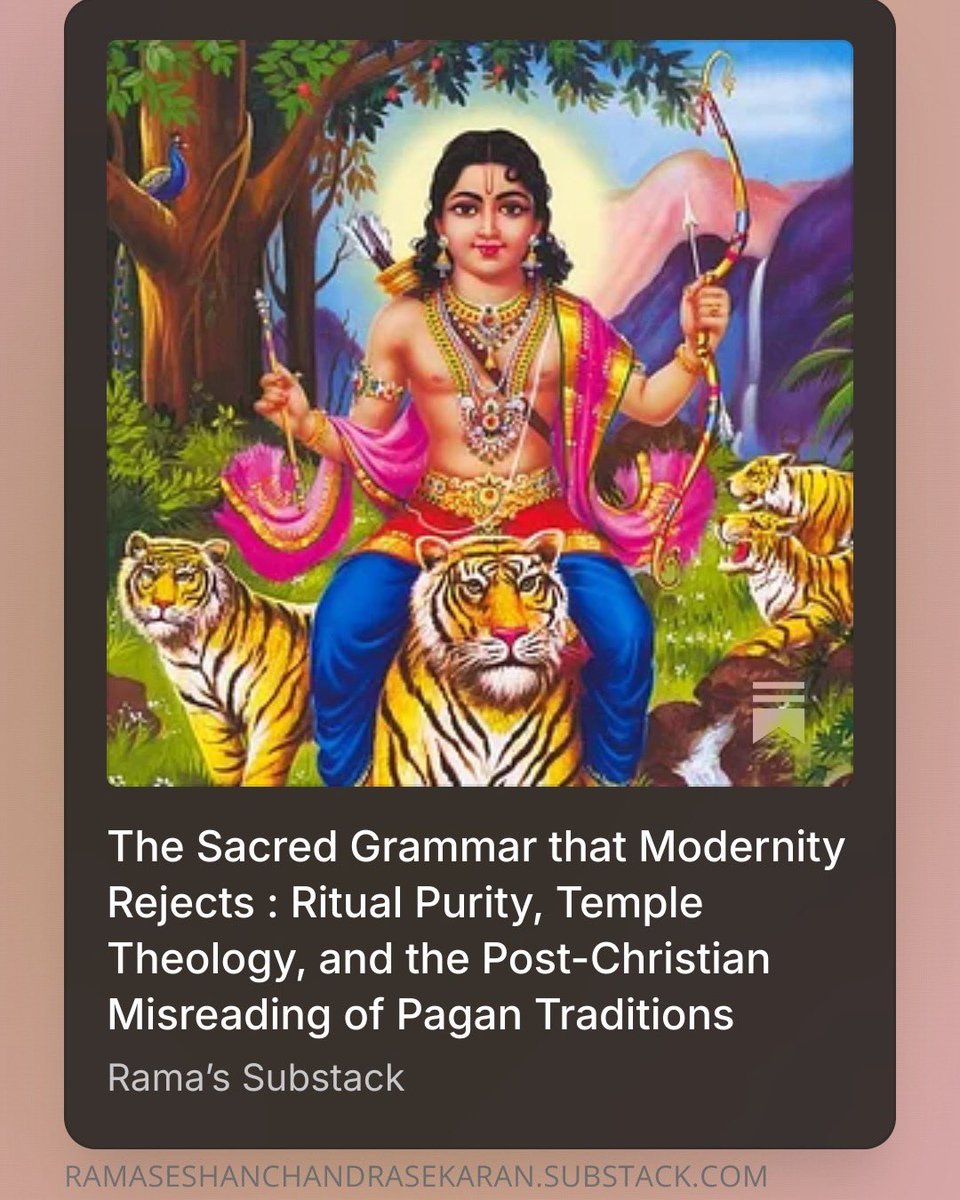
The aim of this article is to elaborate on the following themes :
1. The conflation of ritual purity/eligibility in non-Christian traditions (āśauca, kegare, tumah, miasma, etc…) with moral impurity is a specifically post-Christian interpretive error
2. The temple-as-residence-of-deity is architecturally, theologically, and legally distinct from the congregation-hall model of Christian and Islamic worship spaces
3. The priest-as-servant-of-deity is structurally distinct from the pastor/imam/rabbi as servant-of-congregation
4. Hereditary priesthood as a covenant between lineage and deity, not a caste privilege separately extractable away from its ritual context
5. These distinctions have legal implications and deserve legal protection in pluralist democracies
Namaste X!
This is my first post here - I'm humbled to release my app: VedaVaaNi.
It is an interactive learning platform designed to help you practice Rig Veda and Krishna Yajur Veda chanting with absolute phonetic and prosodic (Chandas) precision.
“Socialism always attacks 3 basic social institutions: religion, the family, & private property. Religion, because it offers a rival authority to the state; the family, because it means a rival loyalty to the state; & property, because it means material independence of the state”
Stray dogs threaten over 80 species in India, including endangered ones like the Great Indian Bustard, Snow Leopard, Tibetan Wolves, Red Pandas, Olive Ridley Turtles and many more.
In Hisar, Haryana they killed some 78% wildlife species and pushed the black buck to extinction!!!
How do you pay $350 million to a country that is cut off from the global SWIFT banking system? You cannot just wire the money from a bank in Mumbai. (wearing my fintech hat :P)
Long before modern banking, Indian merchants used Hundis: an ancient informal value transfer system based on trust. A merchant in Surat would give a note to a traveler, who could redeem it for cash in Persia.
This Reliance deal likely uses a modern, legalized version of the Hundi called the Vostro Account system.
Instead of US Dollars, India pays in Indian Rupees into a special account in an Indian bank. Iran then uses those Rupees to buy Indian rice, medicines, & engineering goods. It is a Barter Loop"that Chanakya would have recognized instantly. It bypasses the Dollar entirely, making the Sanction invisible cos the money never leaves Indian soil.
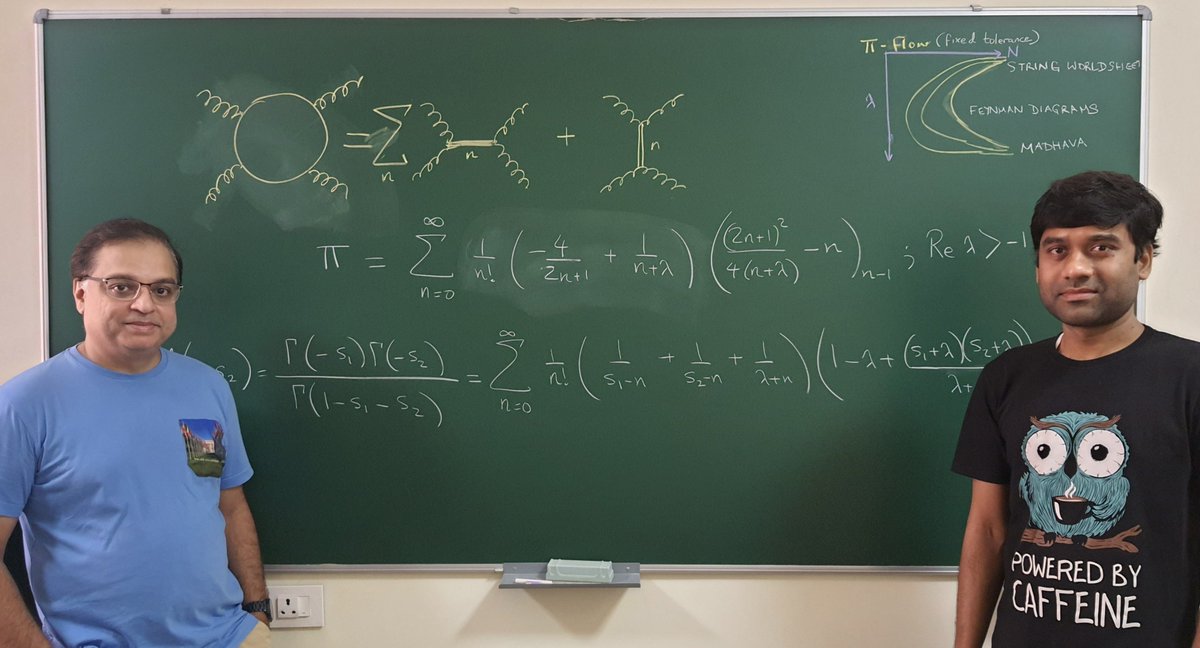
Happy Pi day + IISc, Bangalore High-Energy Physics connection!
In the 14th century, Madhava found the first infinite series for pi.
In the 20th century, Ramanujan found incredibly fast-converging series for pi.
In the 21st century (2024-2026), IISc Bangalore proved that these series are the secret code for High-Energy Particle Physics.
A brand new discovery from the IISc, Bangalore, has linked Ramanujan's pi formulas to the fabric of the universe. Researchers (Arnab Priya Saha & Aninda Sinha from the Centre for High Energy Physics) found that the specific mathematical structure Ramanujan used to calculate pi is the exact same structure needed to solve eqns in String Theory & High-Energy Physics.
They were trying to calculate how high-energy particles interact & stumbled upon a new infinite series for pi that looks exactly like a modernized version of Ramanujan's work. It turns out Ramanujan's obsession with pi was a blueprint for how black holes & subatomic particles behave.
The innate refusal to crawl off a cliff is an exact physical manifestation of what Patanjali’s Yoga Sutras call Abhinivesha.
Abhinivesha is the 5th Klesha (affliction): it is the instinctive clinging to life & the fear of death that is found even in the most learned scholars & newborn infants.
Ancient Indian psychology argued that this fear is not learned in this lifetime; it is a residue (Samskara) of survival. The fact that a few months old baby, who has never fallen off a cliff, refuses to cross the glass is the scientific proof of Abhinivesha, an embedded code in the Human GUI that prioritizes survival over curiosity.
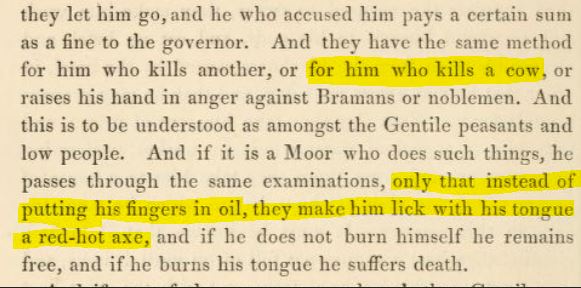
What was the PUNISHMENT for COW slaughter in KERALA ??
Portuguese Officer Duarte Barbosa wrote-
who kills a cow has his fingers placed in hot oil and is forced to lick red hot axe with tongue.
Beef was never the part of Kerala culture, it arrived with communism.
Traveler IBN BATTUTA wrote about the CALICUT state --one thing is forbidden namely to kill a COW or eat it's flesh.
even in 1927 princely state of cochin brought a cow protection bill
Why Bhojshala became personal to me?
Until last year, Bhojshala was just another unfamiliar name to me, despite being a native of Madhya Pradesh. That changed when I visited the site on a reporting assignment for Organiser. What I encountered there was not merely a disputed monument, but a living wound of history. As I read more and walked through the complex, I felt a strange mix of shock, shame, and anger. Shock at what had been done to the site, shame at how little I had known about it, and anger at how casually its history had been altered, negotiated, and denied.
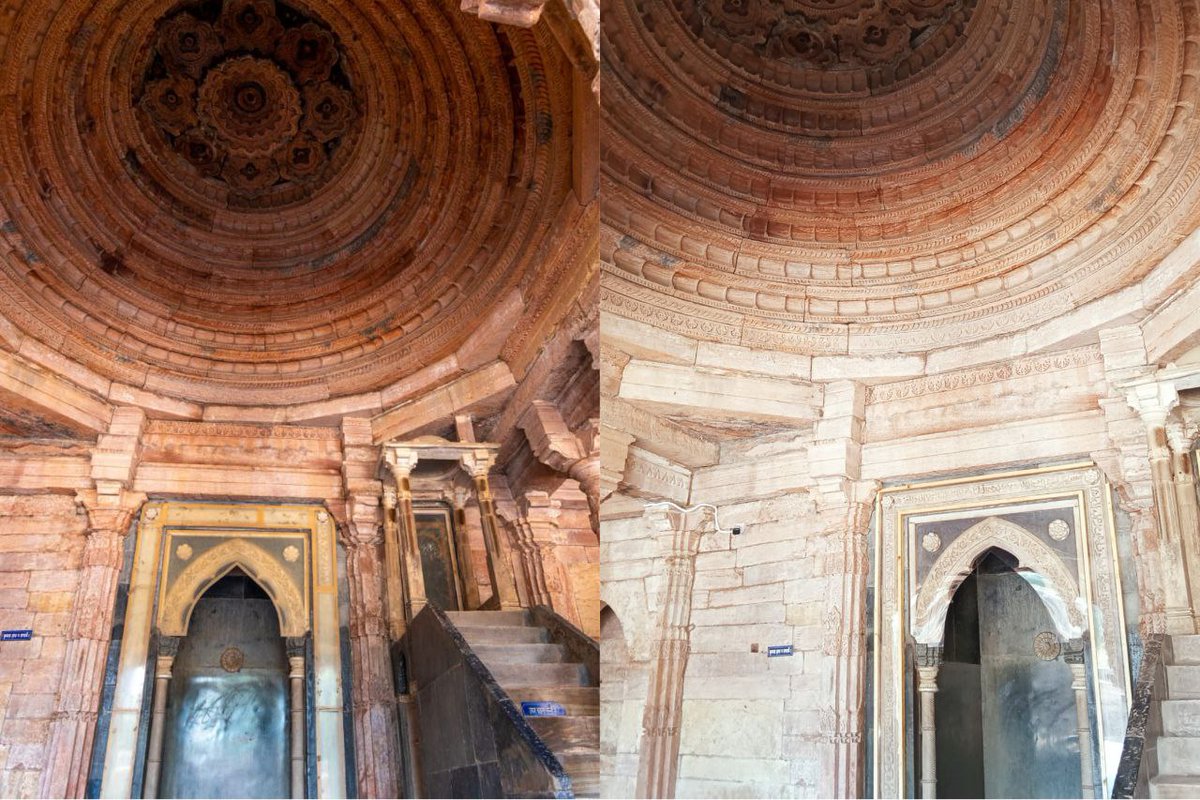
Standing inside the Bhojshala complex, it was impossible to ignore its origins. Every pillar, inscription, and architectural detail spoke the language of a Hindu centre of learning established by Raja Bhoj, a ruler whose vision turned Dhar into a global hub of Sanskrit. The Saraswati mantras carved into stone, references to Bhagwan Ram, and grammatical inscriptions in Sanskrit and Prakrit were not just relics, they were evidence. Evidence that this place was once a thriving Saraswati temple and a seat of knowledge, later damaged and reduced through repeated invasions beginning with Alauddin Khilji in 1305 AD.
What disturbed me deeply was not only the medieval destruction but the modern political decisions that followed. In the late 1990s and early 2000s, administrative orders backed by the Congress government allowed Muslim prayers inside the complex while restricting Hindu worship. Hindus were lathi-charged, jailed, and even killed in police firing for demanding access to what they believe is their own sacred space.
Walking through Bhojshala, knowing that people had died simply for wanting to pray here, made the silence of the stone feel unbearably heavy.
What Hindus recognise as the havan kund becomes a wuzu khana.
What we know as Saraswati Koop is referred to as Akkal Kua.
The garbha griha is the very spot where preachers sit.
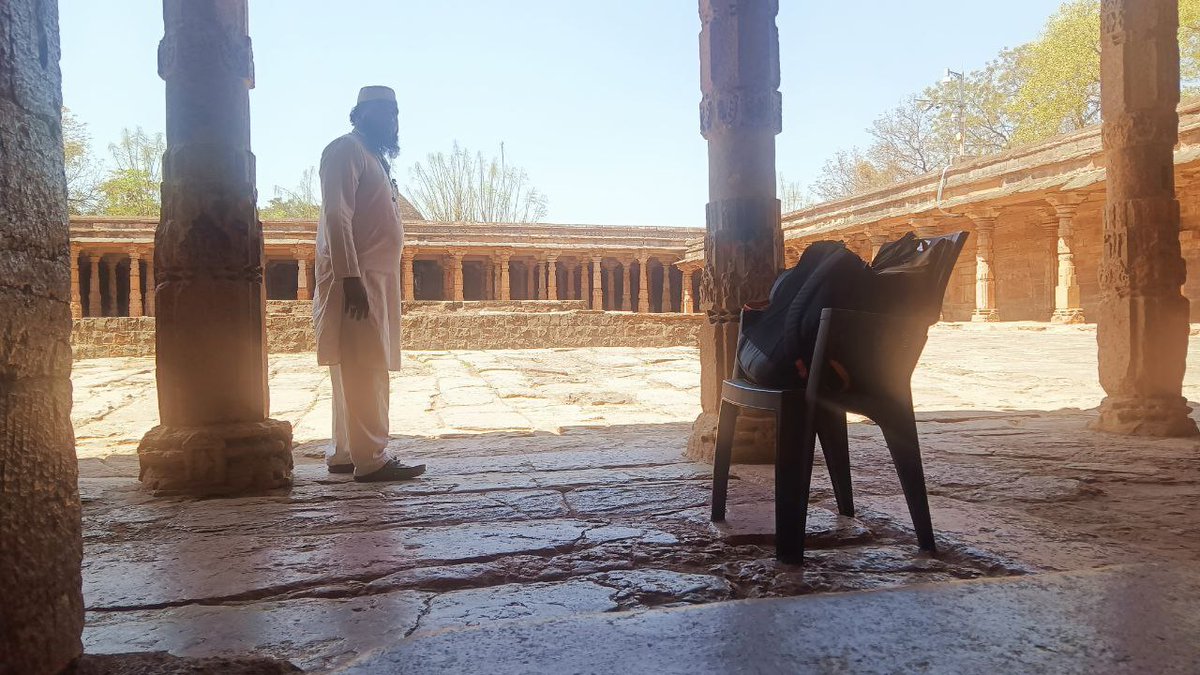
While I had my shoes left outside, I found a man with them on inside the campus, when asked, he ignored and moved away.
Apart from the regular Tuesday worship, Bhojshala witnesses a massive gathering every Basant Panchami, the day dedicated to Maa Saraswati. Several times in the past, this pooja has clashed with Friday prayers, turning the site into a flashpoint.
During my visit, I met representatives from both sides. The Hindu side spoke through history, inscriptions, and archaeological records. The Muslim side relied largely on belief and continued usage. I visited the Kamal Maula Mazar and spoke to its caretaker, who claimed the structure as a mosque but avoided engaging with the historical contradictions visible just a few steps away. What struck me was this: there already exists a separate mosque, Rehmat Masjid, built on land historically granted to Muslims. Bhojshala, however, carries no such continuity for Islamic worship. The structure, its core, its carvings, its very grammar, belong unmistakably to a temple.
Perhaps the most haunting symbol of this struggle lies a few meters outside Bhojshala, the Akhand Jyoti burning since 2005 at the Sankalp Jyoti Mandir. Lit by devotees who walked barefoot from Maihar to Dhar, this flame waits for the return of Maa Vaghdevi, whose original idol still remains in London. That unbroken flame is not an act of defiance, but of patience. It burns quietly, carrying a promise that history, however delayed, will one day be corrected.
But when? Only Maa Vaghdevi knows, sharing some pictures:
So what is life like aboard @INSVKaundinya ? Modern amenities are minimal except for safety and communications. This is how is looks under the deck. As you can see, there are no cabins and just a dark hold for storing supplies. Mostly we sleep on the open deck with sleeping bags, but in rough weather we will have to take turns to sleep here between the boxes. 1/n