@0xBadKoi@jumperapp Clear breakdown of Jumper Pass. Treating it as an on-profile activity log that turns real swaps, bridges and Earn into XP → levels → perks removes the usual confusion. Straightforward and useful.
@rijulraj456 Checking the live profile confirms Level 5 is needed for the https://t.co/xONFB7pc6s cashback which rewards consistent Jumper users really well.
Checked the Jumper Loyalty Pass profile again at https://t.co/sDac6tG852, not an old announcement. The https://t.co/i3ZF0UVpsP Cash line is still listed as “Get up to 4% cashback on all purchases with the https://t.co/i3ZF0UVpsP Cash Card,” and the displayed requirement is Level 5.
That bar is early if you already move funds through Jumper. It fits someone who pays ordinary expenses with a crypto card and would rather have cashback locked to a Pass level than chase a coupon that may no longer match the page. A useful split: Level 3 on that same profile is where SafePal’s $40 X1 discount and Jumper Travel deals show up, so Level 5 is the next step if you already cleared the hardware-wallet or hotel unlock and want the benefit on everyday card spend.
Source: Jumper Loyalty Pass profile, https://t.co/sDac6tG852
Disclosure: this post is part of a Republic campaign and can earn participation rewards if the raid is approved.
Post that, then send the public URL. I can’t submit a link until the post is live.
Chasing leaderboard rank while ignoring the community route is the new way to leave money on the table.
If you are already KYC’d on Legion, the next move is simple: open the Republic Allocation tab and commit what you have.
Most people still treat oversubscribed sales as pure capital races. That mindset is outdated.
The real edge is no longer “how much USDC you can lock.” It is whether you can enter the reserved community pool that sits outside the main allocation.
Jumper reserved 5 % of its Legion sale for The Republic. That slice is not divided equally; it feeds a VP-weighted raffle. More VP raises your odds, yet the final outcome still depends on eligibility and process.
@Alicant0x Reducing post-swap friction feels game-changing. Collapsing research, bridging and depositing into one flow keeps capital working instead of idle across tabs. Wallet-scored earn options make the handoff truly seamless.
Tab hopping is the tax you pay after the swap.
You already moved capital. The next question is where it earns. In the old flow that question opens a pile of tabs.
Before — swap, then research a yield:
Swap on an aggregator
New tab: which chain is this asset actually on
New tab: protocol list (Aave, Morpho, a vault dashboard, a points farm)
New tab: pool page — asset, TVL, APR, lockup
New tab: bridge if the pool is elsewhere
Swap again into the deposit asset
Approve, then deposit
Later: explorer + protocol dashboard + portfolio tracker to see what you hold
Jumper’s own write-up says that after a swap, users are back at discovery: dozens of protocols, thousands of vaults and pools. Their data: nearly 75% of Jumper users swap and then deploy into yield. Source: https://t.co/CngoOKYrjR
After — same intent, fewer surfaces:
Swap on Jumper (routes across 60+ chains; they report 2.1M wallets and $30B+ moved)
Earn feed scored against the wallet you already used — holdings, idle assets, chains — or All Markets if you want the full list
One zap: bridge + swap + deposit batched into a single flow, into a pool from the 600+ opportunities they index (day-one set included Aave, Morpho, Lido, https://t.co/JN68xyjjLJ, Fluid, and others)
Portfolio in the same app: balances and positions across chains, then rebalance, rotate, or exit without a fresh dashboard hunt
What gets pulled together is not “a better APR.” It is the handoff: discovery, the bridge, the second swap, and the deposit stop being separate products. Portfolio is the part that used to be the second round of tab hopping, after the money was already in.
Not custody. Not a return guarantee. You still pick the pool.
Disclosure: this post is part of a Republic campaign and can earn participation rewards.
@joji4680 Idle BP sitting is just dead weight until you map real opportunities. Jumper's Earn + Portfolio collapses the hunt, yet every vault still demands its own diligence check first.
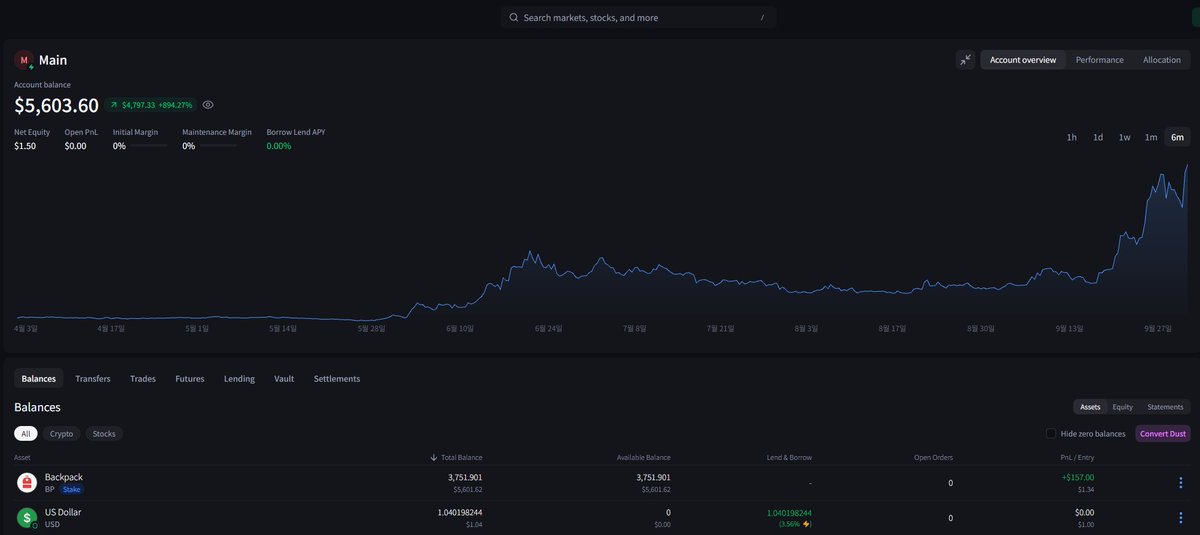
I hold about $5,000 of BP. After reading why Jumper built Earn and Portfolio, the real question was whether that bag is just sitting, or capital I can actually deploy and track.
The article’s point matched my screen. A swap is only half the job. About 75% of Jumper users swap and then look for yield, and that used to mean hunting vaults across separate apps. Earn is the other half: a feed of 600+ pools, filtered by holdings and idle assets, with bridge, swap, and deposit collapsed into one flow.
Portfolio is where I then see where the position is and what it is earning, without opening another dashboard.
What does not change: one flow is not zero risk. I still judge the vault before moving BP.
Screenshot is my own portfolio, personal details hidden. BP balance shown is about $5,000.
Source: https://t.co/Y2zO0relmx
Disclosure: written for a Republic campaign. Participation rewards possible. Not financial advice.
@legiondotcc@jumperapp #TheRepublic
@Whitecube72 Clear explanation of DONE/PARTIAL. Users keep full value on the destination chain and can finish the swap manually with better slippage or liquidity. Transparency like this builds trust in cross-chain routes. Republic campaign.
⭐️Why you got a different token: a stopped destination swap becomes DONE/PARTIAL
A route can finish and still hand you a different token than the one you asked for.
That is the destination-swap case, not a failed bridge.Many cross-chain routes are two jobs in a row.
The bridge moves value onto the destination chain. A second swap is then supposed to turn that bridged asset into the token you selected.
If that second swap cannot be done safely — price moved outside your slippage, or liquidity is too thin for a long-tail token — https://t.co/YRYToLF61O stops at the bridged asset and marks the transfer DONE with substatus PARTIAL, instead of forcing a bad fill or failing the whole route.
So a request for ETH on Arbitrum, funded with USDC on Ethereum, can land as USDC on Arbitrum if the destination swap does not execute.
The bridge step completed. The final conversion did not. You still have value on the destination chain and can swap it yourself, often with wider slippage or another route.
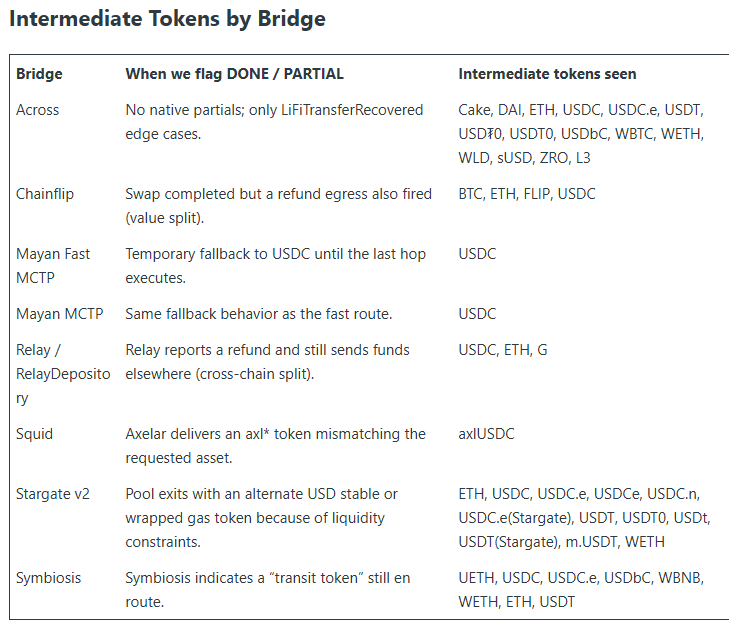
Not every partial looks like that: some edge cases exit into a closely related token, such as another stablecoin or a wrapped gas token, when that path has better liquidity.
DONE means https://t.co/YRYToLF61O sees the transfer as finished. PARTIAL means the received asset was not the exact token requested.
A refund is a different substatus.
Source : https://t.co/lX5jqEUHfB
This post was written as a learning mission for The Republic campaign, which earns participation rewards.
Checked availability live on https://t.co/Kvj7GnrTZv before writing this—still listed.
Sources: https://t.co/Kvj7GnrTZv and https://t.co/hk98tauEZl
Disclosure: This post is part of a Republic campaign and can earn participation rewards.
One Jumper Perk that stood out on the current profile is the Bitrefill Tier 1: 50% off eSIMs, unlocked at Level 4.
The requirement is straightforward—reach Pass Level 4 through normal swaps, bridges or Earn activity. No extra hoops.
For someone who travels or needs reliable mobile data while moving between chains and countries, this is practical. I still buy eSIMs the old way and end up overpaying; a standing 50% cut would actually change how often I grab one before a trip.
@Dee59656279 Multi-chain portfolios get messy fast when assets sit idle across networks. One dashboard that flags earning positions versus dead capital in a single glance cuts the noise and makes rebalancing decisions way cleaner without tab-hopping.