Interesting (and slightly worrying) trends of scientific publications by topic in the USA, normalized to 2010. You see that blue dropping line at the bottom? That's physics. The two most steeply rising ones? Psychology and social sciences.
Many thanks to Mark Macklin and my colleauges for publishing our @ScienceMagazine paper on global river systems affected by metal mining. https://t.co/N1PaejS6Ty
Join us! Research arsenic iron interactions at RMIT. Soil Chemistry expertise. Innovative tools. Collaborative team. #arsenic#EnvironmentalScience Please RT. https://t.co/XzAFzq13EB
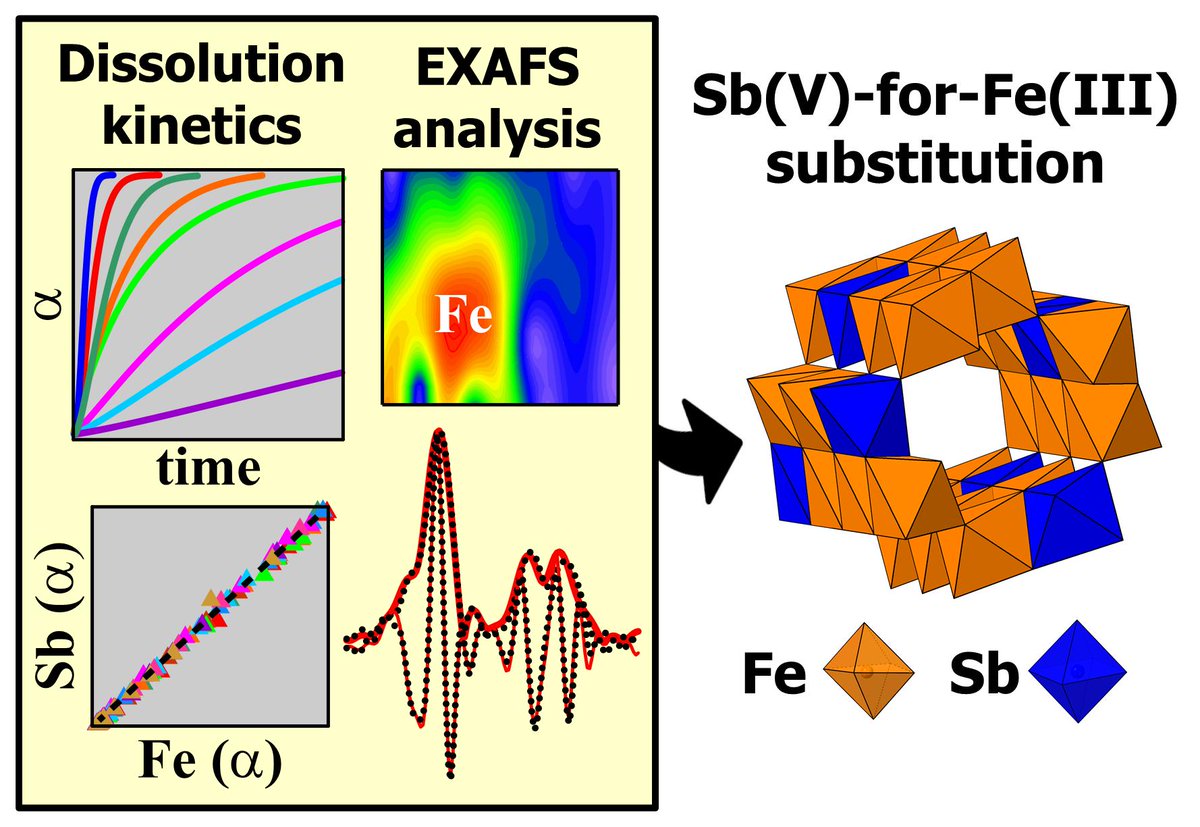
Our latest @EnvSciTech paper explores antimony(V) incorporation into schwertmannite. Check it out at: https://t.co/gUVQX1O7lW. By M Rastegari @nkarimia @ScottJoh_dirtDr @GeoloJess_ S Doherty @gichem06 M Hosseinpour & myself. Thanks @arc_gov_au@ausynchrotron
This atomic-scale movie upends a 100-year-old theory! Thanks to record-breaking 🔬 video resolution at our @molecularfoundry, scientists have discovered 🔎 how atomic-scale defects direct #nanoparticle growth. Check it out ⬇️
https://t.co/RvyUEZQLaW
This article briefly covers essential topics on preparing samples for SEM. If you're new to SEM, or just want to start your Monday with an easy read, I recommend it.
Scanning Electron Microscopy: 6 SEM Sample Preparation Pointers for Successful Imaging https://t.co/S0eJej4ha6
Climate change is not our largest environmental problem. We need to get serious about the largest - chemical contamination of soil, water and air https://t.co/YlYV99R75o
If you're interested in how hexavalent chromium can be reduced via interactions with iron minerals, such as schwertmannite, check out our paper in @HAZMAT_journal. https://t.co/FrU0lz3yMl
By @gichem06@nkarimia & myself. Thanks to @arc_gov_au@ausynchrotron & NSRRC, Taiwan.
Turning waste from bauxite refining into an environmentally-beneficial resource. Our new paper in @HAZMAT_journal explores the use of Bauxsol from Virotec Pty Ltd for remediation of lead-contaminated soil. Thanks to @arc_gov_au@ausynchrotron. https://t.co/k3IuEdX65D
@HAZMAT_journal Are root elongation assays suitable for establishing metallic anion ecotoxicity thresholds? I would say it depends. Have a look at the excellent work by Lamb et al. (2021) https://t.co/5OUfPYiABt
Please RT! Our team has a fully-funded PhD position on antimony geochemistry in environmental systems with @SCGeoscience in eastern Australia. Details and instructions for applying at https://t.co/ZMwXEplPRI. #geochemistry#pollution#environment#minerals
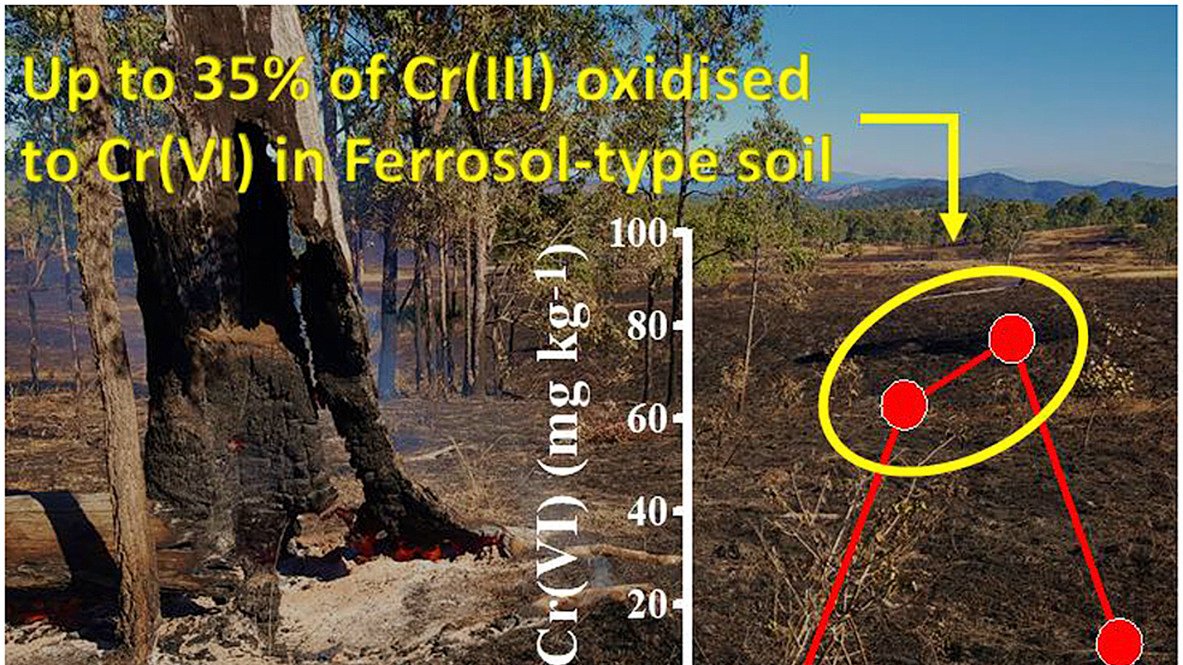
Fully-funded PhD positions are available on @arc_gov_au research into hexavalent chromium formation and fate in #bushfire-impacted soil with our team @SCGeoscience: https://t.co/5wOyXnyfD1. Our recent paper gives some background info on the topic: https://t.co/J4qNPRHYHd
Professor Chris Bishop demonstrates the reaction of phosphorus burning in pure oxygen, which also explains why the name phosphorus means "bearer of light" [full video with more reactions: https://t.co/SBUE4PLgDO]
I have been an editor for 6 months now and read about a hundred papers, and this is what I have learnt so far. As an author myself and a publisher of journals where I talked to external editors all the time, here is what we wish we could tell authors, in no particular order(1/n)