@CAF_Media We've not yet forgotten your embarrassment on the AFCON CUP, which was retrospectively awarded to Morocco
You and FIFA are in the same WhatsApp group
🏆 Referee announced for 2026 #SuperCup!
We're pleased to share that Somali referee Omar Artan will officiate the highly anticipated match between PSG and Aston Villa in Salzburg.
Dangote Cement has cement manufacturing plants in 11 African countries.
Biggest Dangote Cement Plants is in Obajana, Kogi State, Nigeria. It produces 16.25 million tonnes per year and the largest cement plant in Sub-Saharan
Countries where Dangote Cement has factories/production operations
Nigeria
Ethiopia
Tanzania
Zambia
South Africa
Senegal
Cameroon
Ghana
Sierra Leone
Republic of the Congo
Côte d'Ivoire
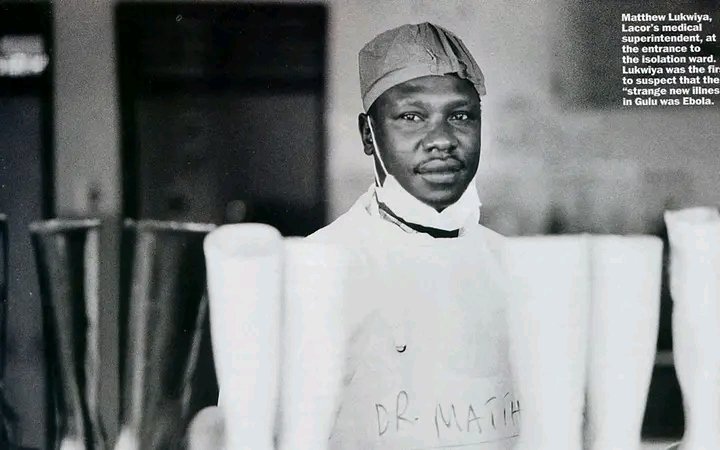
In Memory of Dr. Mathew Lukwiya
In his final hours, he spoke to Sister Apio Anyai Angioletta, the paediatric nurse who had known him for years. She would later remember his exact words.
"Sister, things are worsening. I have tried to fight. The battle is almost over. Now I am seeing that I am also going. The time has come for me to go. That I know. I am going. But if I go, I will be at the doorway. Nobody is going to die now. I will tell my God that enough is enough."
Then he began to sing a hymn about war. Everyone in the room broke down. Sister Apio replied, "No, doctor, it will not be like that." But it was. On December 4th his breathing briefly stabilised. Later that evening his lungs began to haemorrhage. He died at 1:20am on December 5th, 2000.
He was buried at 4pm the same day. The coffin was sprayed with Jik bleach as it was lowered. Margaret asked if she could see him one last time and was refused. The body was considered too infectious.
He was placed in a grave he had chosen himself while he was dying, at the Grotto inside the hospital grounds, beside Dr. Lucille Teasdale and later Piero Corti. Teasdale had died in 1996 of AIDS, contracted while operating on an HIV-positive patient.
The student was buried beside his mentors.
And then something extraordinary happened. After Lukwiya's death, every remaining Ebola patient at Lacor survived. Not another single person died at the hospital. Sister Apio remembered the promise he had made on his deathbed: "I will tell my God that enough is enough." It is the kind of detail you would not believe if you read it in a novel.
By the time the WHO declared Uganda Ebola-free on February 6th, 2001, 425 confirmed and probable cases had been recorded, and 224 Ugandans had died, including thirteen health workers from Lacor alone.
The survival rate during the outbreak was nearly 50%, compared to as low as 10% in previous African outbreaks, largely because of the systems Lukwiya had built before anyone else even knew what was happening.
This is what the mainstream story leaves out. The intern who refused a teaching job in England. The doctor who walked into the bush instead of the nuns. The administrator who turned the hospital into a shelter for nine thousand people, most of them children, every night.
The Acholi son of a smuggler who topped his country in school, won the John Hay Prize at Liverpool, and still chose Gulu over everything else. By the time he made that final speech to his nurses, the heroism was already the entire shape of his life. The Ebola work only made it public.
Happy Heroes Day, Dr Matthew and all healthcare workers who sacrifice more than they should have to! #HeroesDay
# *Copied*