Prabowo Subianto is right to aspire to better growth for his country. Unfortunately for Indonesia, the main obstacle to fulfilling that potential is the president himself https://t.co/NVwvHnJ85q
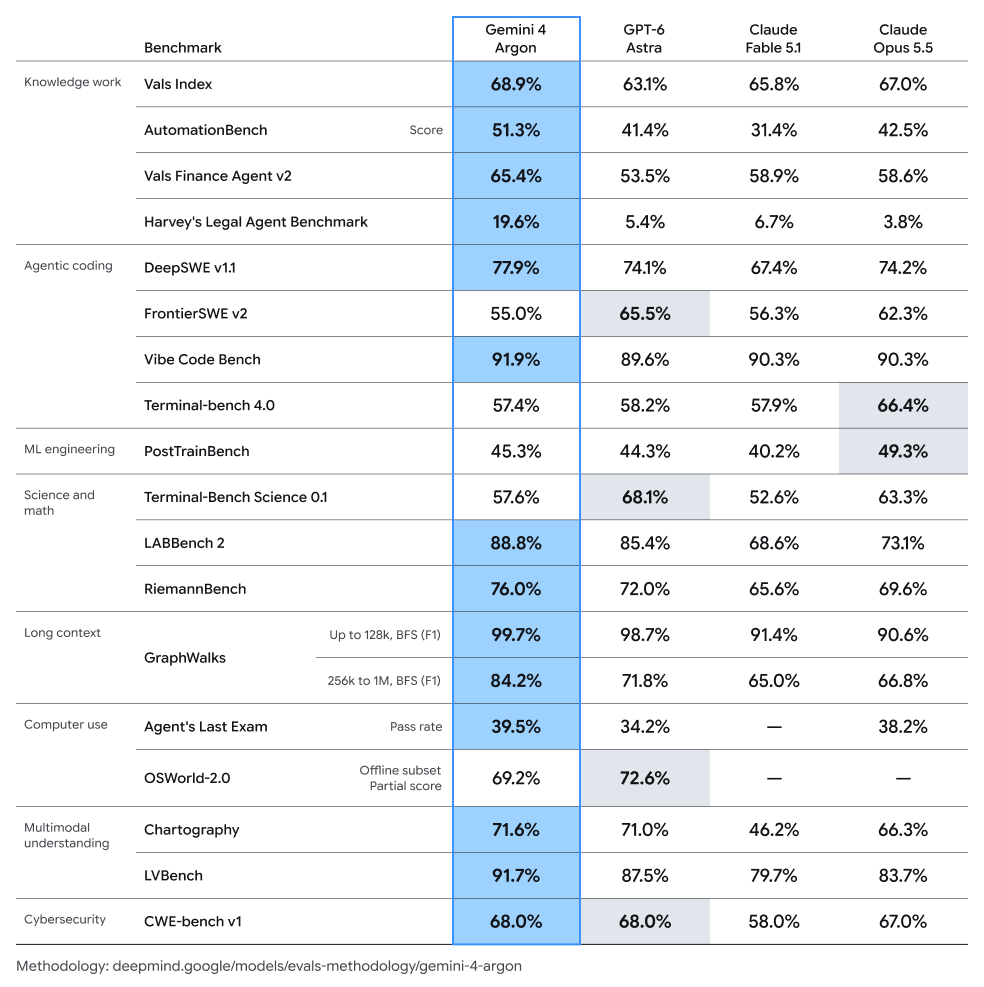
Introducing Gemini 4 Argon – our new frontier model.
It’s built for complex workflows across coding, enterprise knowledge work, and cybersecurity defense – rolling out today to a set of trusted testers through our Fairwind Program.
Ketinggalannya Lampiran III.b, alias Prioritas Nasional Tahun 2027 ini, bikin berantakan di beberapa K/L..
Dikira dapat Anggaran On Top, yg bisa diatur sesuai kebijakan K/L, sudah DISUBMIT PAKSA, 9 Agustus.
Ehh, Lampiran IIIb nya berkata lain 🤣..
Bisa geser antar program tuhh 😑
The resignation of Bank Indonesia Governor Perry Warjiyo two years before the end of his term is one of the most consequential economic developments Indonesia has seen in recent years. Leadership changes at a central bank are always important, but an unexpected resignation during a period of macroeconomic stress carries much greater significance because it introduces uncertainty at a time when markets value stability the most. The government has stated that Perry resigned for personal reasons, and Senior Deputy Governor Destry Damayanti has been appointed as acting governor while the formal succession process takes place.
For financial markets, however, the immediate question is not why Perry resigned. The more important question is what comes next.
Indonesia is currently facing a challenging macroeconomic backdrop. The rupiah has been under pressure, Bank Indonesia has raised interest rates several times in recent months to defend currency stability, and investors are already closely watching fiscal developments and policy credibility. Against that backdrop, any uncertainty surrounding the leadership of the central bank naturally becomes a key market focus.
The credibility of a central bank rests on three pillars: independence, predictability and consistency. Markets can adapt to higher interest rates, lower interest rates or even unexpected policy moves, provided they believe decisions are made independently and with a clear commitment to price and financial stability. What markets dislike most is uncertainty about the future policy framework.
This means the appointment of Perry Warjiyo's permanent successor may ultimately matter more than the resignation itself. Investors will closely assess whether the new governor is perceived as an experienced central banker committed to Bank Indonesia's mandate, or whether the appointment raises broader questions about institutional independence. The market reaction will therefore depend less on personalities and more on confidence in the policy framework that follows.
It is also important to remember that Bank Indonesia is an institution rather than a single individual. Monetary policy is formulated through the Board of Governors, operational frameworks remain in place, and Destry Damayanti's appointment as acting governor provides continuity during the transition. That institutional continuity should help reduce the risk of immediate policy disruption.
Ultimately, this is a moment when communication becomes as important as policy itself. Clear guidance on the succession process, reaffirmation of Bank Indonesia's commitment to its inflation and currency stability mandate, and continuity in policymaking will be essential to maintaining investor confidence. Leadership changes are manageable; what markets will be watching is whether Indonesia's monetary policy credibility remains just as strong after the transition as it was before.