Andrew Ng just dropped a 3-hour course on how to become an AI Engineer in 2026:
• 00:00 - How to build agentic AI systems
• 04:25 - Future of AI engineering
• 23:38 - AI Prompting full course
• 2:52:17 - Creating an app with AI in 30 minutes
This 3-hour watch could replace 10 AI engineering courses on the internet.
Watch it today, then read how to run a self-improving system in the article below.
@Ates1hp Es 246, por que la suma de la operación (15+9=24) da los primeros dos dígitos igual que los ejemplos anteriores,. Para obtener el tercer dígito es la resta de estos números(15-9=6) que es el último dígito y forman finalmente 246.
Most people think all AI models are the same.
Reality: Modern AI systems (especially AI Agents) use different models for different roles.
Here are the 8 model types shaping today’s AI stacks 🧵
📷 GPT — general reasoning & generation
📷 LRM — deep multi-step thinking
📷 VLM — vision + language
📷 LAM — takes actions with tools
📷 HLM — hierarchical problem solving
📷 LCM — concept-level understanding
📷 HLM — hierarchical problem solving
📷 LCM — concept-level understanding
The real shift:
Single model → Multi-model systems Chatbots → AI Agents Answers → Actions
Top AI engineers don’t “pick a model.” They design an architecture.
If you’re building AI agents, this is your edge. Save this. Repost this. Build smarter.
Here are the 3 Core Pillars of Every AI Agent's Context
Here's why MCP, RAG and Skills are now unavoidable...
Before we dive in, here's why all 3 exist in the first place:
Every AI Agent struggles with 3 core problems:
- Connecting to external tools requires writing custom API code every time
- Answering accurately from knowledge it was never trained on
- Repeating the same instructions in prompts; wasting tokens on every single call
MCP, RAG, and Skills were each built to solve exactly one of these problems.
📌 1\ MCP (Model Context Protocol)
MCP eliminates the need to write custom API integration code every time your agent needs to connect to an external tool.
How it works:
- User sends a query → MCP Client selects the right server
- LLM processes the request and routes it to the MCP Server
- Server (Slack, Qdrant, Brave Search) responds with the relevant data
- Final output is returned back to the user
Key insight: Without MCP, every new tool connection means new custom code. With MCP, your agent plugs into any server through one standardized protocol.
Use when: You want your agent to access external tools and services without rebuilding integrations from scratch each time.
📌 2\ RAG (Retrieval Augmented Generation)
RAG gives your agent memory-enabled retrieval, so it reasons over knowledge it was never trained on, instead of hallucinating answers.
How it works:
- Data sources are chunked → converted into embeddings
- Stored as dense vectors inside a Vector DB
- User query triggers a search → most relevant chunks are retrieved
- Retrieved info + query + system prompt → fed into the LLM → Output
Key insight: Without RAG, agents confidently make things up. With RAG, they retrieve first, then reason.
Use when: You want your agent to reason over large, dynamic knowledge bases with accuracy and context.
📌 3\ Agent Skills
Skills stop your agent from wasting tokens by repeating the same instructions in every single prompt.
How it works:
- User query → LLM sends a Skill Request to the Skill Manager
- Skill Manager retrieves the right skill using stored prompts and actions
- Tools like Git, Docker, Python Interpreter, and Shell are triggered
- Skill data flows back to the LLM → Final Output is delivered
Key insight: Without Skills, you bloat every prompt with repeated instructions. With Skills, your agent loads only what it needs, exactly when it needs it.
Use when: You want reusable, token-efficient actions your agent can execute without being re-instructed every time.
Save 💾 �� React 👍 ➞ Share ♻️
cc : Rakesh Gohel
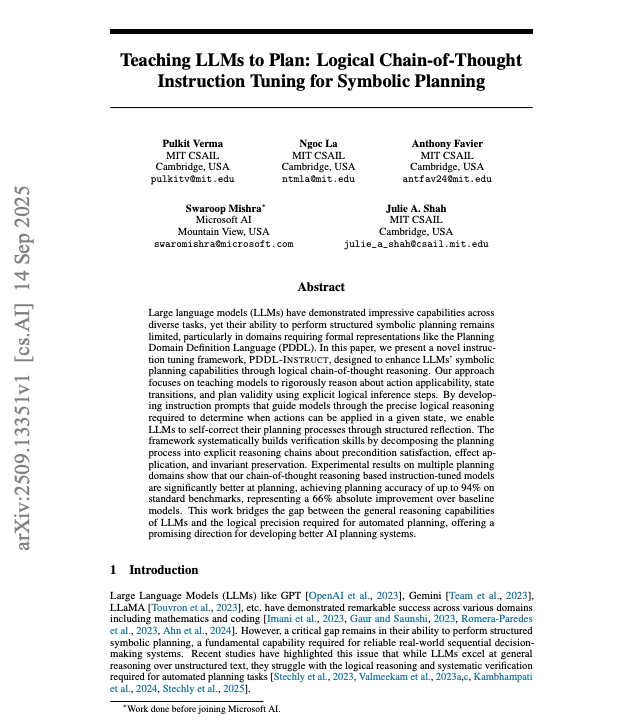
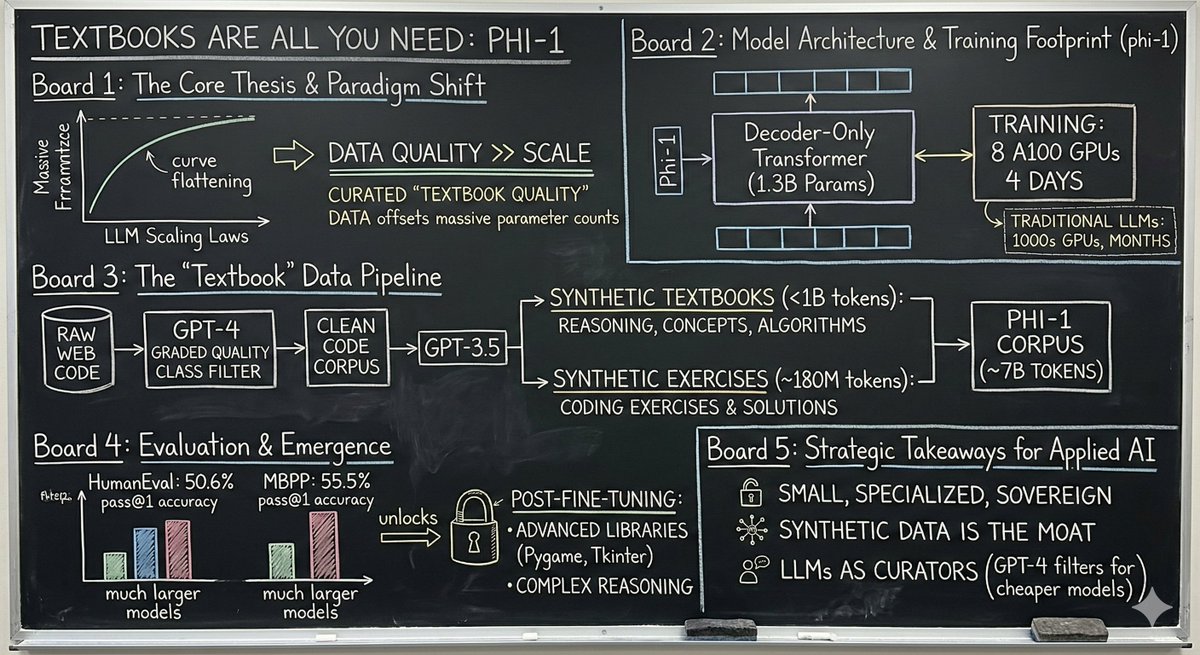
Ayer en el seminario de Doctorado de IA en la Universidad Panamericana, hablamos y trabajamos la idea de calidad en los datos. Durante varios años ya, la fórmula ha sido tener más datos, más procesamiento y modelos más grandes. Y eso ha definido la mejora de los modelos.
Pero, ¿qué tal que no necesitamos un modelo tan grande? En este artículo, los investigadores de Microsoft demuestran que para tareas puntuales, modelos más chicos entrenados con datos de muy alta calidad son la fórmula ganadora.
Sin embargo, ¿quién tiene tiempo hoy de estar limpiando los datos?
Linik: https://t.co/vDX4biOlio
Mientras China 🇨🇳 acaba de hacer el movimiento geopolítico de comercio internacional más fuerte del SXXI -se acaba de unir a su peor enemigo que es Japón 🇯🇵 en alianza con Corea del Sur 🇰🇷- para que en conjunto, con la ASEAN hagan la región de Comercio libre más poderosa del 🌎, Estados Unidos no lanzó un misil, pero detonó una bomba nuclear sobre el comercio global, aquí te comparto: