Two years of ₹10,000 monthly SIPs in 20 large-cap funds, fund by fund (Oct 2024 to 28 Sep 2026, ₹2.4 lakh invested):
• 17 of 20 are worth less than what went in
• Lowest: DSP Large Cap, ₹2,28,594
• UTI Large Cap: ₹2,29,588
• HDFC Large Cap: ₹2,32,148
• Nippon India Large Cap: ₹2,33,844
• SBI Large Cap: ₹2,37,342
• Highest: Taurus Large Cap ₹2,55,860, then Invesco India Large Cap ₹2,48,110
The gap between lowest and highest is ₹27,266 on ₹2.4 lakh. Stretch the same SIP to three years and 19 of the 20 are positive.
Which one is yours?
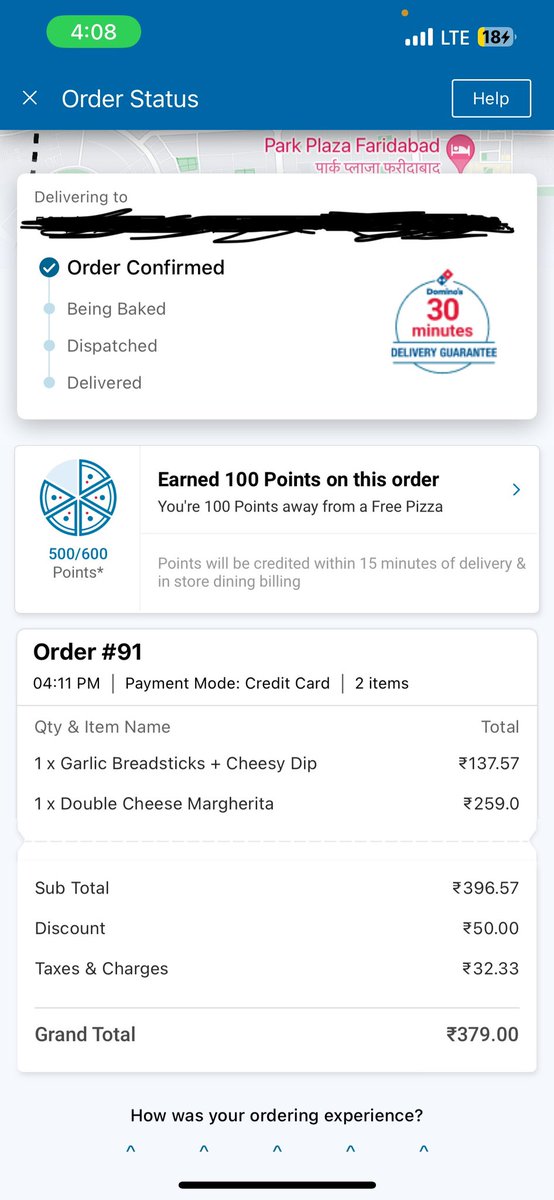
It feels like an intentional way to dodge their responsibility. It’s really disappointing. Now it just feels like they’re trying to cut corners and play games with the clock.
@dominos_india@consumercourtin I’ve had multiple frustrating experiences with Domino’s lately, and I’m done. They’ve been engaging in some pretty unfair practices with their order placement timing.
It’s a sneaky tactic, and it’s misleading to customers who expect their pizza to arrive on time. I’ve had orders consistently arrive late, and when I bring it up, I get to know that on the bill the order time was not the actual time at which I placed the order.
Bruce Greenwald invited Li Lu to speak to his class on value investing.
The result is a 90 minute masterclass on how to be a value investor.
If you haven't watched the video, do it now.
If you have, it's worth re-watching.
Here is a list of my favorite quotes from Li Lu 👇
PERSONALITY OF A VALUE INVESTOR
• "Understand who you are as an investor, because you will be tested. You will have to ask yourself if you truly are a value investor."
• "Value investing goes against our evolution of following the crowds to survive."
• "You will spend most of your time as an investigative journalist. To have insatiable curiosity."
• "You almost have to be curious about everything. Because you never know where you'll get that one major insight."
INVESTOR CRITERIA
• Is it cheap?
• Is it a good business?
• Why is this opportunity available to me?
"Once you answer those questions, you really have to go for it."
INVESTMENT CASE STUDY 1: TIMBERLAND
• "The first thing I check in a company is it's valuation."
• "If you're an investor you don't care where it traded before."
• "What matters isn't the price-to-book ratio itself, but what's in the book value."
• "You want to compare the capital invested in the business to how much pre-tax cash flow the business generates using that capital."
• "So Timberland generated $100M on $200M in capital invested. So why does the opportunity exist?"
- Nike, Reebok, all the shoe brands fell off a cliff during the Asian Financial Crisis.
- Founder owns 40% of the stock
- Company was profitable and didn't need financial markets (no sell-side)
- Tons of shareholder lawsuits
• "What would be your conclusion if you were a normal mutual fund hearing this information? That management is milking the company for their own gain."
What does Li Lu do next?
• "I download every file of the shareholder court cases. That's the investigative journalist part."
• "The result was that the founder withdrew guidance and shareholders didn't like it. That was it."
How do you determine if management are decent people?
• "You've got to be an investigative journalist and find the trail of evidence. Go to their community. Introduce yourself to their friends/family/neighbors."
Total Time Commitment: "A couple of weeks of diligent/obsessive work"
• "Investing is intensive work for short bursts of time."
HOW MUCH TO BUY?
• "If you go join a fund, they'll tell you not to risk anything more than 25-50bps."
• "Think about how much effort you put in to this work. You have no downside and its trading at 5x profits."
• "So, I put a shitload of money into Timberland. Over the next 10 years it went up 7x. It was never more than 15x earnings."
• "If you're not a good analyst, you'll NEVER be a good investor."
• "When it goes up, you don't have to do a damn thing. You just sit on it and ride with it."
INVESTMENT CASE STUDY 2: KOREAN COMPANY
• "Don't think about per-share numbers. Think of yourself as an owner."
• "$236M in book value, $60M market cap, $25M net earnings."
How do you know it's cheap?
• "You must confirm that the earnings are there, and that the book value is real, liquid, and tangible."
• "They're trading at the cash value in the bank with no debt. They have hotels and department stores that they own outright. They're making $30M+ in pre-tax earnings. And insiders own 50%."
The result: Went up 5-6x
VALUE INVESTING IS NOT NATURAL
• "There's a lot of money in value investing. But it's still unnatural to most people."
• "One thing you have to do, is you have to do the work. You have to do the reps. You can make a ton of money if you really do this stuff."
• "I benefited by listening AND THEN DOING my own work. Making my own investments and mistakes."
WHAT MAKES A GREAT ANALYST
• "You must provide accurate and complete information. If you can't succeed on that, you can't succeed in this business."
• "If you're not confident about your prediction and what you know, you can't put any money when the stock's in free fall."
WHAT PROVIDES THE BIGGEST RETURNS
• "Your biggest returns will come from no more than ten tremendous insights. That's it."
• "The only way to build those insights is intense curiosity, intense study."
INVESTING MISTAKES
• "The biggest mistakes come when you buy before you've done all the work."
• "My biggest mistakes aren't buying and losing money. It's not buying and missing out on 50-60x returns."
HOW MANY COMPANIES SHOULD YOU BUY
• "I don't have any set rules on how many stocks or companies I buy. Opportunities are sporadic and it depends on the environment."
• "I usually have 3-4 big ideas. If the market is exciting, I have more opportunities. Or if the market is boring, I have fewer."
HOW LI LU ALLOCATES TIME
• "Most of the time I spend reading and studying about everything. Learning new companies and industries."
• "If I find an idea that captivates me. I stop everything and obsess over that idea."
• "Besides that, I spend a lot of time with my kid and my wife."
TL;DR:
• Be an investigative journalist.
• Work obsessively in short bursts and spend the rest. of your time learning.
• When you've done the work and have conviction, buy a shitload to make it worth it.
• Before you invest $1, make sure you can answer the three big questions: Is it cheap, is the management team good, and why does the opportunity exist.
• Never stop learning.
• Become a curiosity machine.
Terry Smith is considered the Warren Buffett of Britain.
In 2010 Terry founded "Fundsmith" which has beaten the index by a substantial amount with a CAGR of 15.6%
Studying his investing strategy is more valuable than a degree in Finance
Let's break it down:
My Energy Industry Reading Stack:
• Oil
• Energy
• The Frackers
• The Big Rich
• Fisher Invest on Energy
• Crude Volatility
• Oil Man
• Fossil Future
• The World For Sale
• The Prize
• Price Wars
What would you add to this list?
“When we bought See’s Candies, we
didn’t know the power of a good brand. Over time we just discovered that we could raise prices 10% a year and no one cared. Learning that changed Berkshire"
--- Warren Buffett
If you self impose the discipline of selling only rarely, the quality of your buy decisions would remarkably improve. If you buy well and sell only rarely, you're bound to create huge wealth.
The package of 20 lakh crores is definitely a moral boaster for the the nation but in a speech of 33 minutes not even a word about the plight of the millions of migrant workers who need immediate help for their bare survival . Not done .