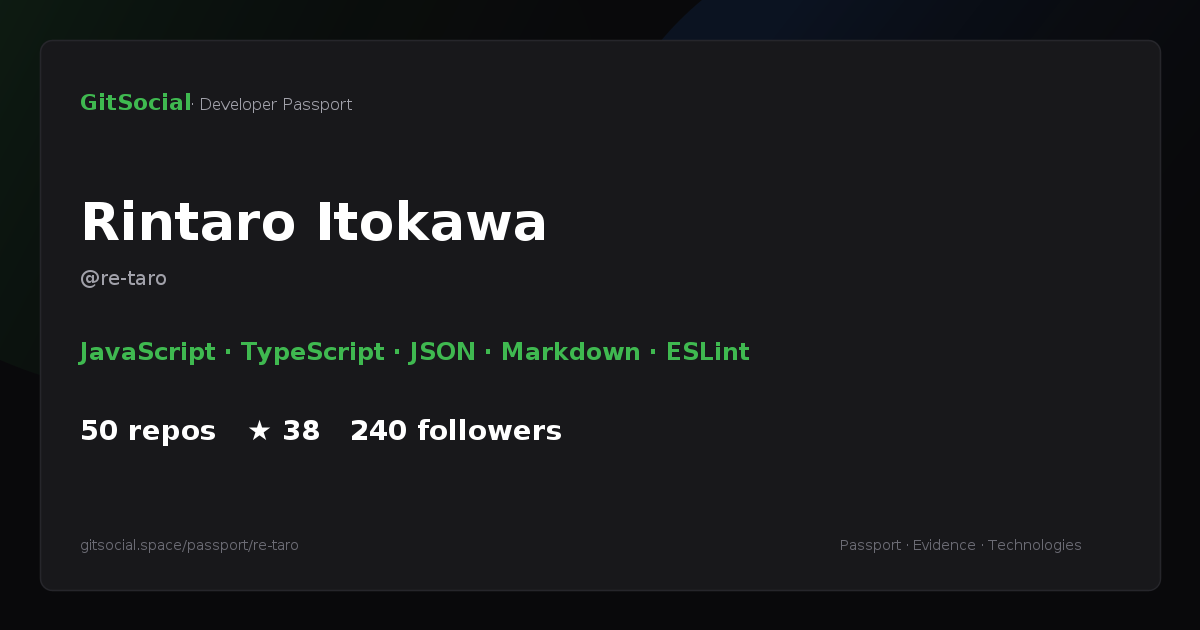
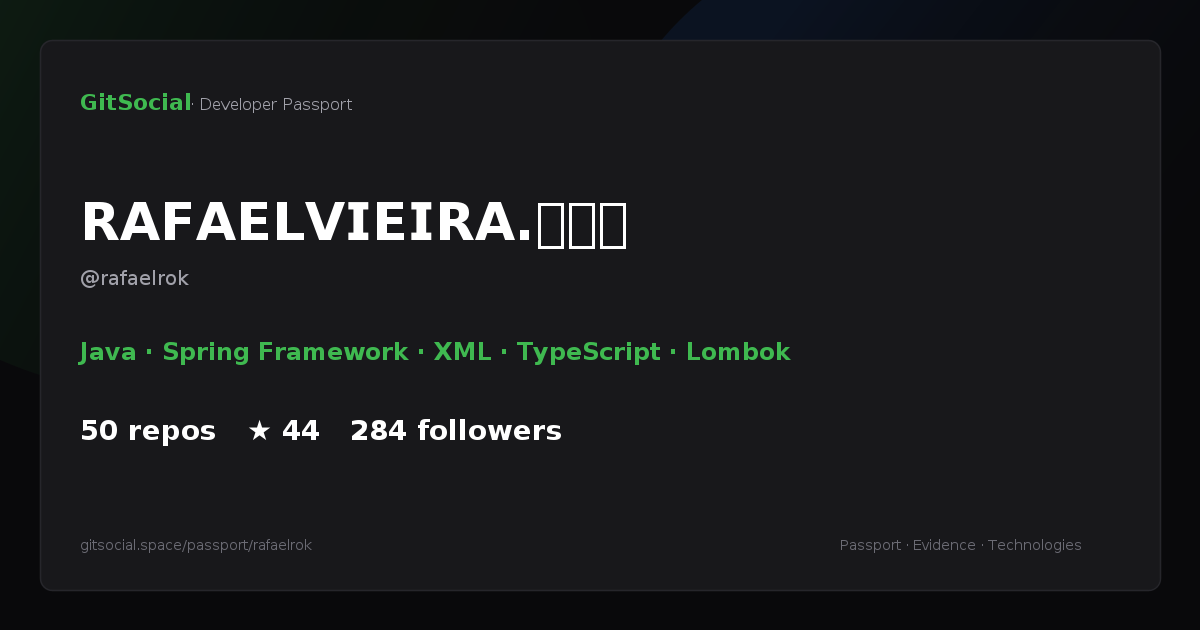
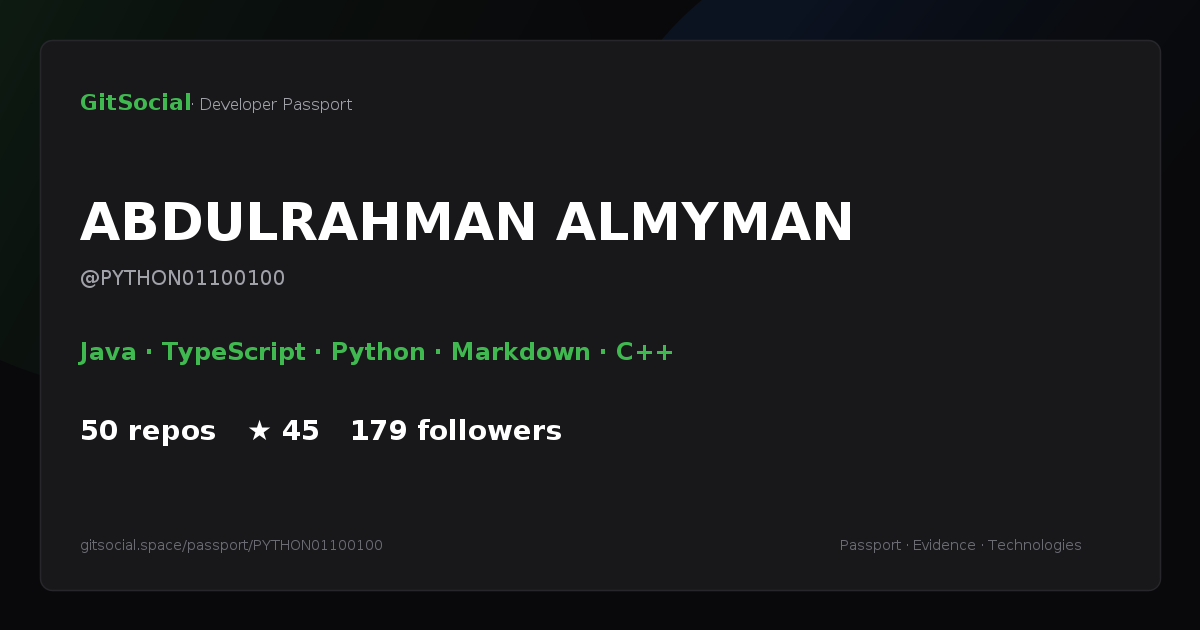
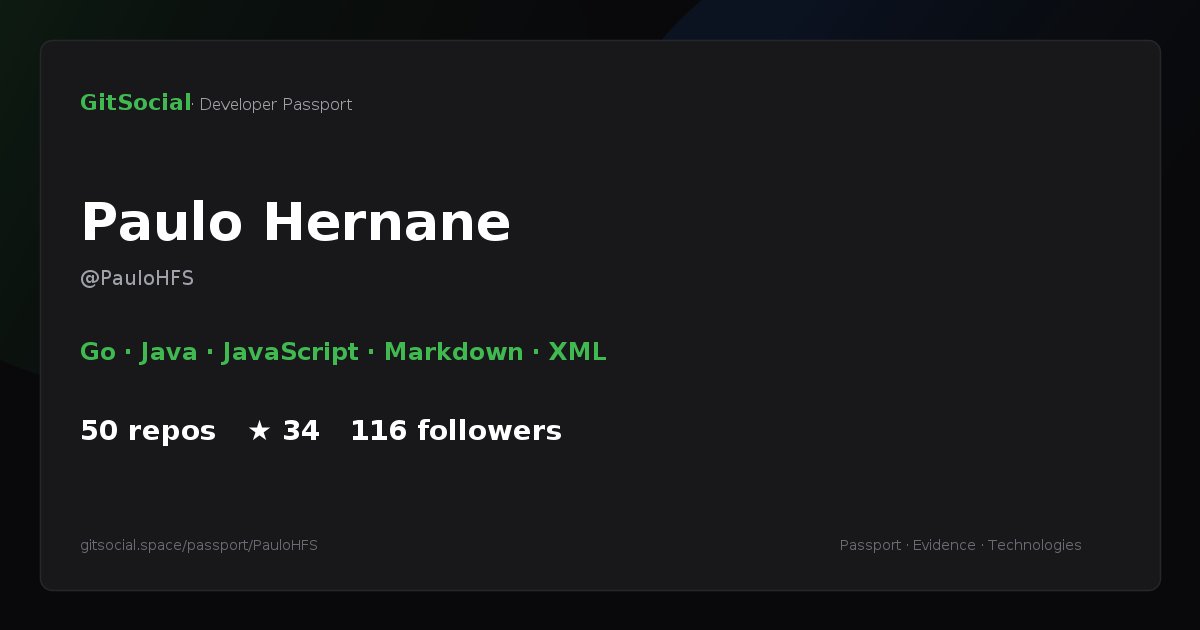
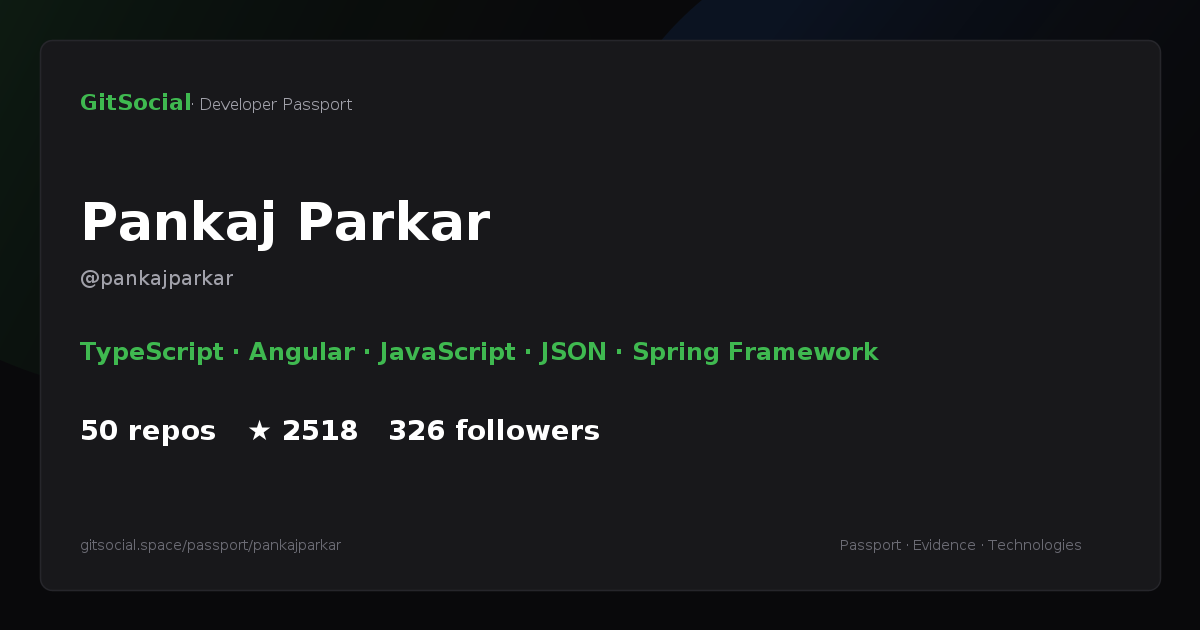
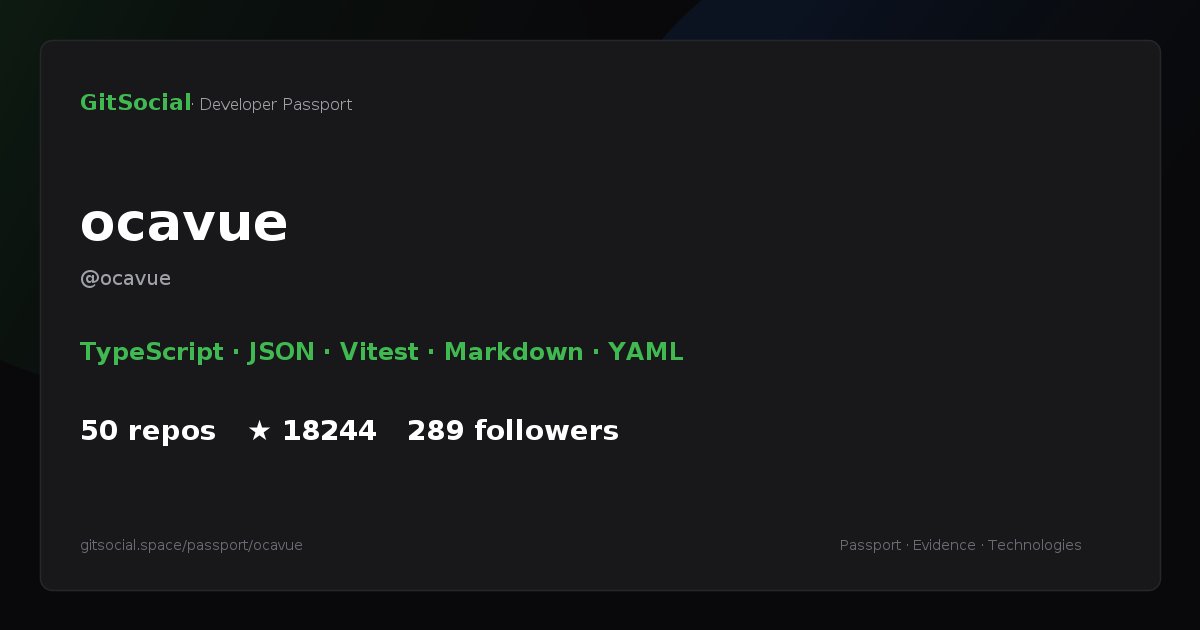
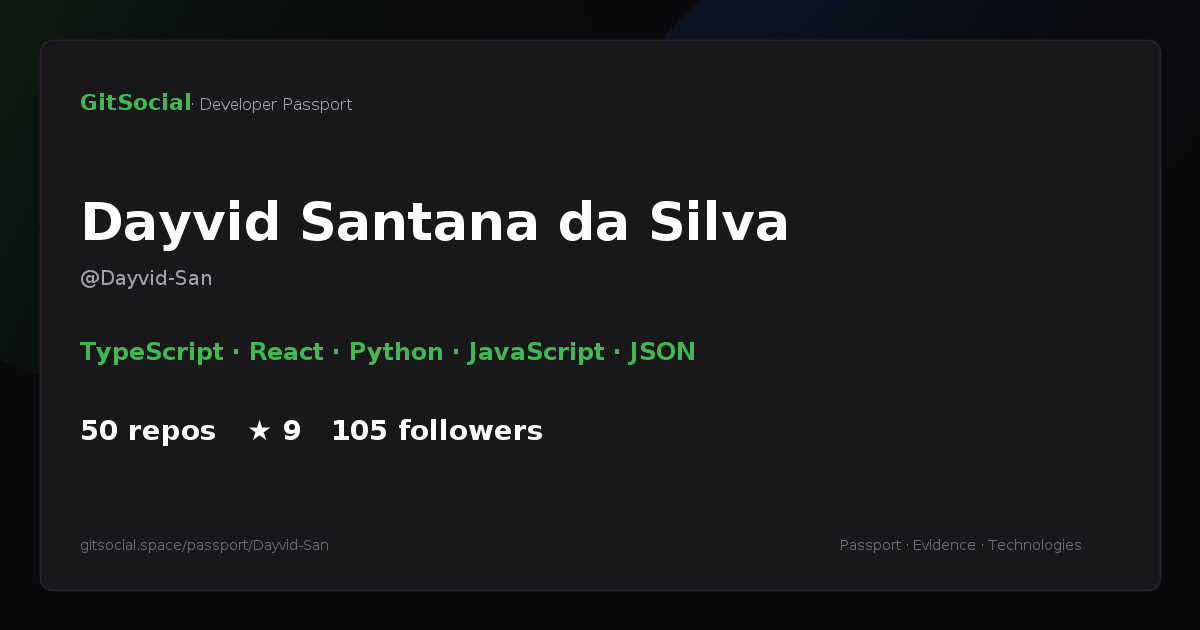
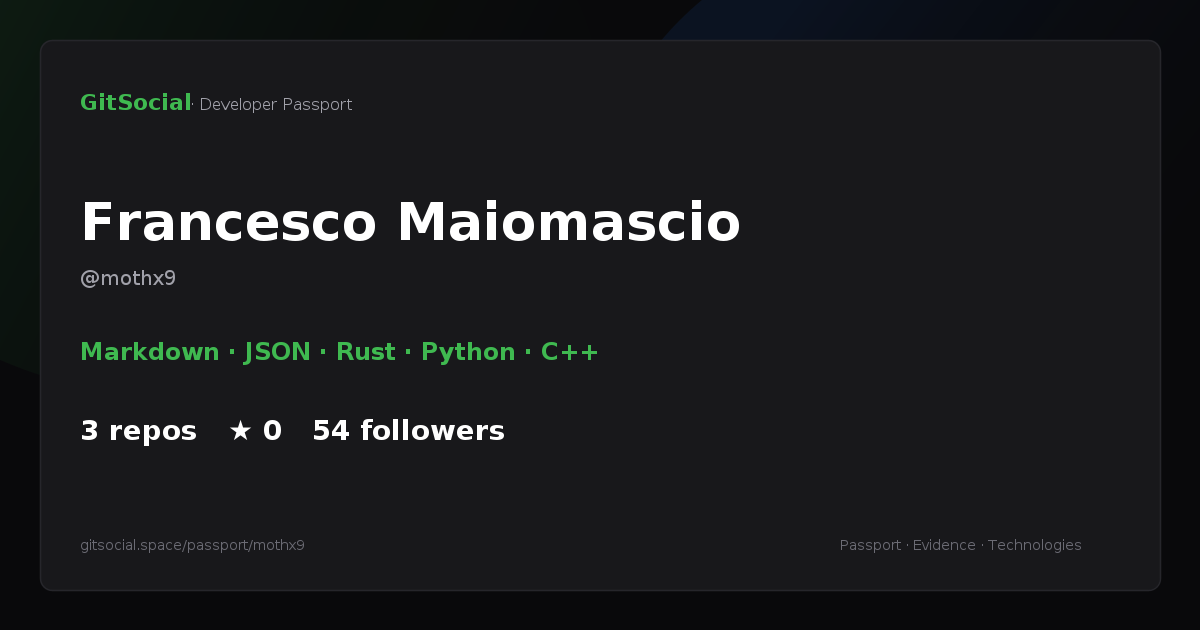
Discover GitHub developers by technical signals, not popularity. Match by stacks, topics, activity, engineering practices, and verifiable repository evidence
Want a Developer Passport for any GitHub profile?
Paste the profile → get a one-page technical passport based on public GitHub data.
Free. No sign-up.
https://t.co/VPzK8q05Re
#gitsocialspace#gss#dev
The philosophy is simple: if you want to know what a developer does, look at the code — not the biography they wrote about it
#GitSocialSpace#developer
@framaiomascio Thanks for pointing out this limitation. You're absolutely right — at the moment, the analysis only covers a developer's own public repositories.
We're working on a more complete view of contributions, including organizational work. This will be introduced in future iterations.
Hiring doesn't lack data. It lacks reading time.
Public GitHub history is full of signals: languages used, practices demonstrated, shipping cadence.
GitSocialSpace automates the reading, not the judgment.
Passports summarize. Humans decide.
We believe developers should be judged by what they build. Which is unfortunate news for developers who only update their LinkedIn headline
#GitSocialSpace#dev#hiring
@zavxai This is a strange question. You haven't specified the system requirements or development constraints. The stack should follow the problem, not the other way around
@mayuri_3015 The answer depends on what broke. 10x traffic alone doesn't tell you whether the bottleneck is the DB, backend, cache, or infrastructure. Find the bottleneck first.
Your resume gets 7 seconds. Your GitHub deserves more.
Years of real work get compressed into two pages and a list of adjectives.
Your commits already show what you build, how you work, and what you ship.
GitSocialSpace turns that work into an evidence-linked Developer Passport.