check out our new manuscript (led by @GMarcoVisani)
structure-based machine learning model for TCR-pMHC complexes, predicting T-cell affinity to peptide-MHC complexes, quantifying T-cell receptor specificity, and designing de-novo immunogenic peptides:
https://t.co/FdrAlwosk8
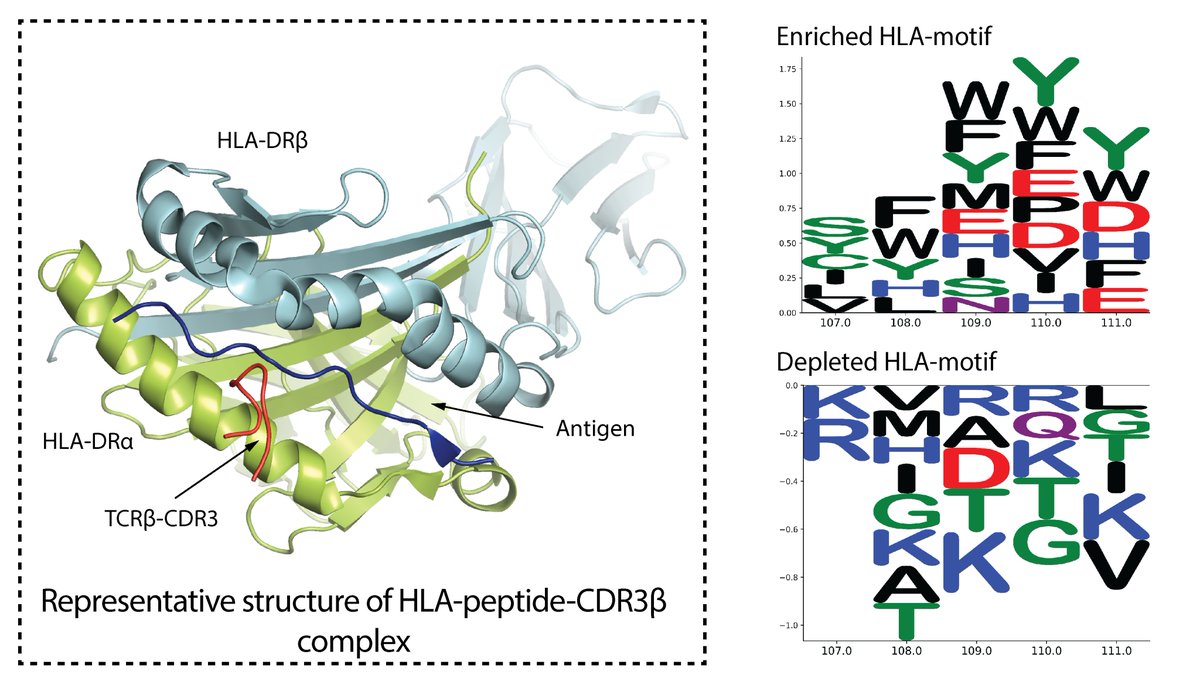
Happy to share our new collaborative work! 🚨 We analyzed 2250 TCR repertoires to uncover how HLA risk alleles shape immune autoreactivity in T1D. T1D-specific HLA-motifs were also validated in sorted pancreatic lymph nodes (pLN) & spleen cohorts. 🧬🧵 #T1D#Immunology#TCR 1/9
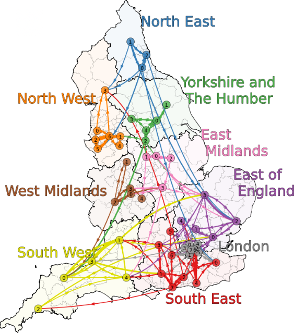
After a long and winding odyssey, excited to finally drop anchor in open-access waters. This preprint shows how neutral allele frequency time series can illuminate disease transmission rates between communities— key for epidemic fore- & backcasting. https://t.co/BZiluaKMWI 🧵
@airr_community@victorgreiff This work wouldn’t be possible without the help and support of my supervisors @TheArmita, Thierry Mora, and Aleksandra Walczak—thank you!
Curious about generative modeling for T and B cell receptor repertoires and its role in understanding immune system diversity? Watch my talk here https://t.co/a4L1Ov3LsX.
Thanks to the @airr_community and @victorgreiff for the opportunity to share our work!
Excited for another virtual AIRR-C seminar with @solefroni and @giulioisacchini (Sept 26, 1600 CET). https://t.co/OU0SDMFg7p Direct registration link: https://t.co/pBzugfPQ20
check out our new work on composition of T cell repertoires during thymic selection.
led by @giulioisacchini, with Thierry Mora, Aleks Walczak, @mariottienca and Klatzmann Lab
I am excited to present this work, result of a 4-year big collaborative project: https://t.co/zb79BH9iz1 #MachineLearning a transferable bottom-up protein force field, trained on force data from over all-atom MD simulations, using physical priors and graph neural networks.🧵⬇️
🧵Excited to share that we @Dyno_Tx have launched our 2nd product Dyno eCap 1, a generative AI designed protein validated extensively in nonhuman primates, as a breakthrough capsid with potential to solve the delivery challenge for variety of eye diseases. https://t.co/iLBhCPCT4V
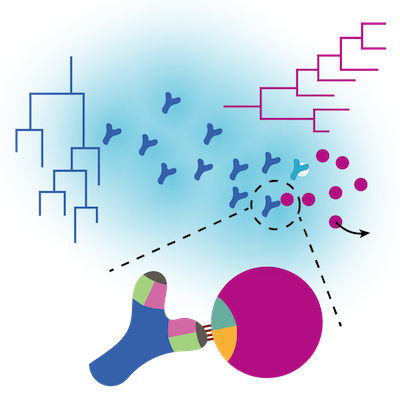
In PRX Life’s debut Perspective, Thierry Mora and Aleksandra Walczak from @LP_ENS_ argue that recent data, controlled experiments, and theory are converging to change our understanding of antibody-viral coevolution.
Check it out: https://t.co/fx5Hoh9TwH
#WeekendReads
Lastly, we demonstrate that thymic selection acts on a relatively smooth sequence space, in contrast to the classical view in immunology that suggests a selective depletion of "forbidden regions” in the sequence space during thymic development.
Happy to share our latest research on the local and global composition of T-cell receptor repertoires during thymic development in humans with @TheArmita, T. Mora, A.Walczak, @mariottienca, and Klatzmann lab https://t.co/awn8XfDAgS
Repertoires become less diverse during thymic development, accompanied by the rise of highly populated local neighborhoods in the sequence space. Remarkably, our repertoire-wide global selection models fully predict statistics of these local sequence neighborhoods
1. ENTER #mRNAvaccines for #pancreaticcancer! Long-term #PDAC survivor story PART3.
"Do #PDACs REALLY have vaccine neoantigens (NAs)"? (aren’t they lowly mutated?)
If each patient = own NAs, how do you vaccinate?
Maybe mRNA? But how?
@Nature https://t.co/d1SgGgdVHq
👇🏽 [1/32]
New preprint on @biorxivpreprint! We investigated the potential for microbial communities to regenerate ecological diversity following species removal, and we found a couple surprises! 🧵👇
https://t.co/3UPntzdbGY