Founding Director Olayan Center for Cancer Vaccines @MSKCancerCenter | Cancer Surgeon-Scientist | Pancreas cancer | Cancer immunology | 2x dad, 2x ironman
🚨 A new cancer vaccine appears to significantly improve survival in people in remission from acute myeloid leukemia (AML), according to new results from a phase 3 clinical trial.
The vaccine, galinpepimut-S (GPS), is an “off-the-shelf” vaccine invented by MSK leukemia specialist and physician-scientist Dr. David A. Scheinberg (@DASLab_MSKCC). In the trial of 126 patients, it reduced the risk of death by 41%. Median overall survival was 24.0 months with the vaccine compared with 14.7 months for patients on standard treatments.
“These data bring us closer to having the first off-the-shelf vaccine for AML patients." Learn more: https://t.co/p6v6KGdYoB
✨ Excited to share new work in @NatureGenet, with next-door neighbor @SohrabShah! Our labs – led by @nceglia; @GreedyApple; Zach Sethna; and @elhanati_yuval - applied information theory and probabilistic modeling to the question of how T cell dynamics changes in response to immunotherapy, particularly coupling between a T cell's T cell receptor (TCR) and its phenotypic state.
T cell responses are critical to cancer immunotherapies. Their behavior is often strongly influenced by their TCR, which directly engages with antigens presented on the cell surface. How clonal the sequenced TCR repertoire is in a dataset has been used to understand response – TCRs that recognize an antigen multiply – but its often a noisy measure, and we wanted to extend this logic to single-cell data in an eqiposed way. Information theory offers a solution.
The specific question of how information is propagated between the TCR and its phenotypic state also becomes a general way to probe genotype-phenotype mapping. The mutual information between receptor and state - that is how much knowing about one tells you information about the other - and how that changes can then be used to probe therapeutic response. Given data sparsity this becomes a problem in probabilistic inference – which was addressed here via a cool hierarchical Bayesian framework led by @GreedyApple & @nceglia.
A flux in phenotype and stronger mutual information post-treatment was associated with response to immunotherapy. In non-responders, therapy did not improve poor communication between TCR and phenotype. Hence information dynamics can be used to measure response.
We are already collectively using this approach across many, many projects. We use variants to analyze vaccine data with @TheVinodLab at the Olayan Center for Cancer Vaccines @MSKCancerCenter, in multiple projects with @break_cancer, throughout the Halvorsen Center @CompOncMSK, and elsewhere. It was a lot of fun and we hope you enjoy! Code link included! 👇 👇 👇
https://t.co/mB7QQLNipv
There's a lot of buzz around mRNA #cancervaccines, but how do they actually work?
These vaccines help train your body’s immune system to recognize the unique genetic signature of cancer cells. Once activated, the immune system can:
🔹 Target and attack cancer cells while helping spare healthy cells
🔹 Work alongside other cancer treatments
🔹 Create a lasting immune response that may help prevent cancer from returning or spreading
📽️ Hear more from Dr. Vinod Balachandran (@TheVinodLab), Director of the Olayan Center for Cancer Vaccines at MSK, about what patients should know about experimental mRNA cancer vaccines.
Today in @Cancer_Cell with @bengrbm
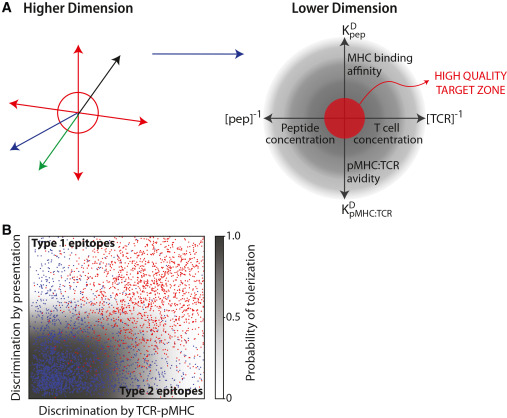
What are Basic Rules to Select Neoantigens?
“The Neoantigen Quality Model: Is Closer to Self More Non-Self?
https://t.co/N5sk2gQAzN
Tweet 🧵👇🏾
Implication:
Possibly many from biology to therapy....
Obvious use case is to select NAs for personalized therapies like cancer vaccines and immunotherapies
Exciting to see these principles in use in modern #RNA cancer vaccines!