@joefrancis505@policytensor IMO this is a problem with the current system. Funders and journals should require data and replication packages _before_ submission.
@MMCOWRD I don't subscribe to WSJ, but I just want to let you know that we already do public peer review at https://t.co/DLVL9zBUeO with our output at https://t.co/4kItDpmsNM, and linked to bibliometrics.
(Note, it has other features I do find useful, like helping you listen to a music track behind a spoken track or audiobook, and you can have both in both ears if you like. And there are more features in the works.)
Did you ever want to listen to different audio in each of your earbuds?
No, me neither, but I bet a lot of unusual people do. My cousin Daniel Shuldman just launched an app for this:
https://t.co/Dt7Wm8ia79
"Two streams. One mind."
https://t.co/ck6tDvsCwM
Unjournal online workshop on using wellbeing measures for prioritizing LMIC interventions.
March 16. Some slots still available.
#econtwitter
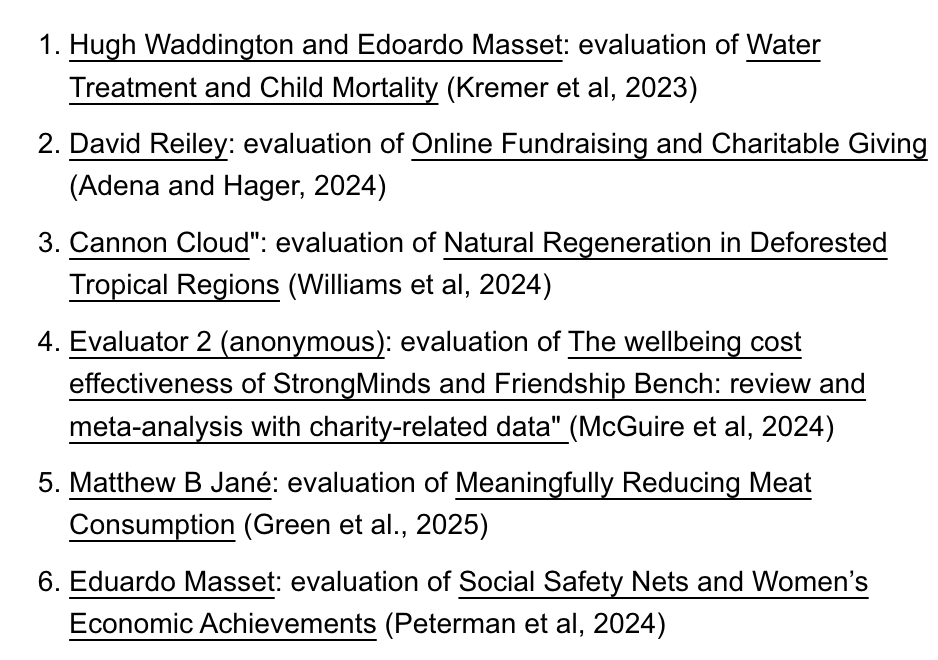
The Unjournal's 2024-25 Evaluator Prizes announced!
Recognizing 8 of 80+ expert peer reviewers for outstanding public evaluation work.
$6,500 in prizes.
→ https://t.co/5nXrdIN1nN
This interested me! and GiveWell (https://t.co/PvdMDXzEAD)! But I was also skeptical. Thankfully I'm an evaluation manager at The Unjournal (https://t.co/e6XedB7JlW), where we do open evaluations of impactful research, so we evaluated it.
@ryancbriggs https://t.co/aLUVimcbzK proposed policy on AI use -- eager for feedback
https://t.co/S3TMb0obBX
Sketching out AI use policy, tools and suggestions in a draft of our new evaluation form here: https://t.co/cTHLLK59aJ
Love any suggestions/feedback! Thanks
I've noticed when submitting peer reviews that some journals now have a box you have to check that pledges that you didn't use AI when doing the review. This seems dumb to me. I do use AI when I do peer reviews. I do the following:
1. Write my review as I always have,
2. Upload the paper to a frontier model and ask it to do a review as well. (I have settings set up so this data is not retained e.g. for training),
3. I compare the LLM review against mine, and I add to mine things that the LLM caught that I did not if such things exist.
I think this produces a strictly better peer review.
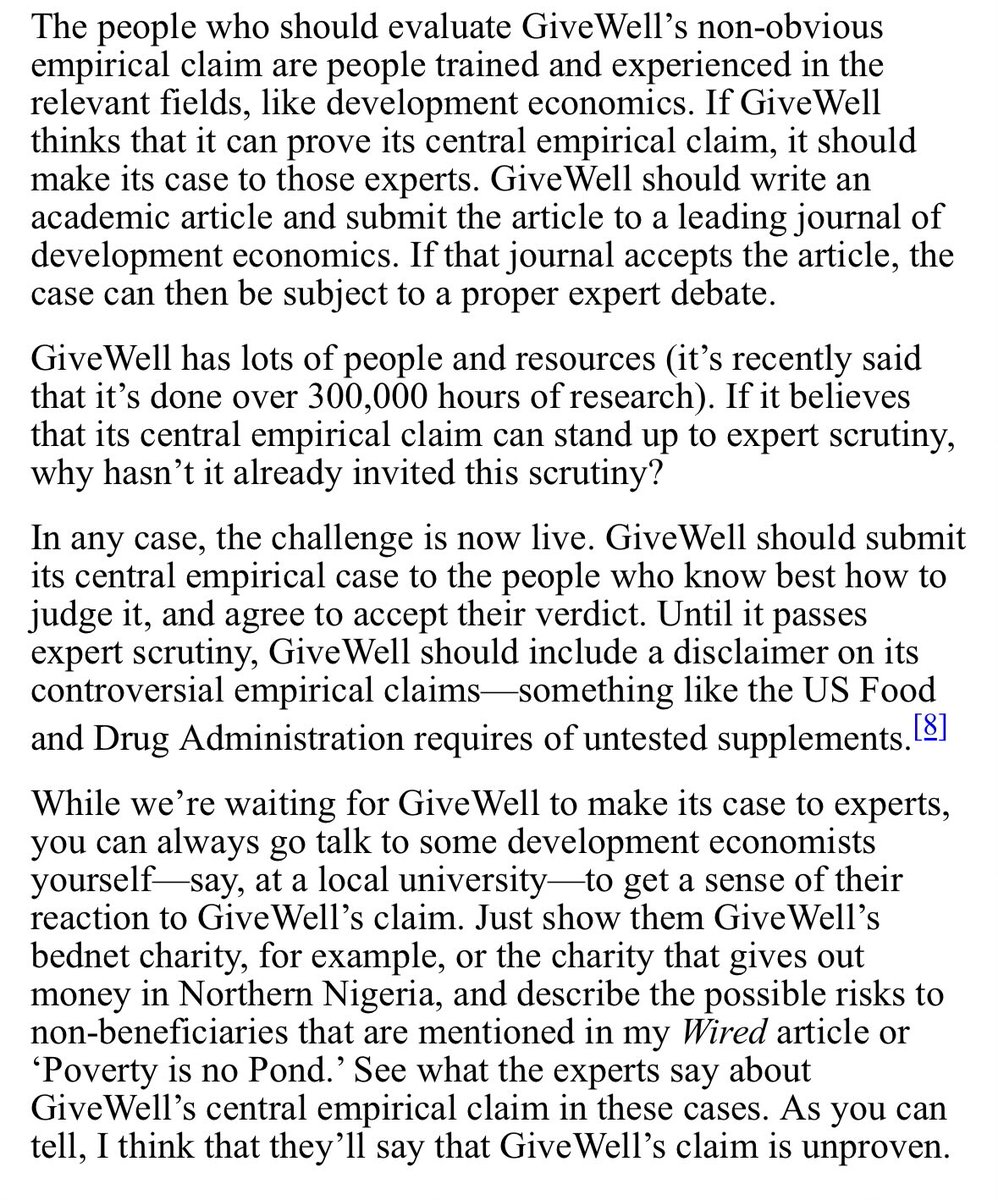
GiveWell literally funded research by a Nobel prize winning development economist on a question GW cared about. They then flagged it for an open peer review process (https://t.co/0cUp4XQoJR). And yet Leif writes this 👇
@ahall_research Exactly. We’ve been encouraging living dynamic research formats like this at https://t.co/aLUVimcbzK.
You can submit research — in any format— for expert public evaluation and rating.
And improve the research in the same place and get it reevaluated.
@ryancbriggs Have you tried using Claude code in the terminal? I've been using that one extensively but I'm wondering whether cowork offers any advantages over that (other than the more attractive interface/fonts, the ability to see visuals within a browser, etc. )
Unjournal pays "reviewers" for their work: https://t.co/psjAxLx8c1 Avg: $450/$350 per eval in base + bonuses + prizes.
2024-awards: they want your feedback – which evaluations merit the top award, and why? Total prize pool: $6600
https://t.co/9FA1jiAmn1
@KhoaVuUmn@Isa_DiFilippo With respect to the authors (Wooldridge is usually on the money), that one always seemed like "excuses not to do weighting" to me. It didn't seem fully fleshed out.
See details on how to join The Unjournal evaluator pool or get involved in other ways: https://t.co/tbIFES7wci
Thread continues on Bluesky: https://t.co/Wug0iRSwO8