एकमक्षरं हृदि निरन्तरं भासते स्वयं लिख्यते कथम्....
The golden words of Bhagawan Ramana in the voice of MS Subbulakshmi.
That's the sloka on my header image on twitter. 😀🙏
I’m not sure why I paused on this clip when it appeared on my timeline.
I don’t even know the name of the dance form (apparently it’s from Saurashtra) but it shows a grandfather teaching his grandson the steps.
Yes, the dance itself is wonderful. Full of energy, joy and life. The kind that makes you want to join in.
But what really drew me in was what this clip symbolised: the passing on of tradition, rhythm and memory from one generation to the next.
In today’s uncertain world, I found that strangely comforting. That not everything around you will change.
It was a reassurance of continuity.
#MondayMotivation
When legendary Manna Dey was asked to sing non-Bengali song…
He chose Gujarati folk song “Helo Maro Sambhalo”!
Observe his pronunciation of ણ and ળ. More clear than of many Gujaratis.
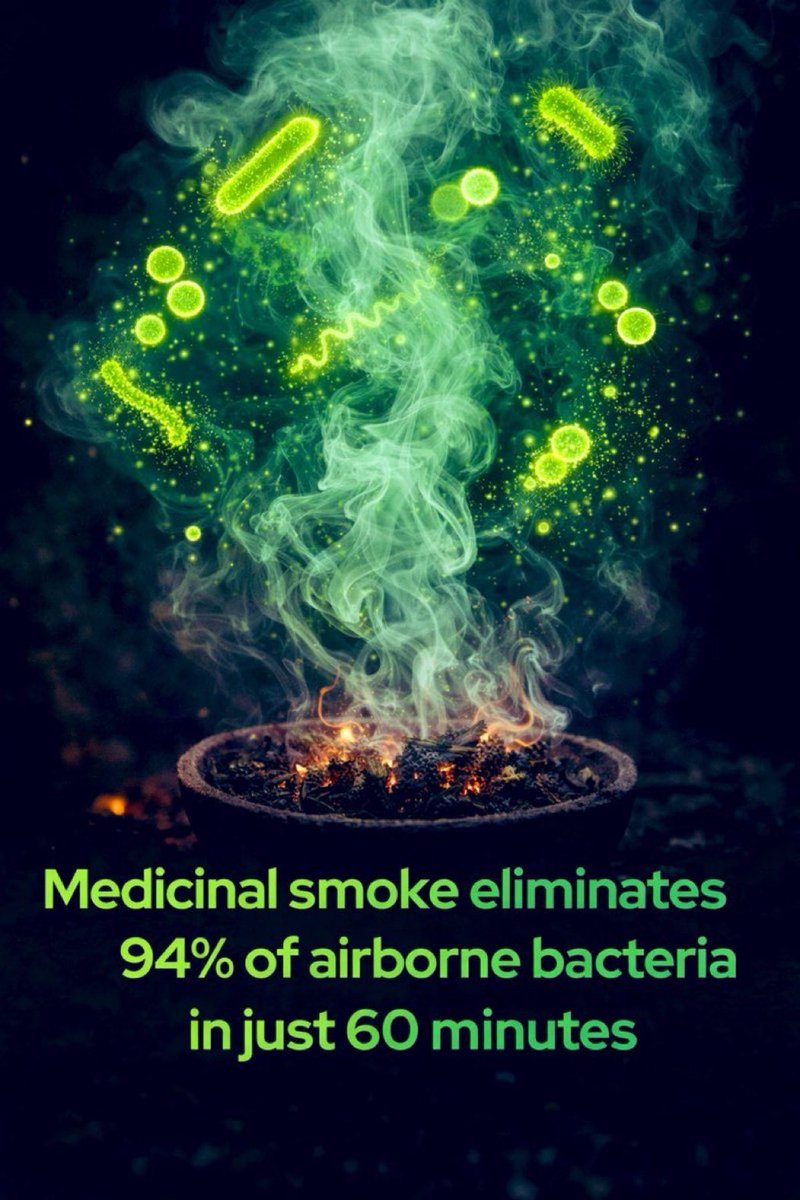
Smoke can clean the air better than some chemicals.
A study published in the Journal of Ethnopharmacology analyzed the effects of "medicinal smoke" - specifically the combustion of wood and a mixture of odoriferous and medicinal herbs - on airborne pathogens. The goal was to see if natural smoke could function as an atmospheric sterilizer.
The findings were significant.
The researchers treated a closed room with this medicinal smoke for one hour. They found that it didn't just mask odors; it decimated the bacteria. Within 60 minutes, there was a 94 percent reduction in bacterial counts.
Even more surprising was the longevity of the effect.
While chemical sprays often evaporate or dissipate quickly, the smoke treatment maintained a cleaner environment for 24 hours in a closed room. In an open room, specific pathogenic bacteria
- including Staphylococcus lentus and Enterobacter aerogenes were completely absent even 30 days after the initial treatment.
This indicates that the smoke possesses strong bactericidal properties, capable of eliminating diverse plant and human pathogens within a confined space. It challenges the modern assumption that air quality is only improved by filtration,
This modern data validates a practice that dates back thousands of years.
Indigenous cultures worldwide have long used smoke for purification. In India, the havan ritual involves burning specific herbs to purify the environment, while Aboriginal Australians have performed "smoking ceremonies" for roughly 60,000 years to ward off bad spirits and cleanse the land.
Read the study:
"Medicinal smoke reduces airborne bacteria." Journal of Ethnopharmacology, 2007
Una investigación en Finlandia encontró que simplemente cambiar en qué juegan los niños puede influir rápidamente en su sistema inmunológico.
Los científicos rediseñaron partes de los patios de juego de guarderías reemplazando la grava y el asfalto por materiales naturales del bosque, suelo, musgo, hojarasca y plantas nativas, para que los niños se expusieran a los microbios presentes en la naturaleza.
Después de solo 28 días, surgieron claras diferencias biológicas.
Los niños que jugaron en estos espacios “re-salvajizados” desarrollaron una mezcla más rica de microbios en su piel y en su intestino.
También mostraron niveles más altos de células T reguladoras, que ayudan al cuerpo a manejar la inflamación y reducir el riesgo de reacciones inmunológicas excesivas como las alergias.
Estos cambios no se observaron en los niños que permanecieron en superficies de patios de juego convencionales.
Los hallazgos respaldan la hipótesis de la biodiversidad, la idea de que el contacto limitado con entornos naturales, especialmente en la vida urbana, puede estar relacionado con el aumento de alergias y condiciones autoinmunes.
Lo que destaca es cuán simple fue la intervención. Esto no fue una exposición extrema al aire libre, solo juego cotidiano en un entorno más natural.
Incluso el contacto pequeño y regular con el suelo y la vegetación parece moldear el ecosistema interno del cuerpo y cómo se desarrolla el sistema inmunitario.
The distinctive golden glow of a Nataraja idol is the result of a forgotten metallurgical genius.
The Manasara (ancient architectural treatise) specifies that for an idol to have Tejas (radiance), the proportions must be exact. While Panchaloha literally means 5 Metals, it is not a 20% split of each.
The classical ratio for a high-quality Chola-style bronze is:
Copper (Tamra): 80-85% (The Body)
Tin (Trapu): 10-15% (The Strength/Ring)
Lead (Naga): 3-5% (The Fluidity)
Silver (Rajata): Trace/Small amount (The Luster)
Gold (Suvarna): Trace/Small amount (The Spiritual Purity/Tejas)
The addition of Lead was the Chola hack. Bronze is notoriously difficult to pour into thin molds cos it cools too fast. The lead acted as a surfactant, reducing the surface tension of the molten metal so it could flow like water into the mm-thin spaces of the Nataraja's hair (Jata) & jewelry.
So, the glow is not just from the trace gold; it is a result of the interstitial alloy physics. The silver & gold atoms sit in the gaps of the copper-tin lattice, changing how the surface reflects light. This creates a warm reflection rather than the cold metallic reflection of standard bronze.
When was the last time Indian football got this much positive global attention? I honestly can’t remember.
So proud of Manisha Kalyan. Her free-kick vs Chinese Taipei is going viral everywhere 🇮🇳⚽️
#IndianFootball#ManishaKalyan
The Nandas have been called the 'First Empire Builders of India.
From Beas to Bengal and Kalinga, their vast empire dominated the Indian landscape for at least 5 decades.
They were exceedingly rich; their prosperity listed in the Sangam poetry, to as far as Greece.
They taxed gums, wood, trees, and even stones.
Katha-saritsagara mentions 990 million gold pieces of the Nandas.
Sangam poetry mentions Dhana-Nanda having buried his treasure in an excavated rock near the Ganga.
Cyropaedia mentions " an exceedingly rich king of India, who wanted to solve the affairs of West Asia."
🚨 BREAKING: Researchers at UW Allen School and Stanford just ran the largest study ever on AI creative diversity.
70+ AI models were given the same open-ended questions. They all gave the same answers.
They asked over 70 different LLMs the exact same open-ended questions.
"Write a poem about time." "Suggest startup ideas." "Give me life advice."
Questions where there is no single right answer. Questions where 10 different humans would give you 10 completely different responses.
Instead, 70+ models from every major AI company converged on almost identical outputs. Different architectures. Different training data. Different companies. Same ideas. Same structures. Same metaphors.
They named this phenomenon the "Artificial Hivemind." And the paper won the NeurIPS 2025 Best Paper Award, which is the highest recognition in AI research, handed to a small number of papers out of thousands of submissions.
This is not a blog post or a hot take. This is award-winning, peer-reviewed science confirming something massive is broken.
The team built a dataset called Infinity-Chat with 26,000 real-world, open-ended queries and over 31,000 human preference annotations. Not toy benchmarks. Not math problems.
Real questions people actually ask chatbots every single day, organized into 6 categories and 17 subcategories covering creative writing, brainstorming, speculative scenarios, and more.
They ran all of these across 70+ open and closed-source models and measured the diversity of what came back. Two findings hit hard.
First, intra-model repetition. Ask the same model the same open-ended question five times and you get almost the same answer five times.
The "creativity" you think you're getting is the same output wearing a slightly different outfit. You ask ChatGPT, Claude, or Gemini to write you a poem about time and you keep getting the same river metaphor, the same hourglass imagery, the same reflection on mortality.
Over and over. The model isn't thinking. It's defaulting to whatever scored highest during alignment training.
Second, and this is the one that should really alarm you, inter-model homogeneity. Ask GPT, Claude, Gemini, DeepSeek, Qwen, Llama, and dozens of other models the same creative question, and they all converge on strikingly similar responses.
These are models built by completely different companies with different architectures and different training pipelines.
They should be producing wildly different outputs. They're not. 70+ models all thinking inside the same invisible box, producing the same safe, consensus-approved content that blends together into one indistinguishable voice.
So why is this happening? The researchers point directly at RLHF and current alignment techniques. The process we use to make AI "helpful and harmless" is also making it generic and boring.
When every model gets trained to optimize for human preference scores, and those preference datasets converge on a narrow definition of what "good" looks like, every model learns to produce the same safe, agreeable output. The weird answers get penalized.
The original takes get shaved off. The genuinely creative responses get killed during training because they didn't match what the average annotator rated highly. And it gets even worse.
The study found that reward models and LLM-as-judge systems are actively miscalibrated when evaluating diverse outputs. When a response is genuinely different from the mainstream but still high quality, these automated systems rate it LOWER. The very tools we built to evaluate AI quality are punishing originality and rewarding sameness.
Think about what this means if you use AI for brainstorming, content creation, business strategy, or literally any task where you need multiple perspectives. You're getting the illusion of diversity, not the real thing.
You ask for 10 startup ideas and you get 10 variations of the same 3 ideas the model learned were "safe" during training. You ask for creative writing and you get the same therapeutic, perfectly balanced, utterly forgettable tone that every other model gives.
The researchers flagged direct implications for AI in science, medicine, education, and decision support, all domains where diverse reasoning is not a nice-to-have but a requirement.
Correlated errors across models means if one AI gets something wrong, they might ALL get it wrong the same way. Shared blind spots at massive scale.
And the long-term risk is even scarier. If billions of people interact with AI systems that all think identically, and those interactions shape how people write, brainstorm, and make decisions every day, we risk a slow, invisible homogenization of human thought itself. Not because AI replaced creativity.
Because it quietly narrowed what we were exposed to until we all started thinking the same way too.
Here's what you can actually do about it right now:
→ Stop accepting first-draft AI output as creative or diverse. If you need 10 ideas, generate 30 and throw away the obvious ones
→ Use temperature and sampling parameters aggressively to push models out of their comfort zone
→ Cross-reference multiple models AND multiple prompting strategies, because same model with different prompts often beats different models with the same prompt
→ Add constraints that force novelty like "give me ideas that a traditional investor would hate" instead of "give me creative ideas"
→ Use structured prompting techniques like Verbalized Sampling to force the model to explore low-probability outputs instead of defaulting to consensus
→ Layer your own taste and judgment on top of everything AI gives you. The model gets you raw material. Your weirdness and experience make it original
This paper puts hard data behind something a lot of us have been feeling for a while. AI is getting more capable and more homogeneous at the same time.
The models are smarter, but they're all smart in the exact same way. The Artificial Hivemind is not a bug in one model. It's a systemic feature of how the entire industry builds, aligns, and evaluates language models right now.
The fix requires rethinking alignment itself, moving toward what the researchers call "pluralistic alignment" where models get rewarded for producing diverse distributions of valid answers instead of collapsing to a single consensus mode.
Until that happens, your best defense is awareness and better prompting.
Witness the divine Panchudola Yatra of Maluda, Puri ⛳️⛳️
This 150-year-old Yatra is a 3-day festival celebrating Radha–Krishna, where 24+ villages bring decorated Bimana (palanquins) across Chilika Lake to Maluda
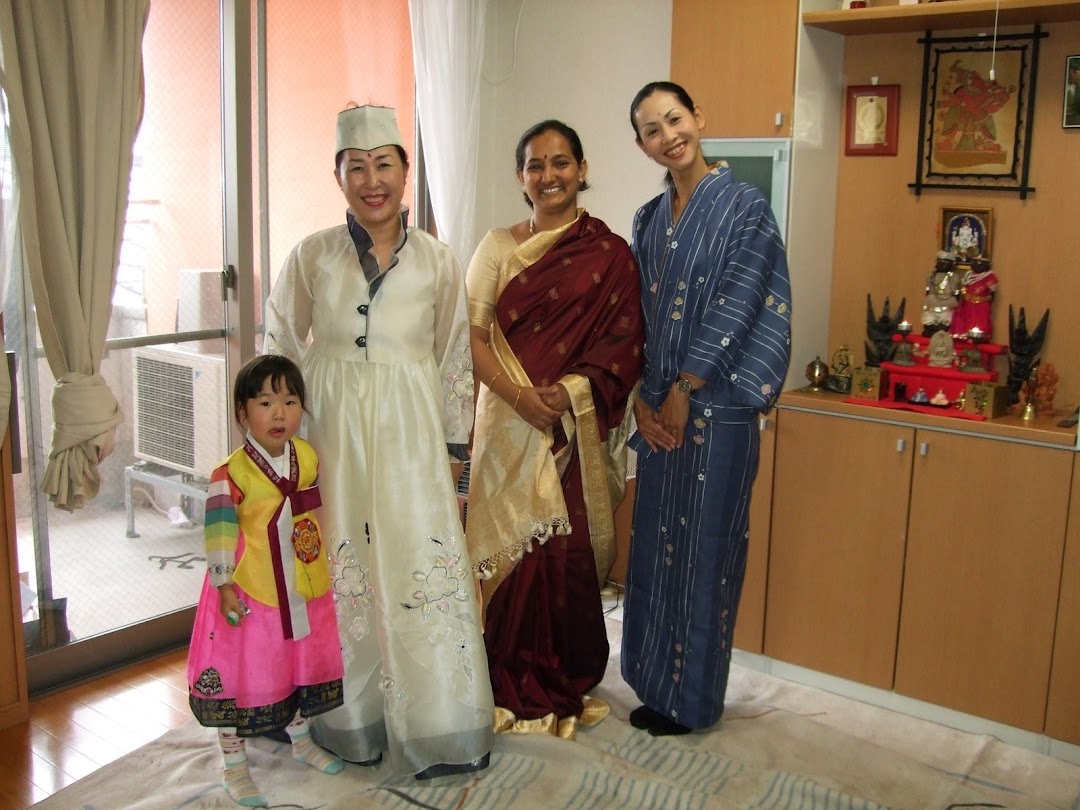
When we lived in Japan, I had invited a few friends for Navaratri. I had kept a small Golu. They were amazed at how similar golu was to Hina matsuri.
Some ladies showed up in their traditional best, Japanese and Korean.
I gave haldi kumkum & a traditional south Indian lunch.
Two days ago in Telangana’s Jayashankar Bhupalpally district, they found a statue of Chennakeshava Swamy estimated to be older than 700 years, it is 5 feet and seems to be from Hoysala architecture!
Born in TN to telugu parents & forefathers, who migrated from the Sircar region of AP, Telugu is mother tongue, Tamil is father tongue, studied Sanskrit & Hindi in school & college, while Kannada & Malayalam were social tongues due to friends, listening to my fathers Rabindro sangeeth HMV records collection at home, visiting Gujarat due to my uncle, and growing up studying in #NLC with friends & classmates from all over India 🇮🇳. every language was so nice to know a little & speak in broken sentences . No one would take offence, rather strengthened bonds over 50 yrs enjoying the unity in diversity.