Trump’s push for government ownership in private companies is setting a precedent Democrats are already following.
State capitalism doesn’t become free-market policy just because a Republican does it.
https://t.co/A4PcqxfEPI
Jeffrey Westling: A Floppy-Disk Fund for a Broadband World
The USF faces mounting financial and legal challenges, prompting calls for Congress to overhaul its outdated funding model
https://t.co/kQOy3tAUxE
Personalized pricing can help rivals win customers. Charging buyers different amounts can spread fixed costs and lower existing customers’ bills.
As the FTC scrutinizes the practice, @BrianCAlbrecht explains why price discrimination need not be anticompetitive. 🔗⬇️
Personalized pricing is an area that needs some rigorous NON-populist empirical examination. Some people wrongly think it is inherently harmful. Consumer effects can be either positive or negative, depending on the circumstances. https://t.co/XwBYOZ9jfi
Would-be offenders need to believe that law enforcement is taking these malicious attacks seriously: police need to investigate attacks and work with service providers, and prosecutors & courts need to see charges through.
New Maryland Law Protects Communications Infrastructure
Maryland now includes telecommunication damages as a misdemeanor offense.
https://t.co/a7fTz52TiG
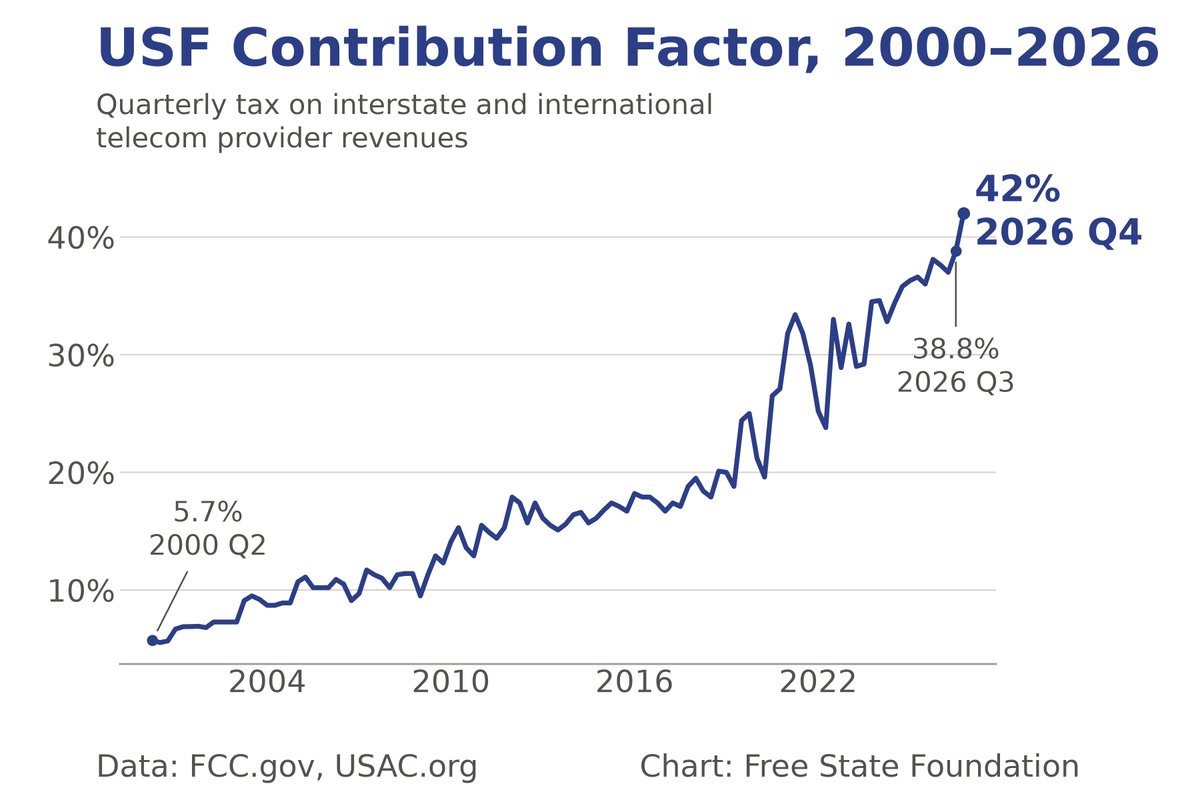
Yes! The rising USF tax (42% now) is a key symptom that the USF funding model is outdated. USF needs a major overhaul - without taxing your internet bill. Op-ed: "A program designed to expand internet access shouldn’t make service harder to afford."
My latest op-ed on the future of USF is live! With another court challenge succeeding in the 5th circuit and ongoing reform efforts on the hill, I argue it's time to wind down the program entirely rather than continue to patch it for broadband. @LawEconCenter
When it comes to data centers, America needs policies driven by free markets, not bureaucratic mandates.
That’s why a coalition of organizations dedicated to limited government and protecting the free market has issued a statement of principles to ensure that the United States continues to lead the world on data center infrastructure.
Here's more from @GoldwaterInst, @abundanceinst, @PacificLegal, @Protectaxpayers, @JmsMadisonInst https://t.co/AJkNrOePEB
But policy is only as good as enforcement here. Law enforcement must be fast to investigate and prosecute as well as cooperate with service providers to exchange information about new crimes. Providers are already doing their part.
A more measured policy approach ala Maryland—a low maximum sentence for a communications-specific criminal offense—could signal to would-be criminals that law enforcement takes these attacks seriously.
Looks like Michigan won't enact a digital ad tax this year. Hopefully Maryland's court losses discourage the MI legislature for years to come! Ads help people browse websites free of charge. https://t.co/0RZgfZELKg
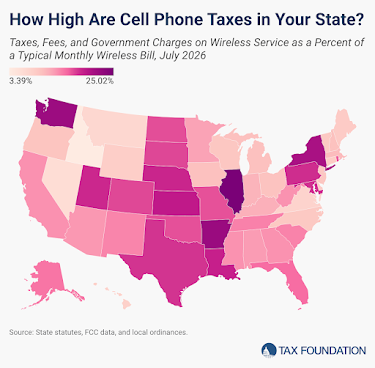
Wireless taxes are way too high and suppress consumer demand, especially for lower-income persons. @gkathysanchez@TaxFoundation@FCC
https://t.co/xW9kCot63B
Wes Moore wanted to ‘supercharge’ Maryland data centers. Now amid shifting politics around the issue, he’s changing course, @adampwillis & @WintrodeBrenda report https://t.co/GO2HDLbP7P
Next week, telephone service revenues will be taxed at 42% – to fund broadband subsidies. My blog post calling for congressional reform https://t.co/XJhu2qNjBt