@theskindoctor13 Directed and produced by Prosit Roy Co directed and written by Anusha Nandakumar and Sandeep Saket.
I believe in non violence, but people like these make me want to break that rule just long enough to https://t.co/IDxBOdZUKF them with a slipper.
@theskindoctor13 They even changed the criminal's surname from "Singh" to "Bhide" a Maharashtrian Brahmin surname. The case has absolutely no connection to Maharashtra, yet they deliberately chose a Maharashtrian Brahmin identity for the character.
The 1978 Ranga-Billa case involved the brutal kidnapping and murder of teenage siblings Geeta and Sanjay Chopra in Delhi by career criminals Kuljeet Singh (Ranga) and Jasbir Singh (Billa).
The horrific crime shocked the nation, leading to a massive manhunt and the swift conviction of both killers, who were ultimately hanged in 1982.
The investigation was led by Inspector VP Gupta of the Delhi Police, with SI Ram Chander serving on the team. A bystander, who had tried to save the children, and later helped the police identify the killers by providing their descriptions was Babulal. The journalist who covered the case was Prabha Dutt.
Amazon Prime's series Raakh, which is based on this incident, replaces Inspector VP Gupta with SI Jayprakash Jatav, explicitly portrayed as a Dalit officer navigating institutional bias. Furthermore, SI Ram Chander is replaced by SI Javed Murtaza, Babulal by Saleem, and Prabha Dutt by Nisar, while a lazy hawaldar character named Mishra has been added to the narrative.
This isn't creative liberty. Creative liberty is meant to enhance a story, not distort historical facts to fit a specific ideological agenda. Another stark reminder of how easily history can be rewritten in plain sight under the convenient guise of creative freedom.
Why is it that @DubaiAirports which handles millions of passengers each year not expect passengers to unpack all hand luggage and laptops at security check while the average Indian airport can't handle fewer people the same way? @BLRAirport
I think India has completely misread the biggest economic shift of the last decade.
Unfortunately the Government of India has failed. Not marginally. Not partially. It has failed in a big way.
For years we have been told that India is the fastest-growing large economy in the world. That our demographics are unmatched. That our consumption story is intact. That global investors cannot ignore us.
Yet look at what has actually happened.
Over the last 4–5 years the world witnessed one of the biggest reallocations of capital in modern history.
Trillions of dollars moved.
The US attracted capital into AI. Taiwan became the semiconductor capital of the world. South Korea became a key beneficiary of the memory and AI boom. Vietnam emerged as a manufacturing destination. Singapore strengthened its position as Asia's capital hub. UAE became a magnet for global entrepreneurs and family offices.
And India?
India largely watched from the sidelines while continuing to sell the same consumption story.
The numbers tell the story.
Net FDI inflows into India have fallen sharply from their peak years.
Private equity activity has slowed materially.
Venture capital funding is a fraction of what it was during the 2021 cycle.
Foreign investors have been net sellers for prolonged periods.
And despite all this there seems to be very little introspection within the system..
Instead every explanation sounds familiar.
"It's a global issue."
"It's temporary."
"It's an AI bubble."
"It's because of interest rates."
At some point we need to stop explaining away reality.
Capital does not care about narratives.
Capital follows opportunity.
And we failed to create enough of it.
China built manufacturing ecosystems that are still decades ahead of us. America built the world's most powerful innovation engine. Taiwan built the semiconductor backbone of the digital economy.
India built compliance.
Ask any foreign investor.
They worry about:
* tax uncertainty
* regulatory complexity
* currency depreciation
* capital movement restrictions
* compliance burden
* endless approvals
These are not ideological issues. These are execution failures.
What makes this even more worrying is that India continues to depend heavily on a consumption-led growth model.
But where does that consumption come from?
A large part comes from:
* salaried professionals
* IT employees
* financial services
* real estate-linked employment
* urban middle class spending
Now look at what AI is doing.
Whether people like it or not this is no longer a passing theme.
It is already reshaping hiring.
It is already reshaping productivity.
It is already changing how businesses think about incremental headcount.
If India misses this wave as well then the consequences will not be limited to the IT sector.
The ripple effects could hit:
* housing demand
* automobiles
* travel
* entertainment
* premium consumption
* retail spending
The second-order impact may be larger than the first-order impact.
And yet where is the urgency?
Where is the national AI mission at scale?
Where are the world-class research incentives?
Where are the regulatory reforms to attract global capital?
Where is the accountability from bureaucrats who have repeatedly missed these shifts?
The most dangerous assumption being made today is that demographics will save India.
Demographics are not an advantage by default.
They are only an advantage if jobs are created faster than aspirations.
Otherwise demographics become pressure.
And pressure eventually becomes unrest.
The world is moving faster than at any point in modern history.
The uncomfortable truth is that India is not competing against its own past anymore.
India is competing against countries that are moving with far greater speed and urgency.
The next 3 years will decide whether India becomes a genuine economic superpower or remains a country endlessly talking about its potential.
Potential does not attract capital. Execution does.
@avataram Looks like the poor college kid was just duped into making some extra money for a courier pick up. Obviously he is not the fraudster or the kingpin... Poor kid
How is it that enlightened bureaucracy and politicians not realise that simply improving civic discipline and structural problems - cleanliness, traffic and rules based order - will jump productivity up by 1000x in cities?
His name is Jatin Mehta.
He ran a diamond and jewellery empire. His flagship company was called Winsome Diamonds and Jewellery, along with a sister firm, Forever Precious.
For years, they were among the larger names in India’s gold and diamond trade.
The way the business was funded is the heart of the story.
Around 2008, a group of Indian banks arranged for large quantities of gold to be supplied to his companies by international bullion banks. The Indian banks acted as guarantors.
The arrangement was simple.
If Mehta’s companies failed to pay the foreign suppliers for the gold, the Indian banks would have to step in and pay instead.
Much of that money ultimately came from public sector banks, funded by ordinary depositors.
By 2013, his companies stopped paying.
The default amounted to around seven thousand crore rupees.
When the banks asked where the money had gone, Mehta’s side said that thirteen overseas buyers in the UAE had failed to pay him and that he had simply passed the losses on.
Investigators later alleged something very different.
They claimed the buyers were not independent companies at all, but part of a network of shell entities linked to interests controlled by the Mehta family. They further alleged that funds had been routed through multiple countries.
By the time agencies in India moved, Jatin Mehta and his family had already left the country.
In 2014, he acquired citizenship of the Caribbean nation of St Kitts and Nevis.
Indian agencies later declared him a wilful defaulter and a fugitive economic offender. Cases were filed and properties were attached.
Very little of the money has ever been recovered.
Years later, a court in the United Kingdom froze assets worth close to a billion dollars linked to the family, stating there was strong evidence of fraud.
The family denies any wrongdoing.
Jatin Mehta is often mentioned alongside Vijay Mallya and Nirav Modi as one of the businessmen who left India owing banks thousands of crores.
His name is simply the least famous of the three.
Follow for verified stories every Indian deserves to know.
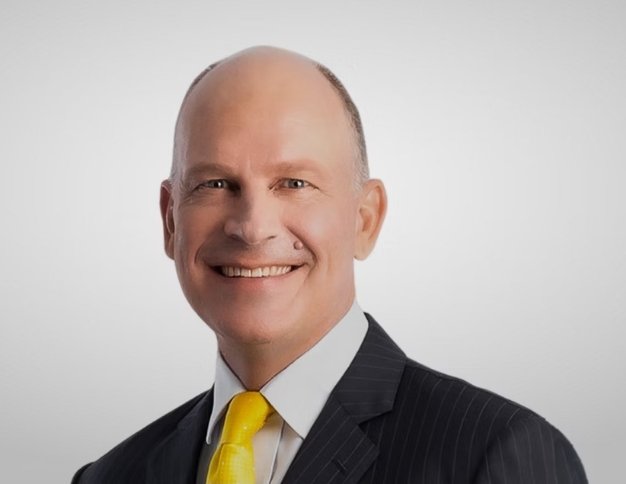
On the left is Nikhil Ravishankar. He went to school in New Zealand, worked all his life in NZ. Yet in 2025 when he was appointed CEO of Air New Zealand, the wave of online racism directed at him became such a tsunami that the country's 3 leading media outlets, the New Zealand Herald, 1News and Radio New Zealand, had to shut down their comments section. The sheer volume of racist comments made it impossible for moderators to do their job. It was like half the population of New Zealand had decided to be racist on Ravishankar.
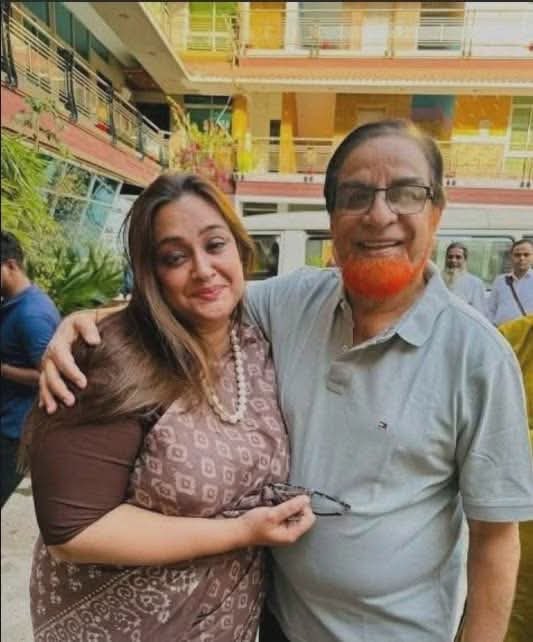
On the right is Air India’s current CEO - New Zealander Campbell Wilson whose appointment in 2022 attracted no such backlash in India. Wilson hails from Christchurch, arguably the most racist city in New Zealand.
Five years ago, in Comilla, Bangladesh, under a Durga Puja pandal, a horrific conspiracy was allegedly hatched against Hindus by placing a Quran under the feet of the Durga idol.
What followed was severe violence: over 500 Hindu homes were set on fire, and more than 23 Hindus were killed, reportedly in response to allegations of blasphemy.
CCTV footage was later examined. It showed a Muslim youth personally carrying the Quran into the pandal. The footage revealed that it was indeed this youth who placed the Quran there.
At that time, Sheikh Hasina’s government was in power. Upon interrogation, the youth stated that Baharuddin had instructed him to place the Quran in exchange for 50,000 (currency unspecified).
Following this, the Bangladesh police began searching for Baharuddin. However, no trace of him was found.
Two days ago, someone reportedly spotted Baharuddin in Kolkata, India, and a video of him circulating online confirmed this sighting.
This morning, Kolkata police arrested the alleged terrorist Baharuddin.
It was reported that his wife, son, parents, and five other family members — eight people in total — were living peacefully in Kolkata. They were said to possess Indian documents including Aadhaar cards and ration cards, indicating that official documentation had been obtained in India.