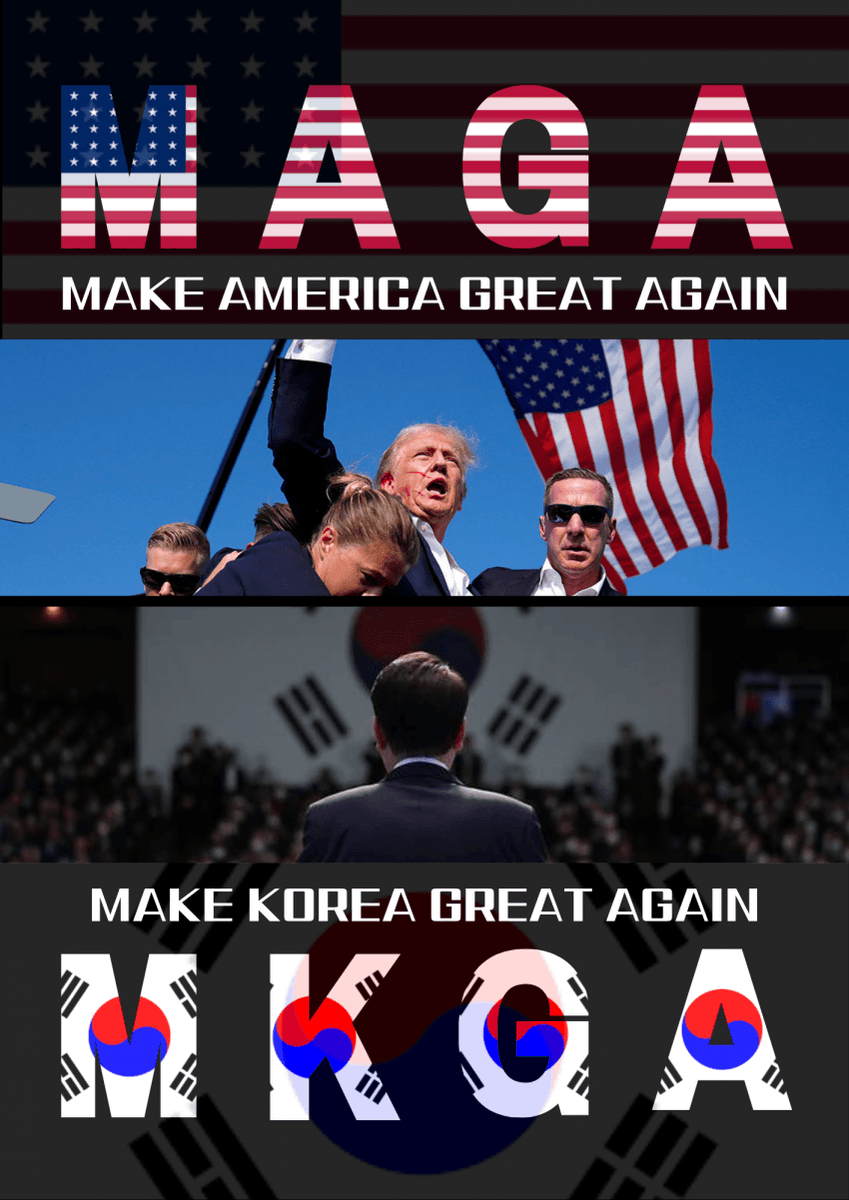
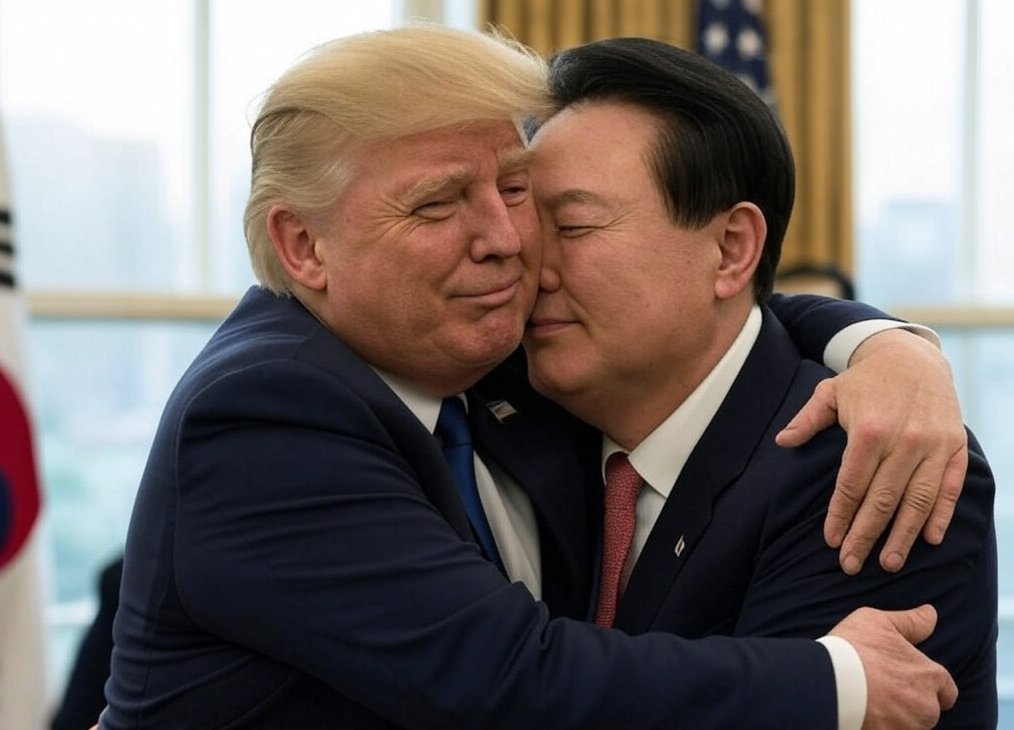
BREAKING:
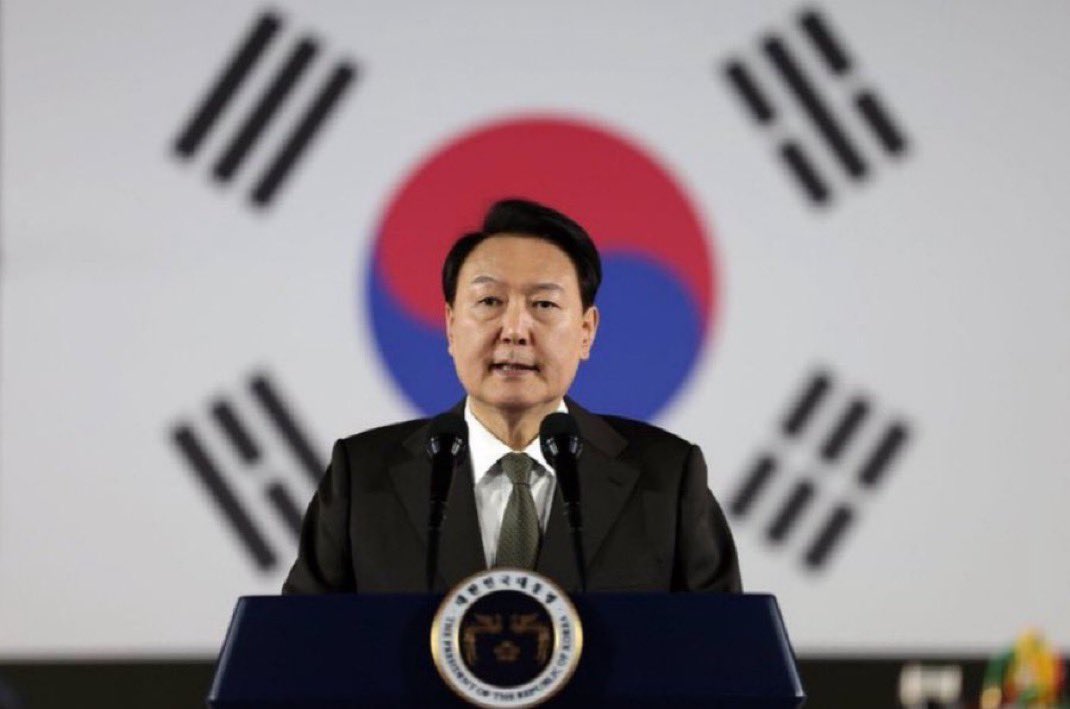
South Korean President Yoon was just released from jail after 5 weeks behind bars.
It’s a victory for the “Stop the Steal” movement and a defeat for the pro-Chinese element in South Korea.
🇰🇷
RFK Jr Shocks Joe Rogan...WiFi Causes 'Leaky Brain.'
It Degrades Your Mitochondria & Opens Up Your Blood Brain Barrier.
The US Gov't Silenced, Halted & Shut Down The Research.
WiFi Radiation Damages The Blood Brain Barrier.
Wireless radiation affects the permeability of the blood-brain barrier (BBB), as well as altering the expression of microRNA within the brain, which leads to adverse effects such as neurodegenerative disease. When the BBB is more permeable, more toxins circulating in the blood reach the brain.
Decades ago, Bioelectromagnetics Neuroscientist, Dr Allen Frey found even low level exposure caused neurological damage & mitochondrial cell death by breaching the blood brain barrier.
Dr Frey reported that modulations induced "leakage" in the barrier between the circulatory system & the brain. Breaching the blood brain barrier is a serious matter: It means the brain's environment, which needs to be extremely stable for nerve cells to function properly, can be perturbed in all kinds of dangerous ways.
Dr Frey's work on radar microwaves & the blood brain barrier soon came under assault from the government.
Scientists hired & funded by the Pentagon silenced Dr Allen Frey & threatened him if he attempted to go public with his findings. He was told to conceal his blood-brain-barrier work or his contract with the Office of Naval Research & the US Army would be canceled.
There was an overwhelming amount of profit at stake & these important findings that proved detrimental health outcomes were followed by suppression, misinformation & a shutdown of government funded research in the United States.
👇WiFi Damages The Blood Brain Barrier👇
https://t.co/rTNdZHD696
👇Mobile Phones Permeate Blood Brain Barrier👇
https://t.co/PHP5ItTIFQ
Video Credit: @joerogan@JRE_Clips@SecKennedy@RobertKennedyJr @mistyjbaker
Breaking! Trump Says He Will Not Feel Responsible If Anything Happens To Dr. Fauci or John Bolton After He Removed Their Security Details
Says They All Made Plenty Of Money and Offers To Recommend Security Companies
Alex Jones IS Breaking IT All Down:
https://t.co/rpXvTSxV34
Relying solely on data and statistics can lead to superficial understanding. Those with deeper insight operate on "awakened awareness" - recognizing patterns and meaning beyond raw numbers.
This isn't to dismiss data entirely - it's a vital tool for decision-making, but it shouldn't be the only basis for judgment. True understanding comes from combining empirical evidence with intuitive comprehension of context and implications.
BREAKING:
South Korea’s President Yoon has arrived at the Western District Court for a hearing that will decide whether his detention will be extended
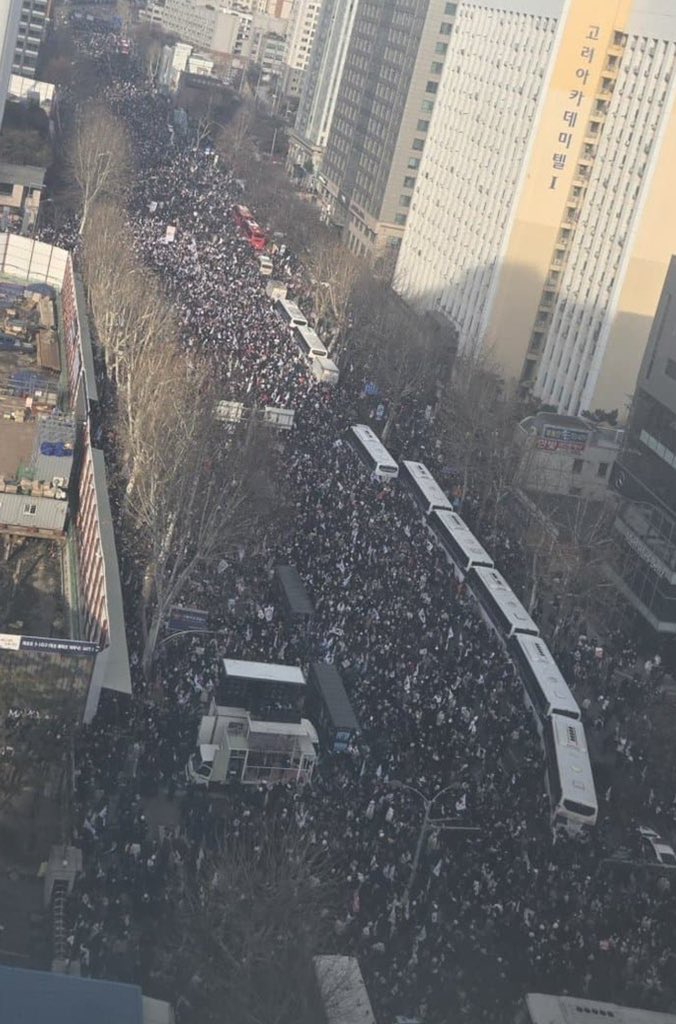
Media wasn’t allowed to enter the court. Tens of thousands of Yoon supporters from Stop the Steal movement are there too 🇰🇷
#BREAKING: Leaked documents from a Chinese Communist Party front organization operating in Canada reveal a plot to get 41 pro-China candidates elected to Parliament during the 2019 election. The document boasts a 20% SUCCESS RATE, indicating eight candidates were elected as MPs.
[BREAKING] This is an “An Address to the Korean People” written overnight with a fountain pen by the President of South Korea, Yun Suk-yeol, himself.
This is a handwritten letter from President Yoon Suk-yeol, who is fighting for his life against the Chinese Communist Party, the overseas Chinese cartel, and the corrupt politicians who collude with them.
An Address to the Korean People
Dear fellow citizens, did you have good dreams for the New Year? I sincerely hope that the Year of the Wood Snake brings you much joy.
Since my impeachment on December 14th of last year, I've had much time to reflect alone. Ironically, it's only after being impeached that I truly realize I am the President.
Through my 26 years of public service, 8 months of presidential campaigning, winning the election, the transition period, and inauguration... Since taking office, I've been so consumed with work from dawn to late night that I seem to have forgotten I was President.
There were many difficult decisions to make regarding public appointments, election pledges and state affairs, crisis management, diplomacy, security, economy, and social issues.
Since my school days, I've lived believing that ability comes from effort, so I've always worked intensely and diligently. Many advised me to maintain presidential dignity and take rest, but domestic and international circumstances since my inauguration have been far from easy.
We faced external economic crises of global security and supply chain disruptions, high inflation, high interest rates, and high exchange rates. The explosive increase in national debt due to the previous administration's populist policies, the "all-in" household debt problem resulting from failed real estate policies, and the deterioration of small business owners and SMEs due to minimum wage increases under the income-led growth policy added to the difficulties in overcoming the economic crisis.
However, thanks to citizens trusting and following me and the government despite difficult conditions, we've been able to address current issues and crises step by step. After abolishing punitive tax policies and implementing real estate policies faithful to market principles, we've stabilized housing prices. By connecting our global pivotal state diplomacy with the economy and working to develop overseas markets and boost exports, we achieved record-high exports last year, nearly catching up to Japan despite their population being 2.5 times larger. Our per capita GDP surpassed Japan's last year.
The upgrading of the nuclear foundation of the ROK-US alliance and strengthening of our comprehensive strategic alliance, along with the normalization of Korea-Japan relations leading to trilateral cooperation between Korea, the US, and Japan, have firmly supported our economy's external credibility. These days, the past two and a half years of running here and there for security, economy, and social reform flash before my eyes like a panorama.
I have many regrets - thinking I should have been wiser and listened more carefully. Looking back at the presidential campaign period and the two and a half years since taking office, I think of each and every citizen who trusted and supported me despite my shortcomings. I think often of those who start their dawn work with tired bodies, students heading out with their backpacks on cold mornings to prepare for their future, and those struggling with illness and discomfort under difficult circumstances. I feel sorry that I couldn't visit and help more.
After rushing around working busily, it's only now in this state of suspended duties that I think "I am the President" - perhaps this realization comes from such regrets. This suspension of duties marks the fourth time in my public service career.
Once as a prosecutor, twice as Prosecutor General - making this my fourth suspension of duties.
People around me say I'm foolish for not compromising and finding an easier path. While foolish choices leading to suspension can sometimes make close associates turn away and leave one feeling lonely, as time passes, misunderstandings clear up and the support and encouragement of many become a source of strength.
My seemingly foolish decisions have always stemmed from my unwavering belief in liberal democracy and the rule of law. Democracy without liberal values is fake democracy - it's dictatorship and totalitarianism masquerading as democracy.
Democracy is a system to protect individual freedom, and liberal democracy is realized through the rule of law. Furthermore, the rule of law is how the freedoms of all members of our community coexist. The rule of law is realized through rational laws that respect freedom and fair judicial officers. The rule of law is a core element of liberal democracy.
Liberal democracy, combined with free market economic principles, creates our prosperity through autonomy and creativity, generates resources for abundant welfare and solidarity, and creates a virtuous cycle of prosperity.
Although our country lacks natural resources, we have excellent human resources and have developed through open and active international trade. Today's world has all countries intertwined in complex relationships involving security, economy, and raw material supply chains.
To sustain our prosperity and pass it on to future generations, solidarity with countries sharing the values of freedom and the rule of law is particularly important. Of course, we must cooperate with countries that don't make hostile attacks on us, even if they have different systems and values, from the practical perspective of mutual respect and pursuing common interests.
However, if a country has a different system and values from ours and conducts hostile influence campaigns against us, we must always be vigilant to protect our sovereignty from being compromised. We must always be on guard against external forces attempting to encroach on our sovereignty.
Only by doing so can we prevent such forces from taking us lightly while realizing mutual respect and common interests. Only through vigilance and caution can we enjoy shared prosperity and peace.
After World War II and the establishment of the UN, resolving disputes through military attacks and war was prohibited under international law regardless of the reason, with war only permitted for defensive purposes. Since military attacks and war provocations involving bloodshed are prohibited under international law, creating significant diplomatic burden even for major powers, "gray zone" tactics that don't involve weapons have become widely used.
These include psychological warfare through false propaganda, political warfare through bribing politicians and election interference, cyber warfare attacking digital systems, and hybrid tactics combining military demonstrations and threats. Information warfare, such as stealing state secrets and core industrial technology information, is also included in hybrid warfare.
Therefore, modern emerging security goes far beyond military and political security to encompass economic security, health and environmental security, energy and food security, advanced technology security, cyber security, disaster security, and more in a very comprehensive and diverse manner.
Military and political security includes information protection, security, and blocking various influence operations. While military provocations and war are political acts that violate a country's sovereignty, nations use various gray zone hybrid warfare tactics that don't involve military provocations and war prohibited by international law, and where the attacker and responsible party aren't clearly revealed, as means to violate sovereignty.
In particular, authoritarian dictatorships and totalitarian states try to maintain their systems by keeping many countries, including neighboring nations, as vassal states or under their sphere of influence. If domestic political forces join hands with external forces seeking to violate sovereignty, it becomes advantageous in acquiring political power through help from their influence operations.
However, nothing comes free. We must give up our core national interests. Not only state secrets and industrial technology information, but also energy security and industrial competitiveness like nuclear power, and furthermore, it destroys solidarity with countries sharing the values of freedom and leads to self-imposed diplomatic isolation.
This is clearly an anti-state act against national interests. Such anti-state acts against national interests continue not only when such forces are the ruling party but also when they become a majority opposition party occupying many parliamentary seats.
Through powerful parliamentary authority and parliamentary dictatorship, they completely block the ruling party's governance through legislative and budget obstruction, leading to governmental paralysis. Going beyond political differences between ruling and opposition parties or checks and balances, they push forward with anti-national abandonment of national interests, government paralysis, and collapse of constitutional order.
This isn't a story about some other country. This is the reality of the Republic of Korea. While any political force must be mindful of voters' opinions, making it difficult to continue outrageous misconduct, what wouldn't they do if they were confident they could secure parliamentary seats as planned through election fraud or take control of administrative power?
There is abundant evidence of election fraud in our country's elections. The election commission's flawed systems that make this possible have all been exposed. The lack of evidence to prosecute specific individuals for election fraud cannot dismiss election fraud as conspiracy theory.
It's like finding multiple bodies stabbed to death - you can't insist there were no murders and they were natural deaths just because the killers haven't been identified. In a normal state under the rule of law, investigative agencies should be actively requested to investigate and everyone should cooperate to find the perpetrators.
Enormous numbers of fake ballots were discovered in ballot box inspections during election lawsuits, and while the election commission's computer system is defenseless against hacking and manipulation, falling far short of normal national agency computer system standards, not only is there no effort to correct this, but they refuse to verify and confirm whether the announced number of voters matches the actual number of voters - this indicates the operation of a comprehensive election fraud system.
This is an act of stealing the sovereignty of the people and an act of destroying liberal democracy. In a normal country pursuing liberal democracy and the rule of law, when the Supreme Court justices and election commission discover this in election lawsuits, they should request investigations and actively cooperate with investigations to thoroughly verify whether such illegal election activities occurred.
Yet they covered this up. If numerous murder victims are discovered, but anyone who mentions murder is attacked as a conspiracy theorist unless victims' families find evidence to identify and prosecute the killers to conviction - is this what we call a state?
A fraudulent election system involving digital systems and fake ballot insertion isn't something an inexperienced political force in one country can attempt and pursue independently. If caught, it could lead to the collapse of that political force. It's hardly something one would dare to attempt alone.
At most, they might resort to distributing money, trading favors, or manipulating public opinion. However, an election fraud system that connects vote counting fraud with opinion poll manipulation demonstrates the need for international solidarity and cooperation with political forces attempting to pursue this.
The fraudulent vote counting system consists of an opinion polling system controlled by specific political forces and the election commission's refusal to verify and concealment. Creating public opinion that attacks mentions of murder as conspiracy theories because the murderer hasn't been identified also constitutes one axis of the fraudulent vote counting system.
Fellow citizens, if this is our country's reality, is this situation a crisis? Is it normal? Is this situation equivalent to wartime or national emergency? Or not? While wartime and contingencies are physical situations occurring in our territorial space - that is, hardware crises - our current reality is a crisis of our country's operating system and software.
Article 66 of the Constitution states that the President, as the head of state, represents the state and has the duty to protect the state's independence, territorial integrity, state continuity, and the Constitution. In simple terms, it assigns the President the duty to protect both the Republic of Korea's hardware and its operating system and software.
When the majority opposition party paralyzes state affairs through parliamentary dictatorship by blocking legislation and budget, promotes public dissatisfaction and national division by issuing unconstitutional and abnormal laws against national interests, suspends the duties of blameless high-ranking officials through dozens of serial impeachments, even impeaches prosecutors and the head of the Board of Audit and Inspection who investigate and audit their corruption, and recklessly pushes forward with protective legislation to cover up their wrongdoings - this represents a catastrophic crisis in the Republic of Korea's operating system, and the President has a duty to protect this operating system.
When I saw them trying to impeach even the head of the Board of Audit and Inspection, a constitutional institution, to bring them before the Constitutional Court, another constitutional institution, I thought emergency measures were necessary to fulfill my constitutional duty of protection. Judging that the series of actions by the majority opposition party constituted a national emergency equivalent to wartime or contingency, I decided to exercise the emergency martial law authority exclusively granted to the President.
While martial law was previously limited to war preparation, our Constitution specifies "equivalent national emergencies," anticipating various national crisis situations beyond war as grounds for declaring martial law.
In a national crisis, the first thing a president of a liberal democratic state must do is inform the sovereign citizens of the national crisis situation and appeal to them to work together to overcome it. Rather than breakthrough the national crisis situation with only the military and dictatorial administrative power, we must share the situation with the sovereign citizens and breakthrough with their cooperation.
Isn't the word "martial law" meant to notify and warn of the gravity of the situation? I aimed to protect liberal democracy and constitutional order by alerting citizens who might not fully recognize the crisis facing our country's liberal democracy and sovereignty, making them vigilant observers and critics of the parliamentary dictatorship's destructive misconduct.
Therefore, I ordered the Minister of Defense to deploy the minimum necessary troops - 280 personnel to the National Assembly and 290 to the National Election Commission - to inform the public about parliamentary dictatorship, maintain order, and properly inform citizens about and investigate the truth of the election fraud system.
The 280 troops deployed to the National Assembly waited in the courtyard, and of those deployed to the Election Commission, only dozens of digital personnel accessed internal systems while the rest waited outside. When the National Assembly passed a resolution demanding the lifting of martial law just two and a half hours after its declaration, they immediately withdrew, concluding peacefully without any casualties or damage.
Fellow citizens, martial law is not a crime. Martial law is the exercise of presidential authority to overcome national crisis. That's why there's a Martial Law Division in the Joint Chiefs of Staff to assist in the President's exercise of authority.
I was impeached due to the frame that "martial law equals rebellion," and the Defense Minister and military officials who prepared and executed this are now detained. This is truly absurd. The troops were deployed for just 2 hours - can there be a 2-hour rebellion?
Have you ever heard of a rebellion that announces its start to the whole world and nation via broadcast, then withdraws troops and stops when the National Assembly says to stop in less than 3 hours? According to the Joint Chiefs of Staff's martial law division manual, nationwide martial law presupposes the use of at least 6-7 divisions, tens of thousands of troops.
The Defense Minister, having served as Operations Director and Operations Commander at the Joint Chiefs of Staff, couldn't have been unaware of this. Because this was an appeal to the public using the form of martial law, only a small force was planned. Since National Assembly members and staff entered after ID verification, the deliberation of the martial law lifting resolution proceeded swiftly, and thousands of people in the main building and courtyard actually surrounded the 280 soldiers.
Following the order to withdraw, the military politely saluted the citizens in the courtyard and withdrew. Were we trying to shut down the National Assembly? Or did we plan a riot? Recently, the opposition party's impeachment officials withdrew the rebellion charge at the Constitutional Court.
They took this obvious step because rebellion charges could not possibly stand. But if they impeach with rebellion charges and then withdraw them in court, isn't this fraudulent impeachment, fraudulent prosecution?
Looking at the situation since the impeachment, I wonder if these are really the politicians who pride themselves on their long years of democratization movement. However, seeing many citizens and young people now recognizing our country's crisis situation and developing awareness of their rights and responsibilities as sovereign citizens, I feel I made the right decision to inform citizens of the national crisis situation and appeal to them, and I feel deep gratitude to the citizens.
Since running for President, I've well understood that the position of President of our country is not a path of glory but one of thorns. However, as I promised to properly establish liberal democracy in this country and fight against totalitarian vested interest cartel forces that turn their backs on freedom and rule of law to restore sovereignty to the people, I have no regrets regardless of what happens to me personally.
Would I have implemented martial law like this for dictatorship and extending my rule? With such a small mini-force for an ultra-short period? While I cannot know what the judicial judgment will be, I believe you citizens well understand whether this martial law was for protecting the Constitution and saving the country or not.
If in the past, members of the National Assembly resisted presidential dictatorship and fought for democratization, then as President charged with protecting the Constitution, I must naturally resist and fight against the unprecedented gangster-like parliamentary dictatorship. This is to normalize state functions and protect liberal democracy.
When I see the current judicial reality - where arrest warrants are issued by agencies without investigative authority, through judge shopping outside normal jurisdiction, where judges arbitrarily lift statutory restrictions on search and seizure with illegal and invalid warrants, where thousands of riot police are mobilized to execute these, where they threaten to arrest presidential security guards for obstructing warrant execution after trespassing in Level 1 military protection zones - I'm dumbfounded at whether this is the legal world I experienced for 26 years.
Seeing what people who disregard liberal democracy do when they hold the sword of power, I get the bitter confirmation that my judgment wasn't wrong about our country being in a serious crisis of national ruin.
Liberal democracy and rule of law are two sides of the same coin. The rule of law that realizes liberal democracy is not formal rule of law or rule of law with tricks. Such rule of law is the kind abused in people's democratic dictatorships and totalitarian states to suppress freedom.
Laws must be made to realize the constitutional spirit of liberal democracy, and once made, laws must thoroughly protect minority rights and individual rights rather than majority rule.
While our left-wing activists relied on such rule of law protection when they weren't mainstream, after securing an absolute majority in the National Assembly, they now prioritize democratic majority over substantive rule of law, and emphasize democratic control over rule of law control.
I properly experienced such lawless misconduct by the Democratic Party administration during my time as Prosecutor General. This reduces legal professionals and judiciary members to political power's henchmen.
But citizens, take heart. If you as sovereign citizens maintain firm awareness of your rights and responsibilities and strive to protect them, this country's future is bright and hopeful.
Fellow citizens, thank you.
[BREAKING] South Korean President Yoon Seok-yeol has listed “fraudulent elections” as one of the grounds for martial law in his response to the Constitutional Court regarding the impeachment trial. This is the first official statement by a South Korean president regarding fraudulent elections.
There are some pretty amazing things happening in Korea. South Korea's President Yoon Seok-yeol has used martial law to secure evidence of election fraud.
This martial law has been years in the making, and it's becoming clear that there was a coordinated effort to root out election fraud in both the U.S. and South Korea, working with President Trump through multiple channels.
President Yoon is ready to take down the CCP-Overseas Chinese cartel that masterminded it, and there are more surprises to come.
@zerohedge Outside of the trading perspective, from an industrial perspective, there has been a significant amount of oilfield development since the early 2020s. We expect to see a significant stabilization and downtrend in oil prices after Trump's election.
@LindaRaschke As someone who has a lot of respect for Linda, and as someone who has struggled a lot with trading due to mental blocks, I'm 100% confident that this session will help a lot of people.
https://t.co/XYqMMh9FYa A good article from Goldman Sachs on the deflation of software, which has been discussed a lot in tech lately. The advancement of AI, particularly generative AI, is likely to reduce the competitiveness of large-scale software programs. By automating many aspects of software development, generative AI lowers development costs and complexity, allowing smaller teams to create competitive solutions. This reduces the need for complex, feature-heavy software and shifts market dynamics, enabling smaller companies to challenge established players.
It's a question that requires a lot of complex thinking. The end of the Bretton Woods system led to rising inflation, which entrenched the tendency for companies to not raise wages to keep up with inflation. In addition, David Rockefeller's global hegemony in the 1970s led to a global supply chain and production reorganization centered in Asia, which led to the loss of major manufacturing jobs at the time.