I’ve been obsessed with @cademarket ever since @PopPunkOnChain told me about the pivot to parimutuel markets for streams
It opens the door to an enormous design space for integrations, participation, and new market experiences
Couldn’t be more excited to bring this from 0 to 1
Excited to share the first people that will be joining the @cademarket team.
@gnarzilla - CTO
@steoniy - CPO
I’ve been fortunate to work closely with these two guys during my career and am extremely lucky to bring them onboard to build the fastest prediction platform
Pumpcade.
Incredible achievement from the solana and anza teams. Excited to get to testing @CadeMarket on this and making everything feel as real time as possible.
Alpenglow is live on mainnet-beta ⛰️ 🎉
Solana’s new consensus protocol: finality reduced from 12.8 seconds to 150 milliseconds, built by Anza.
Why this is important 🧵
You're right, perps don't need to touch the underlying token. But transferability doesn't have to be all or nothing. It can be a lever for expanding token utility, creating new demand, and introducing mechanisms that lock up supply.
Something like ERC20C could enable permissioned integrations through thoroughly vetted operators without opening unrestricted spot trading. Think delegated staking vaults, automated reward management, builder staking/bonding around HIP-3/4, etc.
These create opportunities for third parties to build products around PAPER's existing economics.
For example, an automated rewards vault could reinvest a percentage of USDC rewards into automatic strategies that accumulate more PAPER, restake it, and distribute the remaining USDC to depositors. If economically viable, that creates recurring platform activity, additional fees, and greater utility for PAPER.
The point is to expand the ecosystem incrementally, approving new integrations as their utility and risks become better understood, rather than treating transferability as a yes or no question.
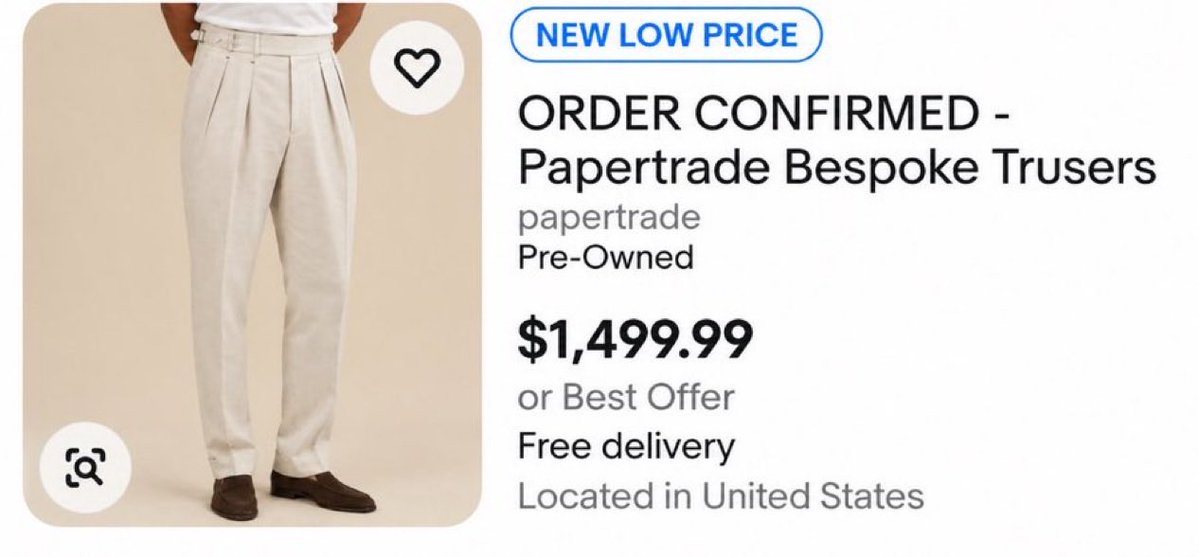
Papertrade is in between a rock and a hard place with a token that in essence *should* be transferrable, but cannot be due to external protocols using it in ways that would adversely affect their business model.
This was core to what we were developing over at @limitbreak - Transfer restrictions enforced on chain deterministically, with creators allowing their tokens to be used in protocols that followed their rules.
ERC20C expands the potential for protocols to build around tokens by explicitly whitelisting systems that grow their ecosystem, protect their business models and allow for way more interesting things to be built on chain.
Jez has been a good friend for a long time, hopefully he takes a look at this as a potential way to navigate the "dark forrest" of the EVM and build something really cool - they already succeeded in the first round, now it's long game.
A note on transferability.
Papertrade is a complicated primitive, and managing it from a risk standpoint is a complicated problem. The PAPER token is far more integrated into the economics of the primitive than most tokens are in their respective protocols today, and, broadly, was designed to act as a counter insolvency incentive coupled with a rebate mechanism to losing traders. Market makers and exchanges are by far the two most profitable businesses in crypto, and our goal was to try and externalise as much of their margins back to users as possible. We are now just over a week into the life of papertrade and we are becoming increasingly confident that this is both possible, but also a likely outcome as agentic led software becomes the norm.
As it stands, the paper token traded as a perp becomes a leveraged bet on bankroll solvency - and being able to short bankroll solvency materially changes the payoff curve of a manipulation attack. The target number goes from the bankroll, to the bankroll + short side exposure on paper. We can, and do limit bankroll size specifically to control this payoff curve and ensure it never becomes existentially problematic, but external perp markets are not something we would have any control over if left to float of their own accord. For example, if our bankroll is $10m, an attack costing $15m manipulating the price of bitcoin or ether is not viable. You simply lose money. If however you were also able to put on $10m of PAPER short side exposure, suddenly an attack costing $15m is very viable indeed.
If we were to make the token transferable at this point, we are confident we would quickly enter a state too dangerous to allow any material exposure to be taken on papertrade, an end result that benefits no party beyond the wolves who have done the math on the short and are waiting in the wings with sharpened knives.
We would also like to thank the various perps teams who have reached out about pre-market listings for their understanding and patience regarding this issue, and especially to the paragon team who, despite jumping the gun on us, have behaved with the utmost integrity and transparency once a dialogue was opened.
Perps on PAPER will always act as a self-limiting exposure ceiling for a token with this type of utility, and we think it would be a shame to limit the growth of papertrade to the extent that allowing perps would necessitate. As such, at this juncture we do not have plans to allow off-contract token transferability.
Structurally, papertrade is limited by the quality of the data it receives from hyperliquid, but we strongly believe that hyperliquid has a very large part to play in the future of global exchanges, and expect their books to continue to thicken and strengthen over time.
A note on fees.
Papertrade launched with a deadband fee from entry of 0.2bps. This means you don't earn anything until the price has moved by 0.002% in your favour. Over the months before launch, we played around with many different curves and fee structures affecting exclusively positions closed very close to entry price in order to try and devise a structure that removed the edge against the bankroll low time frame scalp bots have, whilst also minimally impacting the traders around which and for whom the product was devised. We were never able to find anything we were absolutely happy with and so decided to stay with the 0.2bp deadband fee through launch. This has however meant we have had to be very restrictive when it came to certain parameters, such as OI caps.
Now, however, we have enough live data to fully understand exactly which strategies work, and to make the necessary changes to stop them. The changes we are making will have an on hours and off hours fee mode to account for the relative differences in liquidity the hyperliquid books see between these two time periods, and the ease with which low time frame moves are signalled. The changes we are making will only affect positions closed within 6bps of entry (0.06%) in on hours, and 10bps (0.1%) in off hours. Any trades closed above these threshold price shifts will see no change to their fees at all. On a look back to launch basis, these changes affect the profitability of bot strategies roughly 15x more than they do normal traders, for whom a very small proportion of overall winnings come from within this band.
These changes should serve to flatten much of the edge our microfee structure necessarily creates on low time frames, and will help with long term exchange sustainability. This should hopefully allow us to open up parameters such as OI caps a little more so those of you who wish to can put on the size you want to, when you want to.
It is possible these changes are still too lax, and that further revisions to this structure may be necessary going forwards. If so, we will notify users ahead of time.
A note on paper tokenomics.
In conjunction with the fee changes, we will also be implementing a change to the token issuance curve.
Going forward, every $1 lost mints a fixed share of PAPER's supply at that moment, roughly 0.1% of supply per $1M lost (the exact number depends on the mint rate at the time the contracts are upgraded). PAPER minting in and near insolvency will also change, switching from a flat 100 per $1 of loss, to a time weighted multiplier on the curve growing over time, effectively acting as the house running a discounted auction on its own future cash flows. This change also removes the risk of the paper-mint-straddle-attack, temporarily pushing the protocol insolvent by closing only the winning side of a large straddle position and then attempting to mint as much paper as possible.
In the immediate term these changes will only have a very subtle effect on PAPER minting, but in the long run will structurally change the outlook of the system beyond the first few weeks, serving to slowly dilute out older holders and leaving more recent users with an advantage. Reconstituting the PAPER system into something much closer to the exchange rakeback it was intended to be.
We have been very reticent to touch this particular aspect of the system for obvious reasons, but ultimately we believe that these changes provide all users with the optionality to take a smaller piece of a potentially much larger pie than the current dynamic might necessarily allow.
Other, miscellaneous notes.
These contract upgrades will include a few other contract changes, including the addition of builder codes so that builders can utilise papertrade in whatever capacity they choose to. This will be a whitelist only to begin with and we will have more for you later in the week on where/how this will be rolled out. A small change to contract permissions on the reward distributor and a change on how below bust closes are processed by the exchange are also included, largely to block gas griefing attacks.
These changes will be pushed to docs in full over the coming day, and we will further announce once the changes are queued into the timelock pending final security passes, scheduled to go live 24 hours after that point.
Final note.
We'd like to thank everyone that has tried out papertrade over the last 10 days. It has been a labour of love building this product and both of us have been taken aback at all of the positive feedback we have received. We'd also like to thank all those of you who have spent considerable time musing on the system we have built, and much of your advice has been taken onboard and will likely affect the colour of what papertrade becomes going forward. We know some of these changes will be unpopular with some, but we would not be making them if we did not feel them to be absolutely necessary.
- blurr, jez
@noahwbragg@limitbreak You simply do not whitelist perps protocols as able to transfer your token. It's the same block that exists today, just conditional based on a whitelist of approved operators. Those operators can be vetted and have requirements to uphold to remain whitelisted.
Spent the last few weeks on the math behind this.
Every position will now have a live exit price. If you call the move early, you can take the profit right away. Based on math, not on oddsmakers in a black box.
Hold to the end and the long shots still pay the most.
Adding early cash outs to @CadeMarket change everything.
Our previous protocol already offered the potential of wildly outsized multiples in our short duration markets.
Our new protocol will allow significant multiples on bets in JUST A FEW SECONDS.
Only possible on Cade.
So there are two answers here:
- If there are no users on the opposite side of a market ever, the market is void and all funds are returned to users with no fees, it's just a null market.
- If there were users and they just sold out everything, the remaining side will act as if it won, regardless of outcome. Funds will be distributed, including the remaining funds within the pool, to the remaining side less fees.
Cade never acts as the house, just as the coordinator.
Also very excited to see the reception! I think this makes the entire system more approachable for everyone - cashouts have become a staple everywhere, so it was important to me to allow this as a mechanic, but to make it fit within the parimutuel market system.
Example (fees left out for simplicity):
A market opens with $1,000 on YES and $1,000 on NO. Then another $1,500 comes in on YES. The pot is $3,500, and YES is the heavy favorite.
Every NO holder cashes out. Their side was losing, so together they get back about $300 of their $1,000. The other ~$700 stays in the pot.
YES can now win that ~$700 on top of their $2,500. But NO just became the cheapest bet on the board: $1 on NO could win the entire ~$3,200 pot, which is unlikely to stay open. Every dollar that comes in on NO after the sell off grows what YES wins if YES is the resolved answer.
Same thing if NO had been winning. Selling out an entire side pushes its odds all the way to zero on the way out, so the last shares sell for almost nothing. If that extra $1,500 had gone to NO instead (NO at 84%), NO holders cashing out completely would get back about $2,086 of their $2,500, and ~$414 would still stay in the pot. One side can't drain the pot by running for the exit.
Short answer: yes it does shrink the pot, but every exit changes something for the people who stay.
If the other side cashes out at a loss their loss stays in the pot. It's bigger than if they'd never shown up.
If the other side cashes out at a profit, your side just got more likely. Your cash-out price jumps so you can lock in a larger multiple with your own cash out.
If someone cashes out on your side, your piece of the pie gets bigger and holding just got more profitable.
It's designed to leave upside for people who hold until the end, while allowing for moving in and out of positions for more flexibility.
What we learned from 25k users trying @CadeMarket
1. Average of 20% of users with positive PNL (way above industry standard)
2. KOLs can’t rape you on markets that will go live at mainnet (sports/stocks)
3. It will be the FASTEST way to make a ton of money if you’re good at it
No opinion on Hyperliquid's decisions, but the truth of the matter is that all software will be open source. Security by obfuscation is dead - You cannot rely on this any more.
I know 3+ minutes is a long time to watch, but this explainer gives a great, simple overview of generally how markets work on @CadeMarket
Take a poke around the site and learn, sign up for email notifications and see you when mainnet drops!
Cade Markets are fundamentally different, more fun, and dopamine triggering than any other prediction market.
Explore our new site to understand why, and make sure to join our waitlist.
https://t.co/K07ymRINyZ