The older you get, the more you realize luck is mostly exposure.
If you sit in the same place, have the same routine, talking to the same people, nothing new really happens.
You have to tackle the world to win.
Travel more. Talk to people. Try a breakfast spot. Post on social media. Start a side hustle or a hobby.
The world rewards motion. You don't find opportunity sitting still.
Every person who has tried to sell software to a small Indian law firm has heard this:
"Bhai, send me the proposal. I'll look at it."
You follow up. "Still reviewing." You follow up again. Nothing. Three months pass. The deal is dead.
You cut the price. Same response.
You add features. Same response.
You offer a free trial. They log in once and disappear.
The problem is not your pricing. The problem is not your product.
The problem is you are selling the wrong thing.
Small Indian businesses do not buy software. They hire people.
This is not a behavioral quirk. It is how trust and accountability work in this market.
Think about what happened when Indian courts started going digital.
E-filing became mandatory. Case status went online. Court orders became downloadable. The portals existed. They were not complicated. Any lawyer with a smartphone and an internet connection could have figured it out in an afternoon.
Nobody figured it out.
Instead, thousands of e-filing operators and court typists set up shop near every district court complex in India. The same typists who used to type petitions on typewriters now started filing cases online for lawyers. Charging Rs 200 to Rs 500 per filing. Just to use portals the lawyer could have accessed themselves.
These operators now handle everything from e-filing to downloading court orders to checking case status. Many of them charge monthly retainers from 15 to 20 lawyers each. They are the person the lawyer calls when anything digital does not work.
The lawyers did not want the portal. They wanted a person who would handle it and be answerable when a filing deadline was missed.
Same story with GST. ClearTax built software. Tally added modules. The tools existed. Nobody learned. Instead, 3 lakh GST consultants emerged across India. Charging Rs 500 to Rs 2,000 per month per client. Just to file returns using tools the client could have accessed themselves. Because the person you hire is accountable. The app is not.
Now apply this to AI.
You build an AI workflow system for a 5-person law firm. Client intake automation. Hearing date reminders. Document drafting. Legal research summaries. It works beautifully.
You try to sell it as a SaaS product for Rs 2,000 a month.
They will not buy it.
Not because Rs 2,000 is too much. They pay their munshi Rs 12,000 a month. They pay for their Manupatra subscription. They pay the typist outside court for e-filing.
They will not buy it because they do not trust a subscription to an unknown product. Nobody to call when something breaks. Nobody accountable when the reminder does not go out before the limitation date.
The way to sell AI to small Indian law firms is not to sell software.
It is to sell yourself as the person who builds it, runs it, and fixes it.
Rs 15,000 to 20,000 to build and set up.
Rs 2,000 a month to maintain and be available.
Same pricing as their e-filing operator. Same mental model. You are not a product. You are a person they can call.
And here is where the distribution insight gets interesting.
Think about who already walks into a lawyer's chamber every month.
The legal book supplier.
The local distributor who drops off bare acts and commentaries. These people have been visiting the same 200 to 300 lawyers for years. They know which advocate sits in which chamber. They know their practice area, their court, their temperament.
The lawyer already trusts this person. Already buys from them. Already opens the door when they knock.
Now imagine that book supplier says: "Sir, along with your commentary subscription, I can also set up an AI system for your office. Hearing date reminders, draft notices, client follow-ups. Rs 15,000 setup, Rs 2,000 a month. I will handle everything."
The conversion rate on that pitch is not 2 percent. It is 40 to 60 percent. Because the trust already exists. The relationship already exists. The regular access to the chamber already exists.
The same applies to the stamp vendor and the notary agent who sees the same set of lawyers week after week. Or the munshi inside the firm who handles all the filings and would be the one actually operating any new system.
This is how India adopts new technology. Not through app stores and LinkedIn ads. Through trusted intermediaries who bundle the new thing with an existing relationship.
The person building AI deployment businesses for Indian law firms who figures this out first will not be selling to one advocate at a time. They will be training legal book suppliers and e-filing operators to offer this as a service to their existing clients.
That is a distribution model. Not a product. Not a marketing funnel.
The SaaS model assumes the buyer wants to learn and self-serve.
The India model says: find the person the buyer already trusts. Work through them.
One is selling software. The other is understanding how India actually works.
Know anyone who has done this yet for legal software or AI in India?
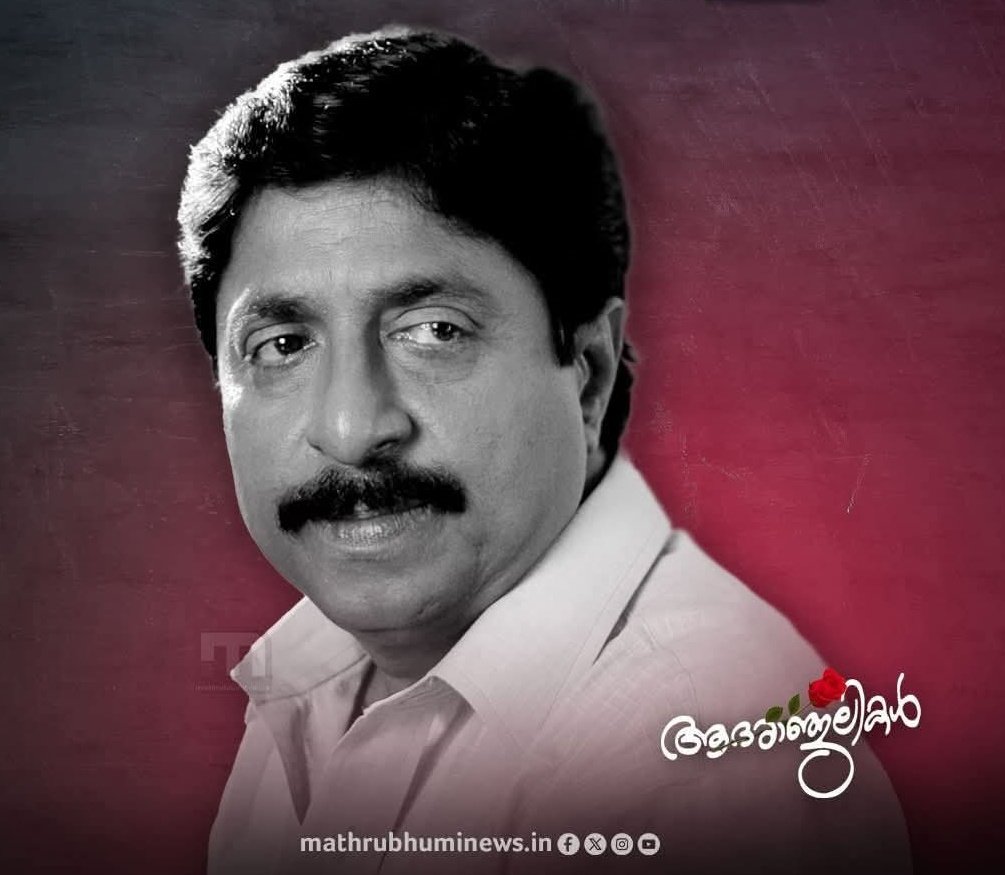
The man who shaped social conscience of the Malayali mind like no other.
Actor par excellence.
Screenwriter beyond all praise & superlatives.
Director we were lucky to see, but never enough.
#Sreenivasan lives as long as the Malayali mind thinks, questions & laughs at itself
C is not just a language. It is sort of THE operating system interface when it comes to Unix and Unix-like systems (including Linux... maybe?).
We often debate "C vs. Rust" or "C vs. C++" as if they are just tools in a toolbox. But we overlook a massive structural reality.
For most of the world, the Operating System is the C Library.
Consider the difference between Linux and everyone else:
Linux is the outlier. It publicly documents its raw System Call ABI, allowing languages (like Go) to bypass C entirely and talk directly to the kernel.
macOS & BSDs are different. Their system interface is officially defined by Libc. If you bypass the C library and call the kernel directly, you are likely breaking the contract.
But it goes deeper.
POSIX is not an OS implementation standard. It is largely a C standard.
The POSIX specification doesn't describe raw syscall numbers or register values. It describes C function signatures.
* It defines printf(), not the assembly required to print.
* It defines <unistd.h>, not the kernel trap.
To be a "POSIX-compliant" OS means, fundamentally, to host a C library (along with a bunch of shell utilities, for example, but that's a different topic).
Even if you don't write C, you are using it.
Python? The standard implementation (CPython) is C.
Java? The JVM talks to the OS and hardware via C.
Rust? It can only talk to the outside world because it mastered the C ABI (Application Binary Interface).
Can we ever leave C behind?
If the definition of the Operating System is tied to the C Standard Library, then "replacing C" isn't just about changing languages. It’s about redefining what an OS interface looks like.
Should we? Maybe. Memory safety issues in C account for a lot major security vulnerabilities.
We are trying to replace the Latin of computing. And Latin has a habit of sticking around.
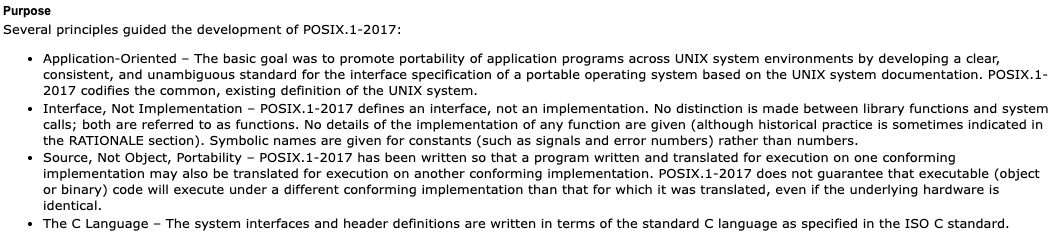
Check this fascinating excerpt from the POSIX standard below. 👇
Two noteworthy bits:
"The C Language – The system interfaces and header definitions are written in terms of the standard C language as specified in the ISO C standard."
"Interface, Not Implementation – POSIX.1-2017 defines an interface, not an implementation. No distinction is made between library functions and system calls; both are referred to as functions. No details of the implementation of any function are given (although historical practice is sometimes indicated in the RATIONALE section). Symbolic names are given for constants (such as signals and error numbers) rather than numbers."
Microsoft confirms "Update and Shut Down" was actually restarting Windows 11.
If you have ever noticed Windows 11’s Update and Shut Down not actually shutting down your PC and restarting instead, you’re not alone.
Many of us probably developed a little trust issue with that button because the PC kept bouncing back to the sign-in screen.
Turns out it was a known issue with Windows 11 and even Windows 10. It's finally fixed.
This fix will begin rolling out to everyone with this month's Patch Tuesday, scheduled for November 11.
Requires Build 26200.7019 / 26100.7019 or newer.
Finally got back my #Samsung#S21FE earlier this week. Screen replaced free & just some service charges. Working fine so far.
Wondering if I should now put it in manual update mode to avoid similar issues.