Want to see more investigations?
Encourage our reporters!
Share this story, leave a comment—and, best of all, buy a paid subscription to https://t.co/jmMno1u0hq.
Starting tomorrow, Supreme court of India is on a six-week summer vacation and will be operating at just 19% of its capacity. There are 53 million cases pending in Indian courts - 93,143 of them are pending in the Supreme Court.
A judge can go on a vacation, a judiciary cannot.
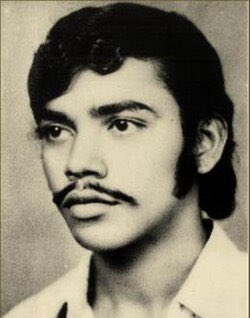
His name was Rajan.
He was a final year engineering student at the Regional Engineering College in Calicut, Kerala. His father, T V Eachara Varier, was a Hindi professor at the Government Arts and Science College in the same city.
On the morning of March 1 1976 the police came to the college campus and took Rajan away.
India was under Emergency. Civil liberties were suspended. Courts had effectively turned away.
His father found out the next day from the college principal.
He went to every police station in the district. No one admitted to having his son.
He met the Home Minister of Kerala, K Karunakaran, directly.
He sent petitions to the Home Secretary of the Government of Kerala three times. Not a single reply or acknowledgement came.
He wrote to the President of India and the Home Minister of the central government, with copies to every Member of Parliament from Kerala.
Nothing.
What Eachara Varier did not know at the time was that his son had been taken to an illegal police interrogation camp at Kakkayam.
He was tortured.
A practice called uruttal was used, where a heavy wooden log is rolled over the body of the victim.
Rajan died from his injuries. His body was disposed of by the police and was never found.
When the Emergency ended in 1977 Eachara Varier filed a habeas corpus petition in the Kerala High Court.
It was the first such petition filed in Kerala after the Emergency.
He did it without legal training, without political backing, without money.
He had spent everything searching for his son.
The court case slowly unravelled the truth.
It forced K Karunakaran to resign as Chief Minister of Kerala in 1978 when the adverse judgment came.
Rajan’s mother became mentally unstable from the grief. She died in 2000 still not knowing where her son was.
Eachara Varier wrote his memoir, Memories of a Father, which won the Kerala Sahitya Akademi Award in 2004.
In its final lines he wrote, “I don’t close the door. Let the rain lash inside and drench me. Let at least my invisible son know that his father never shut the door.”
He died on April 13 2006. He never found his son’s body.
Rajan was picked up from his college campus on a March morning in 1976. He was never seen again.
Repost this. Some stories must not be allowed to disappear.
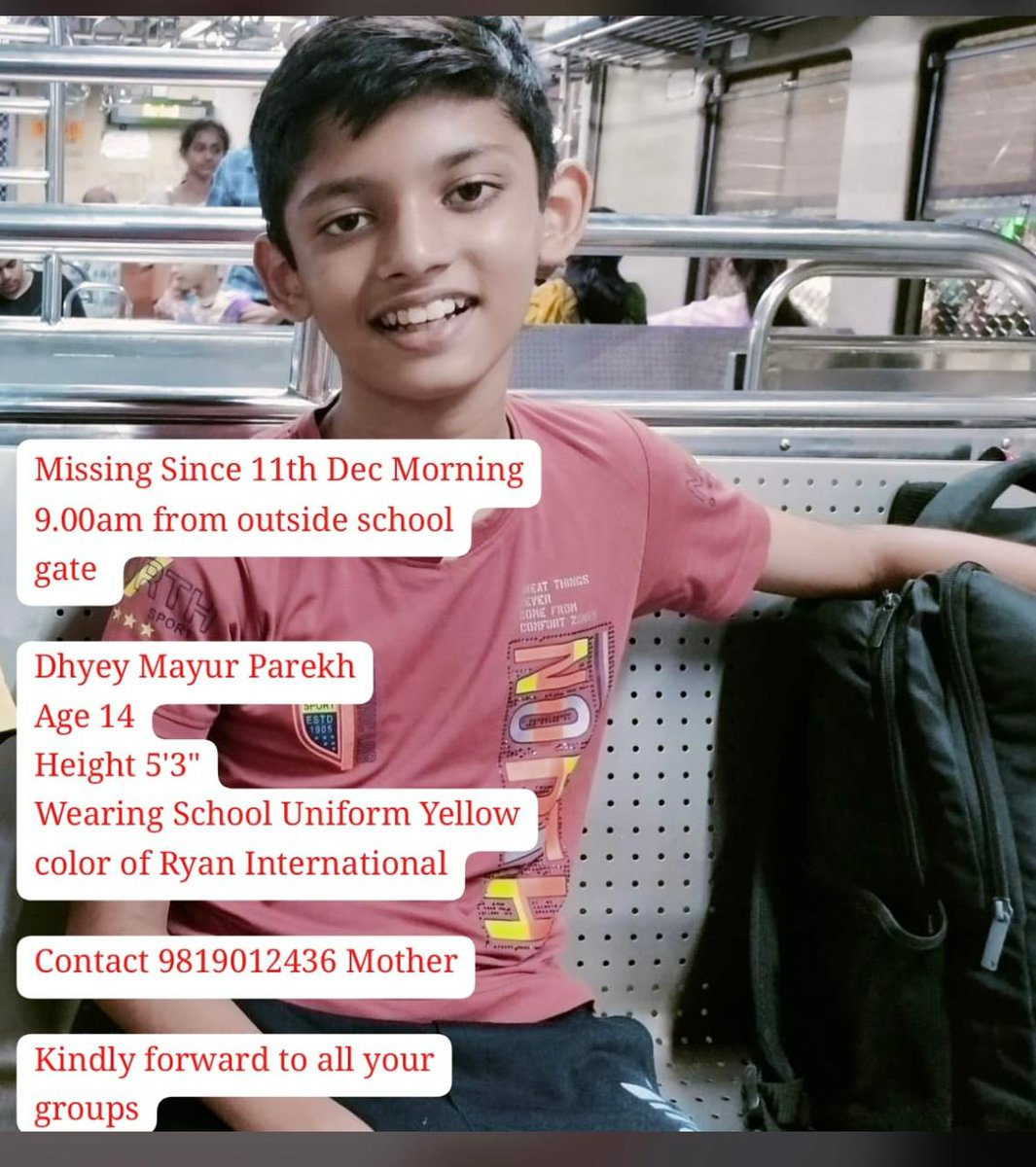
Extremely shocking it is of the media for not covering the increasing missing cases of children in mumbai. It is painful to know that 82 children went missing in last 30 days from different part of Mumbai.
@MumbaiPolice high time to take this seriously. @Dev_Fadnavis@mieknathshinde
This 14 year old kid went missing form the school itself. This needs to be stopped at anycost. @CPMumbaiPolice
Today broke my heart 💔 a beautiful young mother who has left behind a baby girl - she isn’t even 3 months old. A family totally devastated. A father carrying the coffin of his daughter. No family should have to endure such pain. The murderer.. a 41 year old monster Mohammed Azim with several past convictions including 3 rapes and manslaughter.. 2 prison terms BOTH of which he was RELEASED EARLY - free to MURDER Lily. An absolute and total failure by successive governments to prioritise our citizens safety. Today has made me even more determined to fight for justice and the protection of Women and Children in this country! If I spend the rest of life fighting to stop another family suffering as the Whitehouse family did today.. then that is what I will do. ENOUGH. Protect Us. Protect our Children 🩷 @pinkladies_uk@RestoreBritain_@RupertLowe10@reformparty_uk
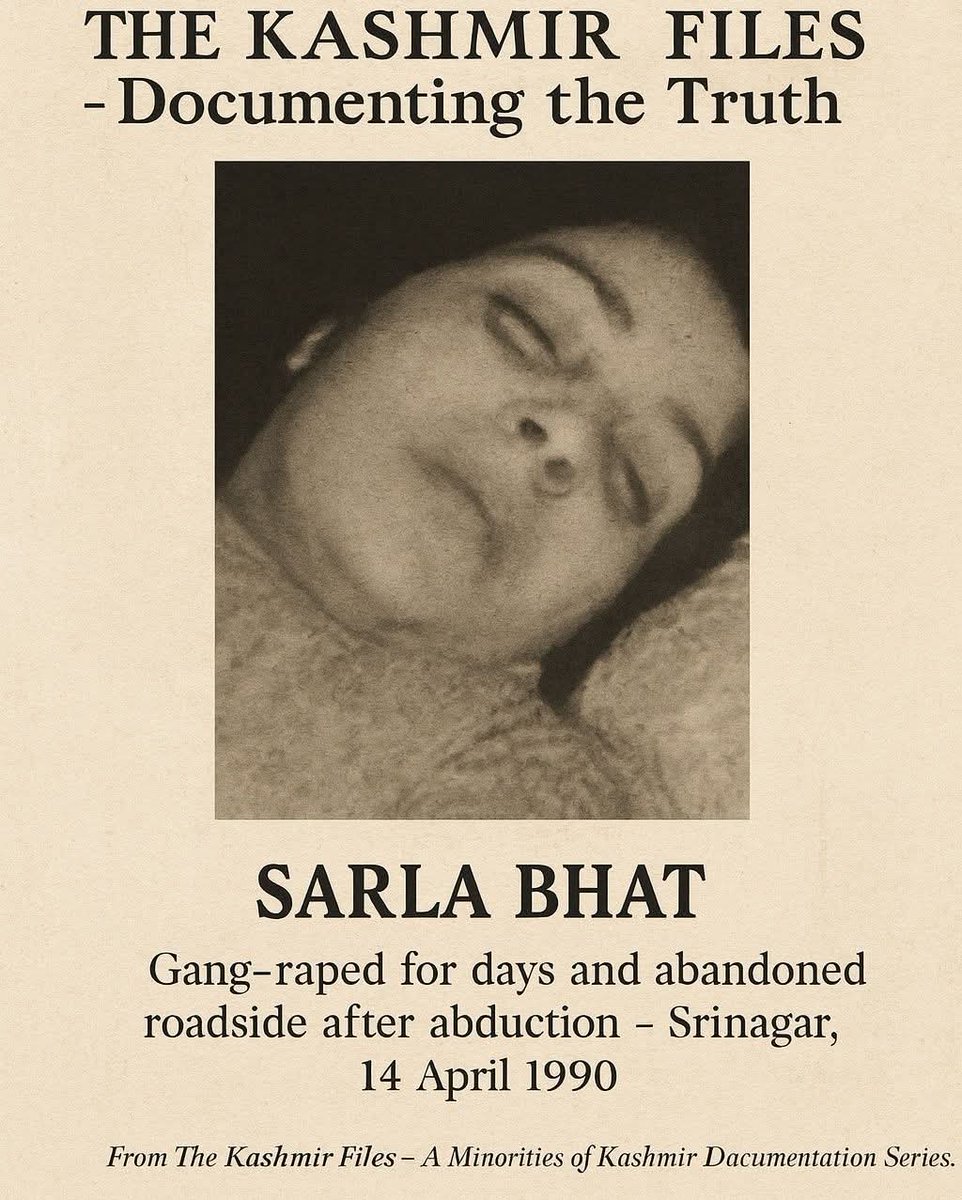
💔 Sarla Bhat — “The Kashmir Files”
She was only doing her duty.
A young Kashmiri Pandit nurse, healing the sick, serving her people, walking the halls of a hospital that should have been a place of safety.
But hatred entered through the doors before dawn on 14 April 1990.
Sarla Bhat was kidnapped from her hostel — not by strangers from far away, but by men who walked the same streets, who knew her name, who saw her humanity and chose to destroy it.
For days she was tortured, violated, and brutalized in ways no human being should ever endure. Her helpless cries never reached her family. Her suffering was swallowed by the darkness that had already engulfed Kashmir.
When her lifeless body was finally found on 19 April, it carried not just wounds —
it carried the story of a community abandoned, hunted, and unheard.
Her mother waited for news that never came.
Her family prayed for a miracle that never arrived.
In the end, they received only silence… and a body.
Sarla’s story is not just a murder story — it is a wound in Kashmir’s conscience.
A reminder that before an entire community was exiled, its daughters were broken, its mothers were left screaming, and its fathers were left powerless before the cruelty of terror.
Remember her name.
Remember her suffering.
Remember that she was a healer — and they took her life with unspeakable brutality.
This is Sarla Bhat.
This is her truth.
This is why The Kashmir Files must never be forgotten.
The CJI has said he will look into the #straydogs issue. He should. Because amidst all the celeb / urban outrage against the SC order 7 yr old Kavya from Srirangapatna may not be hear or seen. This is her attacked by a #stray today.