@xghana_ Not correct. It’s just a variation of jellof. The assertion that it is a corruption of ‘jell of rice’ is not backed by any historical sources. Why is the dish pronounced consistently across the West African subregion?
The dish originated from the Sene-Gambia.
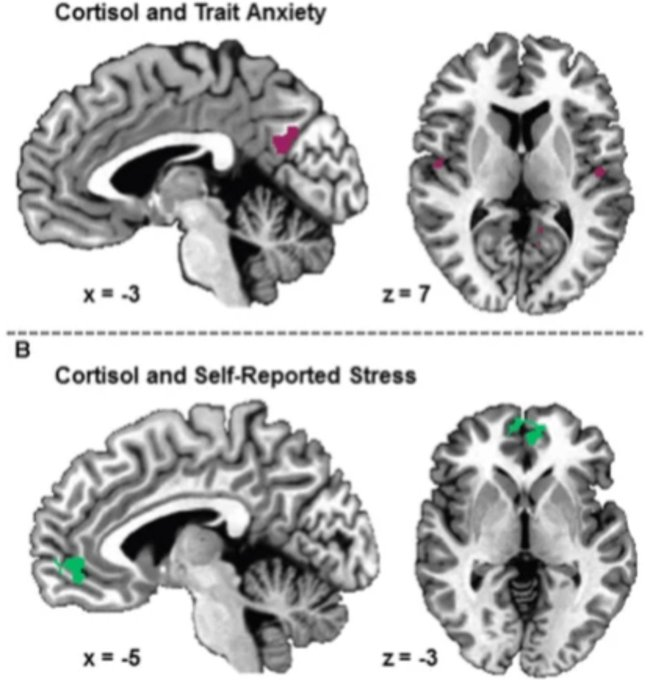
Andrew Huberman just dropped a 2‑hour masterclass on cortisol — your body’s main stress hormone.
High cortisol = burnout, faster aging, weight gain, memory loss, heart disease, Alzheimer’s.
Here’s a 7‑step protocol to fix your cortisol (backed by science):🧵
Your brain has a region that only grows when you do things you don't want to do.
It's called the anterior mid-cingulate cortex.
It's also the same region associated with the will to live.
Watch David Goggins' face when Huberman tells him this for the first time.
Penis size is set before birth by maternal health, metabolism, and hormone exposure (including birth control)
Penis size is largely determined during fetal development through the maternal–placental endocrine system.
Masculinization depends on DHT acting locally in genital tissue. Fetal circulating DHT is often very low, which shows that the androgenic signal is generated inside tissues from precursors rather than delivered directly through blood.
A major part of this signal comes from the backdoor pathway. Placental progesterone is converted across fetal tissues into intermediates such as androsterone, which are then converted locally into DHT in target organs. This pathway bypasses testosterone as an obligatory step.
The placenta provides a continuous supply of progesterone derived from maternal cholesterol, so androgen production depends on maternal substrate availability and its processing across fetal liver, adrenal glands, and peripheral tissues.
The system is distributed and depends on coordinated enzymatic activity rather than a single endocrine source.
Conversion efficiency depends on metabolic conditions. Thyroid function, mitochondrial activity, oxygen availability, and stress signaling determine whether progesterone is efficiently converted into androgenic intermediates or diverted toward other pathways.
Maternal endocrine state directly modifies these conditions. Hormonal contraceptives suppress endogenous progesterone production, alter estrogen signaling, and modify stress-axis regulation, replacing a cyclical endocrine pattern with a static pharmacological one.
This changes substrate dynamics, timing, and pathway organization during fetal development.
Synthetic progestins are not equivalent to physiological progesterone. They activate receptors but do not function as interchangeable substrates within steroidogenesis, so downstream androgen and neurosteroid pathways are altered.
Puberty mainly amplifies androgen exposure and completes growth. The structural baseline is established earlier through progesterone availability, metabolic capacity, enzyme expression, and local DHT production shaped by the maternal environment.
Kwaku Peters, a key member of the adventurer group Wanderlust Ghana, has shared an update on the progress made so far in their historic 12,000 km road trip from Accra to the USA ahead of the 2026 FIFA World Cup.
In 1972, a Stanford psychologist gave 4-year-olds a choice.
"One marshmallow now or wait 15 minutes and get two."
Rich kid waits. Poor kid eats it immediately.
For 50 years, psychologists said this proved poor kids lack self-control.
Wrong.
Poor kids learned that promises get broken. The second marshmallow isn't coming.
Professor Jiang Xueqin spent 50 minutes explaining why the poor kids are the rational ones:
The psychologist was named Walter Mischel. He put a marshmallow in front of 4-year-olds and said: "You can have it now, or wait and get two."
He tracked them for decades. The kids who waited did better at everything.
His conclusion: success means delayed gratification. Long-term planning. Self-control.
So educators built curricula around it. Teach kids self-control, resilience, self-assessment. They'll succeed.
It didn't work.
"If you take a bad student and teach him self-control, resilience, and self-assessment, the student doesn't actually get better."
The reason is simple: correlation does not equal causation.
Successful people wake up at 4am. But waking up at 4am won't make you successful.
If you're successful, you wake up early because you're motivated. If you're successful, you have self-control because your environment rewards it.
The traits don't cause success. Success causes the traits.
Here's what actually determines success:
"We know for a fact that rich people are much more likely to succeed than poor people. School doesn't really matter. If your parents are rich, you'll be successful. If your parents are poor, you will not."
The difference starts with parenting.
A rich kid touches a hot stove. The parent says: "You made a mistake. Don't worry about it. Let me explain why fire is dangerous. You could burn yourself. We'd have to go to the doctor."
A poor kid touches a hot stove. The parent says: "Don't you ever do that again or I'll beat the crap out of you."
Same lesson. Completely different worldview.
The rich kid learns: the world is safe. I am respected. Adults explain things to me.
The poor kid learns: the world is scary. I must fear authority. Don't ask questions.
There's another difference. Rich parents keep promises. Poor parents can't.
"Next week we'll go to Thailand." Next week, you go to Thailand.
"Next week we'll go to McDonald's." But the paycheck isn't enough. "Sorry, we can't go anymore."
Rich parents offer stability. Poor parents can only offer volatility.
Now go back to the marshmallow test.
"If you believe the teacher will keep his promise, you won't eat that marshmallow. If you think the teacher is lying, you will eat it."
If you're a poor kid, you've learned that promises get broken. Adults lie. The second marshmallow probably isn't coming.
So you eat the first one. That's not lack of self-control. That's rational decision-making.
"Poor kids are not stupid. Poor kids are rational. They're responding to the circumstances they live in."
The same logic applies to resilience.
"The idea of resilience is that you believe the world will help you. If you're rich and you fail, someone will help you get up. If you're poor and you fail, that probably tells you that you shouldn't be doing this."
Why try again when trying again has never worked?
And self-assessment? "If you're a poor child who lives under a lot of stress, it's hard to be self-reflective. Because if you look back at yourself, all you think about is your pain and your stress."
Here's the deeper structure.
"As a poor person, if you want to survive, you have to obey authority. As a rich person, you maximize your outcome by negotiating with others."
Poor parents command their children because that's what the world will demand. Obey the police. Obey the boss. Don't talk back.
Rich parents teach their children to debate, argue, negotiate. Because that's their game.
"From day one, rich kids know they're playing a different game."
Here's something stranger.
500 students took an IQ test. Then they guessed their ranking.
The top 5% thought they were top 20%. The test was easy for them, so they assumed it was easy for everyone.
The bottom 5% thought they were average.
"People who are stupid lack the capacity to know they're stupid."
This is the Dunning-Kruger effect. And it explains why the most confident people are often the least competent.
"This helps explain why the world is why it is. Often the people in power are stupid. They don't know they're stupid. They were confident."
Can poor kids escape?
"Yes. But it means leaving your community. You have to be extremely individualistic. Very ambitious. High risk tolerance. Most people don't have that."
The professor is one of them.
"I'm a poor kid who succeeded. My father was a dishwasher. But I left Canada for the United States. I got lucky."
"You can work as hard as you want, but the chances are against you. It takes luck. And that's often the exception to the rule, not the rule itself."
Here's what he wants you to understand:
When we see differences in success, our default explanation is differences in ability or effort.
We forget that a poor kid eating the marshmallow isn't weak. He's learned that waiting doesn't pay.
We forget that a poor kid giving up isn't lazy. He's learned that no one's coming to help.
We refuse to admit that the traits we associate with success are products of environment, not causes of it.
The marshmallow test is about measuring childhood, not measuring character.
Andrew Huberman described the worst morning routine in five steps. Stay in bed, recline, skip sunlight, drink coffee too early, multitask. Every one of them targets the same 30-minute neural event.
Between minute 0 and 60 after waking, your body runs the cortisol awakening response. A healthy pulse lifts cortisol by about 50%, sets a 14-to-16 hour timer for melatonin release, primes immune function, and anchors alertness for the whole day. Miss the window and your circadian clock drifts until you go back to sleep. The rest of the day runs at 70%.
Sunlight is the trigger. Light has to hit melanopsin cells at the bottom of your retina to signal the suprachiasmatic nucleus to fire cortisol. Through a glass window you need 50 times longer. A phone screen is hundreds of times too dim to count. Curtains closed plus head down means the pathway never activates. The pulse either never fires or fires weakly, with effects rippling across the next 16 hours.
Reclining kills the second lever. Studies recording directly from the locus coeruleus and the reticular activating system show alertness drops with reclining and rises with sitting forward. Those melanopsin cells sit in the bottom of your retina for a reason. They evolved to see the sun overhead. Chin down, eyes down, horizontal body: the brainstem reads this signal set as "still asleep" and keeps you in sleep-adjacent arousal for hours.
Coffee at minute 10 kills the third. Adenosine is the sleep pressure molecule cleared by that cortisol pulse. Caffeine blocks adenosine receptors before cortisol gets the chance to clear them naturally. Two to three hours later the caffeine metabolizes, uncleared adenosine floods the receptors all at once, and you crash at 11am. Drink a second cup to patch the crash and you've shifted your cortisol peak four hours late. Which means your melatonin shifts too. Which means you can't sleep that night.
Phone scrolling kills the fourth. Morning dopamine baseline is the lowest it will be all day. Ten minutes of feed delivers hundreds of micro-rewards before breakfast is ready. You've spent peak dopamine on algorithm-selected stimuli. Every real task in the workday that follows registers as a downgrade against that baseline.
Multitasking kills the fifth. The prefrontal cortex boots last after waking. Task-switching between texts, emails, and random notifications during the boot window trains the attention network to run fragmented all day. Sophie Leroy's 2009 attention residue research showed each switch leaves cognitive spillover that degrades the next task. Start the morning with 20 switches and focus is a rented asset for the next 12 hours.
Five random-looking habits, five targeted attacks on the same mechanism. Light triggers the pulse. Posture amplifies it. Caffeine cooperates with it. Dopamine protects what it builds. Focus compounds what it anchors.
20 minutes outside with your phone in the other room fixes all five at once.
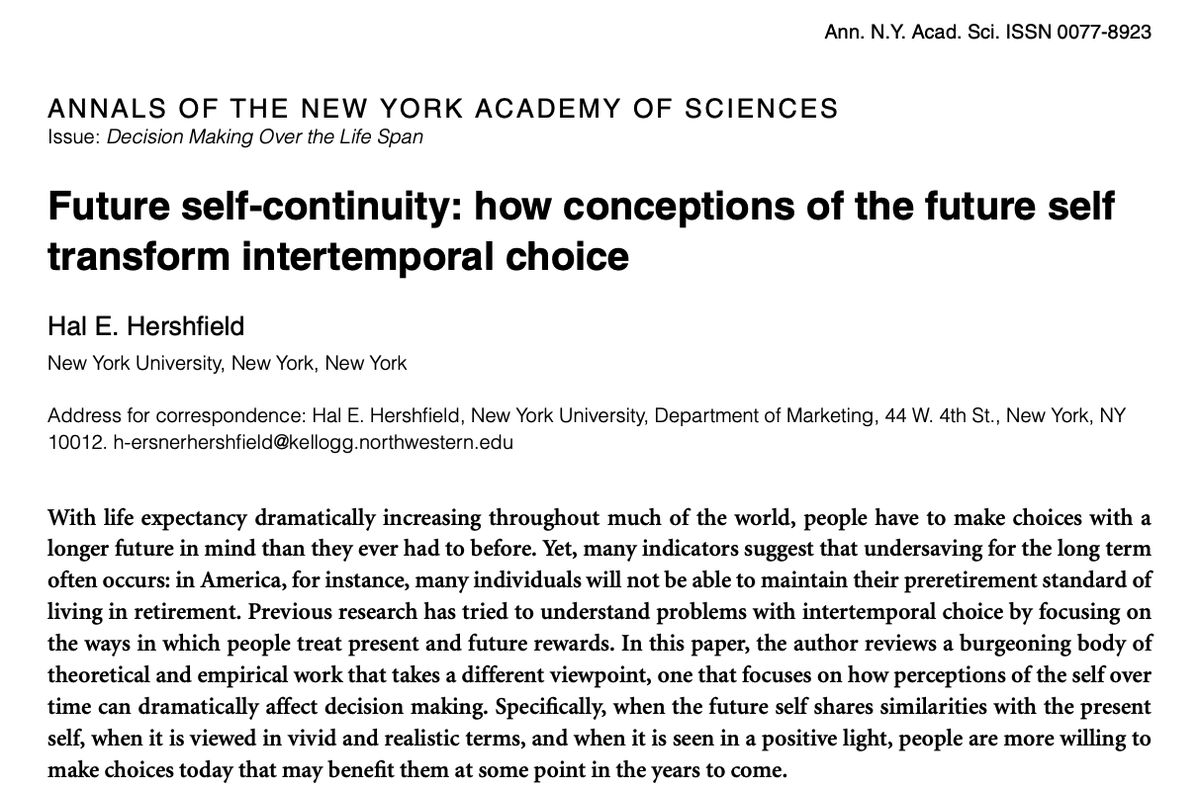
The most dangerous discovery in neuroscience is that your brain actively categorizes "Future You" as a stranger.
In 2011, Hal Hershfield discovered something that destroys every assumption about willpower and self-control.
When Stanford researchers put people in brain scanners and asked them to think about themselves in 10 years, the neural activity looked identical to thinking about celebrities or random strangers. Zero overlap with the patterns that fire when you think about your current self.
You literally perceive Future You as a different person.
That disconnect explains why 92% of New Year's resolutions fail within 60 days. You make promises to someone your brain doesn't recognize as you. Future You will exercise. Future You will save money. Future You will quit smoking. But to your current neural circuitry, Future You is as foreign as the person sitting three tables away at a coffee shop.
The question is would you trust a stranger to follow through on your commitments?
The shift happened when Hershfield tested "future self-continuity" interventions. Simple techniques that force your brain to recognize Future You as actually you. People who spent 10 minutes writing detailed letters to themselves 10 years from now showed 60% higher follow-through rates on behavioral commitments compared to control groups who just made standard resolutions.
The mechanism is startling in its simplicity.
Writing to Future You activates the same brain regions that fire during autobiographical memory recall. You start processing Future You with the same neural machinery you use for Current You. The psychological distance collapses. Future You stops being a stranger and becomes a continuation of your identity timeline.
This rewrites the entire framework of behavior change. Willpower is less about forcing yourself to do hard things and more about convincing your brain that the person who will benefit from those hard things is actually you.
But, 99% people approach goals backwards.
They focus on the action. Do this. Stop that. Change this habit. But the action is downstream from identity recognition. If your brain categorizes Future You as someone else, every sacrifice you make for Future You feels like charity work. And humans hate doing unpaid charity work for strangers, especially strangers who never seem to appreciate it.
The people who sustain major life changes intuitively understood this connection before Hershfield proved it scientifically. They do more than just setting goals. They built detailed mental models of their future identity. They could describe not just what Future They would do, but how Future They would think, what Future They would value, how Future They would spend Tuesday afternoons.
The 60% improvement must not be considered a ceiling. It's the baseline for people who accidentally stumbled into future self-continuity.
When researchers deliberately trained people to maximize the neural overlap between current and future self-perception, follow-through rates approached 85%.
That number breaks most of what the self-help industry teaches about habits and discipline.
So, the takeaway is you don't need more motivation. You need better self-recognition software. Your brain needs to see Future You as clearly as it sees Current You. Every major behavioral change becomes effortless once that perceptual shift locks in.
Future You isn't someone you owe. Future You is someone you are.
Once your brain accepts that equation, behavior change stops feeling like work and starts feeling like basic self-preservation.
7 minutes after you finish studying, your brain quietly runs a file-transfer process. Columbia scientists caught it on a brain scan, and repetition is what speeds it up.
In the study, 29 people went into an fMRI machine and saw flashcards pairing words with pictures. Some flashcards appeared once. Others appeared three times. After the flashcards, participants closed their eyes and rested for 7 minutes, still in the scanner, while the researchers watched what their brains did next.
The hippocampus (a seahorse-shaped chunk deep in your brain that handles new memories) replayed the flashcards at the same rate whether people had seen them once or three times. The scan showed no difference between the groups in that region.
Three other brain regions went the other way. All three belong to your brain's long-term storage network, the system that keeps memories around for years. Those regions replayed the repeated flashcards way more than the once-seen ones. One of them also started firing in sync with the hippocampus more often when replaying the repeated cards, like two colleagues confirming a file had been saved.
Textbooks describe memories moving from the hippocampus to long-term storage as a slow process, one that takes weeks, months, or sometimes years. This study caught that process starting within the first 7 minutes after closing your eyes, with repetition speeding it up dramatically.
When a flashcard had been shown three times, the long-term storage regions replayed the most recent viewing. Your brain treats each repetition as an update.
The hippocampus was doing its own kind of work. For the flashcards people saw only once, the more the hippocampus replayed them during that 7-minute rest, the more likely people were to remember them on the test afterward. The hippocampus was picking up the slack for the weaker memories, while the long-term regions took over the stronger ones.
The paper was edited by Robert Bjork at UCLA, the guy who coined "desirable difficulties," the idea that when learning feels harder in the moment, the memory tends to stick longer. This study adds a mechanism. Repetition works by moving a memory, fast, in the minutes right after you stop looking at the thing.
Chronic fatigue isn’t "aging."
It starts when your mitochondria (the power plants of your cells) begin to fail.
I spent years exhausted, sick, and anxious before learning how to revive them.
Here’s how I fixed my mitochondria and rebuilt limitless energy: 🧵
The people you spend the most time with are not just influencing your mood.
They are physically rewiring your brain.
In 1992, neuroscientist Giacomo Rizzolatti at the University of Parma discovered something by accident that changed neuroscience permanently.
He was studying motor neurons in monkeys. Specifically the neurons that fire when a monkey reaches for food.
Then he noticed something nobody expected.
The same neurons fired when the monkey simply watched another monkey reach for food.
The brain could not tell the difference between doing and observing.
Further research confirmed the same system exists in humans.
They called them “Mirror Neurons.”
When you watch someone experience pain, the pain regions of your brain activate.
When you watch someone laugh, your laughter circuits fire.
When you spend extended time around someone who is anxious, your nervous system starts running their pattern.
Elevated cortisol.
Heightened threat detection.
Increased heart rate.
You are not imagining that certain people drain you.
Your brain is literally running their emotional software inside your body.
Researcher Vittorio Gallese, who worked alongside Rizzolatti on the original discovery, later named this “Embodied Simulation.”
Your brain builds a first-person copy of whatever it observes.
Continuously.
Automatically.
Without asking your permission.
This is why you feel exhausted after an hour with a person who never stops complaining even though nothing happened to you.
This is why you feel energized around someone who is calm and grounded even though they didn’t say anything profound.
Your nervous system was downloading their state the entire time.
Now multiply this by every person you see daily.
Every room you sit in.
Every feed you scroll.
Your brain doesn’t distinguish between a toxic coworker and a toxic comment section.
It runs the simulation either way.
The room you sit in most often is not just an environment.
It is a program your nervous system is running on repeat.
And most people have never audited the program.
They wonder why they are anxious and exhausted and stuck.
They blame themselves.
They never look at the room.
You do not need more motivation.
You need to change what your mirror neurons are copying.
The fastest way to change how you feel is not to think different thoughts.
It is to change what your brain is being asked to simulate.
Choose the room.
Choose the feed.
Choose the people.
Because your brain is going to copy whatever is in front of it whether you want it to or not.
~ Andre Gonsalves
✨🙌🏽💫
The Ancient Brain Wiring That's Quietly Sabotaging Your Life
Barry Ritholtz shares a warning from neurologist Dr. William Bernstein that applies far beyond investing:
"Learn to control your limbic system or else you will die poor."
It's a strong statement. But the psychology behind it reveals something profound about human nature. Why we so often act against our own interests.
The limbic system is the emotional, reactive part of our brain. It's what fires when we feel greed, panic, fear, or urgency. And as Ritholtz explains, our inability to manage these emotions consistently leads us to bad decisions.
Here's the paradox he uncovers:
"We're hardwired to make that mistake. It's kept us alive on the savannah for millions of years and allowed us to become the most successful species on the planet."
The same instincts that helped our ancestors survive predators: react fast, run from threats, chase opportunities are the exact instincts that sabotage us in modern life. Our psychology hasn't caught up with our environment.
Ritholtz shares an old piece of wisdom that flips conventional thinking on its head:
"Don't just do something, sit there."
The meaning? Don't react to every twitch, every news story, every TikTok, every Instagram. Don't let every emotional spike pull you into action.
This is where the psychology gets uncomfortable. We've been conditioned to believe that action equals progress. That doing something is always better than doing nothing. But Ritholtz reveals the opposite is often true:
"If you respond to every time [things twitch], you're going to prevent your [life] from compounding over time."
Whether it's your portfolio, your career, your relationships, or your health, compounding requires patience. It requires overriding the ancient wiring that demands immediate response to every perceived threat or opportunity.
The people who build extraordinary lives aren't necessarily smarter or more talented. They've simply learned to create space between stimulus and response. They've trained themselves to recognise when their limbic system is hijacking their judgment and to pause before acting.
Andrew Huberman on why you can't think your way out of stress:
Huberman is asked what he means when he says you cannot control the mind with the mind.
His answer reframes how we should approach stress, anxiety, and emotional regulation entirely.
"If you're very upset, it's hard to talk yourself out of it. If you're stressed, it's hard to think yourself out of it."
He explains that when we're in heightened emotional states, we tend to default to mental strategies, rationalizing, "third personing" ourselves, texting a friend, trying to reason our way back to calm. But according to @hubermanlab, this rarely works:
"It's very hard to get yourself out of those states with thinking alone."
The solution, he argues, lies not in the mind but in the body.
"The beauty of the autonomic nervous system is that it traverses the brain and the body and it connects to essentially all the organs of the body. And it's a two-way street such that certain behaviors, even certain patterns of breathing etc. allow us to shift between very very alert and stressed and very calm."
This two-way street is the key insight. The body doesn't just receive signals from the brain, it also sends them back. Shifting your physiology shifts your mental state, which in turn shifts the kinds of thoughts and actions available to you.
"If you're very very stressed, you're very very upset, two things happen. One, it's very hard to take your focus off whatever it is that's upsetting you. And if you don't know what's upsetting you, you know, pure anxiety, but you don't know why, it's very hard to take your mind off of the feelings of anxiety."
In other words, anxiety hijacks your attention and then traps you there. Trying to think your way out only tightens the grip.
The way out is to move through the body first:
"If we turn to the body and certain behaviors, we are able to move ourselves along the autonomic continuum. And at that point, when we've done that successfully, we are able to think about things differently."
"If you can't control the mind with the mind, look to the body to control the mind."
“Men cheat more, but women cheat better.”
Leading divorce lawyer James Sexton @nycdivorcelaw argues that infidelity often differs by gender in pattern and motivation, suggesting that while men may cheat more frequently, women’s cheating is more likely to be emotionally driven and tied to the breakdown of a relationship rather than being purely impulsive.