Blue and white stars shine brilliantly against a crimson background of glowing gas in this July 3 image of stellar nursery LH 95 from @NASAHubble. LH 95 is a region in the Large Magellanic Cloud. Learn more >> https://t.co/WAvCR8MJnU
🚨 Massive World Cup Offer AND $100K Giveaway 🚨
If your team takes the lead in 90 minutes but doesn't win in regulation time, we'll still pay your bet as a winner. 💰
Plus, we're giving away $100,000 to 10 lucky winners! 🎁
Repost and comment below to enter 👇
Full T&Cs apply
#FIFAWorldCup
🎁Karambit Doppler Giveaway ($1500)🎁
✅Follow @plunderdotgg + @DrewBills_
✅Retweet & Tag 1 friend
✅Visit https://t.co/S3bzdjVvoR
🚨Winner will receive extra doppler if $50 deposited on https://t.co/Krqjb4XniR in last 10 days
⏱️Rolling in 10 days
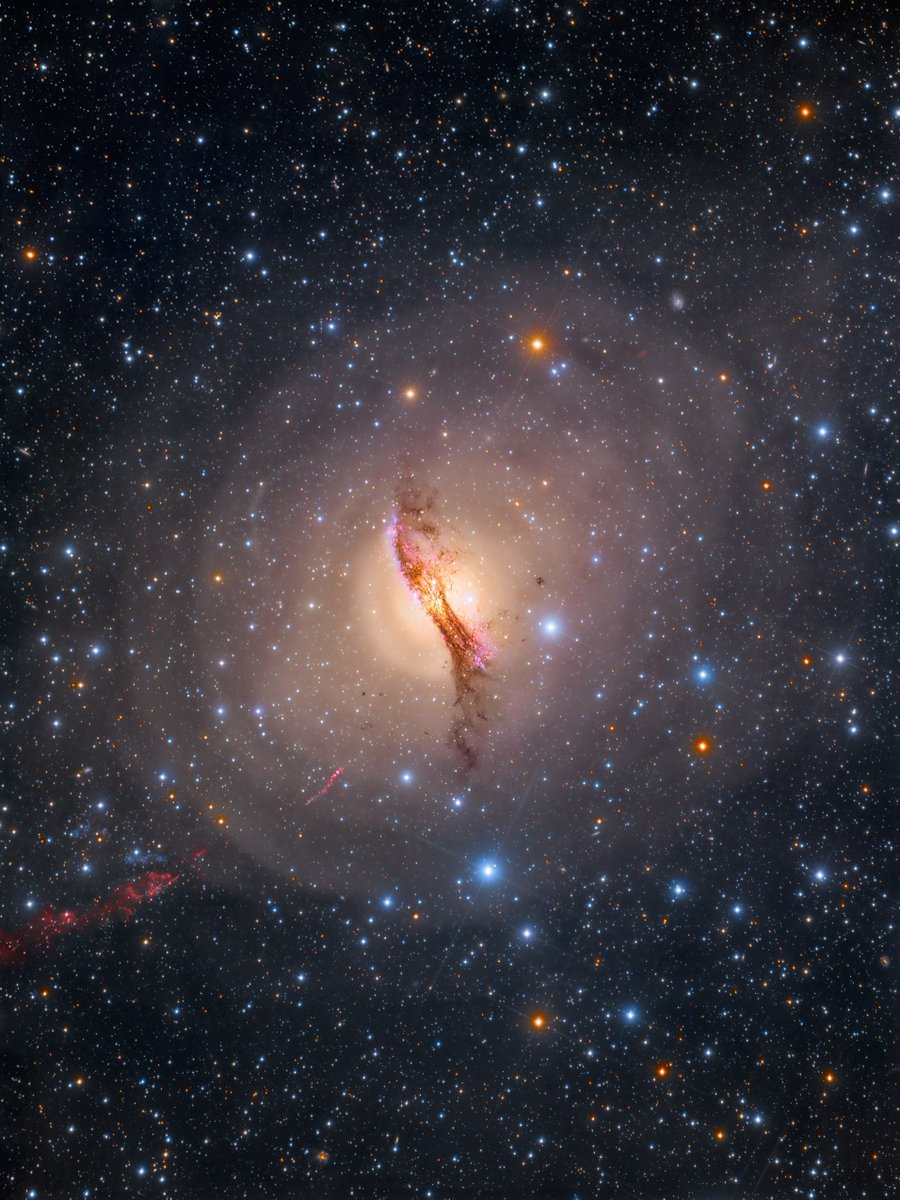
Centaurus A (NGC 5128) is one of the nearest active radio galaxies to us, located approximately 12 million light-years away in the constellation Centaurus. Its diameter is estimated at around 60,000 light-years, and at its center lies a supermassive black hole with a mass of about 55 million times that of the Sun. Centaurus A emits powerful radio jets stretching over a million light-years, making it one of the brightest radio sources in the sky. The galaxy features a distinctive dark dust lane—the result of a collision with another galaxy about 200 million years ago.
Centaurus A should not be confused with Sagittarius A*—the compact supermassive black hole at the center of our own galaxy.
🌙
Happy 250th birthday, America! We got you a present. 🇺🇸
The red, white, and blue stars of this globular cluster shine like a sparkler waved on a dark night in this image from @NASAHubble, released in celebration of the United States' 250th anniversary.