Explanation for a Child:
"Allah gave us quiet prayers during the busy day so we can find peace away from noise, and louder prayers during calm times so our hearts can deeply feel the beauty of the Quran."
4. Variety Prevents Routine:
If every prayer were exactly the same, people could fall into habit and lose attentiveness.
This beautiful balance between silent and loud prayers keeps the worshipper spiritually awake and mindful throughout the day.
3. The Peace of the Night:
Fajr, Maghrib, and Isha happen during quieter times of the day.
At night and early morning, the environment is calmer and the heart is naturally more reflective. Reciting the Quran aloud during these prayers increases concentration, prevents distraction, and brings a deeper feeling of tranquility and khushu.
2. Dhuhr and Asr happen during the busiest hours of the day.
People are working, moving around, thinking about responsibilities, and surrounded by noise.
Silent prayer creates a private moment of peace between a servant and Allah.
It helps the heart disconnect from worldly distractions and regain focus.
1. In the early days of Islam in Makkah, Muslims were heavily persecuted.
If the Quran was recited loudly during the day, the disbelievers would mock the Quran and harm the believers.
So Allah made some daytime prayers silent, helping Muslims worship safely and protect the message of Islam.
Imagine you are a Muslim and your child asks you: Why do we pray Dhuhr and Asr silently while we recite aloud in Maghrib and Isha?
(And you don't know the answer)
It was both a profound honour and a deeply reflective homecoming to return to Kaduna Polytechnic, my alma mater, as Special Guest of Honour at its Combined Convocation Ceremony and 70th Anniversary celebration. This distinguished institution occupies a special place in my personal journey, having played a defining role in shaping my values, widening my intellectual horizons, and deepening my lifelong commitment to public service. Kaduna Polytechnic’s enduring legacy in advancing technical and vocational education continues to inspire confidence in the transformative power of knowledge, discipline, and enterprise.
I am sincerely humbled by the conferment of the prestigious Fellowship Award of Kaduna Polytechnic in recognition of my modest contributions to the education sector and public service, as well as my enduring relationship with this great institution. I dedicate this honour to the resilient people of Kaduna State and to our collective aspiration for educational excellence, institutional renewal, youth empowerment, and inclusive development.
When you’re planning, plan like Prophet Ibrahim (AS).
He didn’t just ask for a child.
He asked for a legacy.
“My Lord, make me and my descendants among those who establish prayer…” — Qur’an 14:40
Dream beyond yourself. Dream for generations.
I really want to marry into this family. Kai ba sai an gaya maka akwai tarbiya ba. This is incredibly loving.
Adopting the communal system of reciting the Holy Qur’an brings back nostalgic memories. ❤️
Governor Uba Sani Orders Immediate Completion of Western Bypass, Sets Up Task Force After Fatal Accidents
The Kaduna State Government has issued a firm directive for the immediate acceleration and completion of the Nnamdi Azikiwe Western Bypass, declaring ongoing delays “completely unacceptable” in the wake of repeated fatal accidents along the corridor.
The decision followed an emergency stakeholders’ meeting convened at the instance of Governor Uba Sani, who expressed grave concern over the rising number of crashes on the 21.5-kilometre expressway stretching from Command Junction through the bypass to Mando Roundabout.
Addressing journalists after the meeting, the Commissioner for Information & Culture, Mallam Ahmed Maiyaki, conveyed the Governor’s deep concern and urgency:
“His Excellency is profoundly disturbed by the tragic loss of lives recorded on this highway. No level of progress can justify the continued loss of even a single life. This situation is intolerable, and decisive action must be taken immediately.”
The high-level meeting brought together critical stakeholders, including representatives of the Federal Ministry of Works, the Federal Road Safety Corps (FRSC), KASTELEA, the main contractor Dangote Industries, subcontractors Dantata & Sawoe, and leadership of transport unions such as NARTO, NURTW, and ACCOMORAN.
Maiyaki noted that although the project was awarded in 2021, prior to the current administration, progress had been sluggish until Governor Uba Sani personally intervened.
“Since the Governor’s direct engagement, we have seen a marked improvement in the pace of work. However, progress alone is not enough—timely completion is now non-negotiable.”
According to updates from the Federal Controller of Highways and contractors, approximately 19 kilometres of the road have been completed. Despite the official delivery timeline of December 2026, the Governor has now issued a clear directive for an earlier completion date.
“His Excellency has made it unequivocally clear: this project must be delivered ahead of schedule. Any further delay will not be tolerated.”
To ensure strict compliance, the government has established a multi-agency task force to monitor construction and enforce safety measures around the clock, particularly during the rainy season.
The task force, chaired by the Permanent Secretary of the Ministry of Public Works, includes the FRSC, KASTELEA, Federal Ministry of Works officials, contractors, community representatives, traditional leaders, and transport unions. The Ministry of Information has been mandated to lead an aggressive public awareness and behavioral change campaign.
Maiyaki underscored that unsafe road use has been a major contributing factor to the accidents, noting that several high-risk crossing points have been identified.
“Beyond infrastructure, human behaviour remains a critical challenge. We are working closely with communities to enforce safer road usage. Recklessness on our roads must stop.”
He further stressed that both construction standards and road usage must align with global best practices:
“We are committed to ensuring that this road meets international safety standards—not just in design, but in how it is used.”
The government’s intervention follows mounting pressure from community leaders and youth groups, who have described the situation along the bypass as a “serious public safety emergency” with far-reaching economic and social consequences.
With the new directive and enforcement mechanisms in place, the Kaduna State Government says it is determined to restore safety, accelerate delivery, and ensure that the Western Bypass serves its intended purpose without further loss of life.
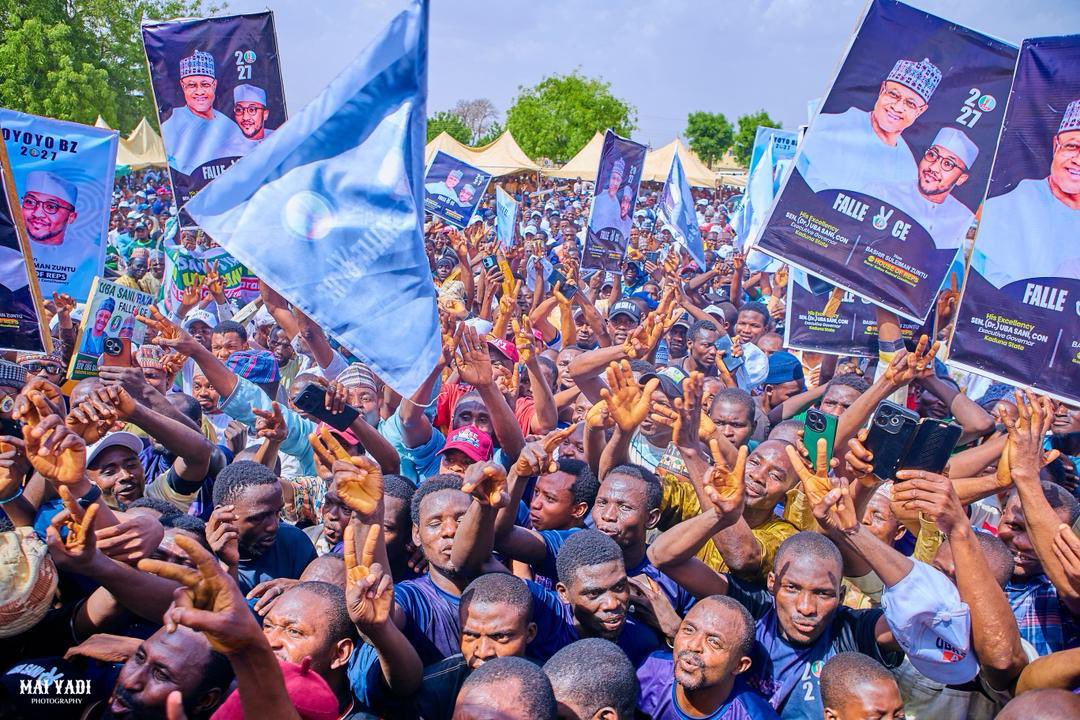
The way the people of IKARA/KUBAU turned up for @BashirSZuntu today is crazy.
I don’t think there’s any young politician as loved as Bashir Zuntu in his constituency.
This is why it’s important to work for you people so they turn up for you on a day like this.
This is why Al Fatiha is repeated in every rakah because every time you recite it, you are speaking to Allah, and Allah is responding to you.
Reference: Sahih Muslim 395
Hadith Qudsi
When you say ;The Most Merciful, The Most Compassionate
Allah says; My servant has praised Me.
When you say; Master of the Day of Judgment Allah says: My servant has glorified Me.
When you say: You alone we worship and You alone we ask for help
Allah says: This is between Me and My servant, and My servant shall have what he asked.
When you say: “Alhamdu lillahi rabbil 'alamin”
(All praise is for Allah, Lord of the worlds)
Allah responds: "My servant has praised Me."
Imagine the King of Kings acknowledging your praise personally.
Why do we recite Surah Al-Fatiha in every rak'ah?
Because it is not just a chapter we repeat, it is a personal dialogue between you and Allah in every prayer. The Prophet Prophet Muhammad (peace be upon him) narrated that Allah says in Hadith qudsi
"I have divided the prayer between Myself and My servant into two parts, and My servant will receive whatever he asks for."