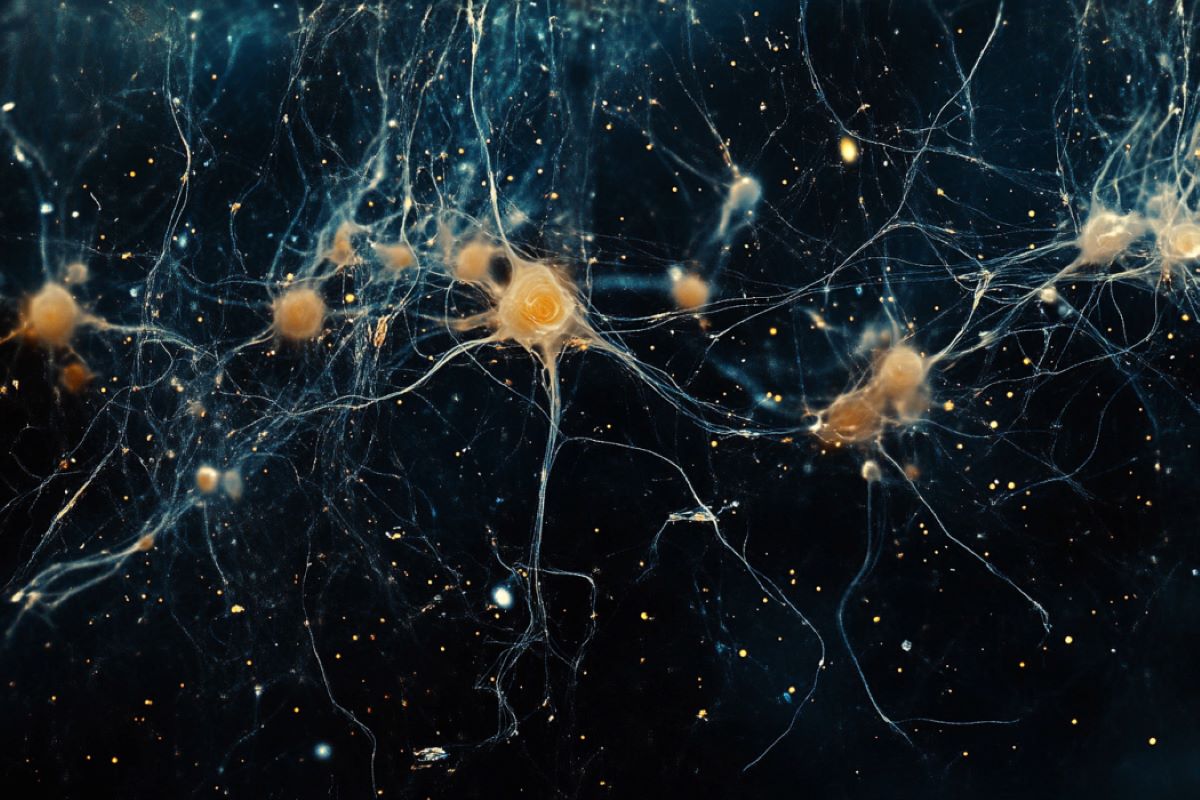
How the Brain Extinguishes Fear Memories
Researchers have uncovered the neural signals behind fear memory extinction in humans for the first time.
By studying patients with implanted electrodes, they found that theta activity in the amygdala increased when previously unpleasant stimuli were re-learned as safe.
These extinction memories were highly dependent on the therapeutic context, which may explain why fear often returns outside of treatment.
The findings open new possibilities for more effective interventions for PTSD and anxiety disorders.
Serotonin Receptor Dampens Visual Input to Enhance Internal Processes
Researchers have discovered that the 5-HT2A receptor in the brain dampens incoming visual information, allowing the brain to focus more on internal processes.
This receptor plays a key role in balancing external sensory input with the brain's internal interpretations.
When overactivated, the receptor suppresses sensory input, which may help explain the hallucinations caused by drugs like LSD.
The study used light-sensitive receptor proteins in mice to precisely control these neural mechanisms, providing new insights into perception and brain function.
The findings suggest that the 5-HT2A receptor could be a target for developing therapies to address psychiatric disorders where sensory processing is imbalanced.
By regulating these brain circuits, scientists hope to restore normal perception in conditions like schizophrenia.
Dopamine Treatment Reduces Alzheimer’s Plaques
Researchers have discovered a potential new treatment for Alzheimer’s disease by leveraging the neurotransmitter dopamine.
In a recent study using a mouse model of Alzheimer’s, dopamine was found to increase the production of neprilysin, an enzyme that breaks down harmful amyloid plaques in the brain, which are associated with Alzheimer’s disease.
By administering L-DOPA, a dopamine precursor, researchers observed a significant reduction in amyloid plaques and improved memory in the mice.
These findings suggest that dopamine could play a crucial role in developing new therapeutic strategies for Alzheimer's disease.
1/3
Nuestro agradecimiento a los hospitales universitarios Gregorio Marañón e Infanta Leonor por posibilitar que nuestros egresados salgan con una formación clínica de excelencia
A novel lymphatic network draining brain fluid could be key to treating neurodegenerative diseases. This opens up new avenues for Alzheimer's research and beyond.
https://t.co/VM2KgWo0ez
1/2
A new study reveals a genomic 'butterfly effect' in autism genetics. Mutations in genome promoters can indirectly affect ASD-related genes, offering fresh perspectives on autism's complex genetic landscape.
https://t.co/ZzcRwuVF3p
1/2
@nietoxconx pero al pasar el código de barras, a mucha gente en Madrid le pasó que no coincidió con la persona que lo había comprado.
De todas formas, la venta podría ser en el propio estadio Olímpico para ser más fiable?
@nietoxconx y podría ser en el propio Estadio Olímpico? porque creo que en Madrid hubo problema si la reventa es entre chico y chica porque te ven si el de la entrada eres tú
Meditation can actually help rewire your brain. Meditation can increase your levels of feel-good chemicals like endorphins & serotonin. Studies also indicate it may increase your capacity for happiness & reduce your propensity towards negativity
#Chopracentercertifiedinstructor
Study finds dopamine, biological clock link to snacking, overeating and obesity
Findings define a connection between reward, dopamine, and circadian pathways in the overeating. #inmice#neuroscience#science
https://t.co/ghQ30IzKAc