LA GLOBALIZACIÓN DEL MATE: LA ARGENTINA EMPIEZA A EXPORTAR YERBA A CHINA Y SUPERA A BRASIL DESPUÉS DE SIETE AÑOS
La Argentina recuperó en 2025 el primer lugar global en exportaciones de yerba mate, tanto por volumen como por valor, tras siete años de prevalencia brasileña. Según el reporte anual del Instituto Nacional de la Yerba Mate (INYM) el país registró un despacho al exterior de 57.980.912 kilos, con ingresos que superaron los USD 116 millones y un precio promedio superior a los USD 1.930 por tonelada.
Este desempeño histórico funcionó como el preámbulo ideal para el inicio de 2026, año en el que el sector logró finalmente activar canales directos hacia China para acelerar la inserción de la tradicional infusión nacional en el mercado asiático.
El volumen de los envíos de yerba mate enviada al exterior en 2025 representó un crecimiento interanual del 32% respecto de 2024, un número histórico para el sector. En términos de producción interna, la Argentina elaboró 889.253.082 kilos de yerba mate durante el año, lo que significa que aproximadamente el 6,5% de ese total se destinó a la exportación, justo por encima de Brasil, que hasta 2024 había sido el principal exportador del rubro.
Infobae 📎 https://t.co/q4AFLDVwcw
Rolf Mantel wrote just a handful of papers, but they forced economists to confront a hard truth: even if individuals are perfectly rational, the economy as a whole need not behave in any orderly way. This post explains why the bridge from micro to macro is much weaker than we once believed—and why that realization still matters today.
https://t.co/ihWFz8Kv9w
Until fifty years ago, Argentina was richer than Spain—
(This Data Insight was written by @EOrtizOspina.)
In a recent Data Insight, I wrote about how Argentina was one of the richest countries in the world at the beginning of the 20th century. Today, I want to follow up with a striking comparison between Spain and Argentina.
The chart shows GDP per capita for Argentina and Spain over the last two centuries. These are historical estimates from the Maddison Project, and the data is adjusted for inflation and differences in the cost of living.
When Argentina declared independence from Spain in 1816, the two countries had very similar GDP per capita. By the late 19th century, Argentina had become richer than its former colonial power, and it stayed ahead for many decades. Spain then started growing faster in the 1960s, and by the mid-1970s it had caught up.
Continued economic growth in Spain after the 1980s drove the large gap we see today. It kept GDP per capita on a steep upward path into the 21st century. Argentina, by contrast, grew more slowly and went through several economic crises, visible on the chart.
Today, Argentina’s GDP per capita is closer to my home country of Colombia than to Western European countries like Spain. This helps us see how much of a difference economic growth can make within just a few generations.
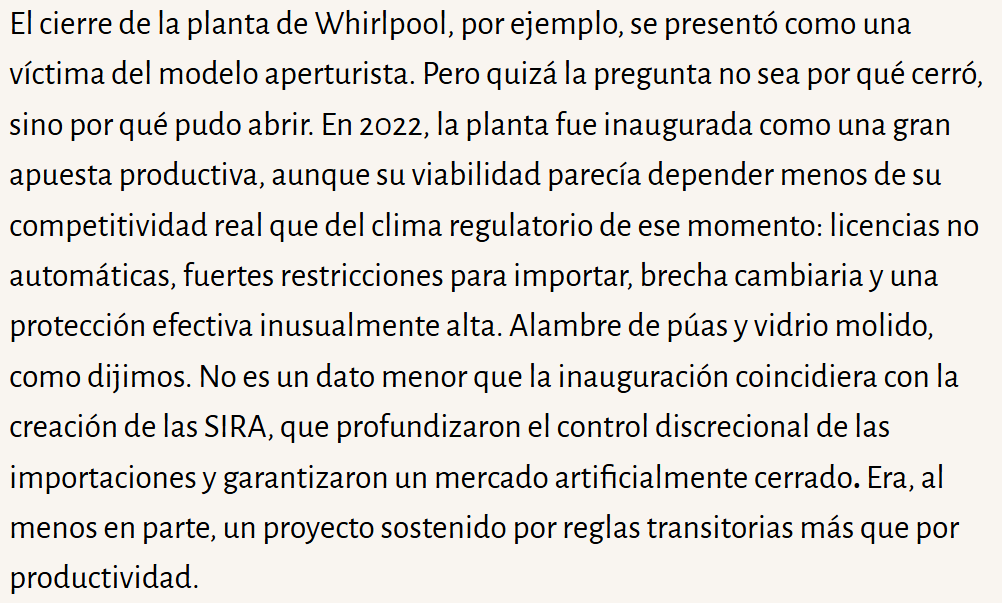
Sumo un dato a lo que bien dice @daianamol.
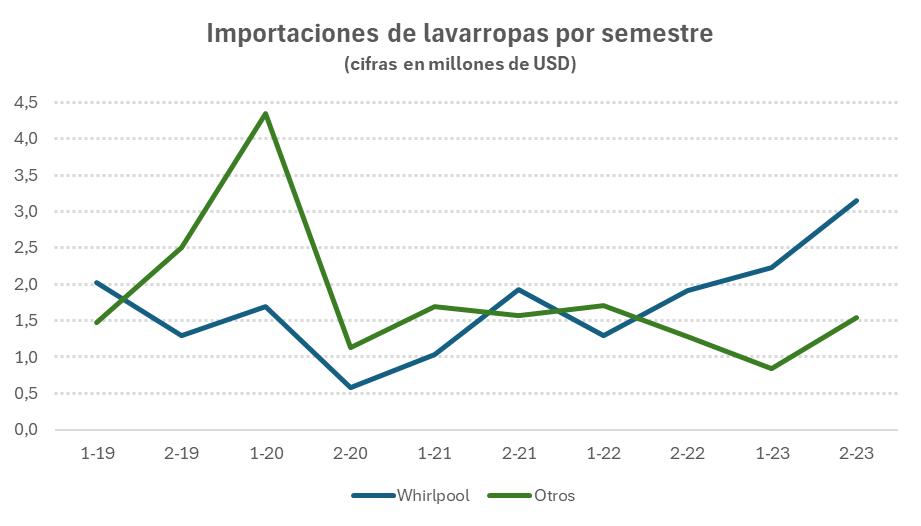
Cuando Whirlpool inauguró la planta, Massa restringió el ingreso de lavarropas sólo a otras empresas. Whirlpool aumentó sus impo (tuvo el 70% de las impo de 2023).
No sólo protegían la producción local, también su negocio importado.
La moraleja del día es que los "https://t.co/VrtcHsLNNa" puede ser contraproducentes: No es solo que algunos votantes no creen en los datos. Es que intentar convencerlos puede ACTIVARLOS para que conviertan a otros. Las rrss amplifican esto.
¿Cuál es el mecanismo para esto?
La MINORÍA que rechazó el contenido del folleto (votantes de Milei) se sintió ofendida y se MOVILIZÓ para convencer a amigos/vecinos.
La MAYORÍA que aceptó el folleto no habló del tema.