“People underestimate how long it takes to win big.
You struggle for 10 years. Eventually, in one day, you achieve more than you did your entire life.
Be patiently aggressive.”
— Patrick Bet-David
A peak life advice from Alex Hormozi:
“The single greatest skill you can develop is the ability to stay in a great mood in the absence of things to be in a great mood about.”
Today we're sharing our work on interaction models. A new class of model trained from scratch to handle real-time interaction natively, instead of gluing it onto a turn-based one.
https://t.co/MoS5s4cm60
Be content with what you have; rejoice in the way things are. When you realize there is nothing lacking, the whole world belongs to you.
Lao Tzu on happiness
Source: Tao Te Ching
Just in: Shayne Coplan (@shayne_coplan), CEO of @Polymarket, drops real advice every aspiring founder needs to hear:
“I dropped out when I was 18, from college, and there were almost three years of complete brutality: things not working, me trying to build things, me learning different things, running out of money, and being stressed about rent. Like, the whole nine yards. And I think the thing I would say is, if you really wanna do this, if you really feel like it's your calling, don't half-ass it. Go all in. Don't hedge your bets.”
Ive watched like 38 times already @fredagainagain1
Fred again.. & Thomas Bangalter (USB002, Alexandra Palace, London 27 Feb... https://t.co/1KjM1eDuel via @YouTube
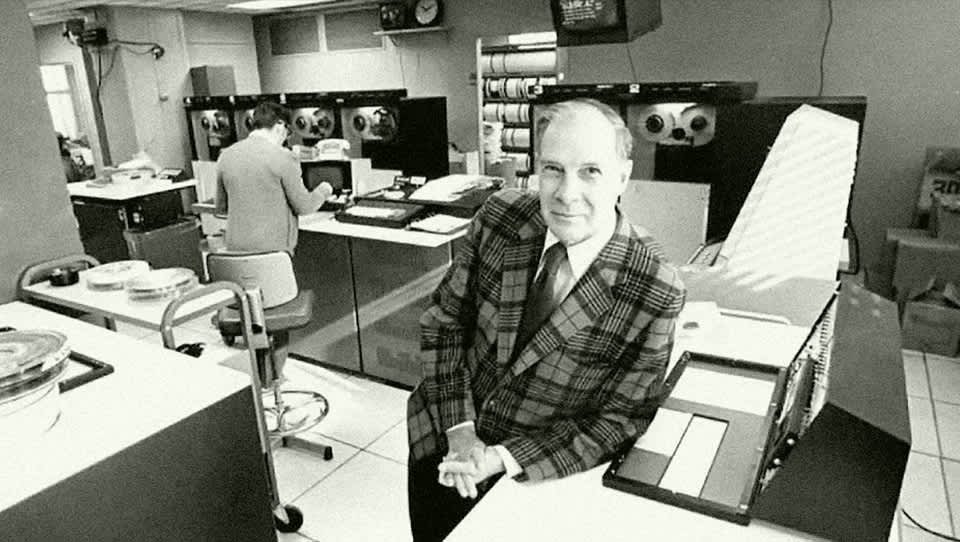
A mathematician who shared an office with Claude Shannon at Bell Labs gave one lecture in 1986 that explains why some people win Nobel Prizes and other equally smart people spend their whole lives doing forgettable work.
His name was Richard Hamming. He won the Turing Award. He invented error-correcting codes that made modern computing possible. And he spent 30 years at Bell Labs sitting in a cafeteria at lunch watching which scientists became legendary and which ones faded into nothing.
In March 1986, he walked into a Bellcore auditorium in front of 200 researchers and told them exactly what he had seen.
Here's the framework that has been quoted by every serious scientist for the last 40 years.
His opening line landed like a punch. He said most scientists he worked with at Bell Labs were just as smart as the Nobel Prize winners. Just as hardworking. Just as credentialed. And yet at the end of a 40-year career, one group had changed entire fields and the other group was forgotten by the time they retired.
He wanted to know what the difference actually was. And he said it wasn't luck. It wasn't IQ. It was a specific set of habits that almost nobody is willing to follow.
The first habit was the one that hurts the most to hear. He said most scientists deliberately avoid the most important problem in their field because the odds of failure are too high. They pick a safe adjacent problem, solve it cleanly, publish it, and move on. And because they never swing at the hard problem, they never hit it. He said if you do not work on an important problem, it is unlikely you will do important work. That is not a motivational line. That is a logical one.
The second habit was about doors. Literal doors. He noticed that the scientists at Bell Labs who kept their office doors closed got more done in the short term because they had no interruptions. But the scientists who kept their doors open got more done over a career. The open-door scientists were interrupted constantly. They also absorbed every new idea passing through the hallway. Ten years in, they were working on problems the closed-door scientists did not even know existed.
The third habit was inversion. When Bell Labs refused to give him the team of programmers he wanted, Hamming sat with the rejection for weeks. Then he flipped the question. Instead of asking for programmers to write the programs, he asked why machines could not write the programs themselves. That single inversion pushed him into the frontier of computer science. He said the pattern repeats everywhere. What looks like a defect, if you flip it correctly, becomes the exact thing that pushes you ahead of everyone else.
The fourth habit was the one that hit me the hardest. He said knowledge and productivity compound like interest. Someone who works 10 percent harder than you does not produce 10 percent more over a career. They produce twice as much. The gap doesn't add. It multiplies. And it compounds silently for years before anyone notices.
He finished the lecture with a line I have never been able to shake.
He said Pasteur's famous quote is right. Luck favors the prepared mind. But he meant it literally. You don't hope for luck. You engineer the conditions where luck can land on you. Open doors. Important problems. Inverted questions. Compounded hours. Those are not traits. Those are choices you make every single day.
The transcript has been sitting on the University of Virginia's computer science website for almost 30 years. The video is free on YouTube. Stripe Press reprinted the full lectures as a book in 2020 and Bret Victor wrote the foreword.
Hamming died in 1998. He gave his final lecture a few weeks before. He was 82.
The lecture that explains why some careers become legendary and others disappear is still free. Most people who could benefit from it will never open it.
If you want a rare life, you have to be delusional. Doubt can enter your mind, and it can sound reasonable, but if you entertain it too much it will slowly drag you down into stagnation. I'd rather reap the lesson from massive failure than do nothing because it's not "realistic."
One of my favorite lessons I’ve learnt from working with smart people:
Action produces information. If you’re unsure of what to do, just do anything, even if it’s the wrong thing. This will give you information about what you should actually be doing.
Sounds simple on the surface - the hard part is making it part of your every day working process.