Military and political developments prior to the war indicate that the invasion of Tigray was planned well in advance. Plan followed by action speaks louder than anything else. #TigrayUnderAttack#Tigray#TigrayGenocide
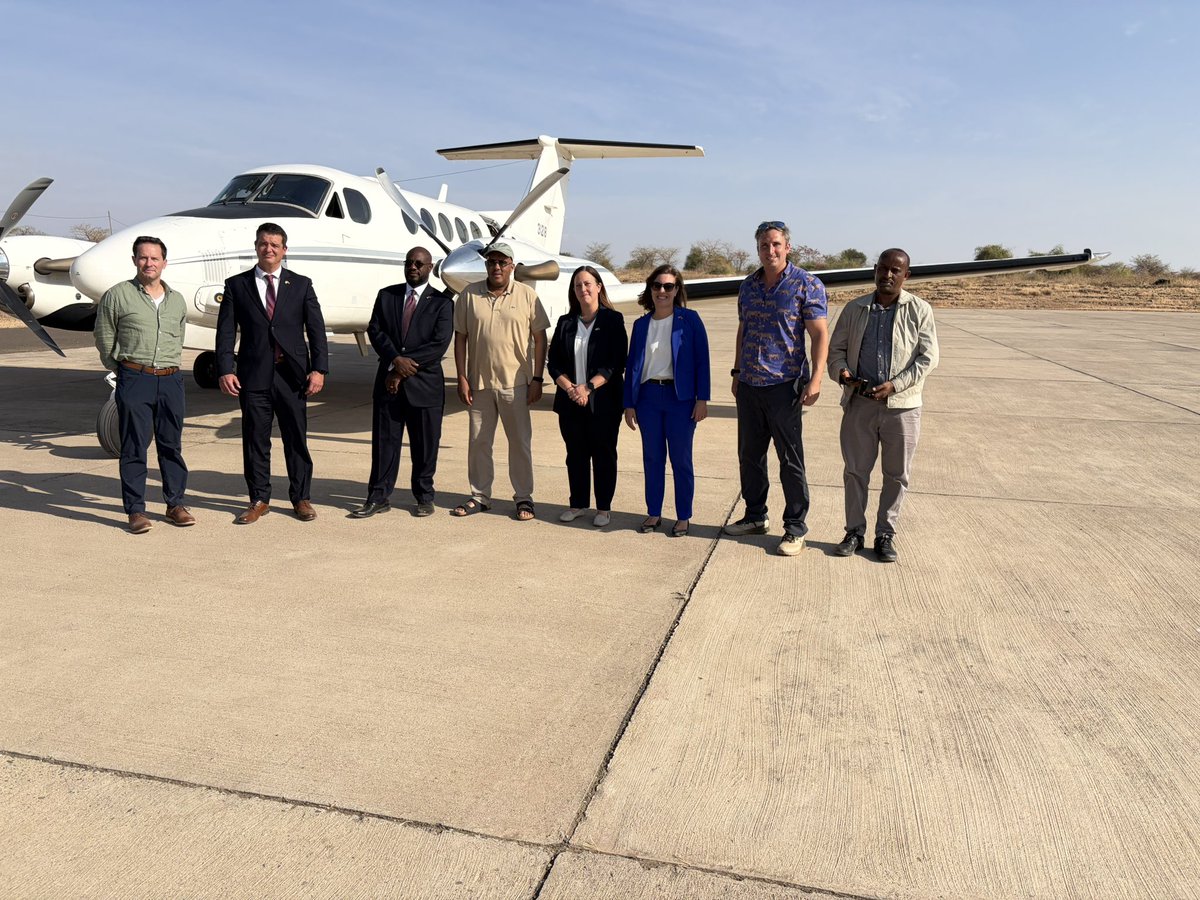
It was a commendable move by Ambassador Ervin Masinga of @usembassyaddis and his delegation to help end the suffering of the return of people in IDP and Refugee camps. Thank you my friend for being honest, firm and unwavering on the need for the dignified return of IDPs and refugees to western Tigray and for your administration’s commitment to help create a conducive environment for the full implementation of the Pretoria agreement!
Happy #Ashenda to the indefatigable and stubborn joy of #Tigrayan women.
You are the pulse that keeps Tigray alive; the heartbeat who endure, resist, and love louder than any attempt to silence you.
Salute for pulling this year’s beautiful celebrations together!
The last cohort of the 200 #Ambulances project have reached #Tigray this week. This is a big breakthrough for rehabilitating the #health system. It was not easy and many colleagues/institutions have done a superb job. Much appreciation & respect to everyone that made this happen!
Today Tigray marks four years since the liberation of Mekelle by the TDF during Operation Alula, a decisive counteroffensive that turned the tide of the war on Tigray.
The day is remembered by many as a moment of defiance, unity and a historic victory against overwhelming odds.
Enderta Wereda speaker (in Enderta Zoba) delivers a fearless, defiant message: the people won, self-governance prevailed. TPLF oligarchs & their military enablers were defeated—loudly, clearly, and irreversibly.
As she said, others in Tigray must rise & reclaim their authority.
#Ethiopia: Hospitals in #Addis_Abeba, various regional states remain largely non-operational as Ethiopian health professionals launch full strike
Major hospitals in Addis Abeba and several regional states were largely shut down on Monday, 19 May, as health professionals demanding better pay, improved working conditions, and protection of their rights escalated their nationwide strike into what organizers called a “full work stoppage,” leaving most departments non-operational and only limited emergency services available.
At major hospitals in the capital, including Menelik II, Zewditu Memorial, and Yekatit 12, Addis Standard observed widespread service disruption. A staff member at Yekatit 12 stated that “none of the healthcare workers have reported to duty,” adding that “only the emergency department is operational,” where patients with critical needs are being treated. Departments such as orthopedics, neurology, laboratory, outpatient, and physiotherapy were all non-functional.
The impact extended to regional facilities as well. At Asella Referral and Teaching Hospital in Arsi Zone, a health professional reported a “full strike,” noting that “all residents and interns have joined,” while only “some patients and a few nurses” remained in the wards. In Fitche town’s Salale University Hospital, a source said administrators were relying on “fifth-year medical students to cover the majority of the workload,” even though the students “are yet to be qualified to work without supervision.”
In Bale Zone, #Oromia, professionals at Madda Walabu University Goba Referral Hospital said they had moved from a partial to a “complete work stoppage.” One health worker said that “no services are currently being provided,” including previously operational units like the ICU and labor ward. The professional also alleged that “security forces entered the hospital compound early in the morning,” which has left staff feeling “terrorized.”
https://t.co/94u4VxYyNP
The stupidity of some Tigrayans is mind-boggling; they are on a mission to erase the crimes of #TigrayGenocide perpetrators. Eritrea🇪🇷 isn't done committing a genocide, and these fools are taking turns dancing with them. @StalinTeklu መሬት ዓድኻ ኣየርግፅካ
Video: Pretoria Agreement is in a “strange limbo”, U.S. policy expert tells Senate members responding to a question on “the bubbling, almost boiling situation” between #Ethiopia and #Eritrea.
At a Senate Foreign Relations Committee hearing on 13 May focusing on East Africa and The Horn, Michelle Gavin of the Council on Foreign Relations cautioned against the fragile state of peace between Ethiopia and Eritrea, attributing it to the incomplete implementation of the Pretoria Agreement. She described the current state of the agreement as being in a “strange limbo.”
Responding to a question from Senator Van Hollen on what “practical steps” the U.S. should take to “try to address the bubbling, almost boiling situation with respect to Ethiopia and Eritrea,” Michelle echoed concerns previously raised by Joshua Meservey of the Hudson Institute. Joshua had highlighted Eritrea’s continued presence inside Tigray in violation of the agreement.
Both experts discussed the need for international pressure to ensure full implementation of the Pretoria Agreement, which brought an end to the brutal two-year war in the Tigray region.
“This is something everybody’s already agreed to, but it has not been fully implemented. It is in this strange limbo,” Michelle said, calling for increased involvement from AU member states as a “helpful focal point.”