Private Bitcoin is live on @Starknet. 🔐
Shield balances, borrow stablecoins, provide liquidity. All with BTC. Luganodes co-signs every bridge event that moves BTC between chains to make it possible.
Non-custodial infrastructure in the critical path of Bitcoin's next chapter.
strkBTC is live in Xverse.
Private Bitcoin on @Starknet. Hold it, shield it, use it in DeFi.
Your keys. Your privacy.
Here's everything you need to know.
STRK20s is the culmination of years of ZK research and ZK-STARK innovation driven by StarkWare.
Scalable privacy, without fragmenting markets.
And the first phase launches today with strkBTC.
@Core_002 $STRK Privacy at planetary scale begins on May 12. Join the Starknet ecosystem online to celebrate the launch of strkBTC.
https://t.co/Rizjq0wF77
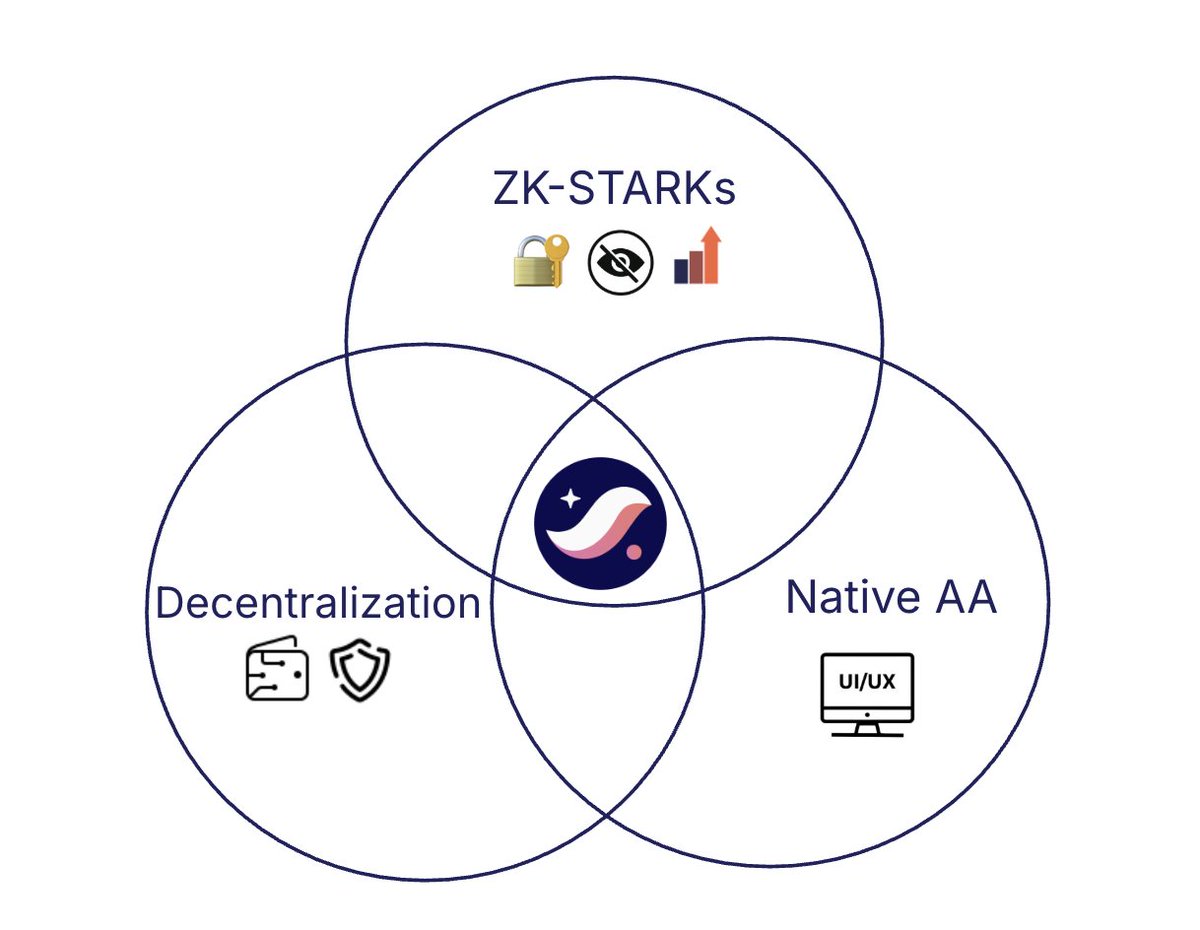
Starknet is future-proofed by design. Here are the elements that will lead us there:
ZK-STARKs for:
- Post-quantum security
- Privacy
-Scale
Native AA for:
- Superior UX
- Optimized devX
Decentralization (not fully there yet, but actively progressing on our decentralization roadmap) for:
- Security
- Self-custody
- Censorship resistance
GOOGLE QUANTUM AI ADVANCES CODE-BREAKING MATH, PRESSURES POST-QUANTUM SHIFT
Google Quantum AI published research optimizing Shor’s algorithm for the elliptic curve discrete logarithm problem (ECDLP), the cryptographic backbone of Bitcoin, TLS, and most digital systems.
Their team reduced requirements to 1,200 logical qubits and 90M Toffoli gates, implying a future machine with less than 500,000 physical qubits could theoretically break ECDSA in minutes.
No such quantum computer is even close to existing today, but the trend is clear: resource estimates are falling fast, driven by algorithmic breakthroughs compounding with hardware progress.
Google disclosed the work via a zero-knowledge proof, proving feasibility without revealing the full method.
Bitcoin isn’t broken, but the clock on post-quantum migration is ticking faster than expected.
Google Quantum AI released a whitepaper warning that cracking 256-bit ECC, widely used in crypto wallets, requires fewer resources than expected. With under 500k physical qubits, it could be cracked in minutes. Google urged the industry to accelerate its migration to Post-Quantum Cryptography (PQC).
Dragonfly Managing Partner Haseeb noted this research improves ECDSA cracking efficiency by ~20x, pushing the expected PQC migration timeline forward to around 2029. He highlighted Google's high caution, as they verified the results using ZK proofs without revealing the actual quantum circuits.
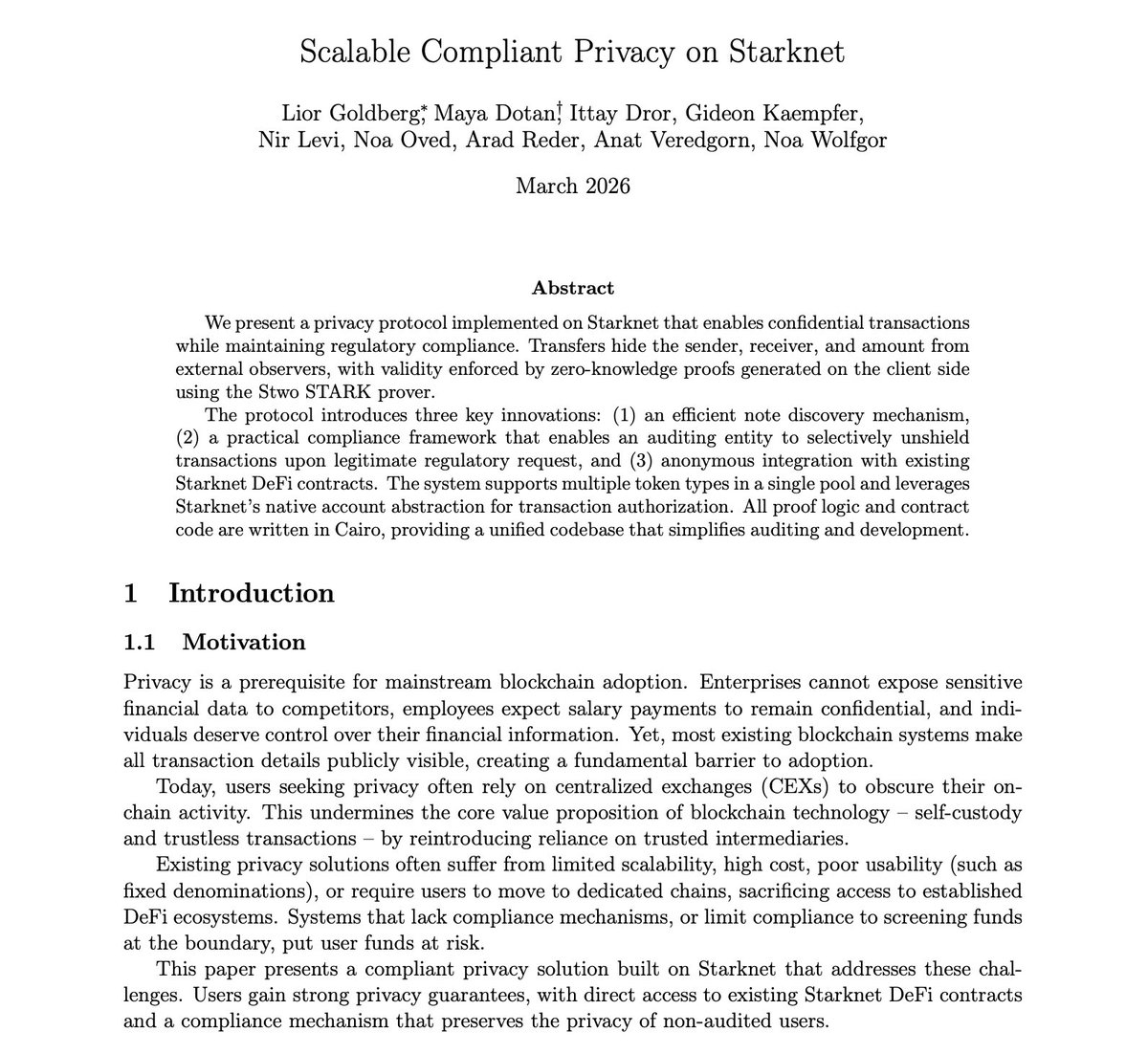
1/ The STRK20s Technical Paper is now live.
It outlines the design, architecture, and core ideas behind STRK20s, a privacy capability for any ERC-20.
If you’re bullish on privacy as crypto’s next major unlock, this paper is for you 🧵