FIRE is defending an Indiana University professor fired for doing her job. Faculty have the academic freedom to teach their students about white supremacy, especially in a graduate-level course on diversity, human rights, and social justice.
Universities cannot bow to outside pressure to terminate faculty merely because others dislike what they teach.
If academic freedom means anything, it protects the right to teach, research, and debate ideas without interference from colleges or politicians.
FIRE fights for academic freedom in a variety of ways—defending individual professors, publicizing rights abuses, and lobbying state legislatures, just to name a few. Check our efforts here:
For generations, critics of elite and flagship universities have accused faculty members of being too liberal, and now we’ve got the numbers behind the claims.
Join our experts for a free webinar as they discuss the latest research on faculty political viewpoints.
In @insidehighered, Univ. of TX profs on "suppressive compliance—a mode of institutional response in which efforts to comply with vague directives expand their reach, producing suppression not mandated by law but generated through risk-averse governance."
https://t.co/0mG63cm9ur
A man has been vindicated after spending 37 days in jail for a Trump meme, DHS may have a database of ICE protesters, and I’m nerding out over the prospect of AI helping us sort what we know from what we only think we know.
It’s been a week!
We’ve also got into Clemson professors fighting censorship with @Graham_Piro and a Nevada student allegedly expelled over pro-ICE stickers with @AdGo.
Plus Cary Davis in @MSNowNews on why a post after Charlie Kirk’s death never should have landed @TheFIREorg’s client in jail, @Ashermcs in @LBC on Reform’s immigration TikTok being reinstated after getting deleted “in error,” and @AP on live facial recognition being used for protest policing in London.
And, yes, I recommend Daredevil: Born Again, season 2. It’s called range.
Read the full weekly update:
https://t.co/QPsdwf0n0e
Last year, the police jailed Larry Bushart for 37 days on a $2M bond for posting a meme after Charlie Kirk’s murder.
With our help, Larry sued Perry County, TN, and its sheriff for violating his rights in retaliation for his protected speech. He has received a $835K settlement.
I had the honor of visiting @ClemsonUniv's campus earlier this month to give two distinguished professors @TheFIREorg's faculty award for defending the First Amendment rights of their colleagues.
Mike Gregory and Charlie Kurth vocally defended colleagues who were fired for speech about Charlie Kirk's shooting. They published an op-ed in the @chronicle criticizing their employer for abandoning free speech principles: https://t.co/73rKYEBOOK
What began with a one-line email has now escalated into multiple investigations, six disciplinary charges, and a second @BowdoinCollege hearing on whether student Finley Rhys can return to campus.
We’re appalled by how far this retaliatory crusade has gone.
Here at FIRE, we spend every day defending the First Amendment rights of Americans.
That work happens in courtrooms, policy debates, and public conversations shaping free expression.
And it takes the right people who help turn principle into action.
Former FBI Director James Comey has been indicted over his now-deleted “86 47” social media post. But Comey’s speech is protected by the First Amendment. It is not a “true threat” and cannot justify federal prosecution.
Longstanding Supreme Court precedent is directly on point.
As the spring 2026 semester winds down, we at @theFIREorg stand ready to defend free speech on campus. If you are a student or professor facing restrictions on your expressive rights, contact us today.
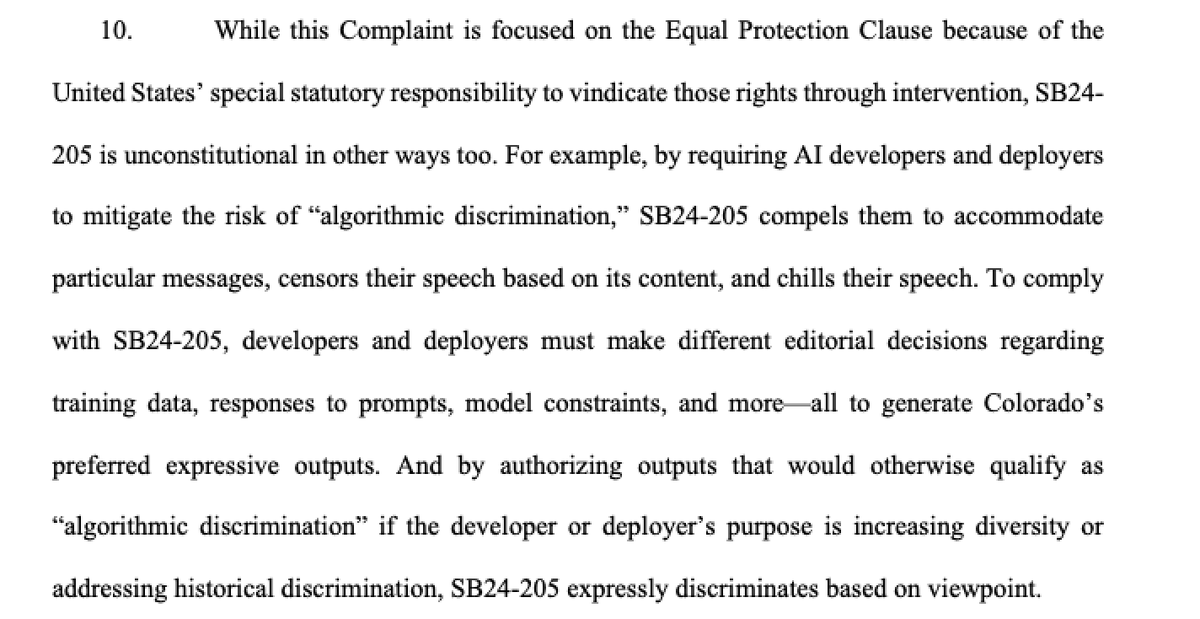
The Department of Justice’s intervention today in xAI v. Colorado notes the serious First Amendment problems with SB 24-205.
As we’ve argued, the law pushes AI developers to engineer “approved” outputs — changing prompts, constraints, and models to align with Colorado’s preferred message, and favoring certain viewpoints over others.
This kind of viewpoint discrimination restricts the free exchange of information, cutting to the core of the First Amendment’s protection.
That’s why Colorado’s AI law poses a dangerous threat. We’re glad the Department of Justice sees it the same way:
A $250 million defamation lawsuit from FBI Director Kash Patel against The Atlantic reminds us that free speech protections matter most when public officials are involved.
The First Amendment sets a deliberately high bar for defamation claims brought by government officials.
The clock is ticking for sex and gender courses at Texas Tech. The university system is cracking down on classroom instruction under the broad categories of Sexual Orientation and Gender Identity. The message is clear: They do not want faculty to teach about sex or gender.
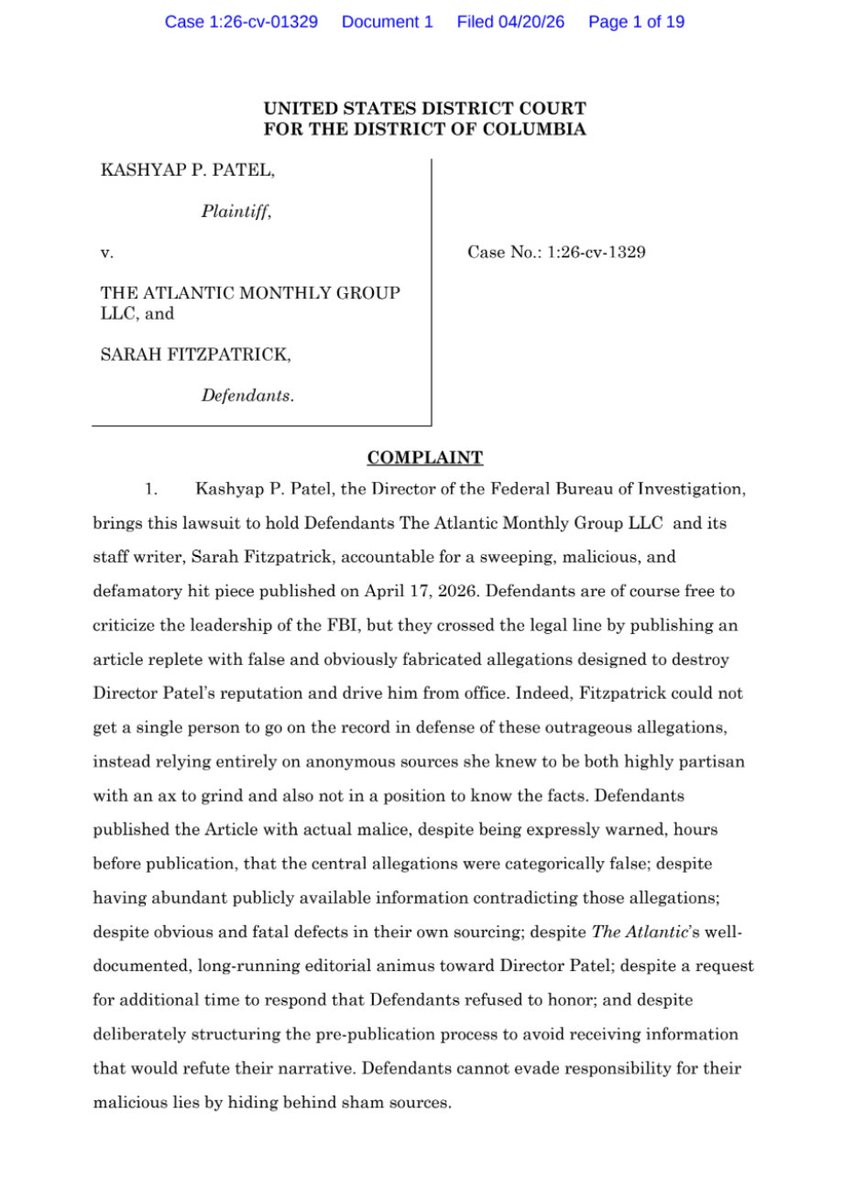
On April 20, FBI Director Kash Patel filed a $250 million defamation lawsuit against The Atlantic for its reporting on the director’s alleged “excessive drinking and unexplained absences.”
The Trump administration has a record of punishing critics, and its officials are no strangers to filing lawsuits meant to silence dissent by driving up the cost of speaking. Today's filing from FBI Director Kash Patel has all the markings of that playbook.
The First Amendment sets a high bar on defamation cases against public figures. In order to win, Patel must prove not only that The Atlantic published false information, but that the reporter knew it was false or had serious doubts about it, and published it anyway. That high standard is important so that all of us — reporters and citizens alike — can hold our government accountable.
But sometimes, the lawsuit is the punishment. SLAPP suits are weaponized by the wealthy and well-connected to punish speakers with costly litigation, even if the suit is ultimately thrown out. They’re abuses of America’s legal system, and FIRE fights against these violations of our First Amendment rights.
We deserve to know the truth about how our government works. If news outlets knowingly publish false information, they will be held responsible by courts and by the readers they serve. But unless Patel can meet the First Amendment’s high standard, debate on important issues must remain — as the Supreme Court said — "uninhibited, robust, and wide-open.”