October 19, 1781. Cornwallis did not show up to his own surrender. He sent a brigadier with his sword and said he was ill.
Nobody believed him then and nobody believes him now.
The surrender at Yorktown is the moment the American Revolution was effectively won, and the thing worth understanding about it is that it was not really an American victory in the way the story usually gets told. It was a Franco-American operation that worked because of a French fleet.
Here is the actual mechanism.
Cornwallis had marched around the Carolinas and Virginia all year winning battles that cost him men he could not replace, and in August he dug in at Yorktown on the York River, on the assumption that the Royal Navy could reinforce or evacuate him whenever he wanted. That assumption was the entire basis of British strategy in America.
Then de Grasse brought a French fleet up from the Caribbean and beat the British fleet off the Virginia Capes in September. Not a crushing victory, just enough. The British fleet went back to New York to repair and Cornwallis's door closed.
Washington and Rochambeau, who had been planning to attack New York, dropped that plan and marched roughly 450 miles south in a few weeks to get on top of him before the navy came back.
By early October there were around 16,000 Franco-American troops digging siege lines in front of about 8,000 British, Hessian and Loyalist defenders, with French engineers doing the technical work because formal siegecraft was a European specialty the Continental Army simply did not have.
Then it became mathematics. Dig the first parallel, bring the guns up, pound the works, dig a second parallel closer, repeat. Washington reportedly fired the first gun of the siege himself on October 9.
The British redoubts 9 and 10 were taken by storm on the night of October 14, redoubt 10 by Americans under Alexander Hamilton, who had pushed hard for a field command and got it. That put Allied guns close enough to make the position untenable.
Cornwallis tried to evacuate across the river to Gloucester Point on the night of the 16th. A storm scattered the boats.
On the morning of the 17th a drummer boy climbed onto the parapet and beat for a parley while an officer waved a white handkerchief, and the guns went quiet. Terms took two days to settle.
On the 19th, Cornwallis surrendered 7,087 officers and men, around 900 seamen, 144 cannon, and a collection of ships including a frigate and thirty transports.
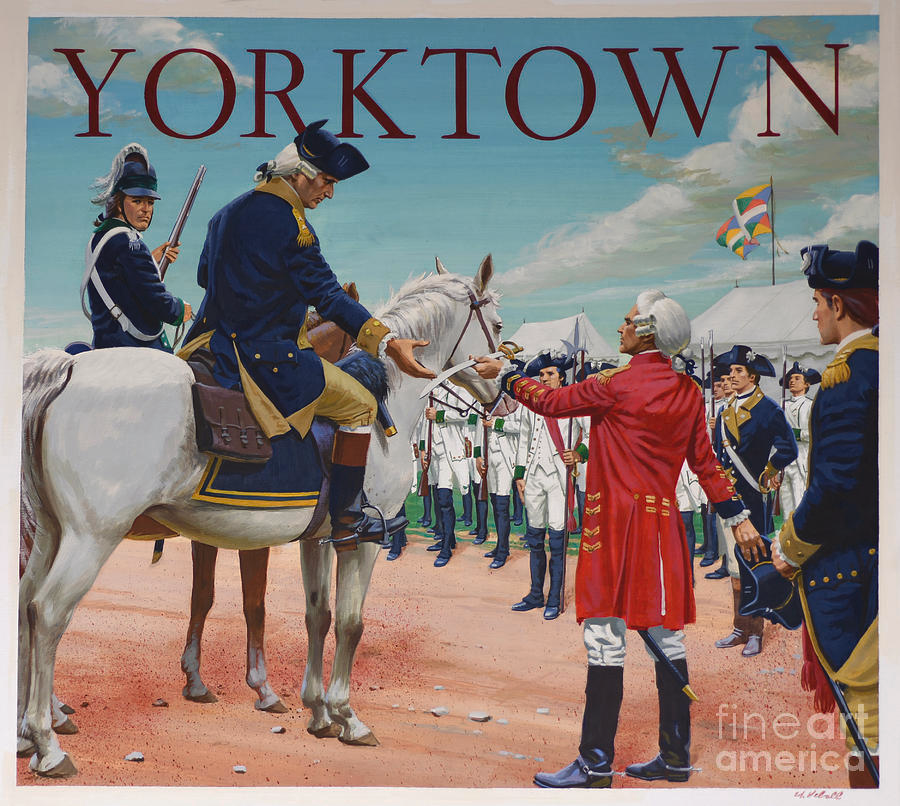
He did not attend. He pleaded illness and sent Brigadier General Charles O'Hara out with his sword instead.
What happened next in the standard account is that O'Hara tried to present the sword to Rochambeau, the French commander, rather than to Washington, which would have made the surrender a French affair and the Americans incidental. Rochambeau refused and pointed him to Washington. Washington refused on the grounds that a subordinate should not surrender to a commander in chief, and directed him to Benjamin Lincoln, who had himself been forced to surrender Charleston to the British the year before.
Lincoln accepted the sword and handed it straight back.
That sequence is reported in multiple accounts and is almost certainly substantially true, though the dialogue gets polished in the retelling, so treat the exact words as tradition.
The other famous detail is the music. The story is that the British bands played a tune called "The World Turned Upside Down" as the troops marched out.
Now the honest part. That claim does not appear in contemporary records of the surrender and seems to show up decades later. It is a perfect detail, which is usually a warning sign. Take it as legend rather than fact.
What is documented is the humiliation itself. The British and Hessians marched between two lines, French on one side and Americans on the other, grounded their arms, and some of the men wept. British officers reportedly looked only at the French the entire way, refusing to acknowledge the Americans, which is its own kind of statement.
Fighting did not stop. The war went on at sea and in the Caribbean and in India for another two years. But Yorktown broke the political will in London. The North government fell in March 1782, peace talks opened, and the Treaty of Paris was signed on September 3, 1783.
Two armies, one navy, eight years, and it came down to a British general betting that the Royal Navy would always be there and being wrong once.
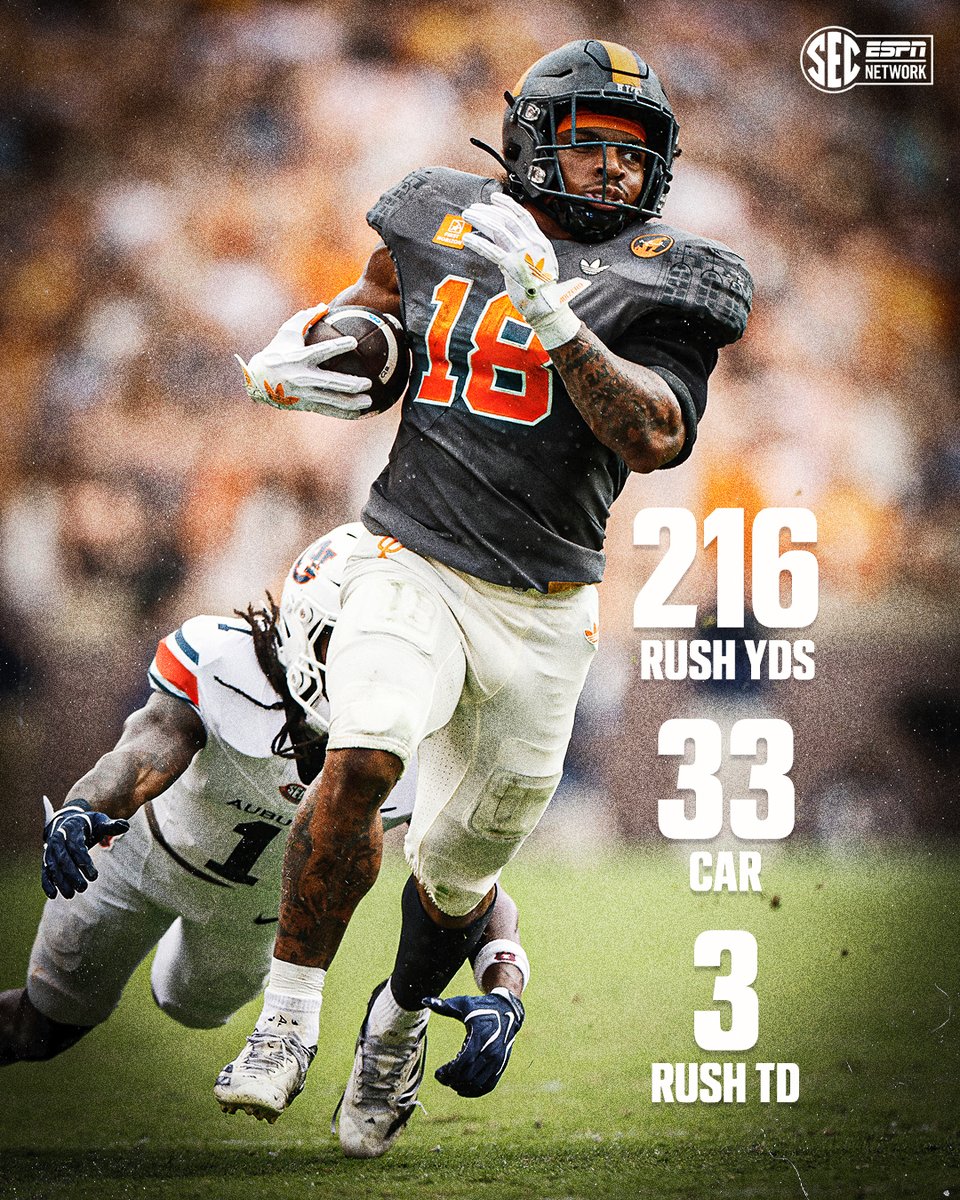
🔥This is the full Dixieland Delight that was played in Neyland after Tennessee beat Alabama 🔥
The Skycam feed had the stadium audio connected, so Dixieland Delight came in crystal clear as it was played for fans. It was slightly out of sync but I think I fixed it.
Tennessee won.
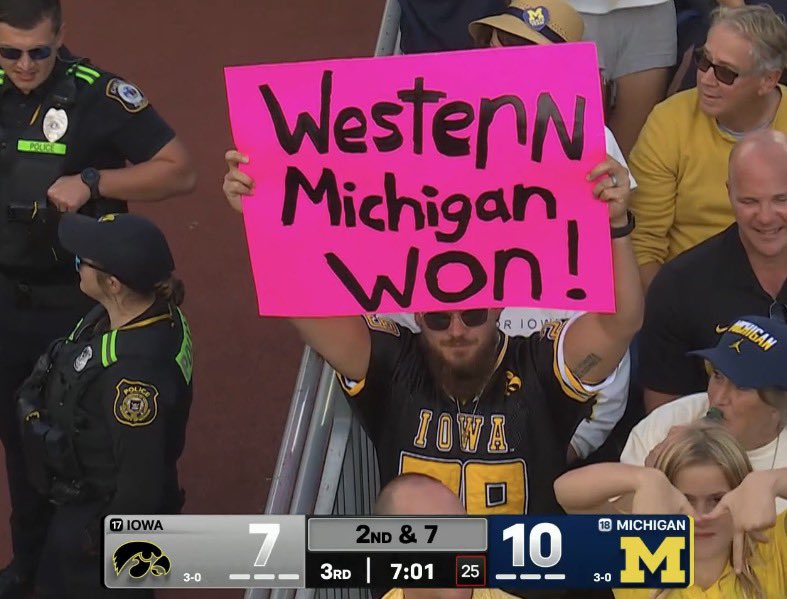
Florida lost. Alabama lost. Vanderbilt lost. Lane Kiffin lost. Texas even lost. All on the same day.
If you can’t appreciate the magic and beauty of this near-perfect football Saturday, I don’t know how to help you.
-Red River Rivalry Instant Classic
-Nebraska blows a 17-6 4th-quarter lead to Indiana
-UCLA upsets Oregon in Autzen
-Georgia first win at Bama since 2007
-Kentucky 2 point conversion to upset LSU in OT
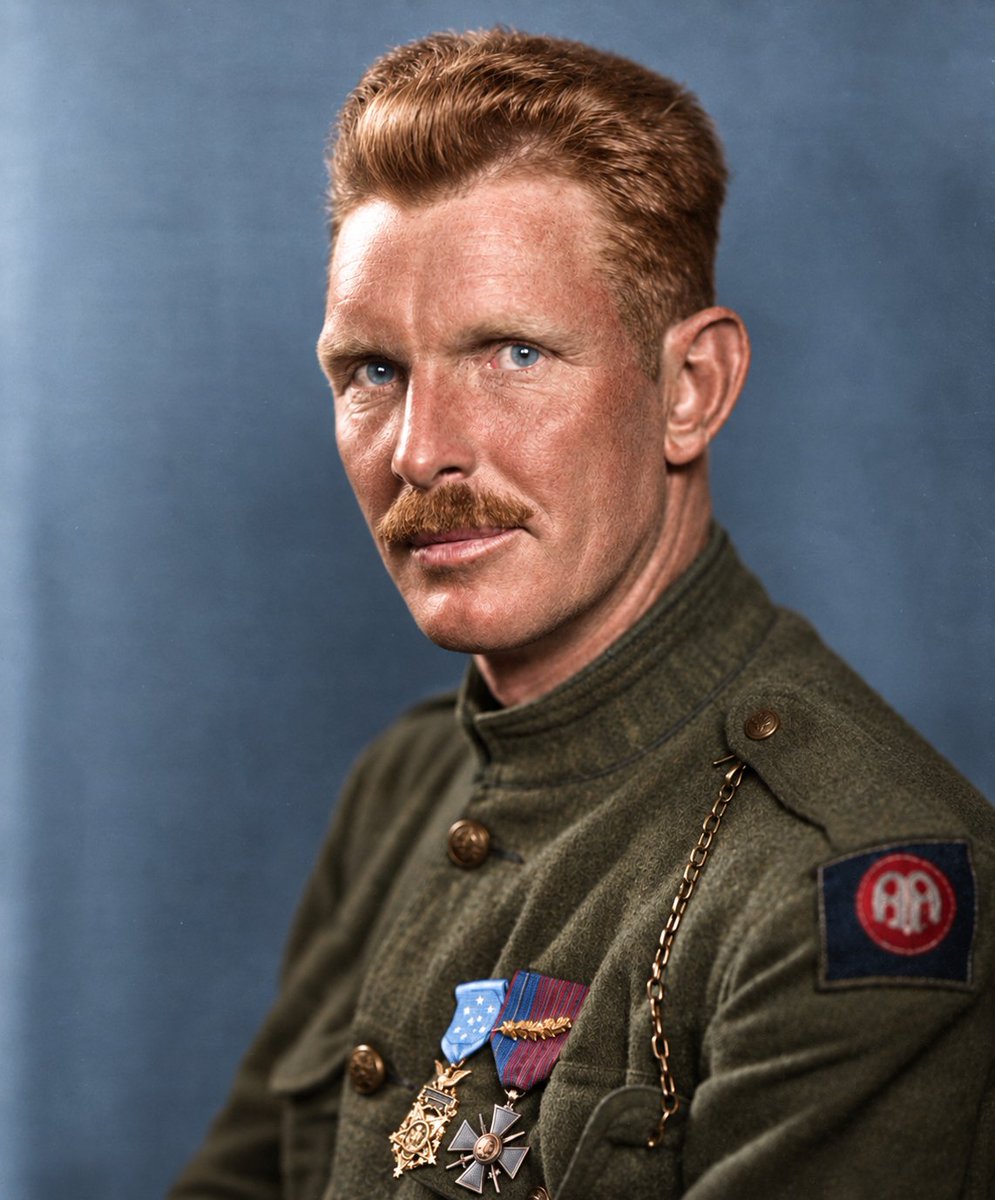
108 years ago today, a red-headed farmer from Pall Mall, Tennessee did something in the Argonne Forest that still doesn't seem real.
Alvin York grew up dirt poor, a hard drinker and brawler, until a religious conversion in his twenties changed his whole life. When the draft notice came in 1917, he asked to be exempted as a conscientious objector. His church opposed war and so did he. The Army said no.
His battalion commander spent hours going through the Bible with him, trying to convince him that a man could fight and still be right with God. York went home on leave, prayed on it for two days on a mountainside, and came back ready.
On the morning of October 8, 1918, York was one of 17 men sent to slip behind German lines and knock out machine guns near Chatel-Chehery, France. They surprised a group of Germans and captured them. Then the machine guns on the ridge above opened up. Six Americans were killed instantly and three more went down wounded, including the sergeant in charge.
That left Cpl. York in command of seven men, most of them pinned flat guarding prisoners.
So York went to work. Every time a German gunner raised his head to fire, York shot him. He'd been shooting turkeys in the Tennessee hills since he was a kid and he was not missing at that range. When six Germans charged him with bayonets, he drew his pistol and dropped all six, starting with the last man and working forward, so the ones in front wouldn't realize what was happening.
A German officer, Lt. Paul Vollmer, emptied his pistol at York and missed every shot. Watching his men fall one after another, Vollmer finally called out in English and offered to surrender the whole position if York would stop shooting.
York agreed. Then he used Vollmer to order other German positions to give up as they marched back through the woods.
By the time he reached American lines, York had killed 25 men and was herding 132 prisoners in front of him with a handful of survivors.
When a general told him he'd heard York captured the whole German army, York said "No sir. I got only 132."
He was promoted to sergeant and received the Medal of Honor. New York threw him a ticker tape parade. Companies offered him a fortune to endorse their products and he turned almost all of it down. He went home to Tennessee, married his sweetheart, and spent years raising money to build a school for kids in the mountains who had no shot at an education.
When Hollywood finally made his story in 1941, he agreed partly to fund a Bible school. Gary Cooper won the Oscar for playing him.
The man who didn't want to go to war became the most famous American soldier of it.