There is a species of ant that approaches the edge of another colony, kills a single worker, and then takes on the dead ant’s scent.
For ants, scent is everything. Wearing that scent, the intruder walks in with no resistance. The workers pass by without concern.
The intruder moves inward, toward the queen, then It sprays the queen with a different scent that makes the workers turn on her. Then they surround her and kill her.
The intruder does not need to fight anyone. The colony does the work itself.
Once the queen is gone, the intruder reproduces. The true invader is no longer an intruder. It is the future.
This is how ideological takeover works.
A destructive foreign ideology takes the scent of familiar ideas and walks in as if it belongs.
It speaks the native vocabulary, justice, equality, compassion, rights, progress. It uses these words and quietly changes what they point to.
Then it moves inward.
It alters how foundations are perceived. Responsibility is made to smell like cruelty, law like oppression, borders like hatred, tradition like danger, history like guilt.
At that point, the civilization turns on itself.
Its courts, universities, churches, media, and bureaucracies begin treating their own foundations as threats. They believe they are defending the system.
They are enforcing what now smells legitimate. They do not see the intruder because it sounds exactly like them.
And when the founding principles are finally removed, discredited, dismantled, erased, the foreign ideology does not need to conquer anything. It inherits what is left.
The queen is gone. The colony is no longer itself.
The most effective conquest is the one that convinces a society that its own foundations are the enemy, and that killing them is an act of virtue.
Bayes’ theorem is probably the single most important thing any rational person can learn.
So many of our debates and disagreements that we shout about are because we don’t understand Bayes’ theorem or how human rationality often works.
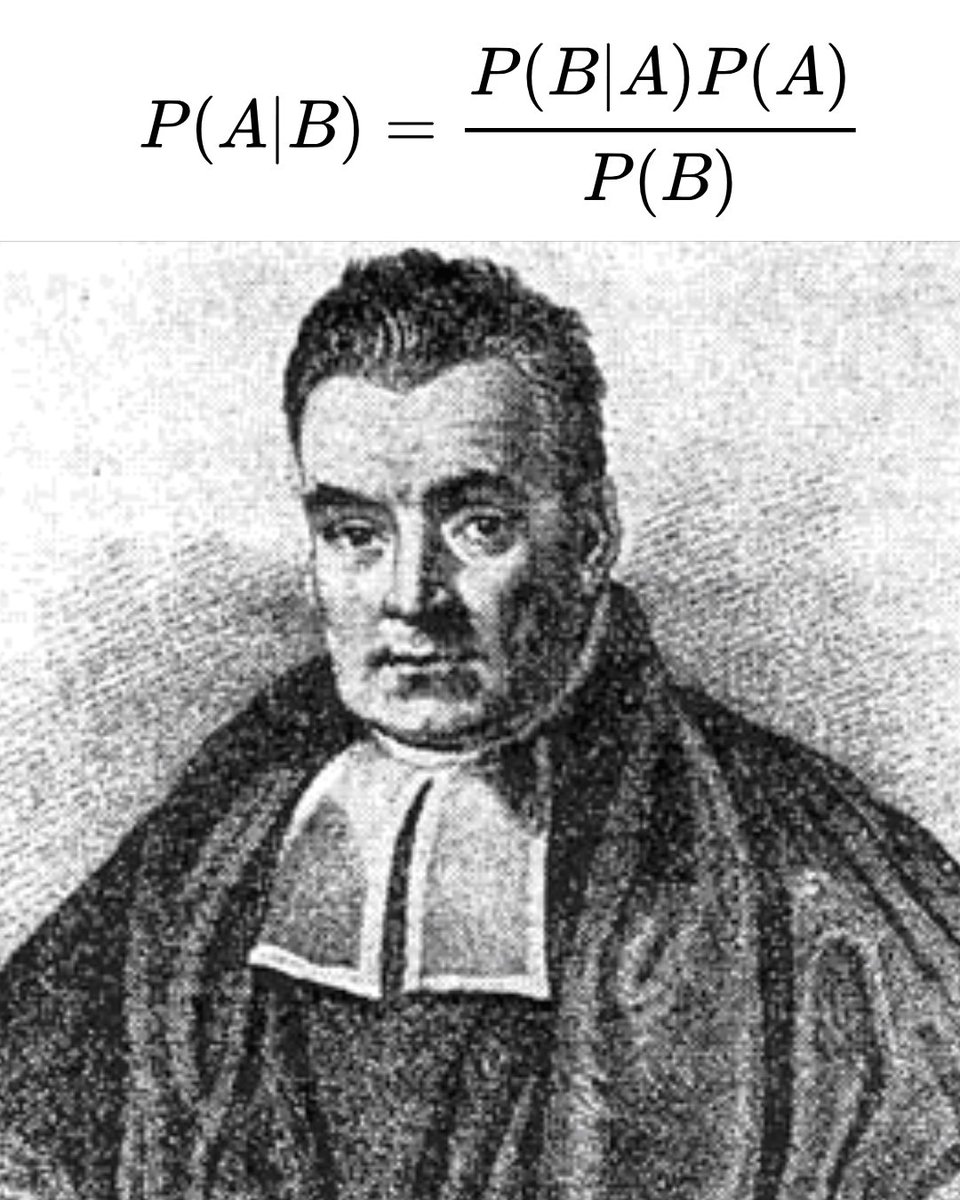
Bayes’ theorem is named after the 18th-century Thomas Bayes, and essentially it’s a formula that asks: when you are presented with all of the evidence for something, how much should you believe it?
Bayes’ theorem teaches us that our beliefs are not fixed; they are probabilities. Our beliefs change as we weigh new evidence against our assumptions, or our priors. In other words, we all carry certain ideas about how the world works, and new evidence can challenge them.
For example, somebody might believe that smoking is safe, that stress causes mouth ulcers, or that human activity is unrelated to climate change. These are their priors, their starting points. They can be formed by our culture, our biases, or even incomplete information.
Now imagine a new study comes along that challenges one of your priors. A single study might not carry enough weight to overturn your existing beliefs. But as studies accumulate, eventually the scales may tip. At some point, your prior will become less and less plausible.
Bayes’ theorem argues that being rational is not about black and white. It’s not even about true or false. It’s about what is most reasonable based on the best available evidence. But for this to work, we need to be presented with as much high-quality data as possible. Without evidence—without belief-forming data—we are left only with our priors and biases. And those aren’t all that rational.