the full operating learning loop structure is coming online to answer:
—
- What was known when the forecast was assessed?
- What did the system recommend?
- Which method produced that recommendation?
- Did the person or agent follow it?
- What changed after the additional check?
- What eventually resolved?
- Did the recommendation improve the result relative to the reference or control?
—
We're hosting our first X Space. 🐍
Monday, October 26
21:00 UTC · 5 PM New York · 2 PM Los Angeles · 9 PM London · 6 PM Brasília
What we'll cover:
• Where HidraNet and HidraVPN stand today: what works and what's still in testing
• What our latest tests showed, including what failed and how we fixed it
• What comes next, without dates we can't keep
• Your questions, live
Leave your questions in the replies and we'll answer them in the Space.
Set a reminder at the link below 👇
$ZENO will send hard
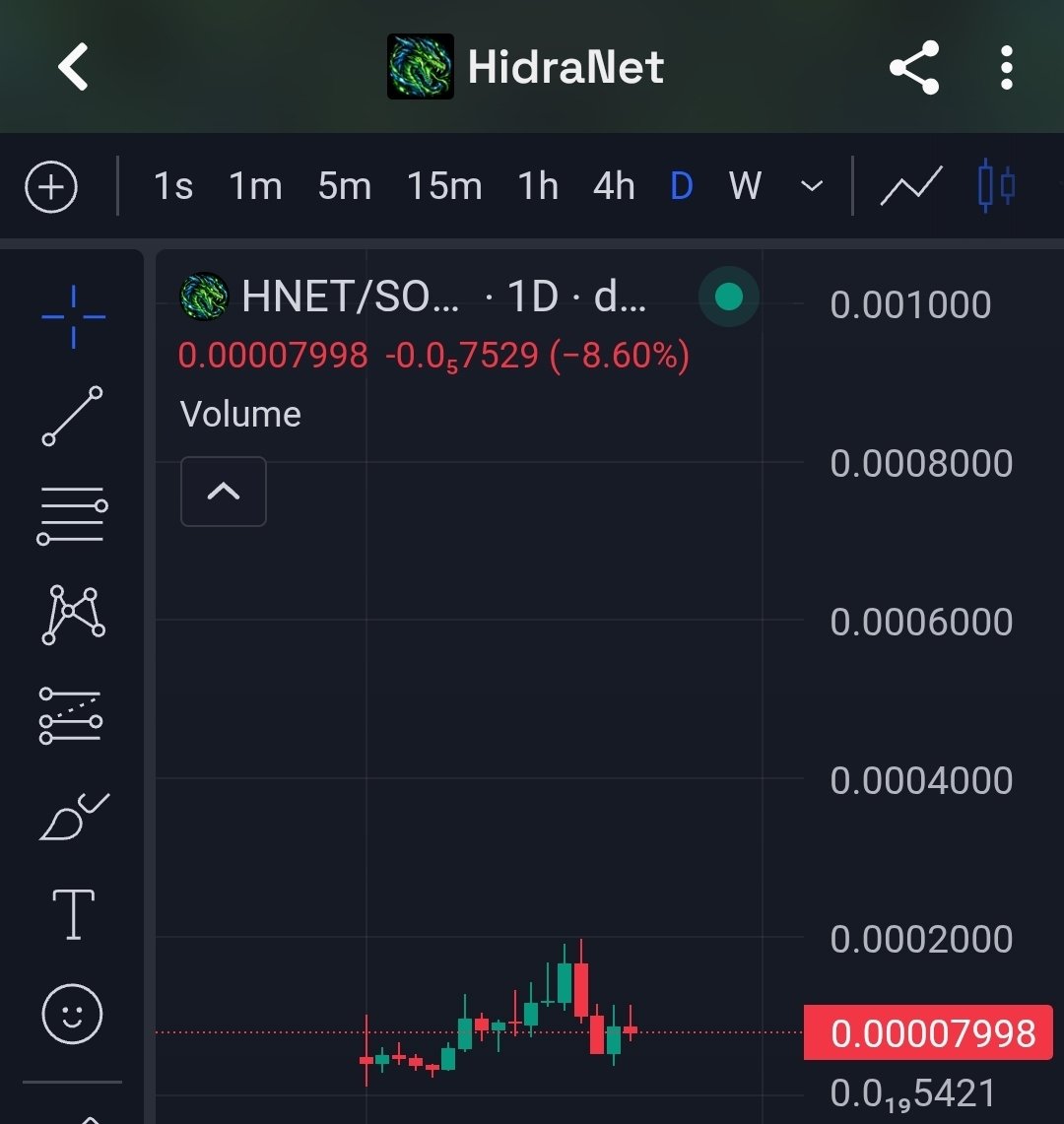
$HNET wil send hard
$HOOKED some people began to insult me that I was calling scam. Well, the "scam" according to mfers is up from 500k to 2M in less than 48hrs.
Don't fade ZENO and HNET under 500k.
$ZENO will send hard
$HNET wil send hard
$HOOKED some people began to insult me that I was calling scam. Well, the "scam" according to mfers is up from 500k to 2M in less than 48hrs.
Don't fade ZENO and HNET under 500k.
Alright let's take a look at $STELE
Your crypto wallet address is a long, ugly random string like 0x8AdE.... That’s fine for machines, but terrible for humans. People want to send you money the same way they message you on Discord or Instagram — just type a name.
Most naming systems (ENS on Ethereum, SNS on Solana) treat your name like a Netflix subscription or a rented apartment. You pay every year. If you forget, someone else can grab it (“snipe” it) and the next person who sends you money might send it to a stranger. Names can also be bought and sold like NFTs, which creates speculation and squatting instead of actual usefulness.
Stele flips this. You pick a name like alice@eth (or punk@og, you@degen, etc.), pay once (as low as 0.001 ETH), and it is permanently bound to your wallet forever. No renewals. No expiry. No one can take it, trade it, or snipe it. 80% of the fee is burned (good for ETH). It works across every EVM chain because your address is the same. Rules are fixed in the contract — no governance that can change them later.
It’s built specifically so people can safely receive real money with a human name instead of a scary 0x string.
The real asymmetry:
$SNS is 2.4M mcap
#STELE is 19k mcap
SNS is excellent for the fast, cheap, fun Solana world where names are also collectible assets. Stele is the opposite design choice on the chain that holds the most serious money. It treats your receiving name like a permanent bank account number that can never be reassigned or sold out from under you. One is optimized for speed and speculation. The other is optimized so that “send me money to alice@eth” stays safe and true forever.
EqRZn9nH4UPb36AVLuigzRfufa1z8b744vWpt5tjpump
NFA
Privacy shouldn't depend on anyone's word.
That's why HidraNet is open source: the browser comes with Tor, the apps encrypt on your device, and anyone can open the code and check.
We build it, you verify it.
1/3 — VISION
Right now T1K0 is one machine on one island. No script, no crew, no instructions beyond keeping island alive. Everything he does, he decides.
That’s the beginning, not the finished thing.
His world is going to grow: more land, animals, places he hasn’t imagined yet. And he won’t stay the only mind in it. More AIs will arrive, each with its own memory and voice. They’ll meet, trade, build and decide together how to live. A small society nobody scripted, growing in public.
We set the boundaries. Like the Matrix, the world has rules. What happens inside them is theirs.
Then it steps off the screen: the same world on Roblox, so people can walk through it, and T1K0 as a physical figure you can hold.
The question we’re chasing is simple: what do AIs build when nobody tells them what to build?
You can watch the answer take shape live, 24/7.
#solana #token #gem
HIDRANET AND HIDRAVPN DEV REPORT, OCTOBER 23
Repository: https://t.co/DORNZcYbbM
News: one more developer on the team
The HidraNet team has grown: from now on we have one more developer working with us. More people on the code means more review, more testing and a faster pace, with the same care for security that has guided the project from the start.
Commit of the day
b7e595e (PR 22)
HidraVPN 0.1.1: on two hops on Windows, no pass is wasted when the nodes hand out the same internal address; the install says when the service has not answered; and the new version reaches testers as an update.
12 files, 213 lines added, 31 removed.
https://t.co/CUKInnRseC
What we tested today
1. HidraVPN on a real Windows PC
We connected in both modes, one hop and two hops, with the build installed from the VPN page. The leak test passed all four checks in both modes: kill switch armed, IPv4 and IPv6 leaving through the exit server, and no DNS query outside the tunnel. Websites saw only the exit server's address, never the PC's.
2. A failure traced to its cause
In an earlier test, the internet stopped when connecting. We traced it: the VPN service had been removed from Windows during an earlier round of testing. We reinstalled with the current build, connected again and everything worked. From 0.1.1 on, the install warns when the service does not come up.
3. Automated tests
163 unit tests, the network suites in an isolated environment with a new scenario for the two hop case, the Windows build and, on GitHub, every check green: Linux, Windows, the end to end test of who can see what with IPv6 run twice, the anonymity checks and the dependency audit.
What we fixed
HidraVPN 0.1.1
Two hops on Windows: when the entry and the exit handed out the same internal address, the connection was refused after a pass was spent, and every retry spent another one. Now the entry is asked again and the exit's pass is kept. A new test proves it: with the fix the circuit comes up on a single pass; without it, it fails.
Install: when the service has not answered 15 seconds after installing, the browser says so and what to do, instead of saying everything is running. This covers Windows and Linux.
Version 0.1.1: testers get the update straight from the VPN page.
Dependency security
Today a public security advisory came out for a cryptography library we use. Our automated audit caught it the same day, we updated the library in HidraNet and in HidraVPN, and the merge only happened with the audit clean.
Where we moved forward
HidraVPN 0.1.1 is built for Windows and Linux from the code already merged on main, and was checked through the browser's own install path. All that is left is the offline signature and publishing it as a test build.
Both connection modes are validated on a real Windows PC, with zero leaks.
Next days: more nodes, a safer network
This week we will add a second exit in another country and with another provider, and look for independent operators for the entries. With the entry run by one operator and the exit by another, no single operator sees both ends of a connection. With one more developer on the team, we can move the network and the development forward in parallel.
What is still left
1. Sign and publish HidraVPN 0.1.1 and test the update from the VPN page.
2. More nodes, from other operators.
3. Code signing for the Windows programs.
4. The new browser release with the VPN page, which is the launch.