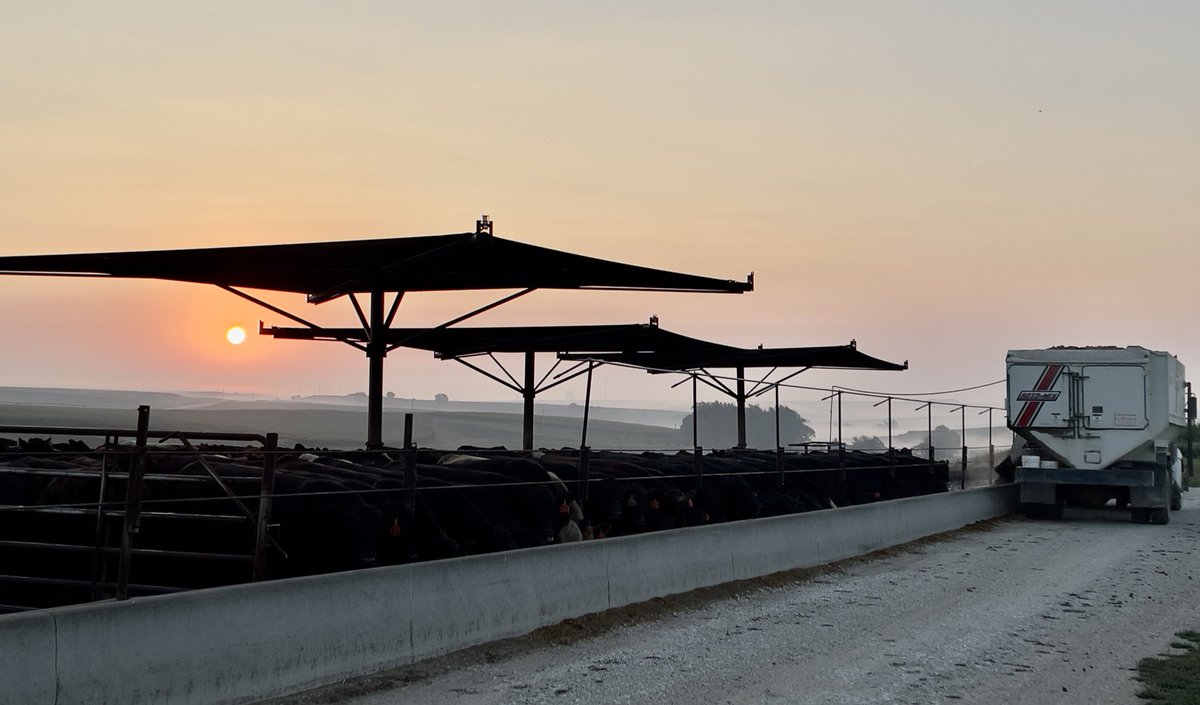
Can a nutritionist help me figure out how the feed intakes on this pen of cattle can be so high?! Racking my brain here and just can’t figure anything out
Save the date for the 2024 U.S. CattleTrace Symposium, on November 18 & 19 in Kansas City. This eagerly anticipated two-day event will gather prominent industry leaders, producers, and technology experts to propel voluntary animal disease traceability into the future.
A new independent economic analysis of the Beef Checkoff finds an ROI of $13.41 for each dollar producers invested in the program's demand-driving activities for the five-year period 2019-2023. https://t.co/RM75hdRArT @ClintonReports@Tyne_Ag@DroversCTN
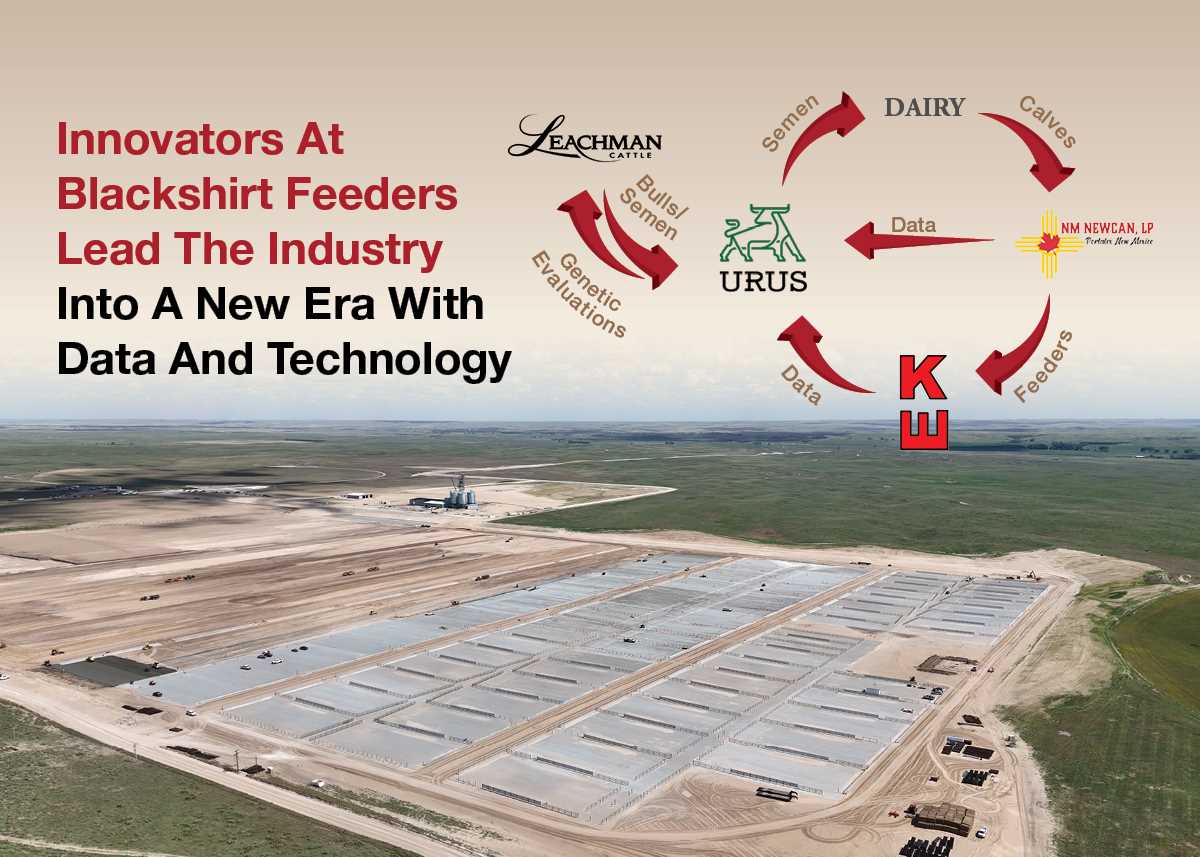
The largest feedyard north of the Rio Grande is under construction in SW Nebraska. First cattle due in Sept. Technology, data and BeefXDairy. @ClintonReports@ChipFlory https://t.co/m1khVd2CCt
Sustainable Grazing for People and Nature: How pastoralists hold the key to protecting and restoring grasslands https://t.co/nzGrz8WmQs
"...Covering more than half of our planet’s terrestrial surface, the protection and restoration of grasslands and savannahs is key if world leaders are to deliver the targets they committed to in the Global Biodiversity Framework (GBF). Grasslands are home to thousands of plants and animals, including iconic species like tigers, jaguars and elephants. Likewise, more than 500 million people, including indigenous peoples and local communities, live in these landscapes and rely on them for their livelihoods. Pastoralists, ranchers, nomadic herding tribes and many more unique cultures all call grasslands home. Countless other people rely on these landscapes for clean water, food and medicine.
Grasslands are not empty wastelands and we must stop treating them as such...."
"...More must be done by governments and sub-national authorities to protect, sustainably manage and restore grasslands, particularly by supporting pastoralist communities, who produce food in harmony with nature and play crucial stewardship roles in maintaining the health and productivity of grasslands. Traditional and regenerative grazing practices can often mimic natural processes that build soil organic matter, increase water retention, sequester carbon and conserve biodiversity, making them vital to the delivery of Sustainable Development Goals, the GBF and the Paris Agreement...."
h/t @TyRBeal cc. @PabloPastos@SavoryInstitute
Mystery illness impacting Texas dairy herds has been confirmed as a Highly Pathogenic Avian Influenza (HPAI) strain. It's also now confirmed in Kansas. https://t.co/7mnuMQC0hw
Panhandle ranchers are in need. And fellow Texans got right to work rounding up donations of feed and hay.
But it’s more than a round bale or a sack of feed. It’s hope and faith rolled up tight along with prayers for a better tomorrow.
🎥: @aggiedane#texasfarmbureau #panhandlestrong #wildfires
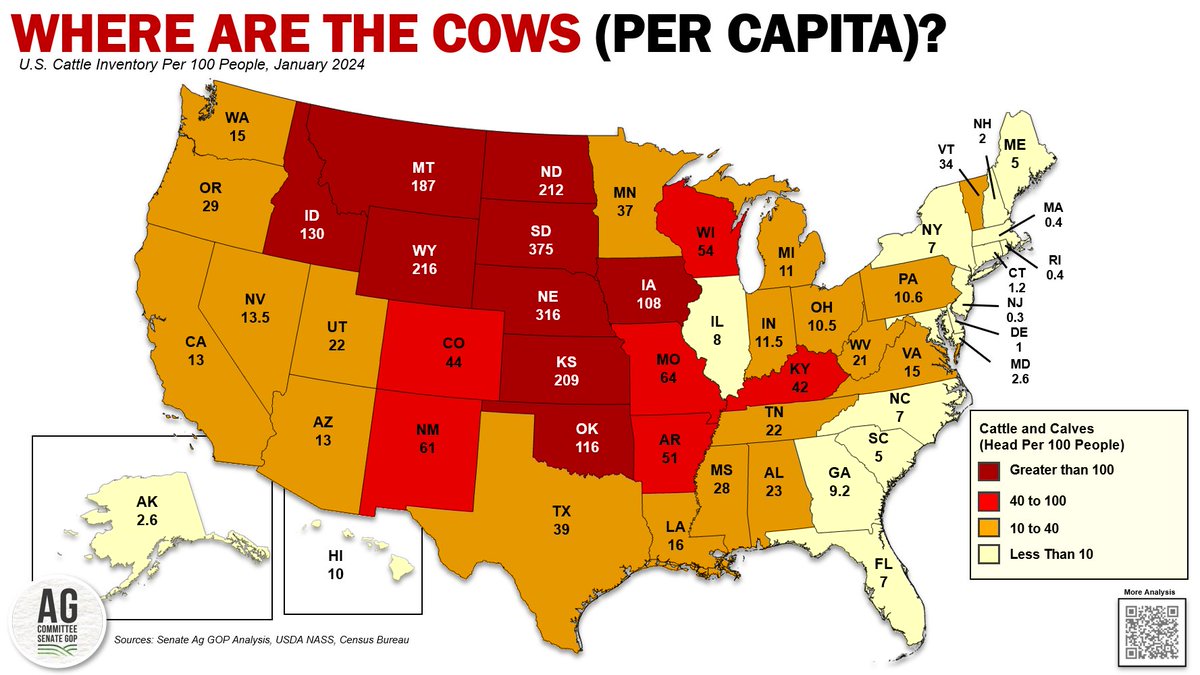
#SundayFunday ICYMI 🇺🇸 Jan24 inventory of #cattle and #calves fell to the lowest level since 1951 at 87.2 mil. head 👇🗺️ of the U.S. #cattle inventory per 100 persons #AgTwitter
Join UNL's feedlot Extension team for an online discussion of the mud situation and possible solutions for cattle producers, Monday, Feb. 5 at noon (CST). Check out beef.unl. edu for details and to register.
#mud#cattle#nebraska#itsnotforeveryone
When I was involved in a leadership role for @BeefCheckoff there was a continual barrage of negativity and misunderstanding leading to the spread of misinformation. I believe most people want the facts yet many thrive on creating chaos. Here's the truth. @NECattlemen@BeltwayBeef
There is apparently no end to academic stupidity in the real world. As long as it treats a symptom (water runoff) does not address the cause of desertification and costs a lot while using technology it gets published & must be "scientific". That cattle or sheep hooves do this for nothing, while simultaneously also addressing oxidation and thus the cause of such water runoff and desertification is rejected. And of course earlier people in the Americas dug such pits to try to stop water flow - analysis in the 1980s indicated the Charcoan irrigation-based civilization that failed could not have saved themselves with all the technology of today. The only thing that could have saved that civilization was livestock & using the holistic planned grazing process that they didn't have.
And so it is today with desertification playing so great a role in climate change that even stopping fossil fuel use will not stop man-made climate change.
https://t.co/zx5CYcP1TV
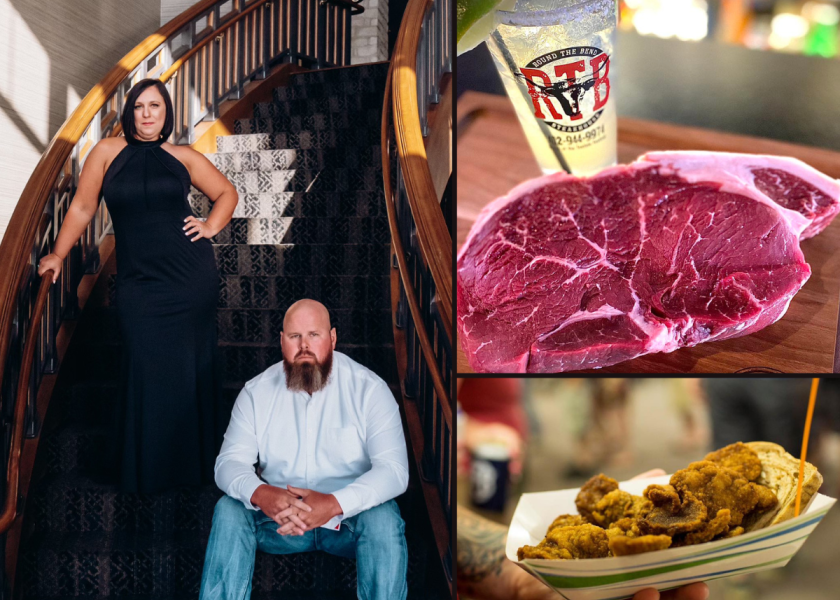
With the purchase of a small town watering hole and a family’s dream, TJ and Tifini Olson, owners of Round the Bend Steakhouse of rural Ashland, Neb., find immeasurable value in the Good Lord, good people and good beef.
https://t.co/5c4Bep6A0B
Industry mourns legendary seedstock breeder and tireless advocate for genetic advancement and profitability for commercial cattlemen.
https://t.co/n54ctPoVL6
Packer progress. At least 8 beef packing projects are in various stages of completion that could add 10% to daily capacity. All face similar headwinds. https://t.co/bZGIcNpJ0K @DroversCTN@ClintonReports
I just learned that I'm a 12-percenter, a demographic Tulane researchers ID'd that eats a disproportionate amount of beef. Apparently we are the problem. You may be, too! https://t.co/SRsA8ofbqP @ChipFlory@GHGGuru@Tyne_Ag@ClintonReports@DroversCTN
A string of high heat days will continue to test man and beast. We have a light breeze to start the day with the hope for a good breeze throughout the day. Prayers for all working in the heat and the creatures under our care. #cattle#hotweather