Today, we are deeply saddened to share the passing of our beloved co-founder, İpek Yavuz, whose passion, dedication, and vision have been at the heart of TaleWorlds since the very beginning.
Together with her family and loved ones, we mourn her loss and remember her with love, respect, and gratitude.
We built a browser with GPT-5.2 in Cursor. It ran uninterrupted for one week.
It's 3M+ lines of code across thousands of files. The rendering engine is from-scratch in Rust with HTML parsing, CSS cascade, layout, text shaping, paint, and a custom JS VM.
It *kind of* works! It still has issues and is of course very far from Webkit/Chromium parity, but we were astonished that simple websites render quickly and largely correctly.
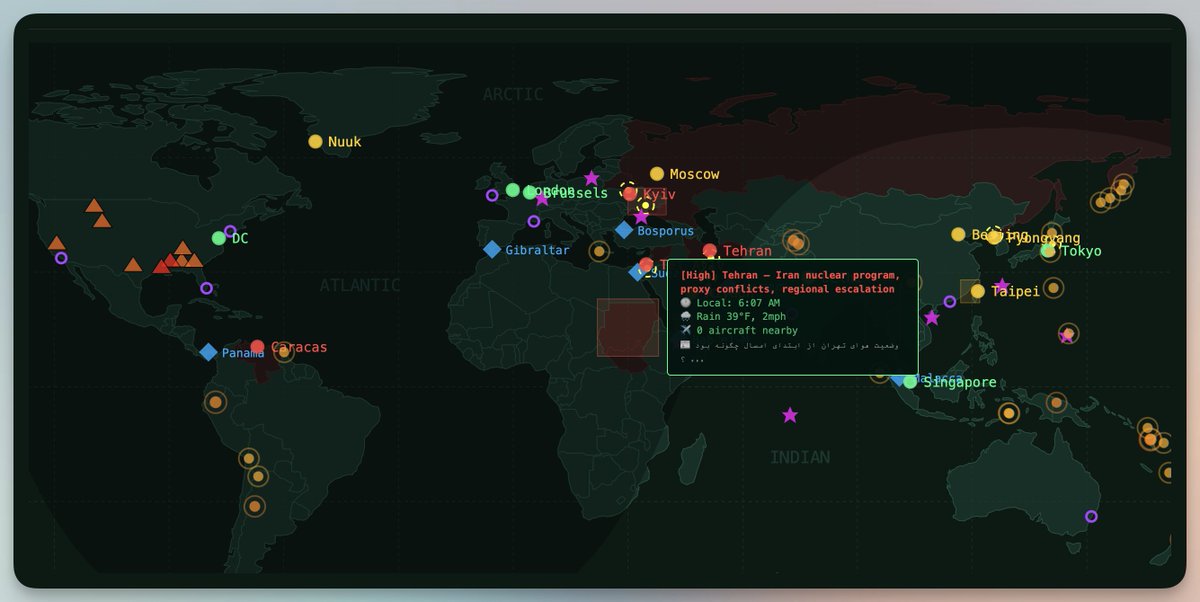
I truly hope the Iranian people will endure the last of darkness and finally see the light. The world needs a good news, we all wish you the best! #IranRevolution2026#Iran
With the Claude Code shutdown. I am proud that we build Codex in the open with our OSS repo and we are 100% invested in supporting a flourishing ecosystem of agentic coding tools out there.
You can already build on top of https://t.co/hDjdmjH8pg directly, which includes ChatGPT login and same usage as you get in codex. Reach out if you are a builder!
Scoop: xAI staff had been using Anthropic’s models internally through Cursor—until Anthropic cut off the startup’s access this week.
Here’s what xAI cofounder Tony Wu sent to staff on Wednesday according to a copy of the internal Slack message I viewed:
“Hi team, I believe many of you have already discovered that anthropic models are not responding on cursor. According to cursor this is a new policy anthropic is enforcing for all its major competitors.
This is a both bad and good news. We will get a hit on productivity, but it rly pushes us to develop our own coding product / models. We're at a time in which Al is now a critical technology for our own productivity. This coming year is rly going to be wildly exciting for all of us.
The team is rapidly developing our own models / product. We will have something to share with everyone soon. In the meantime, you may still try all different kinds of models in grok build.”
Anthropic declined to comment. A Cursor spokesperson directed me to Anthropic for comment. xAI did not respond to request for comment.
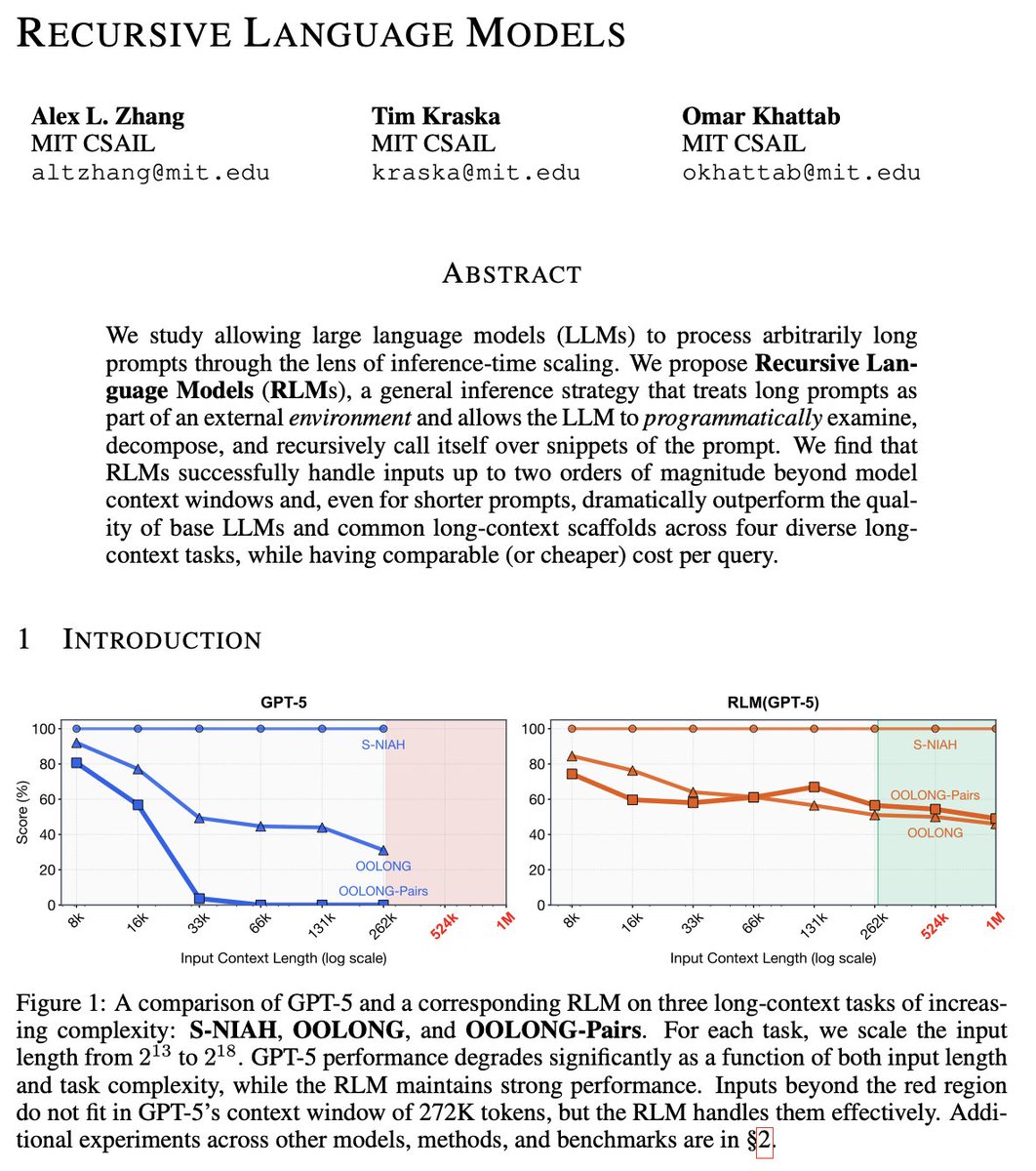
Much like the switch in 2025 from language models to reasoning models, we think 2026 will be all about the switch to Recursive Language Models (RLMs).
It turns out that models can be far more powerful if you allow them to treat *their own prompts* as an object in an external environment, which they understand and manipulate by writing code that invokes LLMs!
Our full paper on RLMs is now available—with much more expansive experiments compared to our initial blogpost from October 2025!
https://t.co/x47pIfIkTb
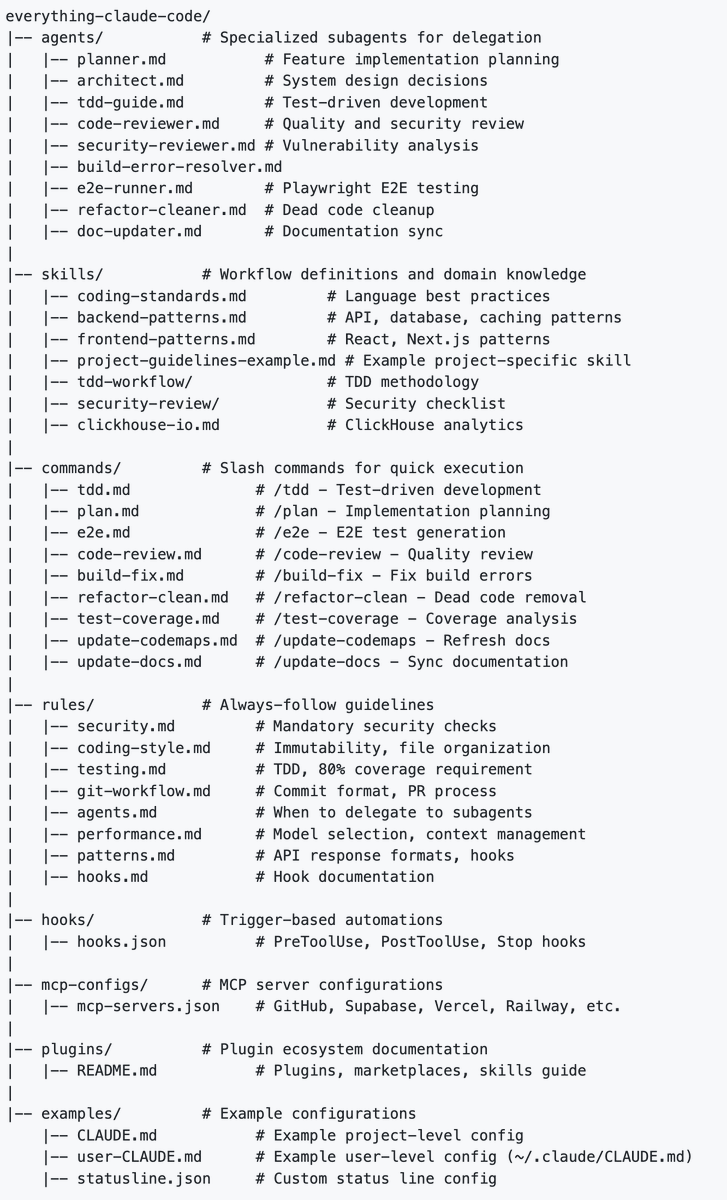
I'm Boris and I created Claude Code. Lots of people have asked how I use Claude Code, so I wanted to show off my setup a bit.
My setup might be surprisingly vanilla! Claude Code works great out of the box, so I personally don't customize it much. There is no one correct way to use Claude Code: we intentionally build it in a way that you can use it, customize it, and hack it however you like. Each person on the Claude Code team uses it very differently.
So, here goes.
This is the AlphaGo moment for software agents.
Every AI coding agent today, from Cursor to Devin to Claude Code, learns from human traces. GitHub issues. Pull requests. Test suites written by developers. Someone had to write all of it first.
This creates a hard ceiling. SWE-bench Verified required 93 professional developers to manually screen 1,699 samples just to produce 500 usable problems. The original SWE-bench needed human-curated issue descriptions, pass-to-pass tests, fail-to-pass tests. The data scales linearly with human effort, and human effort doesn’t scale.
SSR breaks that constraint entirely. One model plays two roles: bug injector and bug solver. It explores real codebases, discovers how tests work on its own, creates progressively harder bugs by removing code or manipulating repository history, then learns to fix what it broke. The injector must produce bugs that fail tests through semantic errors, not syntax mistakes. The solver gets no natural language description, just the raw codebase and a test patch.
No human labeling. No curated issues. No pre-existing test suites. Just Docker images with source code.
The results: +10.4 points over human-data baselines on SWE-bench Verified. +7.8 on SWE-Bench Pro, which contains 731 enterprise-level tasks averaging 107 lines of code across 4+ files. The model trained entirely on self-generated bugs still generalizes to solving natural language issues written by humans that it never saw during training.
They also introduced higher-order bugs constructed from the solver’s own failed repair attempts. When the solver fails, those failure patterns become new training problems. The curriculum gets harder automatically.
This is the same loop that took Go from “decades away” to superhuman in 18 months. AlphaGo didn’t need human games to learn. It generated its own curriculum by playing against itself, discovered strategies no human had conceived, and scaled past every grandmaster on the planet.
We’re watching the same pattern emerge in code. The bottleneck was always data, and the assumption was that useful coding data required human developers to create it. SSR suggests that assumption is wrong. Raw repositories plus self-play can generate unlimited training signal.
Meta trained this on 16 million token batches across 150 steps using H100 clusters. The infrastructure exists to scale this dramatically further. More repositories, more self-play iterations, harder bugs.
GitHub has 200 million repositories. The training data ceiling just disappeared.