@jeremiecharris It will never come back, the owners are shutting it down. Expect digital id and social credit systems when it returns. And just in time to postpone elections
BREAKING: German authorities have arrested a suspected Russian spy in Brandenburg. The 53-year-old Ukrainian man, identified as Vadym Y., is accused of collecting militarily sensitive information for the Russian intelligence service since at least July 2025.
According to the Federal Prosecutor’s Office, he allegedly targeted contacts within Europe’s arms industry, gathering information on the production of tanks, ammunition and explosives, as well as industry personnel. He is also suspected of monitoring military installations linked to the security of NATO’s eastern flank, including, according to media reports, the German Armed Forces’ Lithuania Brigade.
The suspect was arrested in the Oder-Spree district following an investigation involving the BKA and information from Germany’s domestic intelligence service. He is due to appear before an investigating judge at the Federal Court of Justice in Karlsruhe, who will decide whether he will be remanded in custody.
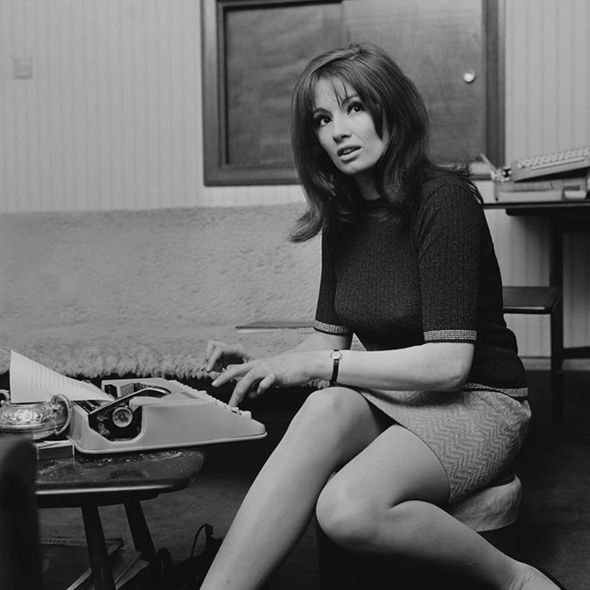
Christine Keeler was a 19-year-old model and call girl caught in a love triangle with a British cabinet member and a Soviet spy in 1961.
Christine had a brief affair with 46-year-old John Profumo, the British Secretary of State for War in 1961 after meeting him at a pool party at a Buckinghamshire mansion owned by the Astor family. She was also in a romantic relationship with Yevgeny Ivanov, a GRU agent at the Soviet Embassy in London under diplomatic cover as the assistant Naval Attaché.
The love triangle erupted into public view two years later when Stephen Ward, a well-known man-about-town, was put on trial for running call girls (including Christine) to other members of British high society.
Christine spoke to the police about her affair with Profumo after she was caught up in an investigation when two of her other boyfriends were involved in a knife fight. One of the men later tried to confront Christine at her apartment, and when she refused to answer the door, he drew a pistol and fired several shots into the door, which quickly led to an investigation. From there, the story of Christine’s involvement with Ward, Profumo, and Ivanov unraveled.
Profumo made false statements to Parliament which he later recanted and resigned in disgrace in June 1963. Prime Minister Harold McMillan resigned a few months later, citing health problems. But his resignation is widely attributed to the Profumo Affair.
Ward was ostracized by most of his friends and associates and pilloried in the media. He committed suicide by overdosing on barbiturates, passing away three days later.
It was later revealed that MI5 had contacted Ward, attempting to leverage his friendship with Ivanov (and Ivanov's relationship with Christine) to convince the GRU agent to defect to England. In the decades following the Profumo Affair, Christine made increasingly startling claims, including that Ward had tried to kill her, that he was a spy working for Russia, and that she had been pregnant with Profumo's child. Many aspects of the event are still contested, and it has been the subject of films, documentaries, and even a stage musical.
#uk #callgirl #london #coldwar #ussr
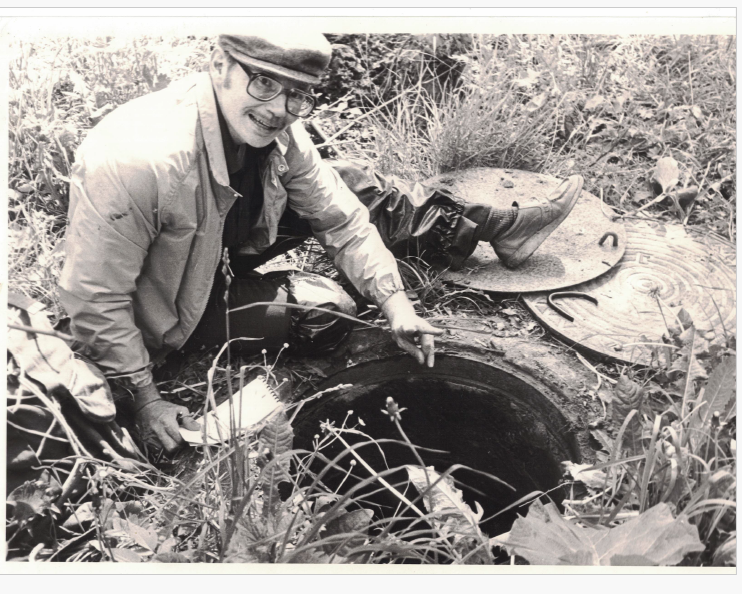
CIA operations officer Gene Coyle’s wife Jan snapped a photo after the couple completed one of the highest-risk operations of the entire Cold War, right in the heart of Moscow in 1986.
Gene joined the Central intelligence Agency after graduating from Indiana University. Several years later, he and his wife Jan were selected for a two-year tour in Moscow. They attended specialized training including nearly a year of Russian language studies.
One of his most important assignments there was Operation GTTAW, which had placed a state-of-the-art recording device around buried communications cables between the Soviet Ministry of Defense and the Krasnaya Pakhra Research Complex.
The joint CIA-NSA operation spent $40,000,000 developing the revolutionary cable tapping and recording device, and the tapes themselves had to be manually retrieved and replaced every few months. The device had been emplaced by an earlier operations officer underneath a manhole cover in woods beside the Kaluzhskoye Motorway.
Gene spent six months building his profile as an embassy functionary, traveling to bookstores around the country to purchase books to send back to the US. Eventually he grew confident that the KGB had ceased regular surveillance of him.
One Saturday morning after completing his regular routine at the gym and car wash, he and Jan drove close to the site before hiking through the woods to locate the manhole cover. They spent hours digging out the device with a small shovel, replacing the tape reels, and hiding it again. On the way back to the embassy, confident they had not been detected, they played Born in the USA by Bruce Springsteen on the cassette player.
The reels went back to the US for analysis, and Gene received a $2,500 bonus and the Intelligence Medal of Merit. As a part time CIA employee, Jan received $74.50 after taxes for her role in one of the most secretive missions of the Cold War.
For episode 264 of the Spycraft 101 podcast I spoke to Gene about his careers as a CIA officer, professor, and author. The episode is available now.
#coldwar #russia #moscow #cia #operation
https://t.co/IcJGavRlmb
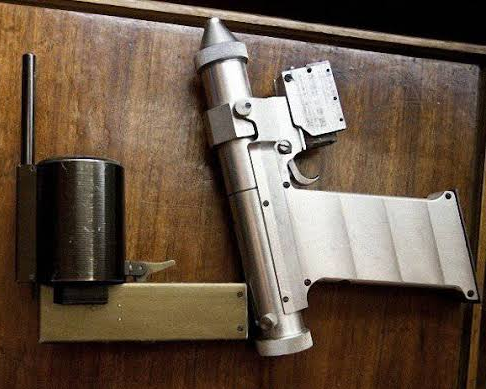
The Soviet Union developed laser pistols in the 1980s for use by their cosmonauts to disable American spy satellites in orbit.
In 1971 the Soviet government saw development of the American space shuttle as a vehicle intended to capture spy satellites out of orbit or even to carry a nuclear warhead into space in order to bomb Moscow with no warning. Soviet scientists immediately began developing countermeasures to this perceived weaponization of near space by the United States.
Scientists at the Military Academy of the Strategic Missile Forces in Moscow designed and tested two different pistols. Initial requirements were for a laser that could burn through an American astronaut’s space suit, disable satellite optical instruments, and even function as a cauterizer for any wounds suffered by the cosmonauts. They created a prototype which met these requirements using a fiber optic cable as a laser resonator but was several meters long. What was needed was a pistol-sized weapon that could be used within the confines of one of the planned Salyut space battle stations.
The first pistol design partially met this need by winding the fiber optic cable around a spool to reduce its overall length and developing one-time-use flash lamps the size and shape of 10mm bullets. The flash lamps were filled with zirconium foil and pure oxygen and ignited by a tungsten-rhenium filament, producing a 10-millisecond flash of light that generated up to five joules of energy on target. The breech of the pistol tilted up to expel the used flash lamp, and the next one was loaded from the 8-shot magazine in the grip via a bolt action lever.
The laser could be safely fired through the windows of Soviet spacecraft when targeting American optical instruments. The second design was a semiautomatic pistol which held six flash lamps in a revolving cylinder, allowing for faster follow-up shots.
There is no record of either pistol ever making it into orbit with Soviet cosmonauts and the project was shelved in 1989. It was not revealed to the world until 2011.
#cosmonaut #space #laser #ussr #coldwar