Your architecture, alive. A live C4 map of your code, kept as plain Markdown in Git. Free and open source. Scan your repo, then shape it with your coding agent.
Hello world! 👋 Meet groma.md.
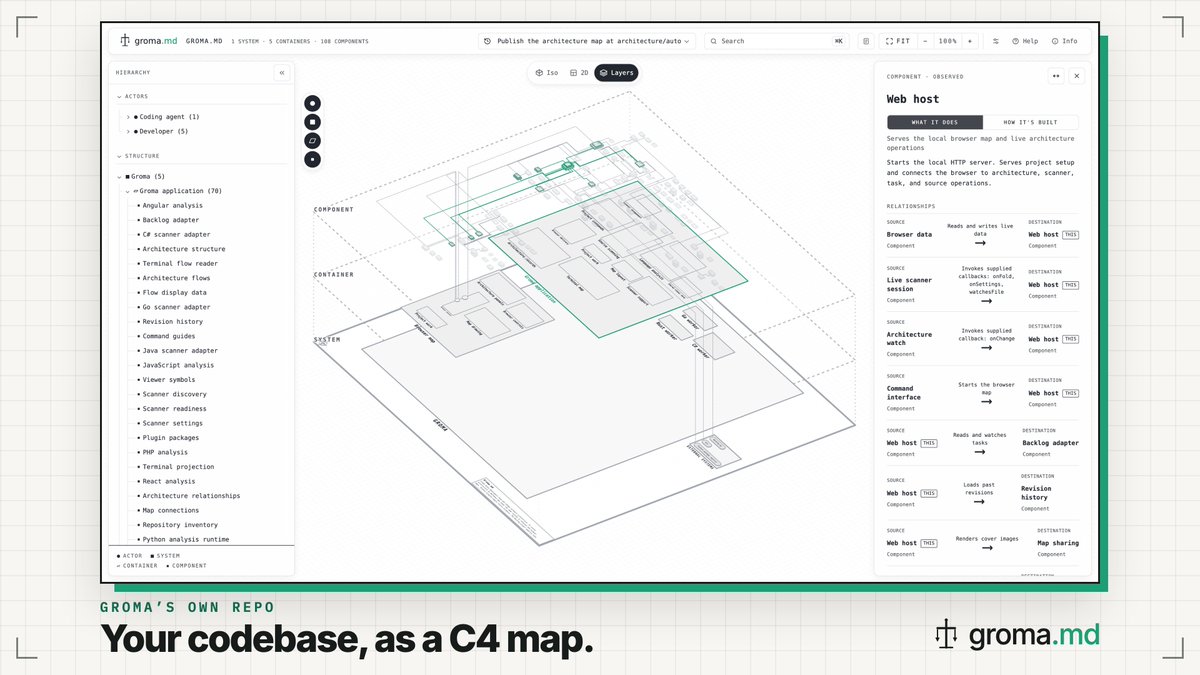
Your architecture as a live C4 map: scanned from your code, curated by your coding agent, and stored as OKF 0.2 Markdown in Git. 👇
groma.md 0.6.0 is out: review what your agent changed in your architecture.
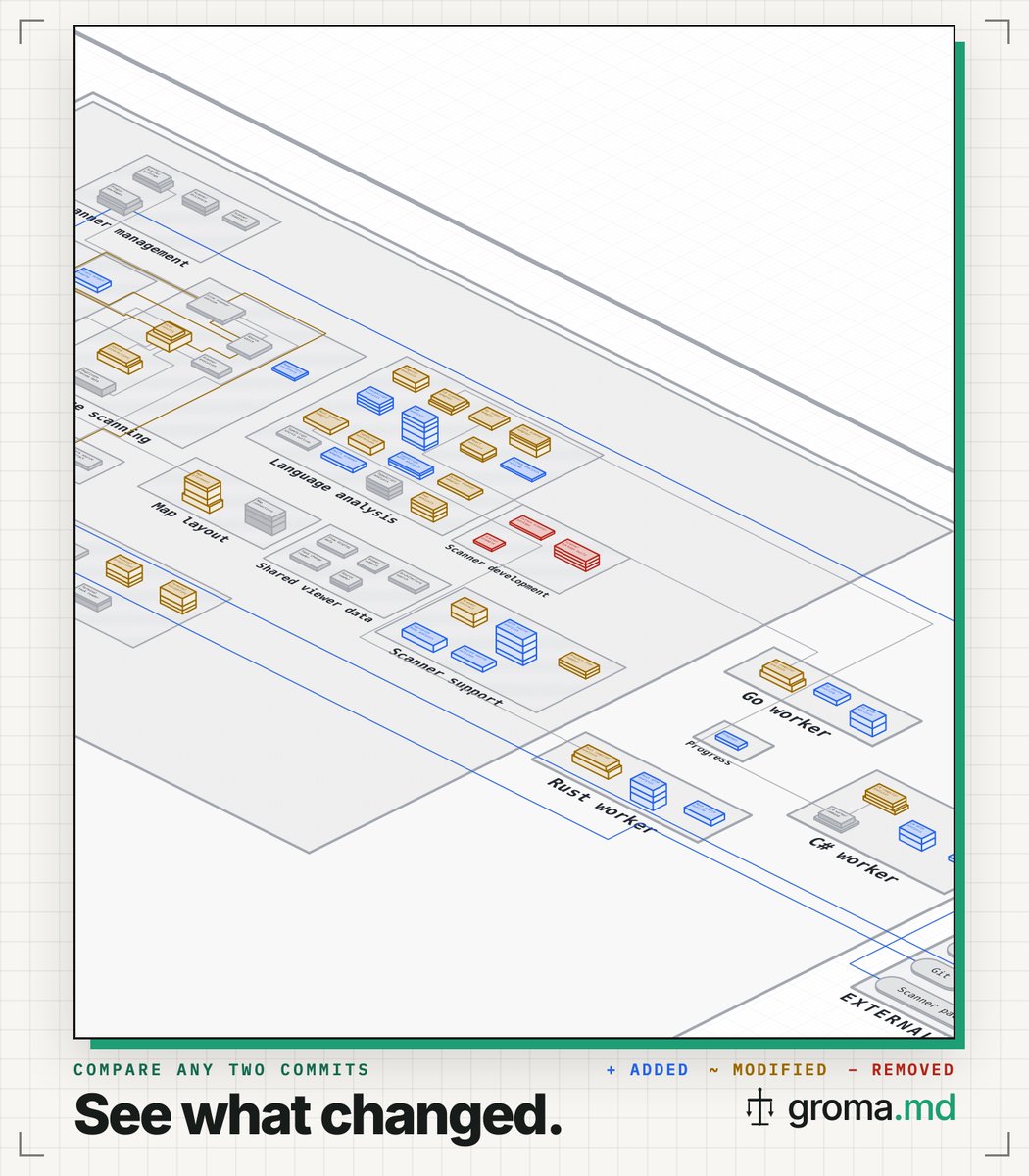
Compare two commits and only the changes stand out. Filter them, step through with J and K, see what changed in each modified component, and read its code diff file by file. 👇
groma.md 0.6.0 is out: review what your agent changed in your architecture.
Compare two commits and only the changes stand out. Filter them, step through with J and K, see what changed in each modified component, and read its code diff file by file. 👇
Hello world! 👋 Meet groma.md.
Your architecture as a live C4 map: scanned from your code, curated by your coding agent, and stored as OKF 0.2 Markdown in Git. 👇
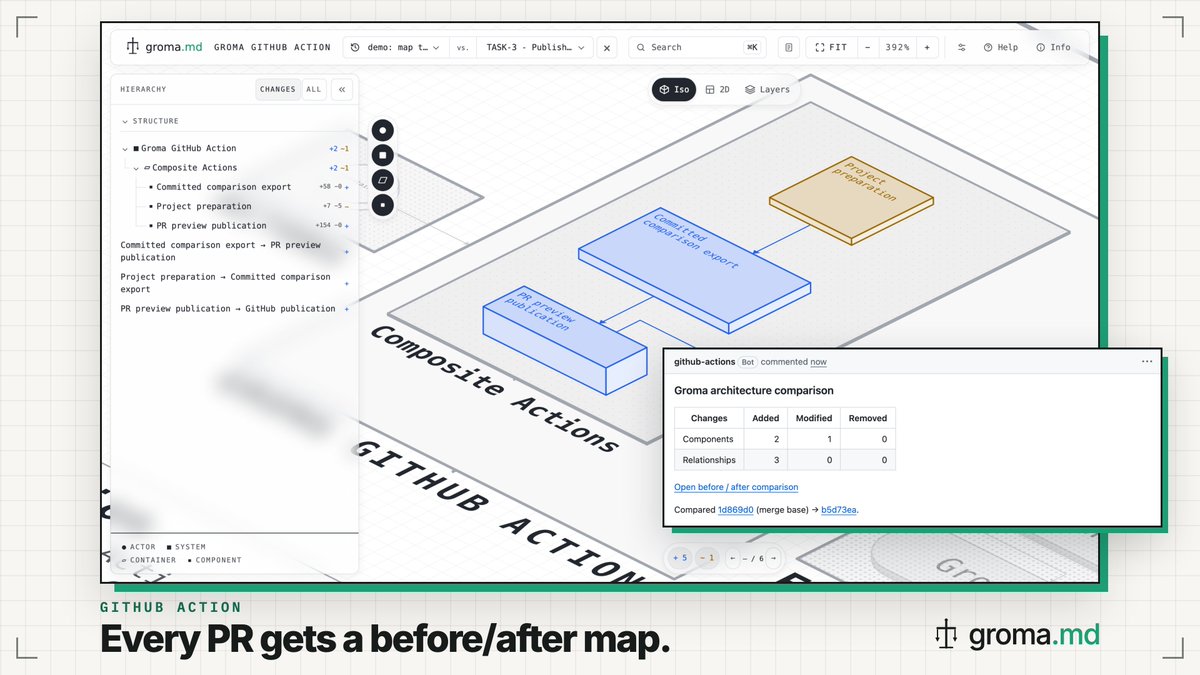
It works in pull requests too. The groma.md GitHub Action publishes a before/after map for every PR to GitHub Pages and keeps one comment updated with the counts. Public repos, no extra account or secret.
This PR maps its own changes and has the setup: https://t.co/3yrJl3ptzF
Opus 5.5 on Max effort - "make a dynamic 15-second motion graphics video that shows what an incredible motion designer you are, like it's your showreel for a résumé. go all out."
@pantasw2 Right now groma.md uses the current git repo to display the history of the project and compare commits.
In a future version it will work across multiple repos.
@DoodleBear_Kuma Commit comparison is already built-in.
Different branch selection is coming soon.
Will check about rotating the camera. Panning should be already very smooth.
It's early days, so expect a few rough edges, and tell us what you find!
Explore Groma's own map:
https://t.co/vzpSLn9uQ7
Code: https://t.co/mtmAhfB6fV
Docs: groma.md
Happy mapping! 🗺️
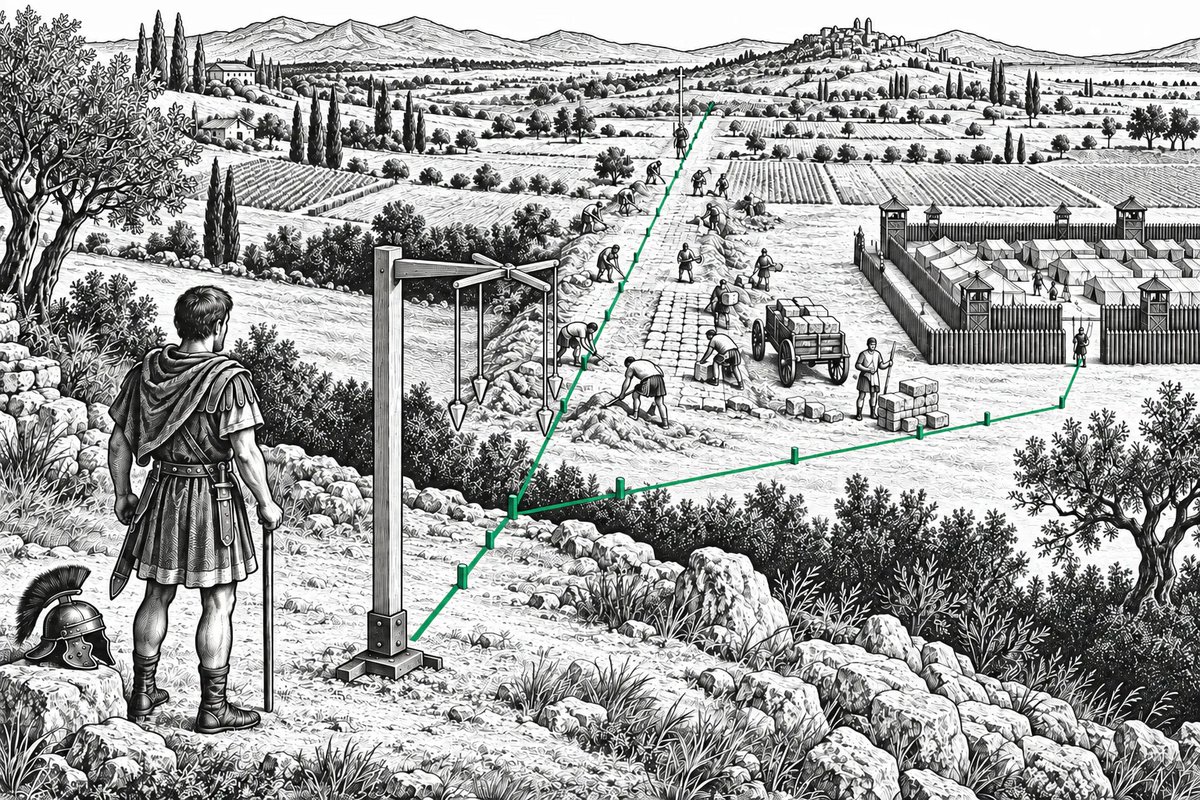
Fun fact: a groma is the instrument Roman surveyors used to lay out straight roads and camps, so builders could follow the lines. 🏛️
Groma does the same for your code: a map that you and your agents follow as the code grows.
Free, MIT licensed and local. No account, no backend, and Groma itself calls no AI service: curation runs in the agent you already use.
Scanners for TypeScript, JavaScript, Angular, React, Vue, C#, Go, Java, Python, Rust, PHP and Swift.
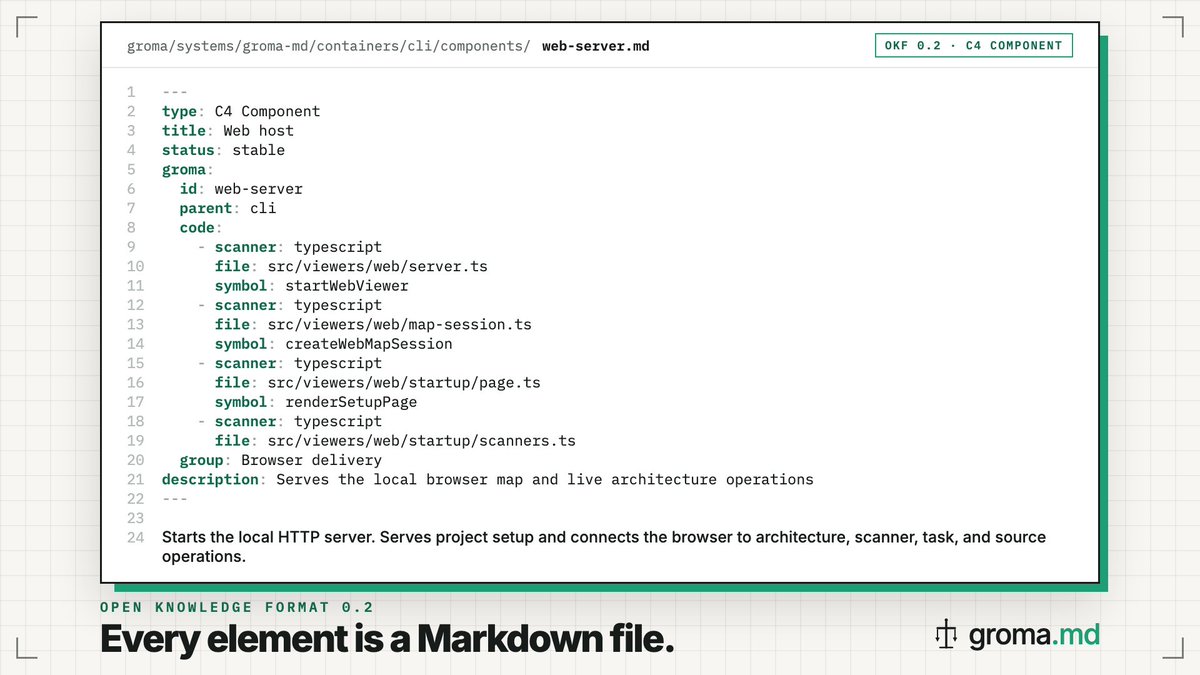
Every element is a Markdown document in the Open Knowledge Format (OKF 0.2), right in your repo.
C4 gives the map its structure, OKF keeps it portable and readable without Groma, and architecture changes get reviewed in the same PR as your code.
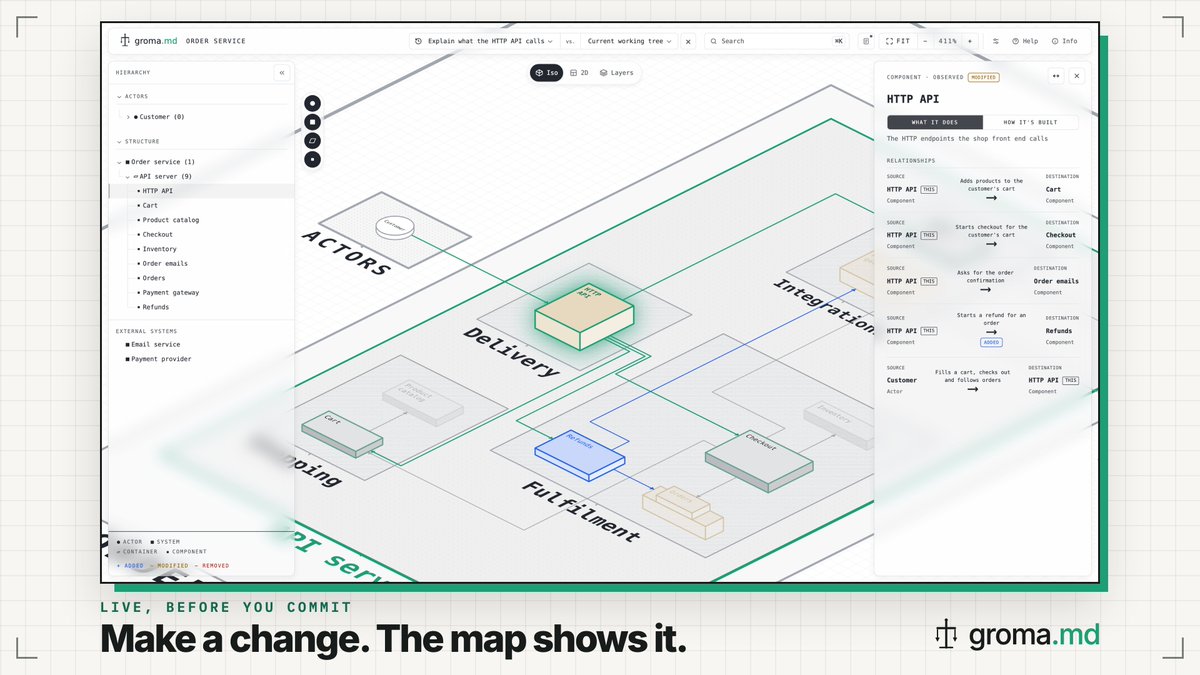
It stays live while you and your agents work.
Save a file and the map updates. Backlog.md tasks show up pinned to the components they touch, so you always see where the work is happening.
You can even compare the architecture between any two commits.
Then walk it like a map.
Search anything, read what a component does, open the code behind it, and trace a flow step by step.
See it in 2D, in iso, or split into its C4 layers: system, container, component.
Getting started takes three steps:
1. npm i -g groma.md
2. groma web scans your code into a first map
3. Ask your coding agent to curate it
The scan is the starting point. Your agent turns it into the architecture you'd explain to a new teammate.