Демографскиот пад е документиран со години, о впрочем ја зафаќа цела планета во земјите што не се шитхоли.
Овие лузери го дебатираат затоа што се преголеми пички да ги дебатираат вистинските проблеми на Македонија, а тоа се окупацијата под Северџанистан, отсуството на владеење на законите и државна одговорност, и политичка елита што е преплашена од Албанската мафија.
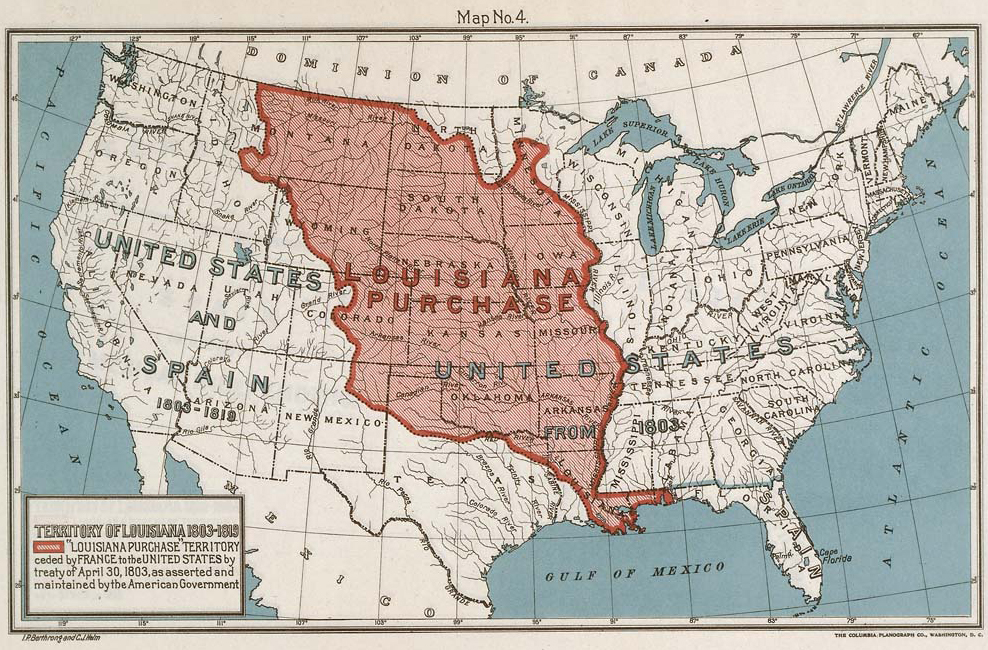
Le 3 mai 1803, Napoléon vend la Louisiane aux Américains.
2 144 000 kilomètres carrés. Du golfe du Mexique jusqu'à la frontière canadienne, du Mississippi aux Rocheuses. Un territoire plus vaste que la France, l'Espagne, l'Allemagne et l'Italie réunies. 22% de la superficie actuelle des États-Unis.
Prix : 15 millions de dollars. Soit 80 millions de francs. Soit 3 cents l'acre.
Les Américains étaient venus à Paris pour acheter la Nouvelle-Orléans. Napoléon leur a proposé tout le territoire d'un coup. Ses négociateurs n'en revenaient pas.
Pourquoi brader un empire colonial entier ? Parce que son armée venait d'être décimée à Saint-Domingue par la révolte des esclaves et la fièvre jaune. Parce qu'une nouvelle guerre contre l'Angleterre se profilait. Et parce qu'il savait que sans flotte, la Louisiane tomberait aux mains des Britanniques.
Son calcul : mieux valait vendre le territoire aux Américains que le perdre face aux Anglais. Et créer un rival de l'Angleterre de l'autre côté de l'Atlantique.
Thomas Jefferson avait autorisé ses négociateurs à dépenser 10 millions de dollars maximum. Ils en ont dépensé 15. C'était une fois et demie le budget annuel de l'État fédéral. Pour financer l'achat, les États-Unis ont dû emprunter, à 6% d'intérêt, auprès d'une banque anglaise. La Barings.
En une signature, les États-Unis ont doublé leur superficie. L'achat de la Louisiane est l'acte fondateur de la conquête de l'Ouest.
Aujourd'hui encore, La Nouvelle-Orléans a un quartier français, des noms de rue en français, et des descendants de colons qui parlent encore la langue.
Trump thinks he can solve a clash of ancient civilisations that started more than 2500 years ago.
The Israelis are Mesopotamians, and the Iranians are Indo-Europeans.
Abraham is explicitly from Ur of the Chaldees, which is in southern Iraq, near modern Basra. There is no meaningful genetic discontinuity between the people of ancient Mesopotamia and the people who became Canaanites who became Israelites.
Hebrew is a Semitic language. The Semitic language family originated in Mesopotamia and the Arabian Peninsula. Hebrew, Aramaic, Akkadian, Arabic, Babylonian — all branches of the same tree. Hebrew and Babylonian Akkadian are cousin languages the way Spanish and Italian are cousins. They share root words, grammatical structures, and conceptual vocabulary going back thousands of years before the Bible was written.
The foundational myths of Judaism — creation, the flood, paradise, the first man, the tower — all have direct Mesopotamian predecessors that are older. The ethical and legal framework — the covenant structure, the law codes — mirrors Mesopotamian forms. The calendar is Babylonian. The alphabet is Aramaic-Mesopotamian. The very concept of recording sacred history in written texts is a Mesopotamian invention.
El — the chief god of the early Israelites and the root of the word Elohim, one of the Hebrew names for God — was a Canaanite/Mesopotamian deity. The word Israel itself contains El. The angels, the cosmic hierarchy, the idea of a divine council — all have deep Mesopotamian roots. Early Israelite religion before the exile looks very much like a local variant of broader Mesopotamian religious culture, with Yahweh gradually absorbing the attributes of El, Baal and others into a single deity.
"Iran" comes directly from "Aryana" — land of the Aryans. The Iranians were Indo-European, not Semitic. This is the foundational distinction. Where the Semitic world — Sumerians absorbed by Akkadians, Babylonians, Canaanites, Jews, Arabs — emerged from the Fertile Crescent and Arabian Peninsula, the Iranians came from somewhere completely different.
The Iranian peoples were part of the great Indo-European migration — a population that originated on the Pontic Steppe, the grasslands north of the Black Sea and Caspian Sea, in what is now Ukraine, southern Russia and Kazakhstan. Around 2000–1500 BC these steppe peoples began expanding in all directions on horseback, carrying their languages with them. One branch went west and became the Greeks, Romans, Celts, Germans, Slavs. Another branch went south and east and split into two streams — one into India becoming the Vedic civilization, one into Iran becoming the Persians and Medes.
Old Persian, Sanskrit, Greek, Latin and all their descendants are branches of the same tree. The word for father in Persian is "pedar," in Latin "pater," in Greek "patér," in Sanskrit "pitár," in English "father." The word for god in Persian is related to the Sanskrit "deva." The Iranian god Mithra appears in Roman religion as Mithras and possibly echoes in the Vedic Mitra. These are not coincidences — they reflect a common origin perhaps 5,000 years ago on the Eurasian steppe.
The two main Iranian tribes that entered history were the Medes in the northwest and the Persians in the south. The Medes formed the first Iranian empire around 700 BC, destroying the Assyrian Empire — the superpower of its day — in alliance with the Babylonians. Then the Persians under Cyrus the Great overthrew the Medes in 550 BC and built the Achaemenid Empire.
In 651 AD the Sassanid Persian Empire — the last great pre-Islamic Persian dynasty — was destroyed by the Arab Muslim armies in one of the fastest conquests in history. Iran was Islamicized. Arabic became the language of religion and high culture. Yet something remarkable happened — unlike Egypt, like North Africa, like the Levant, which gradually became Arabized in language and identity, Iran kept its language. Persian survived. Within two centuries Iranians were writing sophisticated poetry, philosophy and science in Persian — using the Arabic script but their own language. The Persian cultural identity proved resilient enough to absorb Islam without being dissolved by it.
The Persian literary renaissance of the 9th-10th centuries produced figures like Ferdowsi, whose Shahnameh — Book of Kings — deliberately reconstructed pre-Islamic Persian identity and mythology. It was a conscious act of cultural preservation remarkably similar to what the Jewish scribes did with the Torah in Babylon. A conquered people writing their way back into existence.
So you have two civilizational streams that met in the Middle East:
The Semitic stream — out of Arabia and the Fertile Crescent, producing Sumerians, Akkadians, Babylonians, Canaanites, Jews, Arabs. Urban, agricultural, text-centered from very early, building civilization in river valleys.
The Indo-European Iranian stream — out of the Eurasian steppe, mounted, pastoral, bringing a completely different cosmology, a dualistic theology, a warrior aristocratic culture that then learned to govern sedentary civilizations from the Semitic world.
Modern Iranians are the descendants of that Indo-European Iranian stream, heavily mixed with the pre-existing Elamite and Semitic populations of the region, then further shaped by Arab Islamic conquest. Genetically they are distinct from Arabs — closer to South Asians and Europeans than to Semitic Arabs in certain markers, reflecting that ancient steppe origin. Linguistically Persian is closer to English than it is to Arabic — both are Indo-European, while Arabic is Semitic.
Which makes the current conflict between Iran and Israel — between the heirs of the Indo-European Iranian world and the heirs of the Semitic Mesopotamian-Canaanite world — in some sense a resumption of the oldest cultural fault line in the Middle East. The same two civilizational streams that first encountered each other when Cyrus walked into Babylon in 539 BC, when he freed the Jews and sent them home. Except then they were allies. And the Iranian was the liberator of the Semite.
History has a very dark sense of humor.
Let’s put an end to Russia’s destructive influence: How the Napoleonic War of 1812 began.
So, here’s the scoop: On June 24, 1812, Napoleon rolled into Russia with his army, kicking off what he called the Second Polish War. He claimed this whole thing was about stopping Russia from messing with Europe too much. But, as usual, there was way more going on behind the scenes.
Back in 1807, France and Russia had signed the Treaty of Tilsit. It wasn’t perfect, both sides broke some rules here and there, but they mostly tried to stick to it. The big thing Napoleon wanted was for Russia to enforce the Continental Blockade, his plan to cut off Britain’s trade and crush their economy. But, surprise, surprise, Russia wasn’t super into it.
Now, here’s where it gets juicy. Back then, foreign policy wasn’t always about logic or strategy, it was often about ego and personal drama. Napoleon, trying to cozy up to Russia, decided the best way to seal the deal was to marry into the Russian royal family. He first proposed to Grand Duchess Ekaterina in 1808, and when that didn’t work, he tried again in 1810 with 14-year-old Anna. Both times? Big fat no. For Napoleon, this was a massive slap in the face. The Russian court didn’t want anything to do with what they saw as a social climber, and this rejection just made things worse between the two countries.
Fast forward to June 22, 1812. Napoleon, now in full propaganda mode, told his troops that Russia had broken the Treaty of Tilsit and that this invasion, the Second Polish War, was totally justified. He wasn’t just trying to crush Russia’s influence in Europe; he also wanted to create an independent Poland and even dreamed of teaming up with Russia to take on India. Yeah, India.
Here’s how he pumped up his soldiers:
“Soldiers! The Second Polish War has begun. The first ended at Friedland and Tilsit… This one will bring just as much glory to French arms, but this time, the peace we make will last and finally end Russia’s grip on Europe for the last fifty years.”
Spoiler alert: It didn’t go as planned. But hey, Napoleon was always good at selling big dreams.
@ZoranSlavjanski Слична ситуација како и со Третата интернационала и Информбирото. Кога се растурала интернационалата Македонците пропатиле и искрвариле.
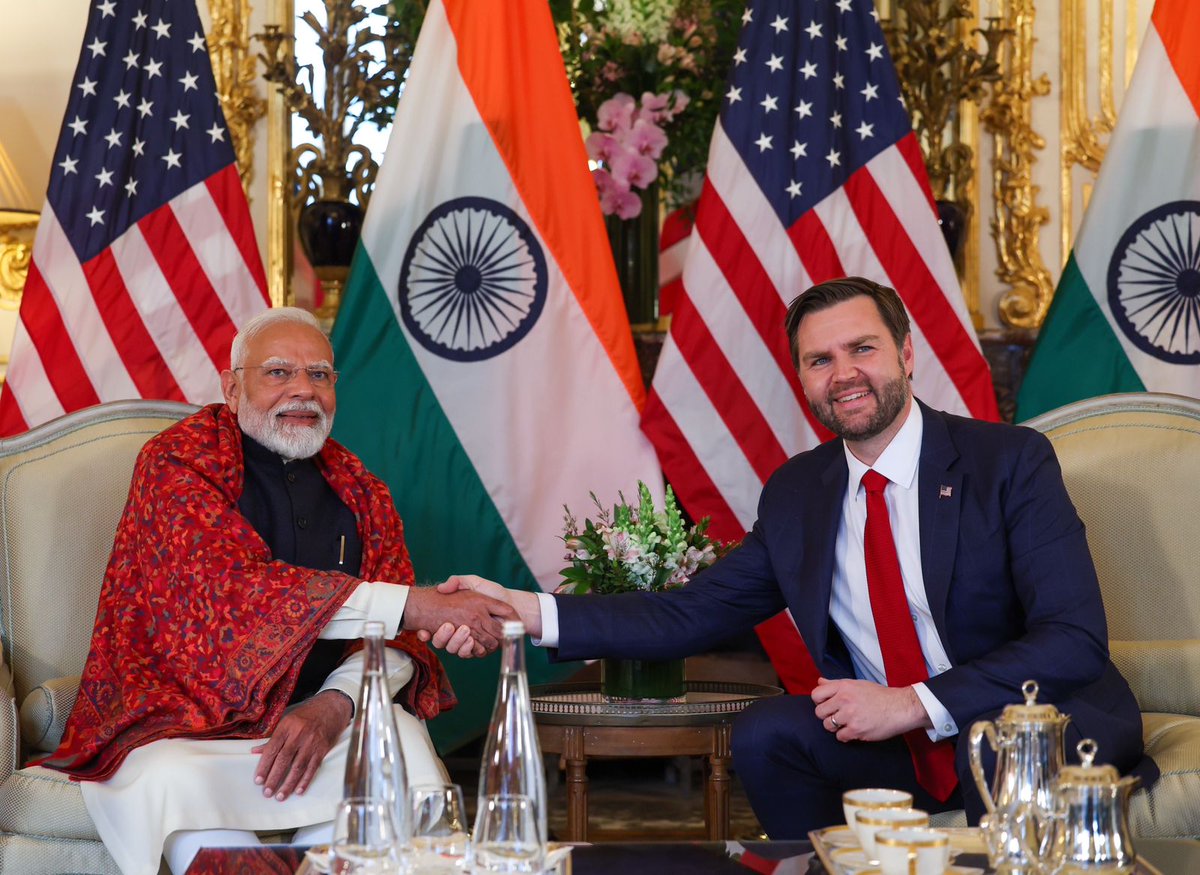
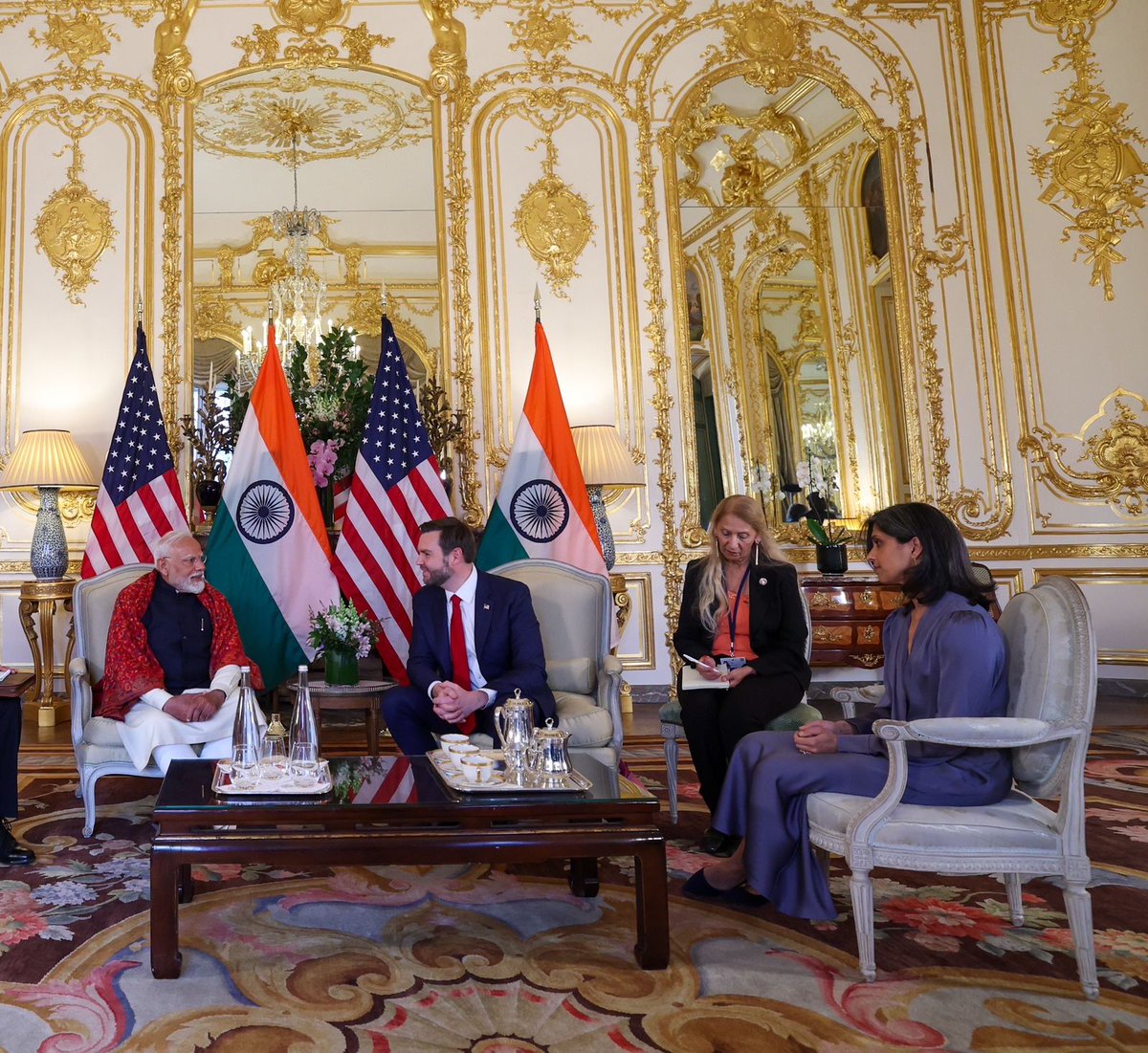
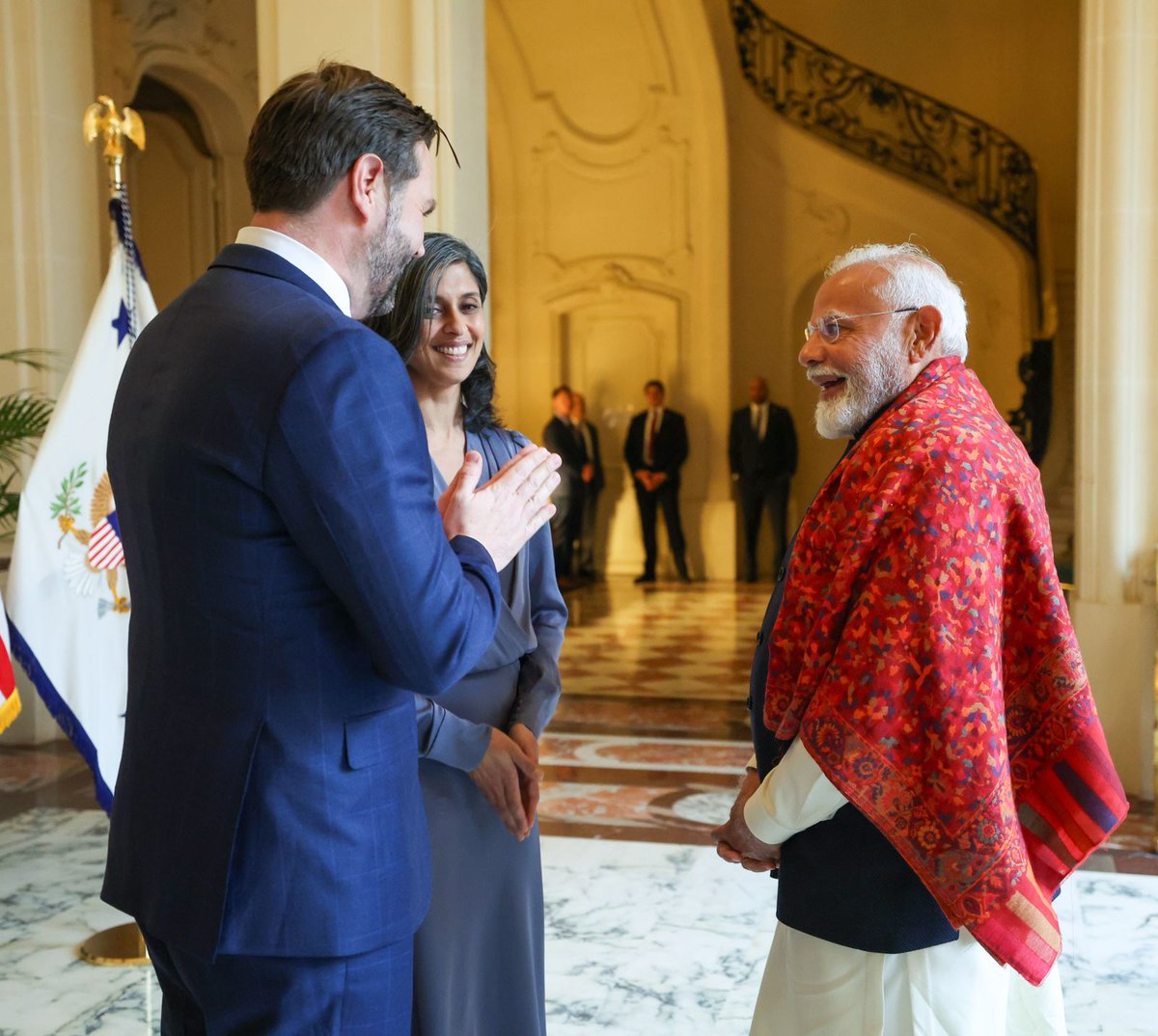
Had a wonderful meeting with US @VP@JDVance and his family. We had a great conversation on various subjects. Delighted to join them in celebrating the joyous birthday of their son, Vivek!
@ZoranSlavjanski Колку што се сеќавам Џефри ја советуваше и ексју како да се распадне, вклучително и Македонија. 99% од професорите на УКИМ се калемени на тас матрица.
This Russian-born American physicist says Our Entire Universe could be a Giant Neural Network: He published a research paper that redefine our Reality: suggesting that we’re living inside a massive neural network that governs everything around us.
Dr. Vitaly Vanchurin was born in Moscow and is a professor at the University of Minnesota. He teaches theoretical physics and cosmology. Dr. Vanchurin has a master's degree and a Ph.D. in physics from Tufts University, where he studied the evolution of cosmic strings.
[https://t.co/Fd6b7ZIcoS]
Dr. Vanchurin's current research focuses on several complex topics, including:
- The expansion of the universe (cosmic inflation)
- The idea of multiple universes (multiverse cosmology)
- The behavior of strings in space (string theory landscapes)
- Fluids that exist in multiple dimensions
- Gravitational waves
- How light travels through the universe
Dr. Vanchurin has been in the news for his new theory about "cosmological neural networks", which is a fascinating idea that combines cosmology and computer science.
Dr. Vanchurin attempts to reframe reality in a particularly eye-opening way — suggesting that it's a "possibility that the entire universe on its most fundamental level is a neural network."
Stay with me, It's a Thread







![Unexplained2020's tweet photo. This Russian-born American physicist says Our Entire Universe could be a Giant Neural Network: He published a research paper that redefine our Reality: suggesting that we’re living inside a massive neural network that governs everything around us.
Dr. Vitaly Vanchurin was born in Moscow and is a professor at the University of Minnesota. He teaches theoretical physics and cosmology. Dr. Vanchurin has a master's degree and a Ph.D. in physics from Tufts University, where he studied the evolution of cosmic strings.
[https://t.co/Fd6b7ZIcoS]
Dr. Vanchurin's current research focuses on several complex topics, including:
- The expansion of the universe (cosmic inflation)
- The idea of multiple universes (multiverse cosmology)
- The behavior of strings in space (string theory landscapes)
- Fluids that exist in multiple dimensions
- Gravitational waves
- How light travels through the universe
Dr. Vanchurin has been in the news for his new theory about "cosmological neural networks", which is a fascinating idea that combines cosmology and computer science.
Dr. Vanchurin attempts to reframe reality in a particularly eye-opening way — suggesting that it's a "possibility that the entire universe on its most fundamental level is a neural network."
Stay with me, It's a Thread](https://pbs.twimg.com/media/GWKAQHsXsAEgsci.jpg)





