Afrobeats And Its Links To US Secret Intelligence
Have you ever found yourself wondering why Afrobeats - the joyful soundtrack to the "Africa Rising" era from the late 2000s through the early 2010s - seems to have lost much of its energy and lustre of recent? Does it seem to you like the music no longer belongs to the fans and has become a distant, expensive product that nobody can relate with anymore?
You are not imagining it - in fact the reality of what has happened to Afrobeats is a lot darker than you would possibly imagine. Far from just a fresh music genre that embodied the sounds and aspirations of a new generation across the continent, it has been coopted into the arsenal of the US government's extensive foreign influence and interference tools. In fact, your favourite Afrobeats artist, as incredible as it sounds, most likely now has a handler permanently assigned to them by the US State Department.
In this special report, The Spearhead Senior Reporter Mckay Chukwu examines a story that has been hiding in plain sight for years, detailing the State Department's well-funded cultural interference infrastructure which has been deployed all over the Global South to bend entire populations and their governments toward the foreign policy goals of the US government.
There's often a mild shadow-ban to overcome when this happens.
I can't shake the sense that I'm screaming in a soundproofed room. But tbf that's been my general experience over my 12+ years of social media.
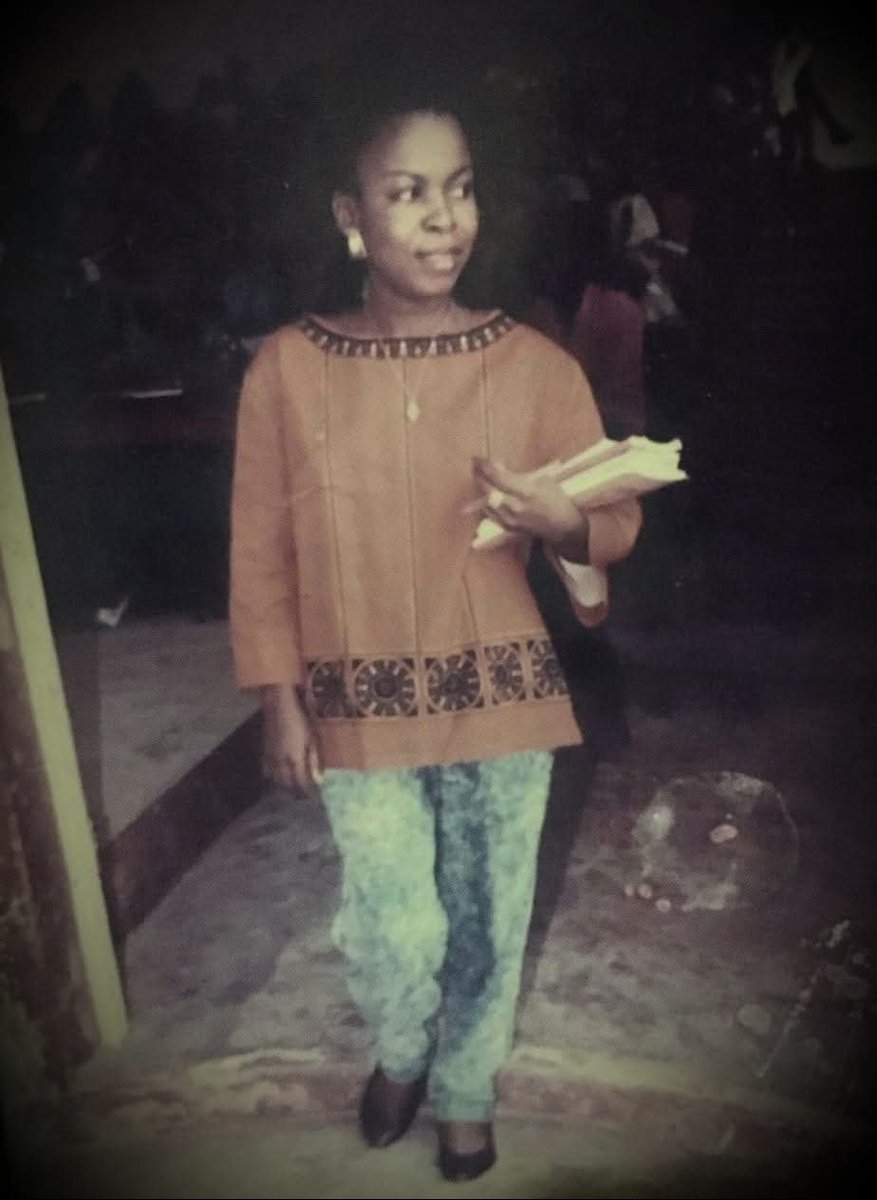
It's my mum's birthday. She survived domestic violence, escaping with her kids. Although she lost, she was the 1st woman from her village to go into politics to prove that women could also be a force. She's building a shelter, so other women too could escape from DV.
It is interesting to put side by side how Chinua Achebe Achebe saw the English language and how James Baldwin did.
Achebe writes in his 1965 essay "The African Writer and the English language":
"Let no one be fooled by the fact that we may write in English, for we intend to do unheard of things with it."
Baldwin in writing about how he stopped hating Shakespeare, wrote:
"My quarrel with the English language has been that the language reflected none of my experience. But now I began to see the matter in quite another way. If the language was not my own, it might be the fault of the language; but it might also be my fault. Perhaps the language was not my own because I had never attempted to use it, had only learned to imitate it. If this were so, then it might be made to bear the burden of my experience if I could find the stamina to challenge it, and me, to such a test."
The last line of this Baldwin quote, this challenge and test is mirrored in what Dambudzo Marechera wrote about English:
"For a black writer the language is very racist; you have to have harrowing fights and hair-rising panga duals with the language before you can make it do all that you want it to do. It is so for feminists. English is very male. Hence feminist writers also adopt the same tactics. This may mean discarding grammar, throwing syntax out, subverting images from within, beating the drum and cymbals of rhythm, developing torture chambers of irony and sarcasm, gas ovens of limitless black resonance."
For me, this way of approaching language is useful for a writer whether you are writing in a borrowed language or in your mother tongue. No language is neutral, or good, or even bad. Every language has baggage from culture(s), and history. An African language is not safer for use than a European language. Many African languages have the same kind of problems that English or any other colonial language does, and too often those problems hide in plain sight because those who use it have not interrogated the language enough. Often a language needs person originally excluded or marginalised by it, outsiders to show its deficiencies. English has the advantage of being used by many and so it has been beaten into a million shapes. In African languages like Hausa, you only need to look at the way non-Muslims have used the language to see how that has also challenged and tested the language.
Anyway...
👏👏Early Olympic Games qualification for Nigeria🇳🇬
For the first time ever - Nigeria have qualified for the Olympics in the Beach Volleyball event, and will be representing Africa at the LA 2028 Olympics.
Esther Onyinye Mbah and Pamela Miyoum Bawa won the Beach Volleyball African title, defeating Morocco in straight sets 2-0 (21-18, 21-10) to book an early qualification to Los Angeles.
This has been probably the most humiliating week of my entire life. Years of patience just spat on in an instant.
My only hope is that God will make things right somehow. Because this is too much.
"You think every love story has to end in marriage?" No, I simply don't think it's one of the best love stories ever written by a Nigerian let alone by an African. Messiness is not a romantic virtue.
Yes, seed sovereignty is a vital aspect of protecting a community's food interests, but there's no such thing as GMO Ginger.
What do you think happens when fungi attack a crop that grows only through clones of itself?
Those ladies in Kenya and SA that made it their life's work to store, label and preserve indigenous seeds and protect seed sovereignty, they are doing the work of God.
Let me tell you how it happened. Nigeria’s ginger export hit zero from N26 billion within 3 years.
The official story blames fungal blight.
But here is what actually happened. When Nigerian farmers lost their indigenous seed supply, grant-aided interventions arrived with replacement seeds.
An associate professor at Lagos Business School flagged publicly that some of those interventions involved GMO organisms that weakened indigenous crops and compromised soil health.
That is not a conspiracy theory because it is a documented academic concern.
Now that Nigeria spoke got destroyed by the GMO seedlings….what is not the result?
Nigeria was forced to import ginger from China to fill domestic demand. Chinese ginger has none of the pungency, oleoresin content, or quality that made Nigerian ginger a global premium product. And the ginger now sitting in Nigerian markets tastes like wood because it essentially is wood.
The two indigenous varieties that built Nigeria’s global ginger reputation, the Tafin Giwa and Yatsun Biri, had decades of soil relationship and quality built into them.
Once the soil was degraded and those seed varieties were displaced, the product that returned was a pale imitation. Nigeria did not just lose a market. It lost a seed. And without a National Ginger Seed Bank, which nobody has built, it may never fully get it back.
Léa Seydoux on why she started acting:
“I’m going to tell you something very intimate,” she tells Variety’s @DPD_ in this week’s cover story. “The reason why I do this job ... I never really wanted to become an actress, but I wanted to exist. The only way I found to exist was to have my image printed on a film and have the proof of my existence.”
Read the full cover story: https://t.co/O2FUHXV6cP