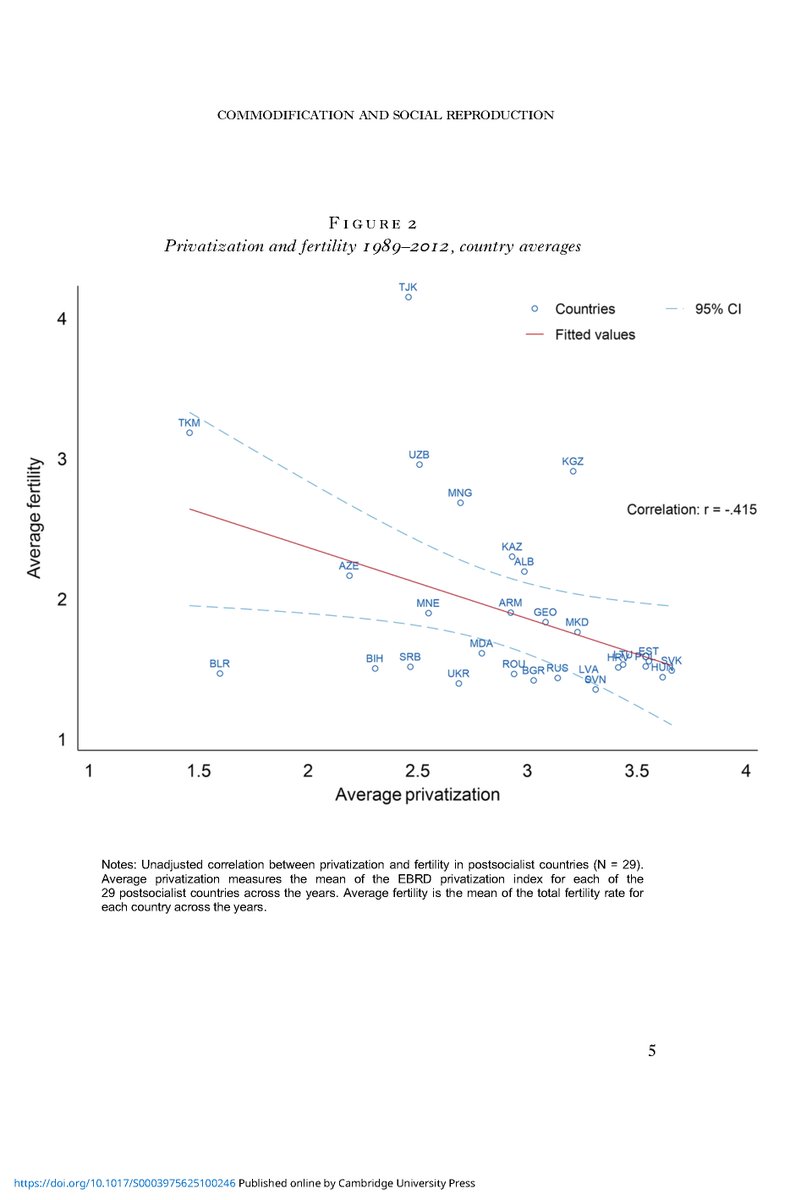
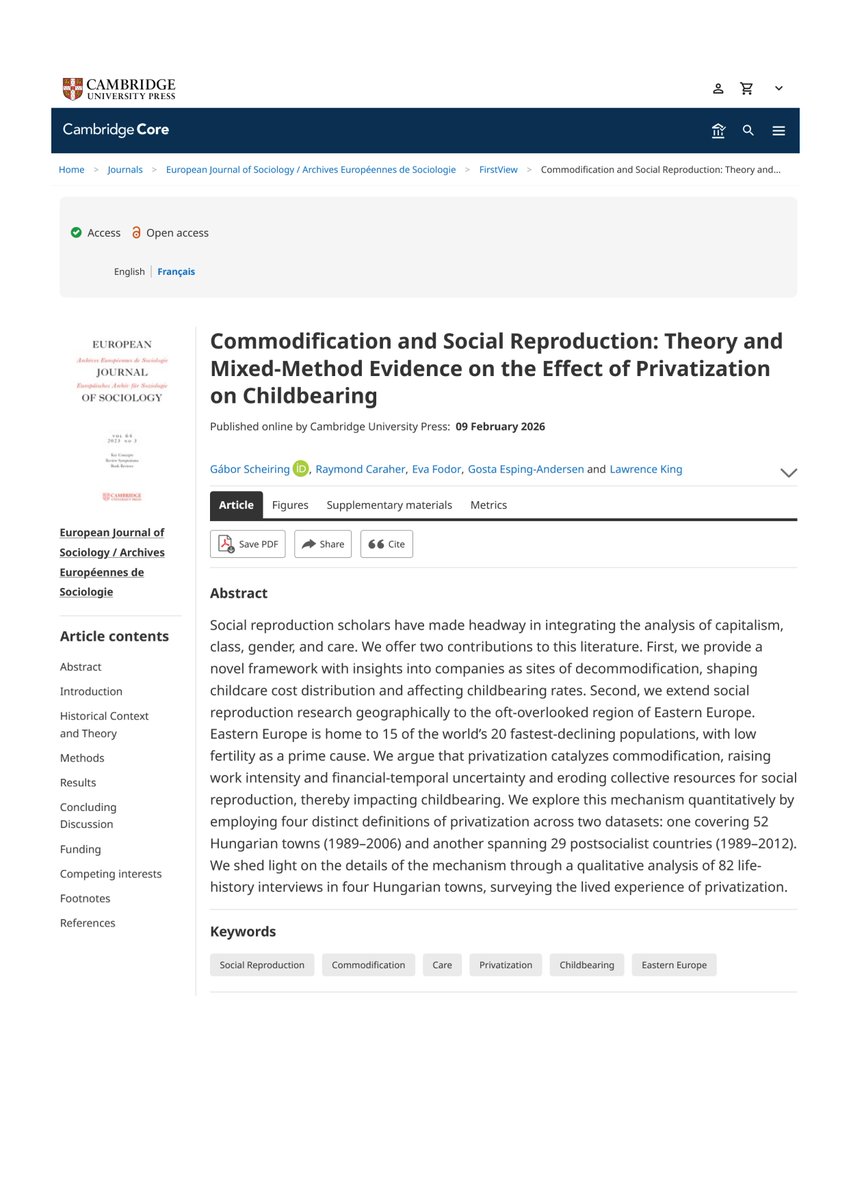
I have a new paper out in the European Journal of Sociology! Commodification and Social Reproduction: Theory and Mixed-Method Evidence on the Effect of Privatization on Childbearing.
I have friends who do brilliant work on #social#reproduction, take #Marx seriously, but don’t find #demography inspiring. I also have demographer friends who do brilliant work on #fertility but don’t know social reproduction theory and don’t take Marx seriously. Putting these two worlds in dialogue was always going to be a tall order. That’s also what motivated this study.
Economic production and social reproduction are two sides of the same coin. Social reproduction theory asks a deceptively simple question: if workers produce value, who produces workers? And how are the costs of producing and sustaining life #distributed across genders, households, markets, and the state? We argue that these are not side questions but core to understanding the #postsocialist #fertility #decline. This is not a minor story. Around 15 of the world’s 20 fastest #shrinking populations are located in Eastern Europe, with low fertility as a major driver.
Empirically, we combine cross-national panel models with subnational and qualitative evidence to trace the mechanism. #Privatization and commodification shift risk downward, reorganize household budgets and time, and make #childbearing a far more uncertain project. Marketization does not just reshape jobs and incomes. It reaches into intimate life decisions by transforming the conditions of social reproduction.
I’m grateful to all my co-authors Lawrence King, @EvaFodor_CEU, Raymond Caraher, and Gosta Esping-Andersen. Co-authoring with Gosta, a doyen of welfare state theory and social demography, was quite an experience. As the acknowledgements section demonstrates, many contributed to this study. I’d like to flag the help from @azarrova, Darja Irdam, @gigoca, @EszterKovats, @LMurinko, @i_reprosoc, and @DorottyaSzikra.
A peek behind the scenes, because behind every success in academia there are dozens of invisible setbacks. This paper took around eight years from first idea to publication. It went through multiple submissions, a second-round rejection at a top journal (American Journal of Sociology), and several R&Rs that would have required reshaping the argument in ways that would have hollowed out what the paper is trying to say. Part of this reflects how broken the academic publication game is. Part of it reflects the paper’s unusual niche. It relies on advanced quantitative tools, but it is not a clean causal inference design. It is also theoretically hybrid, and the tensions between social reproduction scholarship and mainstream demography made some pushback almost inevitable.
A lot changed in my life over these eight years. I lived in six cities, in five countries, across three continents. I held multiple precarious contracts and lived through major political upheavals. There was one “comforting” constant, though: this paper was almost always under review somewhere. Not anymore.
As they say: Each article is its own Vietnam — easy to get into, hard to get out of. In the end, it found a very good permanent home at EJS. In the end, it found a very good permanent home at EJS. Comments welcome!
#politicalconomy #sociology @GUQatar@QNLib
With Orbán’s anti-hegemonic network facing a shakeup, what happens to Tbilisi? Former MP and political scientist Gabor Sheiring discusses the ideological and economic axis between Budapest and the Georgian Dream government. @gscheiring
https://t.co/CaJzN27Csp
The Turkish AKP government is effectively shutting down the main opposition party (CHP). Why is the West silent about this?
To appreciate the paradox, keep in mind that the CHP is a mainstream, West-aligned party, which was poised to win the next elections. The overall picture was deceptively similar to that in Hungary, where the West closely watched the elections as if it were a matter of life and death.
But there is a key difference under the surface. The AKP switched from “economic nationalism” in the summer of 2023 to mainstream economics. It toned down its criticism of the West. Not incidentally, Erdoğan met with Trump right before the attack on the CHP. Simultaneously, the pro-business finance minister Şimşek was holding meetings in Britain, and foreign minister Fidan was meeting the German prime minister.
Western authorities do not love the AKP and would prefer to work with a more secular party. They know that they are playing with fire when they work with the AKP, since it can switch to “economic nationalism” anytime. But just like in the case of Fidesz, they also know that even such experiments will remain within the fold. Western businesses might even benefit from the ecological deregulation and low-wage work. These two elements are essential parts of the alleged “nationalism” of parties like Fidesz and the AKP, which protect domestic capitalists but not nature and labor. The AKP also plays “anti-Western” and “anti-Isreal” cards on occasion, but might still be the West’s best bet on streamlining anti-imperialist feelings in the country and keeping them under a largely toothless cultural umbrella.
Parties like the CHP, despite their overall neoliberal stance, come with their own risks for the West. Lacking Erdoğan’s ruthless authoritarianism, the CHP might not be able to enforce labor discipline, which would mean interrupted trade of cheap goods for European consumers and loss of profits for global conglomerates. The CHP has a (weak) left wing, which might, in situations of systemic chaos, push the party towards anti-imperialism or an economic nationalism more protective of the people and the environment than its business-aligned AKP/Fidesz versions. (Some in the American establishment still cannot forgive the CHP’s coalition with a minority AKP faction to block cooperation during Bush’s invasion of Iraq, despite Erdoğan’s directives to cooperate with the US).
So, the West ultimately picks business and diplomatic stability over liberal-democratic principles and contributes to the decline of democracy worldwide.
You can be certain that some of the authoritarian tactics used in Turkey today will be tried out in the West tomorrow.
In a new essay for #ResilienceResistance, 2025 CFK Global Fellow Gábor @gScheiring unveils three pitfalls to look out for as Hungary works to revive its democracy https://t.co/aOPkrAp7Z3
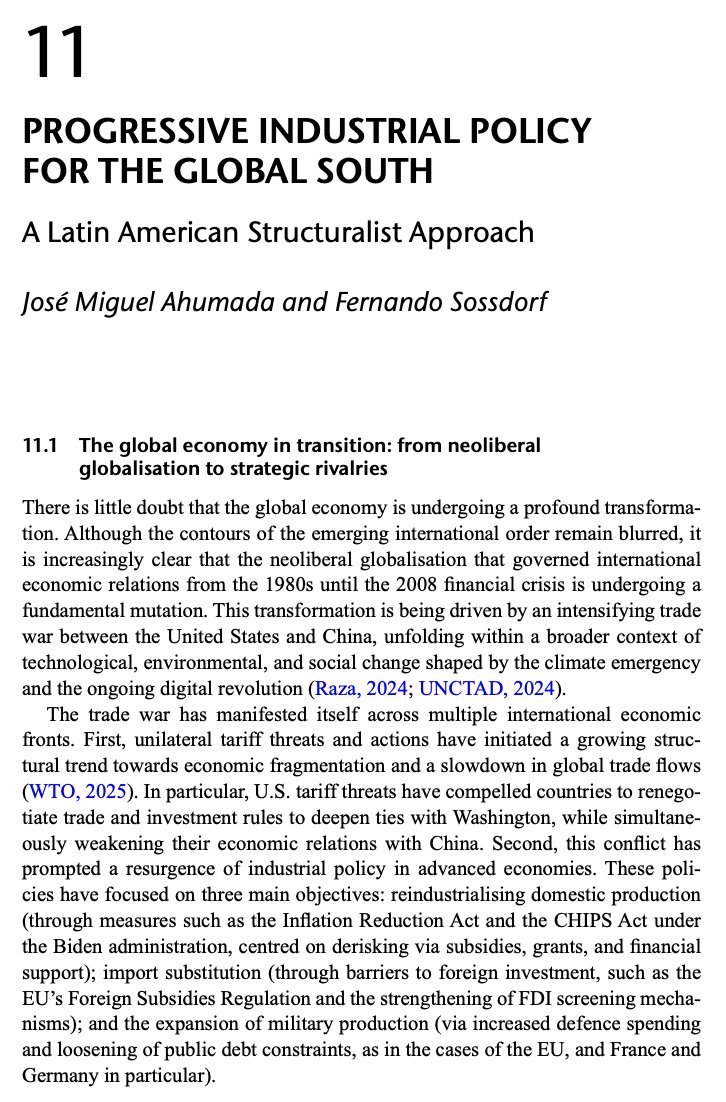
En momentos en que incluso el Banco Mundial habla de pol. ind. , es útil diferenciar entre las medidas de pol. ind progresistas de las liberales y conservadoras.
Dejo el texto sobre una agenda de pol ind progresista que escribimos con @fsossdorfg 👇
https://t.co/mvbD2OStXl
I was honored and excited to join @hanafi1962 on his podcast Connecting Social Research to Society, hosted by the @AUB_Lebanon and the Arab Council for the Social Sciences (ACSS). An ambitious discussion series that maps the 𝐬𝐨𝐜𝐢𝐚𝐥 𝐢𝐦𝐩𝐚𝐜𝐭 𝐨𝐟 𝐬𝐜𝐢𝐞𝐧𝐭𝐢𝐟𝐢𝐜 𝐫𝐞𝐬𝐞𝐚𝐫𝐜𝐡 by 𝐬𝐜𝐡𝐨𝐥𝐚𝐫𝐬 𝐰𝐨𝐫𝐤𝐢𝐧𝐠 𝐢𝐧 𝐚𝐧𝐝 𝐨𝐧 𝐭𝐡���� 𝐀𝐫𝐚𝐛 𝐰𝐨𝐫𝐥𝐝. A few weeks after I had the pleasure of hosting Sari at Georgetown for a public forum on his new book, the conversation continued, this time with him in the host's chair.
This podcast turned into a more 𝐩𝐞𝐫𝐬𝐨𝐧𝐚𝐥 𝐜𝐨𝐧𝐯𝐞𝐫𝐬𝐚𝐭𝐢𝐨𝐧 this time, talking through the trajectory that took me from Budapest's working-class outskirts through the Hungarian parliament to comparative politics and political economy at GU-Q.
We started where my thinking actually started. Coming of age in the 𝐭𝐮𝐦𝐮𝐥𝐭𝐮𝐨𝐮𝐬 𝐲𝐞𝐚𝐫𝐬 𝐚𝐟𝐭𝐞𝐫 𝟏𝟗𝟖𝟗, watching the regime transformation up close, sensing early on that something was off in the official story. A generation of workers told their lives were the 𝐩𝐫𝐢𝐜𝐞 𝐨𝐟 𝐩𝐫𝐨𝐠𝐫𝐞𝐬𝐬. The human casualties of that process were systematically underestimated, and the 𝐝𝐢𝐬𝐜𝐨𝐧𝐧𝐞𝐜𝐭 𝐛𝐞𝐭𝐰𝐞𝐞𝐧 𝐞𝐥𝐢𝐭𝐞 𝐨𝐩𝐭𝐢𝐦𝐢𝐬𝐦 𝐚𝐧𝐝 𝐦𝐚𝐬𝐬 𝐝𝐢𝐬𝐥𝐨𝐜𝐚𝐭𝐢𝐨𝐧 is what eventually paved the way for Orbán. And how similar dislocations came to be the undoing of Orbán's regime.
The 𝐩𝐚𝐭𝐡 𝐰𝐚𝐬 𝐧𝐞𝐯𝐞𝐫 𝐥𝐢𝐧𝐞𝐚𝐫 by conventional academic benchmarks. Years of activism after college in green and progressive movements. Four years as an opposition MP between 2010 and 2014, watching Orbán dismantle Hungarian democracy from inside the parliament. A doctorate in sociology at Cambridge to work out, with some analytical distance, what I had lived through, followed by four years of post-doc creative precarity. And now Doha, where Georgetown gives me ground to stand on, space to grow, and a vantage point that makes it impossible not to recognize the 𝐩𝐚𝐫𝐨𝐜𝐡𝐢𝐚𝐥𝐢𝐬𝐦 𝐨𝐟 𝐬𝐨𝐦𝐞 𝐄𝐮𝐫𝐨𝐩𝐞𝐚𝐧 𝐝𝐞𝐛𝐚𝐭𝐞𝐬.
Sari and I also talked about how much more 𝐜𝐨𝐧𝐧𝐞𝐜𝐭𝐬 𝐄𝐮𝐫𝐨𝐩𝐞'𝐬 𝐄𝐚𝐬𝐭𝐞𝐫𝐧 𝐚𝐧𝐝 𝐍𝐨𝐫𝐭𝐡 𝐀𝐟𝐫𝐢𝐜𝐚𝐧 𝐩𝐞𝐫𝐢𝐩𝐡𝐞𝐫𝐢𝐞𝐬 than the standard area-studies maps suggest. The exhaustion of statist development projects in 𝐓𝐮𝐧𝐢𝐬𝐢𝐚 𝐚𝐧𝐝 𝐇𝐮𝐧𝐠𝐚𝐫𝐲. The social costs of neoliberalization in both. The fragility of shallow formal democracies that arrived without the underlying social contract to sustain them. These stories point toward a bigger question: 𝐰𝐡𝐚𝐭 𝐬𝐮𝐬𝐭𝐚𝐢𝐧𝐚𝐛𝐥𝐞 𝐝𝐞𝐦𝐨𝐜𝐫𝐚𝐭𝐢𝐳𝐚𝐭𝐢𝐨𝐧 𝐫𝐞𝐪𝐮𝐢𝐫𝐞𝐬, anywhere in the world. Much to unpack in the future.
Grateful to Sari for being such a generous interlocutor, and to the Arab Council for the Social Sciences, AUB, and the Science & Society initiative for the invitation.
🎧 YouTube: https://t.co/7uahDIwvkF
🎧 Spotify: https://t.co/DzaoneevGL
🎧 Apple: https://t.co/COWiadd7a9
📡 Full series: https://t.co/qAerUCQJn7
#academiclife #research #impact #democracy @GUQatar
@sopjap Perfect summary of the intertwining of civilizationism, racism, and zionism. And I am sure he is truly convinced that he is the good responsible guy.
Fidesz is finally out of power in Hungary — but the system it built, with some of the worst wages and employment rights in the EU, remains intact. https://t.co/4CtfrwpWS8
Grateful to @TVPWorld_com (Polish public broadcast) and host @SaschaFahrbach for the chance to discuss my recent @jacobin piece on Hungary's post-Orbán transition, and the harder question lurking behind the celebration: what does #sustainable#democratization actually require?
Getting a critical-but-constructive analysis of #Hungary's lift-off moment onto an anglophone regional broadcaster is not nothing. Mutual learning between #Poland and #Hungary is vital. The temptation right now, in Budapest, Brussels, and Warsaw, is to treat Orbán's defeat as the destination rather than the runway.
I wanted to push back on that without sliding into pessimism, and without turning the analysis into a critique of Péter Magyar himself. The point isn't whether the new government deserves support. It's whether the conditions for democracy to take root will be built.
My argument turns on three traps that any post-illiberal transition has to navigate.
▎① The economic trap: democracy without social foundations is fragile. If the material insecurity that fueled Orbánism is left intact, the next authoritarian entrepreneur is already taking notes.
▎② The political trap: weak institutions and a hollowed-out civil society cannot, on their own, hold a government accountable, no matter how well-intentioned that government is. Counter-hegemonic infrastructure has to be rebuilt, not assumed.
▎③ The cultural trap: the symbolic terrain Orbán cultivated for fifteen years doesn't disappear with an election result. Dignity politics matters, and a transition that ignores it cedes the ground back.
None of this is an argument against Magyar. It's an argument for sustainable democratization, the kind that survives the next downturn, the next backlash, the next charismatic challenger.
The #Roma #anthem was sung in the Hungarian Parliament for the first time in its history this week, with the #EU #flag flying above the building. Heavy and welcome symbolism. But the proof of the symbolic pudding is in the eating.
Link to the interview: https://t.co/ba9X4jO17z
Jacobin piece: https://t.co/SfDDC9pfeU
#democracy #illiberalism #FarRight #Europe #Hungary @GUQatar
Every year, this has to be the one report I look forward to the most: the Democracy Perception Index, compiled by the Alliance of Democracies Foundation (in partnership with Nita Data).
In fact, my yearly thread on the report is apparently such a tradition that, this year, its lead researcher personally sent me the report with this message: "every year, I look forward to your thread about it!". That's how you start wondering whether you tweet too much 😅
Why do I like this report so much? A few reasons:
1) The Alliance of Democracies Foundation, the organization behind the report, cannot even remotely be suspected of being some sort of anti-West outlet: it was started by an ex-NATO Secretary General (Anders Fogh Rasmussen) and its stated purpose is "to unite world democracies"
2) It's surprisingly honest and the methodology is actually democratic. Unlike other reports on democracy the scoring isn't done by the report's authors (like the report by Freedom House or The Economist's "Democracy Index"). It simply asks people what they think and, when it comes to democracy, that's kind of the point 🤷♂️
3) I love the expression "perception is reality" because, like it or not, what people believe about their system is what determines its legitimacy. A democracy that nobody actually experiences as one can't credibly claim to be one. And conversely, a so-called "autocracy" that its people overwhelmingly believe is actually a democracy might... actually be a democracy.
Anyhow, this year's edition did not disappoint. The data is absolutely fascinating and frankly, a little terrifying. So here you go: my thread on the 2026 Democracy Perception Index 🧵
@Szabadsag1956 Tisza has an impressive supporter base but no formal membership; there's a huge difference between the two. That might change in the future: if those islands got incorporated as local party organizations, that would be a welcome sign of democratizing the movement.
Zack Polanski's Jewish identity is being erased because he is leftwing.
It is an utterly transparent - and deeply sinister - campaign from our media and political elites.
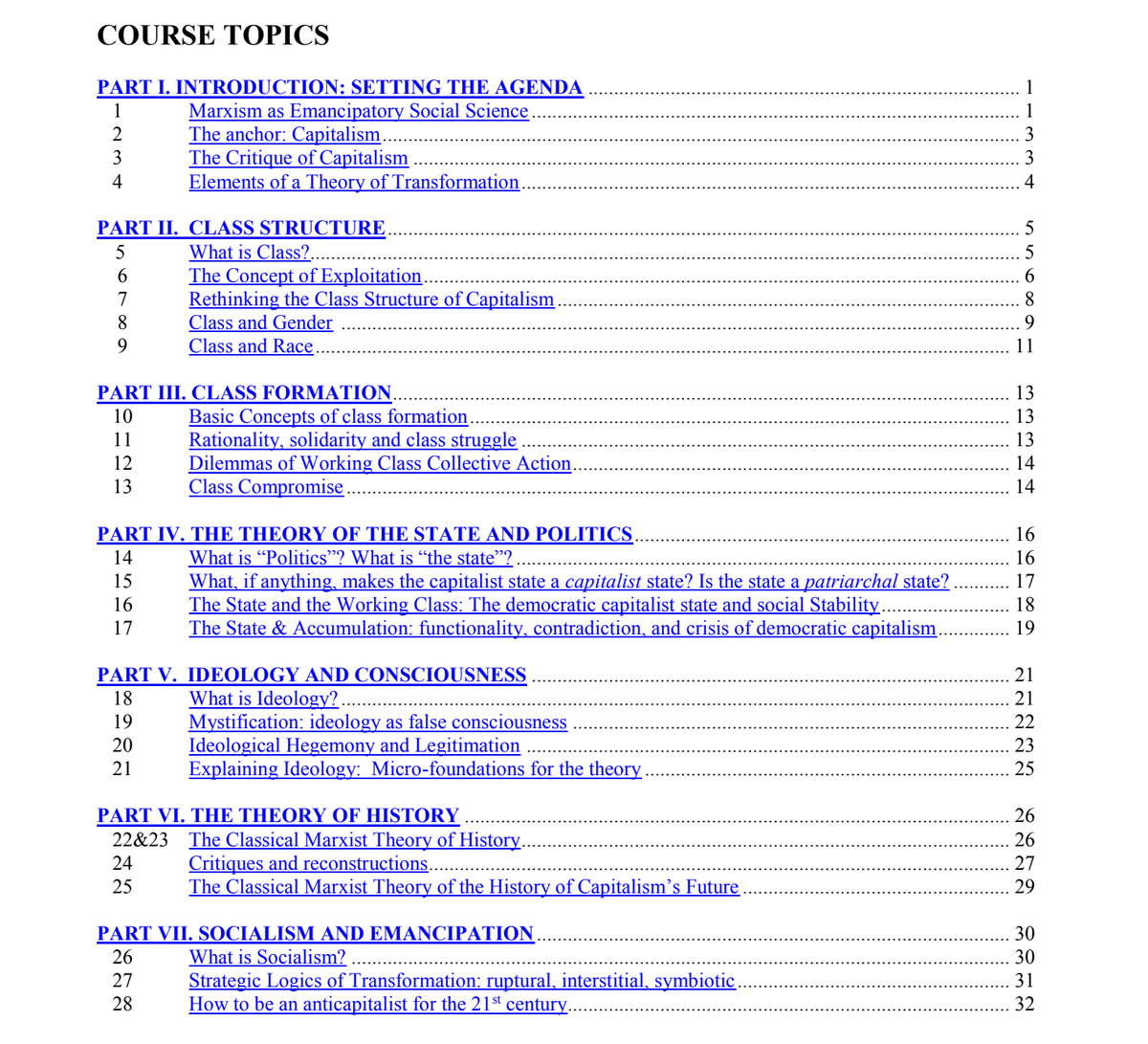
Erik Olin Wright'ın Wisconsin'daki efsanevi Sosyolojik Marksizm syllabusu. Son derece kapsamlı ve sınıf analizinin pek çok metnini içeriyor. 2 yıl bir okuma grubuyla başlıktaki metinlerin çoğunu okuma fırsatı bulduk. Linkten indirebilirsiniz.
https://t.co/TJkGRME4h5
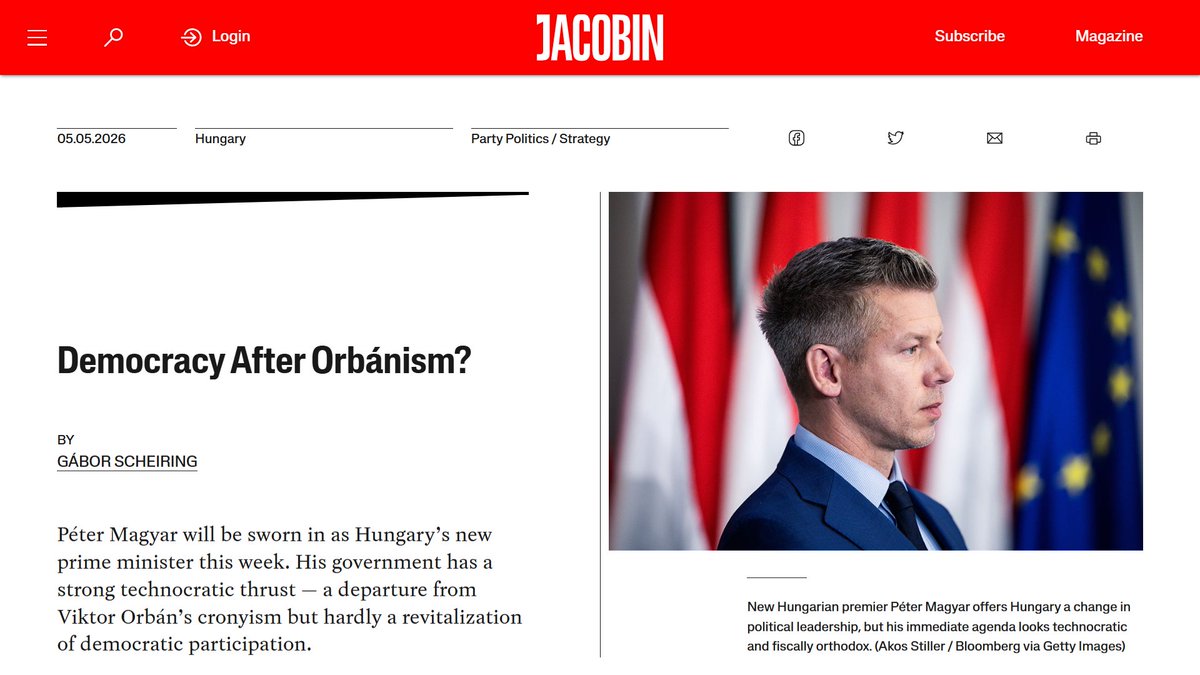
In my new @jacobin essay, I argue that Péter Magyar's incoming government has cleared the runway, but the work of democratic liftoff is only beginning. Hungary's spring of democracy is real. But the magical thinking that we can simply return to the 1990s with contemporary branding risks producing another illiberal cycle.
Orbán didn't fall because Hungarian shopkeepers, truckers, and nurses suddenly took to reading John Locke. He fell because the economy collapsed, while the crony class transformed itself, and taxpayers' billions, into a new aristocracy.
The road to sustainable democratization runs through three traps (economic, political, cultural) that Benedek Jávor and I, in our forthcoming book, call triple devaluation. This triple trap is not Hungarian. It is the puzzle facing democratic forces from Warsaw to Washington.
🔹 The economic trap. EU funds without a developmental-state framework are like strong coffee for an exhausted driver: it gets you through the next bend but won't get you all the way home.
→ In the incoming Magyar government's program, the rhetoric of economic modernization and fairness exists; a transformative developmental-state model does not.
🔹 The political trap. Defusing Orbán's institutional land mines is the "easy" part. The harder problem is the absence of counterpower in society: weak unions, exhausted civil society, a two-year-old governing party with no organized membership.
→ Only power restrains power, and if society is disempowered, democracy is vulnerable.
🔹 The cultural trap. A center-right civilizationist frame that competes with the far right by adopting soft xenophobia in a suit and tie is no path forward. Voters tend to choose the original over the copy.
→ Yet for the peripheries and the working class, the incoming government offers no new framework of recognition.
The comparative record is unforgiving. Starmer in Britain. The post-Mečiar coalition in Slovakia that paved the way for Fico. The democratic parties of post-2011 Tunisia. Where democratic restoration fails to address the economic, political, and cultural traps that breed frustration, illiberalism returns.
This is where the left has a role, not as a junior partner in centrist restoration, but as the force building what comes next. The old Hungarian left disqualified itself for this task: from IMF socialism in the 1990s to the post-2010 pacts that displaced the politics of inequality with symbolic constitutional liberalism.
A new left has to be built on different foundations. The paramount step now is to strengthen the counterhegemonic communities and institutions that can carry green-left politics as both an idea and a social coalition. This social coalition does not emerge on its own. It must be built. And through this task, the Left can rediscover itself.
#Democracy #FarRight #Illiberalism #Orbán #PéterMagyar @GUQatar
https://t.co/SfDDC9pfeU