Buy the dip
Buy it again
Buy it when your broke
Buy, it ain't no joke
Buy if it makes you cry
Buy if you feel you may die
Buy till it goes down to zero
Buy like you're a super hero
Buy when they say you look foolish
Buy cuz the market is bullish
#stockmarketcrash
🫠🥵😵💫
BREAKING: A cyberattack hit 178 major organizations, including Zoom, CNN, BBC, Fox News, HSBC, Ledger, Equifax, Salesforce, IKEA and Air France-KLM, by loading malware on the Optimizely Web platform, exposing visitors to scripts built to steal payment data and exploit iOS devices, per security firm Report URI.
Banking and finance was the hardest-hit sector, with 32 organizations affected, including the UK's HSBC across multiple markets such as the US, Hong Kong, Mexico, Singapore, Australia and the UAE.
$HIMS just became a two-sided operating system for healthcare. Today, Eli Lilly signed a formal partnership to distribute Zepbound and Foundayo through the $HIMS platform. Earlier this year, Novo Nordisk did the same with Wegovy. The two companies that dominate obesity medicine now both supply through $HIMS.
This is the moment the flywheel grows a second side. Here's how it works:
1/ The supply side: pharma. Building a direct-to-consumer channel is slow, expensive and outside pharma's core skill. $HIMS already has the patients, the providers, the pharmacy logistics and the brand. Lilly plugs in and reaches millions of self-pay patients without building any of it. Lower cost to reach each patient means a higher return on every drug they've already spent billions developing.
2/ The demand side: patients. A patient opens one app and gets a consultation, a prescription if appropriate, and home delivery. Foundayo starts at $149/month and Zepbound at $299/month, branded and FDA-approved, with no compounded substitutes. More choice, lower friction, same price as anywhere else. Outcomes per dollar go up.
3/ The two sides feed each other. Every new pharma partner makes the platform more valuable to patients: wider catalog, better prices, more options for the provider to match to each person. Every new patient makes the platform more valuable to pharma: more reach, more demand, more real-world data on adherence and response.
4/ The data is where it compounds. Every consultation, every check-in, every lab panel, every switch from one therapy to another becomes longitudinal outcome data that no single drugmaker can collect on its own. Patients get treatment matched to them. Pharma learns what works, for whom, in the real world.
5/ This is why both sides improve outcomes per dollar at once. Pharma gets more outcome per R&D dollar because its drugs reach the right patients at a fraction of the distribution cost. Patients get more outcome per healthcare dollar because the platform matches them to the best intervention at the best price.
6/ Then the gravity flips. The more pharma supplies through $HIMS, the more patients come. The more patients come, the more pharma has to supply through $HIMS. Lilly and Novo are fierce competitors, and both just chose the same platform. That's what a two-sided network looks like in its early innings.
7/ Now add the biomarker loop. Generic peptides arrive on the same rails. The dataset deepens. The AI gets better at designing the right intervention for each person. Eventually pharma isn't just selling through $HIMS. It's building for it.
Just as $PLTR became the operating system for enterprise decisions, $HIMS is becoming the operating system where medicine meets the patient.
The molecule becomes the output. The platform that matches it to each human becomes the asset.
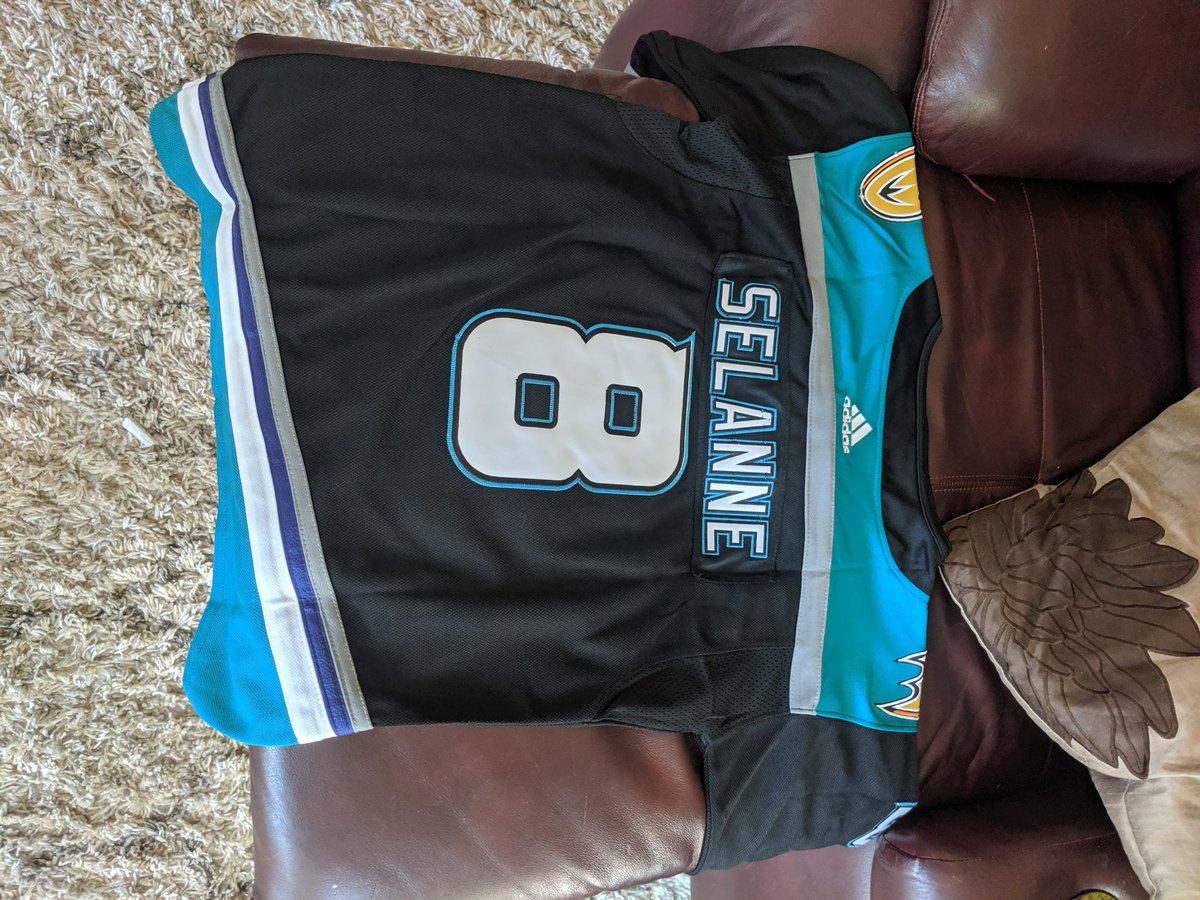
Sooo it's been a long time since I said I would buy this, but not long enough cuz the Jersey doesn't fit.
But we do love it!
#teemuselanne@TeemuSel8nne