#GTComputing is a global leader in real-world computing breakthroughs that drive social & scientific progress. Our community pushes the possible forward.
Thank you veterans for your dedication, service, and sacrifice🫡💓
New research offers promising hope for veterans navigating PTSD. A @GeorgiaTech and @EmoryUniversity team developed a tech toolkit syncing Fitbit wearables with clinician web dashboards.
https://t.co/YxiqvF1Hlv
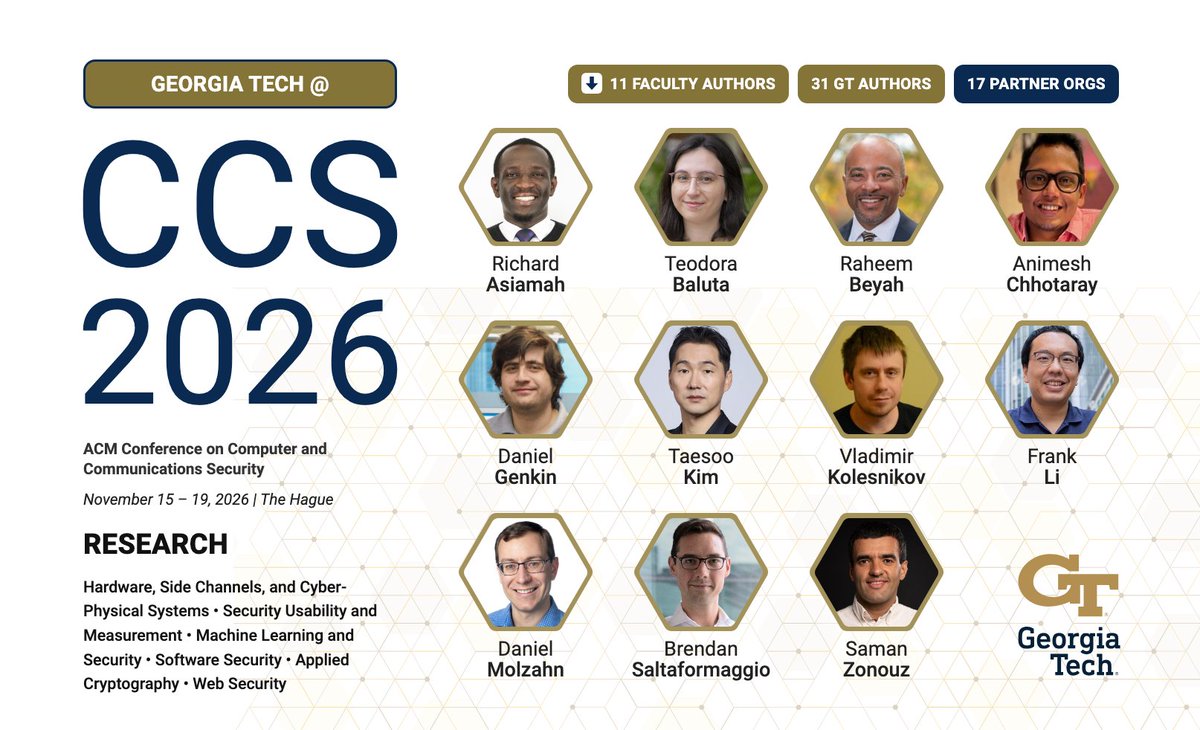
Cyber protection out on the ocean and in autonomous vehicles are highlights of new research from @GeorgiaTech at the @TheOfficialACM Conference on Computer and Communications Security (Netherlands, Nov. 15–19).
Check out Tech's experts and their work.
https://t.co/otTRZC3Yzr
Food safety? Yes, please.
Cumbersome legal requirements for food safety? No, thank you.
The FDA Food Traceability Rule requires perishable foods records during a contamination outbreak. A @georgiatech study shows this may be a burden for small farms.
https://t.co/76xRgoDNlx
A magnificent seven! This is Ángel Cabrera's last week as Georgia Tech's 12th president, and his tenure has embodied our motto — Progress and Service. #WeCanDoThat 🐝💛👏 | https://t.co/n8lTVLJkKS
With more people turning to LLMs during personal challenges, is AI equipped to offer emotional support?
@GeorgiaTech researchers have developed a new neural framework to evaluate how different training sources shape social reasoning in models.
News: https://t.co/iI4N31WDau
What happens if AI agents start speaking their own language?
@mark_riedl says AI models could develop shorthand references intended for the model to work faster.
But it would probably look like gibberish to most humans.
Read more: https://t.co/Cl0moozzh4
Georgia Tech officially opens the Nexus AI Supercomputer, a $20 million, @NSF-funded supercomputer, creating new possibilities for researchers across the country.
With 90% of its computing capacity available to universities across the United States, Nexus offers a flexible suite of AI hardware and software to support research across a wide range of science and engineering fields. 🐝 #WeCanDoThat
Georgia Tech's new human-computer interaction research includes 2 best papers, on workplace conflict and PTSD, respectively.
@sigchi#CSCW2026 is Oct. 10-14. Discover GT experts, and our analysis of all ~200 papers!
GT: https://t.co/QXo524kZIF
Papers: https://t.co/ejDwLxkKrv
Assistive robots score points for cleaning and organizing homes, but what if the bots move your keys and wallet and forget where they put them?
A new benchmark created by @GeorgiaTech tests the memory capability of vision-language models (VLMs).
News: https://t.co/SPZWBS0XN1
How are consumers really using language models? @GeorgiaTech experts 🐝 have some insights and will share new research findings at this week's @COLM_conf.
Explore our interactive data story📊: https://t.co/KsB6kbnbZn
GT@CoLM 2026: https://t.co/Qnm6iwbCoD
#GTComputing
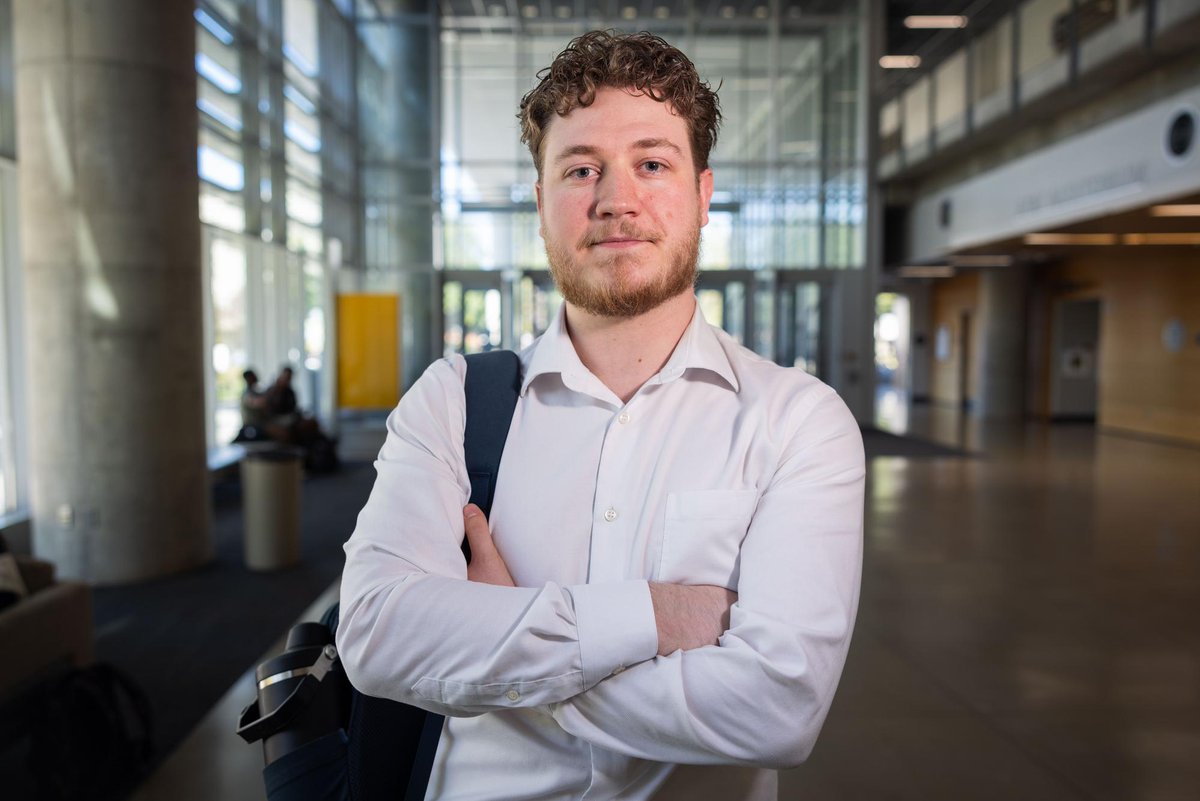
National labs play a critical role in advancing science, developing energy tech, and ensuring national security. This summer, Ph.D. student Tage Burnett contributed to that mission firsthand during an internship at @ORNL.
https://t.co/7gX8QiKIe6
New faculty member @_jessethomason_ is bringing his spotlight on robotics to #GTcomputing.
Thomason is exploring how roboticists can create new ways to communicate with robots using computational representations of language.
Read more: https://t.co/LzqfgjwJGF
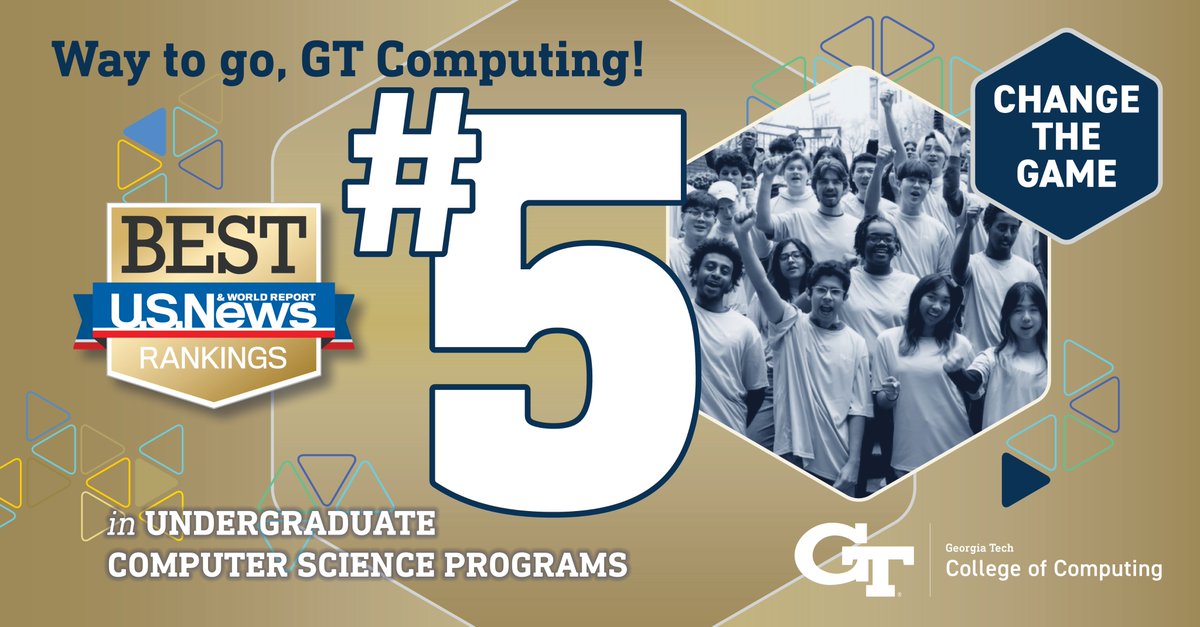
#GTComputing has been named No. 5 for undergrad CS programs in the 2027 @usnews Best Colleges. Plus, our top standings in specialty areas:
• Cybersecurity: No. 2
• Software Engineering: No. 3
• Artificial Intelligence: No. 5
• Data Analytics: No. 5
https://t.co/WZqna7sIaJ
What was ancient Greece's architecture really like?
New AI and ML models from @GeorgiaTech researchers will provide archaeologists and classical architecture experts with better analytical tools for studying building structures from ancient Greece.
https://t.co/Es8ugovROv
Georgia Tech's Qi Tang is leading work to advance the understanding of turbulence through scientific machine learning as part of a new @NSF Science and Technology Center at @michiganstateu. The center is funded for $30 million.
News: https://t.co/DIBY9szy5K
#GTComputing
One of @GeorgiaTech's pioneers in the computational use of social media data for mental health, @munmun10, says that the $17.1 billion settlement against @Meta is a start in helping address better protections for youth using social media.
Read more: https://t.co/zXQaHTZUw4
Using @allen_ai's Olmo 3 model, a team led by @GeorgiaTech graduate students studied how training data shapes a language model’s social reasoning—its ability to interpret people’s beliefs, emotions, intentions, and everyday moral choices.
Read more:
https://t.co/lWxyrMqJ2T
Many people rely on social media, particularly youth.
@GeorgiaTech and @childrensatl are developing an AI social media surveillance tool that can help identify when a young person is at risk of a harmful mental health event.
Watch video: https://t.co/DwkfeZKDRN