Over the past week, I’ve been overwhelmed by the love and support of friends, industry colleagues, and people I've never met. Thank you to everyone who has shown kindness to my family and me. It means the world to me.
I came to the United States 53 years ago, and becoming an American citizen is one of the greatest gifts and proudest moments of my life. NVIDIA has been my life’s work. Building it into the company it is today alongside my colleagues has been a privilege and an honor. Nowhere but in America could a company like NVIDIA be possible. I love our country, and I love NVIDIA.
I did not live up to the standards expected of everyone at NVIDIA, and I have made serious mistakes in my personal life. I created problems for the Board that I deeply regret. I own my mistakes completely, and I am committed to cooperating with the Board’s independent investigation.
Since my departure, I’ve seen an outpouring of calls from NVIDIA’s employees, investors, business partners, and customers for me to return as CEO. Many continue to reach out to me directly as the company navigates complex technology, market, competitive, and geopolitical dynamics. NVIDIA is a once-in-a-generation company. If the Board of Directors decides that my return is in the best interest of our shareholders, our employees, the company, and America, I would be honored to answer these calls and return as CEO.
Thank you again to everyone who has shared their good wishes. I am profoundly humbled by your support. To my family: I love you, and I will spend the rest of my life being worthy of yours.
Jensen
The best way to identify and work through the bottlenecks of drug development is to get deeply involved in real drug programs, across many different therapeutic areas and stages of development. Over the past several months, our scientists have engaged in deep research partnerships with six organizations developing new medicines: The Column Group, Generate Biomedicines, BigHat Biosciences, Divergence Labs, Enveda, and Bristol Myers Squibb. We’ve also begun our own drug discovery efforts through the acquisition of Mithril Medicine, a single-person biotech company co-founded by @atlasventure.
Today we’re sharing early progress in accelerating drug discovery from these research collaborations. With Claude, we are streamlining operations and working to derisk novel targets with TCG, redesigning lab protocols with BigHat, designing CAR-T cell therapies with Generate, and multi-specific therapeutic antibodies with Divergence, drafting regulatory filings with Enveda, and supporting portfolio-level decision making with BMS. Our early collaborations span pre-clinical and clinical work on potential treatments for cancer, allergies, rare genetic diseases including forms of childhood muscular dystrophy, and more.
My team has been working with @Prof_Oak_ , founder of Mithril Medicine, for the past year. Jason Rhodes, General Partner @atlasventure and Chairman of the Mithril Board said this about Mithril: “We prioritized LAMA2-Related Congenital Muscular Dystrophy (LAMA2-RD) as the lead indication, in part, because of the enormous unmet need. These patients present with the disease at birth, spend their lives in wheelchairs and on ventilators, and rarely live past their mid-twenties; yet no therapy is available, and few are in active development. We believed Mithril would be the company to change that.” Anthropic acquired Mithril and we are pushing the frontier of how a single skilled operator, with Claude, can run an entire pipeline of drugs.
We’re working with these teams to show how AI can assist drug developers at many stages of the process already, and to prioritize improvements to our models based on the benchmarks we’re building with collaborators. Our blog includes links to technical reports written with our partners: https://t.co/xGG6tJGMPJ
If you care about biotech and drug development watch this interview with Matt Gline, the CEO of Roivant, a biotech firm that is now worth $24 billion.
He talks about why he thinks predictions about AI from people like Anthropic’s Dario Amodei are overly optimistic.
“If Dario is right and I'm wrong, and he cures every disease in five years, man, are we all the winners from that outcome,” Gline said.
“I think if you work in this industry, it is very hard not to be skeptical of any of those claims. Because, and I've said this in other settings recently too, biotech is a wood chipper that like is built to like ingest souls and shred them. It's just like such a hard business that like someone comes and they're like, oh, but I've built a computer and I'm going to push a button and all of that goes away and it just works. Like that is probably not the way that's going to go.”
Kudos to co-authors (and ex-colleagues) on publishing guidance on how to choose a summary method for replicate data in medchem assays and recommendations of summary methods for a variety of BAO endpoints
https://t.co/tZ7cyt7HwJ
#statistics#medchem#ontology
Today, with over 100 industry partners, we introduced the NVIDIA Open Agent Safety Platform, bringing together OpenShell and Sentry.
Artificial intelligence is extraordinary technology that will advance discovery, productivity, security, health, and prosperity for generations to come.
But its full promise can only be realized when people have confidence that AI is being built to be safe and deployed with wisdom and responsibility.
This is bigger than a single product. It's the beginning of an open ecosystem to build the trust layer for safe agent systems.
Together, we are building the foundation of the AI economy.
Trust and innovation are not in conflict. Safety is how trust is earned. We must build not only the most capable AI, but the most trusted AI, so that this extraordinary technology can realize its enormous promise for the world. https://t.co/ugYWQ1MyRi
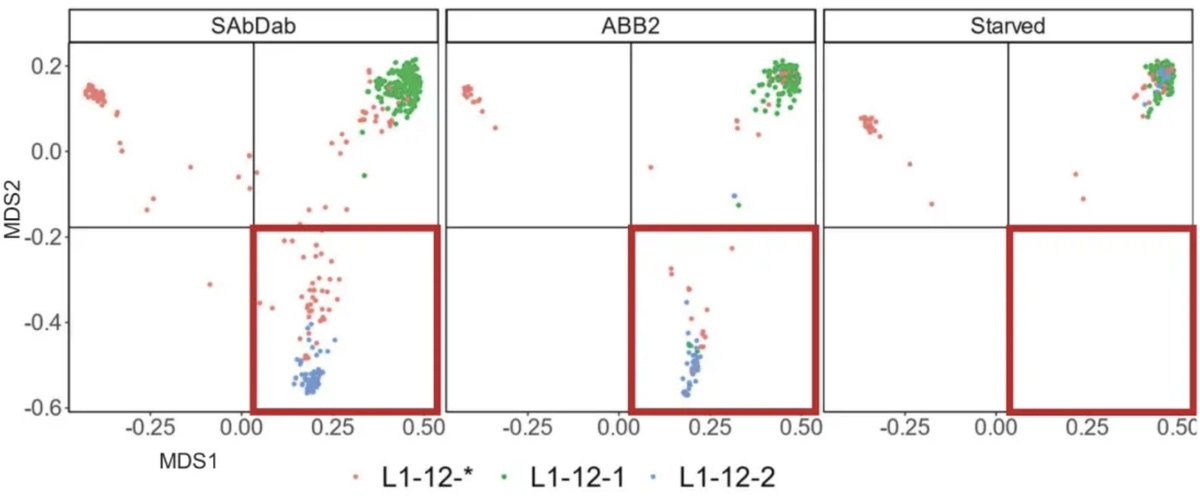
The protein-ligand co-folding problem overtly relies on memorization (not a bad thing), a property that overlaps with CDR loop conformation memorization, which similarly lacks any coevolutionary signal for guidance. Fig from https://t.co/4A4qhSfGrk
a sizeable jump, meaningful if it were for never before seen targets/sites. but it's likely the opposite. it reminds me of a game we (comp/med chemists) used to play, i.e. picking x-ray pose out of 5 candidates with 3 confidence levels. 47% doesn't get you on the leader board.
Five pharma companies just fine-tuned OpenFold3 in a federated setting on 20,000+ structures...
... raising correct ligand-pose predictions from 29% to 47%
"Once, men turned their thinking over to machines in the hope that this would set them free. But that only permitted other men with machines to enslave them". Incredible!
Excellent assay on the reality of drug discovery and the tangible impact of the current AI protein binder design models, probably on a similar level of what FEP can do for small molecules.
The antibody revolution has happened scientifically, but it is not obvious these companies will build great businesses unless they produce differentiated clinical candidates https://t.co/pdLdcBCdAP