2달째 잊고 지냈네
Bitcoin 55K? 에이~ 아직 45K도 있는데, 느긋히 기다려봅시다.
파이도 바닥신호 나와야 잡지 지금은 아님둥.
2026년 10월~2027년 2월 사이 바닥이 나온다고 올해 초부터 말하고 다녔지만, 10월 바닥 안나왔으니 더 들고가도 됨.
어느새 11월 끝나가지만 반등 나올때까진 HODL!
이어서. 오늘 다시 올라왔네요.
대충 또 개인적인 해석을 하자면
알림에는
"Securitize: 분배금 412.38 USDC 수령 완료"
"USDT: 커피숍에서 4.50 USDT 결제 완료"
"Coinbase: 애플 주식 2주 매수 체결 완료"
"Aave: 건강도 2.41. 대출 상태 안전함
"Benji: 일일 수익 계좌에 반영 완료"
"PAXG: 토큰화 금 0.25 PAXG 수령"
의미는 일반적인 뉴욕 증시나 글로벌 금융 시장은 아침 9시~9시30분이 되어야 개장하지만, 온체인 RWA 세상에서는 당신이 출근을 준비하는 아침 7시에도 시장은 이미 활발하게 움직이고 있으며, 커피 결제같은 일상생활속의 결제부터, 주식 매수, 이자 수령까지 모두 해결 할 수 있다는 걸 보여줍니다.
음모론을 덧붙히자면
하단의 "gm. Markets are already open" 이란 문구는 기존 기득권 금융이 잠에서 깨어나 개장 준비를 하기도 전에, 이미 온체인 모바일 결제망은 이미 완벽하게 가동 중이며, 커피를 USDT로 결제하는 실생활 유틸리티가 보여주듯, 이미 전 세계 유저들의 손끝에서 작동하는 시스템은 다름 아닌 모바일 유틸리티의 대표주자 "Pi network"를 연상시킵니다.
또한 아침 7시는 새 시대의 아침을 의미하고, 직전 글에서 말씀드린바와 같이 시스템 통합에 이은 모바일 세상의 완전한 개막의 시작을 알리는것과 같습니다.
💥주의 : 재미를위한 개인적인 음모론일뿐, 심각하게 받아드리지 말아주세요. 끝!
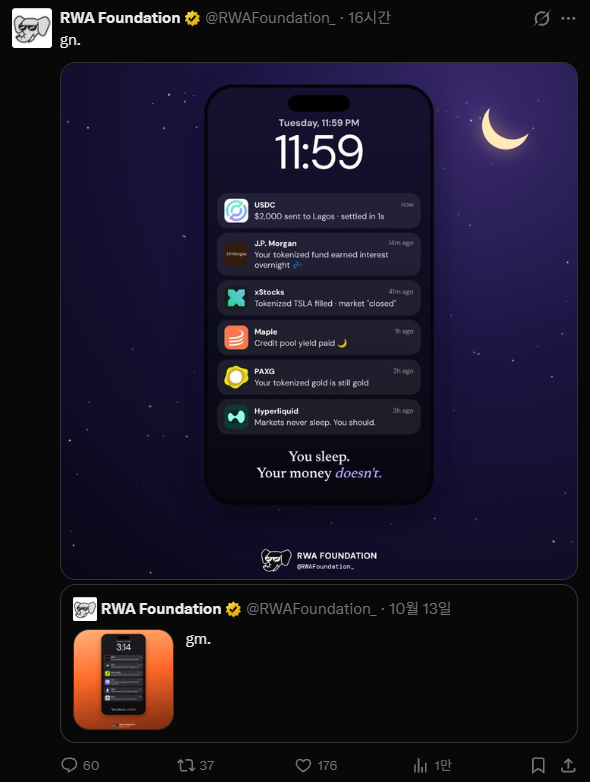
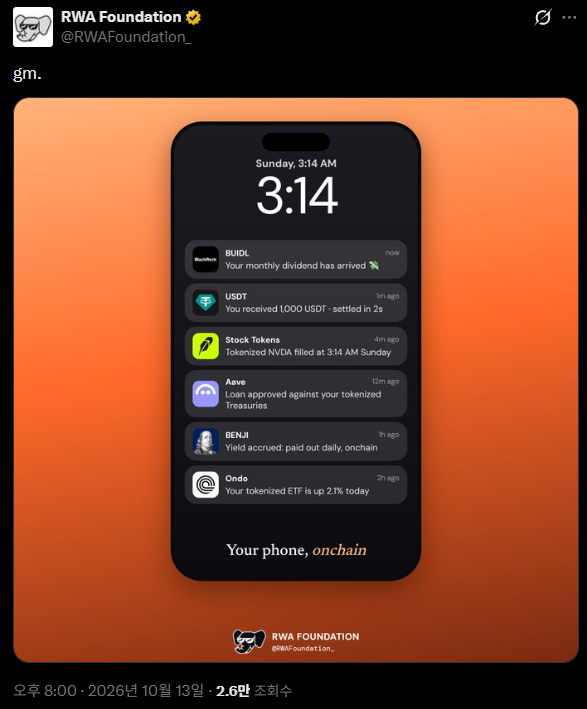
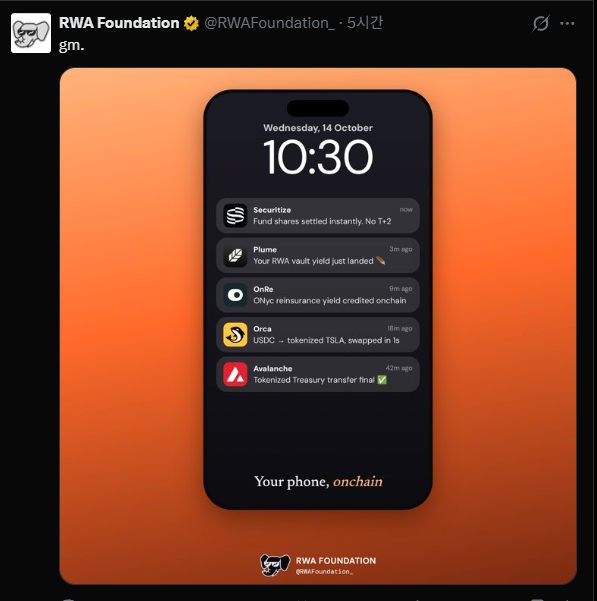
어제부터 @RWAFoundation_ 계정에서 사진과 같은 뭔가를 암시하는 인사글이 등장하기 시작했습니다.
파이오니어로써 3.14 보면 환장하지 않을수가 없쥬~
그냥 재미로 보시라고 이 3장의 사진을 음모론적 관점으로 해석해 보겠습니다. (그냥 재미로 하는거니 심각하게 받아드리지 마세요, 그리고 글이 길기 때문에 천천히 읽어보세요)
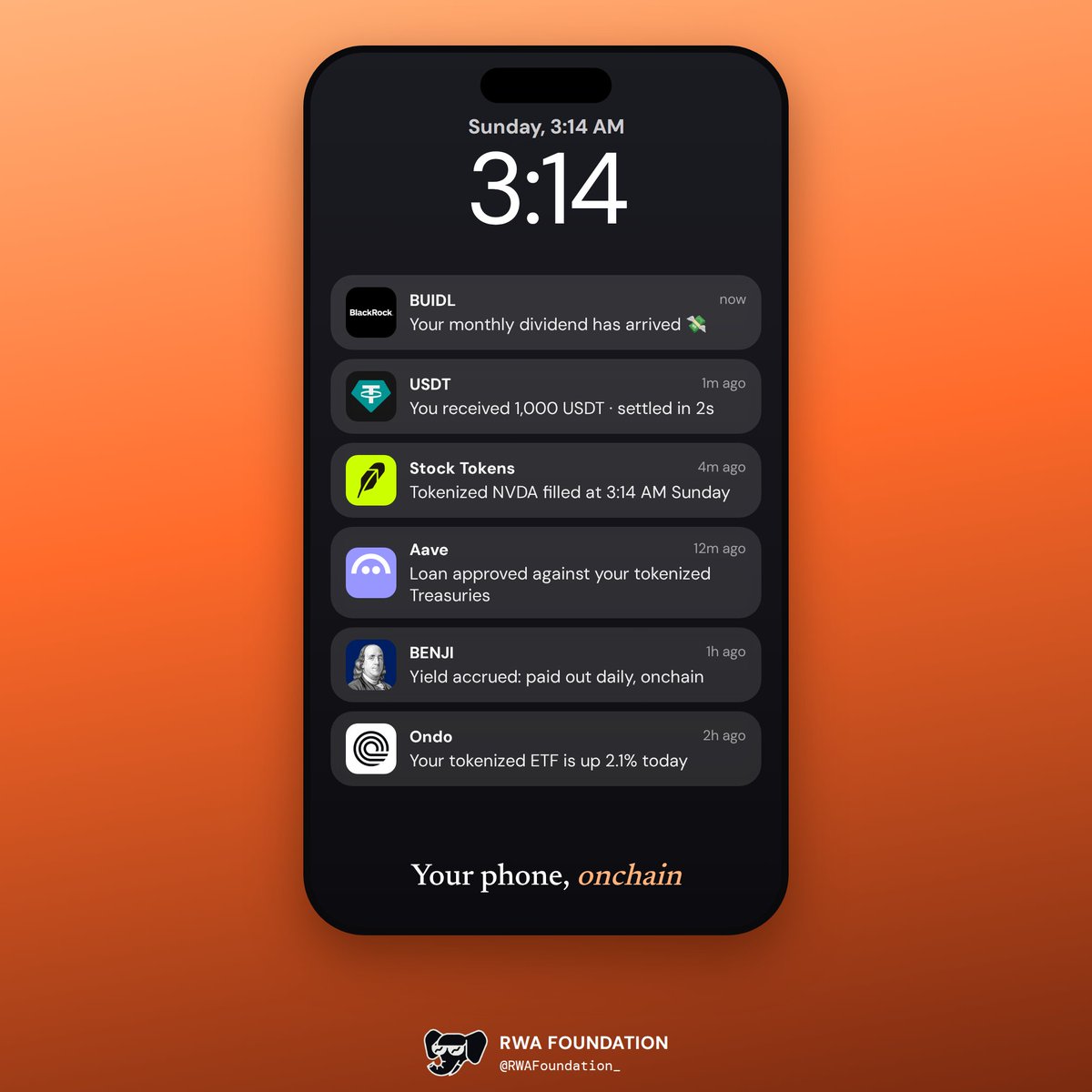
✅첫번째 사진에서는 3:14 AM 이라는 시간과 6개의 휴대폰 알림이 표시되어있습니다.
이 알림의 내용은 현재 블록체인 상에서 실물 자산을 토큰화(RWA)하고 있는 게계 최고 금융기관 및 디파이(DeFi) 프로토콜들의 실제 서비스입니다.
알림내용은 굳이 설명하지 않겠으나 이 사진에서 의미하는바는 "Your phone, onchain"이라는 문구에 있습니다.
즉, 이 말은 금융 인프라의 전면 이동을 뜻하며, 은행 영업시간, 증권사 MTS, 휴일 거래 제한 등의 제약이 완전히 사라지고, 스마트폰 하나만 있으면 24시간 365일 월스트리트의 모든 자산(국채, 주식, ETF, 대출, 달러)이 내 손안에서 작동하는 미래를 직관적으로 나타낸 이미지로 해석할 수 있겠습니다.
그리고 아침인사와 일요일 새벽 3:14 는 모두가 잠든 일요일 새벽에도 내돈은 쉬지 않고 일하며 배당과 이자를 만들어내고 있다는 점을 알람으로 강조하고 있습니다.
음모론을 덧붙히면, 파이네트워크의 상징인 3.14와 스마트폰 채굴이라는 점에서 이 두가지가 파이네트워크를 상징하고 있습니다. 결국 전 세계 수천만 명이 매일 스마트폰으로 접속하는 파이 네트워크의 강력한 모바일 지갑 인프라야말로 RWA 자산들이 올라탈 가장 완벽한 '고속도로'를 뜻합니다.
✅두번째 사진에서는 해당글을 리트윗하며 gn과 자정직전에 6개의 알람이 떠있는 모습입니다.
알람에서 핵심내용은 아래와 같고,
"J.P. Morgan: 자는 동안 토큰화 펀드 이자가 지급되었습니다."
"xStocks: 시장은 닫혔지만 테슬라 주식 토큰 거래가 체결되었습니다."
"PAXG: 당신이 자는 동안에도 토큰화된 금은 여전히 금입니다."
"Hyperliquid: 시장은 절대 잠들지 않습니다. 당신은 주무세요."
이 내용은 전통 금융 시스템(증권사, 은행)은 오후에 닫고 주말엔 쉬지만, 온체인 RWA 금융은 24시간 365일 쉼 없이 작동하며 당신이 자는 동안에도 돈이 일하게 만든다는 브랜드 메시지를 연출한 것 입니다.
또 음모론적 관점에서 보자면 11시 59분은 전통 자산 시장이 종말을 고하기 직전, 즉 '자정 직전의 마지막 1분'은 기존 기득권 금융이 한계에 다다랐음을 은밀히 암시하는 숫자입니다.
✅마지막으로 세번째 사진에서의 시간과 날짜는 글이 올라온 날짜인 10월 14일 수요일과 10:30 적혀있습니다.
배경이 주황색인걸 보아 오전 10시30분인걸 알 수 있겠습니다.
알림 내용중 4개의 내용은 아래와 같고,
"Securitize: "펀드 주식이 즉시 정산되었습니다. T+2(2일 소요) 대기 없음"
"Plume: RWA 볼트 이자 수령"
"Orca: USDC를 테슬라 주식 토큰으로 1초 만에 교환" "Avalanche: 토큰화된 미국 국채 송금 완료 "
이것의 메세지는 기존 금융에서는 주식을 사고팔면 정산까지 2일이 걸렸지만, 온체인 모바일 세상에서는 즉각 이뤄지며, 스테이블코인으로 주식을 1초만에 스왑이 가능하고 송금이나 이자지급의 속도 역시 빠르게 이뤄지는 속도혁명을 강조하고 있습니다. (파이코어팀 역시 빠른 전송속도를 어필한적이 있죠)
이 역시 음모론으로 바라보면, 세번째 사진에서 가르키고 있는 시간은 오전/오후가 나타나있지 않기 때문에 10월 30일 이라고도 해석할 수 있으며, 이 기점으로 파이네트워크 생태계 위해 블랙락, 아발란체, 시큐리타이즈 등 글로벌 RWA 자산들이 전면 결합되어 24시간 실시간 정산 체제로 들어간다는걸 암시합니다.
⛔주의 : 이 글은 지루한 일상에서 파이네트워크의 올바른 성장과정을 간절히 바라고 있는 개인의 지극히 주관적인 생각으로 재미있자고 작성한 글입니다. 그러므로 너무 기대하지 말고, 재미로만 봐주셨으면 합니다. 끝!
📢 5,625,000 VERY burned 🔥
As announced, the VERY used for VeryPunks minting has been burned.
Burn record on VeryScan:
https://t.co/cy64ccwjnM
This burn address (0x…dEaD) is now our official burn address. AdVERY burns will go here too, and when the NFT marketplace opens, 5% of every trade amount will be burned to this address.
Thank you to everyone who minted 💜
#VeryChat #VeryPunks
[공지 요약]
-도입 배경 및 목적: 가격 변동성이 큰 암호화폐의 한계를 보완하여 회계, 결제, 기업 거래 등 가격 안정성이 필요한 실물 경제 활동을 지원하기 위함
-스테이블코인의 역할: 파이(Pi)는 여전히 생태계의 메인 암호화폐로 남으며, 스테이블코인은 외부 자금 유입 및 안정적인 거래를 돕는 보완적 역할을 수행
-OUSD 파트너십: 200개 이상의 기업 컨소시엄이 운영하는 스테이블코인 OUSD와 협력. 발행·상환 수익의 대부분을 파트너에게 환원하는 구조로, 파이오니어 보상 프로그램 및 다양한 유틸리티 확장에 활용될 예정
-향후 계획: 규제 준수(Compliance)와 네트워크 특성을 고려해 신중하게 구현 방식을 설계 중이며, 단계적으로 세부 사항을 공개할 예정
-이번 공지는 파이 네트워크가 단순 '앱 내 출석 체크' 단계를 넘어 기업 및 실물 상거래가 유입될 수 있는 금융 인프라를 구축하겠다는 의지를 보여주며, 메인넷 생태계의 실질적 유용성을 넓히는 데 크게 기여할 것으로 기대
Pi Network is included in RWA Foundation's list of 78 blockchains!
But here's something important to understand.
If you look closely at the image, you'll notice that Avalanche, Solana, and Stellar have a star (★) next to their logos, while Pi Network does not.
The star means "RWAF MEMBER," indicating official membership in the foundation.
So, we cannot claim that Pi Network is an official member or partner of RWA Foundation based on this image alone.
However, RWA Foundation maintains an ecosystem directory featuring blockchain projects and infrastructure related to Real-World Asset (RWA) tokenization. This directory includes not only its members but also various other projects.
In other words, it's reasonable to say that Pi has been included among the 78 blockchains recognized and featured by RWA Foundation.
However, there are still some unanswered questions.
We don't know what specific criteria Pi met to be included in this list, or whether the Pi Core Team has had any direct communication with RWA Foundation.
#pi #pinetwork #파이 #파이코인
People often misunderstand what token burning actually means, so let me explain.
First, burning is not a magic solution.
But still important.
But many people treat token burning as if it were some desperate last solution designed only to artificially push the price higher in short term.
They ask
“If burning reduces supply, what about demand?”
The assumption is that burning can reduce supply, but it cannot create demand.
That is not entirely true.
One of the reasons demand disappears is because the token price has already collapsed or because the tokenomics are simply not attractive enough for investors.
We need token burn 🔥 for demand.
Look at Pi.
The price has been trending downward for more than a year, falling from around $3 to below $0.08.
At the same time, there are serious tokenomics concerns.
The core team controls 20 billion Pi that are not locked, creating uncertainty about when, how, and how much could potentially enter the market.
The maximum supply is 100 billion Pi, yet there is still no clear long-term deflationary mechanism.
"These factors themselves can weaken demand"
Large investors who actually have the power to move markets are not stupid.
If they believe that every time they buy a large amount of Pi, an equally large amount of new supply could eventually enter the market, they will naturally choose other projects first.
That is one of the reasons Pi continues to struggle compared with many other major crypto assets.
The same applies to ordinary Pioneers.
Just look at the community. Their mindset has changed compared with a few years ago.
Many people have already bought or accumulated large amounts of Pi, but they have also learned something from the market:
No matter how much they hold, there always seems to be more selling pressure coming into the market.
So they already understand that simply accumulating more Pi does not necessarily protect them from losses.
They are beginning to realize that Pi does not currently have strong scarcity.
That is exactly why tokenomics matter.
Scarcity is not just a theoretical concept.
It directly affects market confidence, investors and pioneers behavior, and whether people are willing to keep putting new money into the asset.
And we should not expect dramatic changes simply because we talk about protocol upgrades, DEXs, or other technical developments.
Most serious blockchain projects already have major protocol upgrades, smart contracts, DEX infrastructure, and ecosystem development.
Technology alone is no longer enough to differentiate a project.
If Pi truly wants to create stronger demand, then improving its tokenomics is also necessary.
So let me say it again.
Why do I believe a burn mechanism is necessary?
Not simply because it reduces supply.
A credible burn or deflationary mechanism can also improve market confidence, reduce long-term dilution concerns, make the tokenomics more attractive, and ultimately help create demand.
Burning is not just about reducing the number of tokens.
It can also be part of creating the conditions that make investors and pioneers willing to buy them.
That is why many major crypto projects use some form of burning, fee destruction, buyback-and-burn, or other deflationary mechanisms as part of their tokenomics.
3 reasons Pi needs stablecoins
Pi core team obviously understands this.
1. Stablecoins are the most practical way to make payments
Whether payments are made between AI agents or between people, stablecoins are the most efficient option.
The idea of people buying and selling things with Pi has been outdated for a long time. Who would choose to pay with highly volatile assets like Bitcoin or Ethereum?
Stablecoins, backed by the U.S. and designed to maintain a stable value, are taking over the world.
Pi’s opportunity is to bring as much stablecoin payment activity as possible onto its own blockchain rails.
(As you know, even when people use stablecoins on Pi, Pi is still needed and used. Every token transfer requires Pi to pay the transaction fee, and you also need Pi to create a wallet.
More importantly, if people start using stablecoins on the Pi blockchain, the ecosystem built around them can grow—and Pi’s utility will increase as a result.)
To do that, Pi will need partnerships with AI companies and ways to encourage AI agents to make stablecoin payments on its network.
Dont forget.
"Pi could then serve as the fuel used to pay transaction fees"
2. A DEX without stablecoins in its liquidity pools is already halfway to failure
During the enclosed Mainnet period, the community tested a P2P trading model using only Pi.
The idea was simple --people should trade exclusively with Pi and never convert it into cash or cash equivalents.
But the results were disappointing. In less than a year, many merchants either couldn’t or chose not to convert their Pi, and ended up taking significant losses. Today, more than 99% of them have stopped accepting Pi payments.
The same principle applies to a DEX. For Pi’s DEX to grow, its liquidity pools cannot contain only Pi and tokens issued on Pi. The ecosystem must not become isolated. It needs to connect continuously with outside assets and build a broader DeFi ecosystem.
3. Stablecoins are the U.S. government’s preferred path
The U.S. has stepped back from the high risks of a CBDC and is instead supporting privately issued dollar stablecoins that follow strict regulations. Stablecoin issuers are also increasing their holdings of U.S. Treasuries.
"This is a great way for the U.S. to increase demand for its Treasury bonds"
In other words, stablecoins are the answer for the U.S.
Why did Ripple start issuing its own stablecoin when XRP was already being used?
Pi faces the same reality.
Like Ripple and Stellar, Pi is a U.S. project, so it has to pay close attention to U.S. requirements.
To connect with major institutions and corporate payment networks, it needs dollar-backed assets that meet U.S. legal standards.
This isn’t a choice. It’s a necessity.
#pi #파이 #pistablecoin #파이코인
26년 9월 28일, 실물자산(RWA) 토큰화 전문 글로벌 기업인 온도 파이낸스(Ondo Finance)와 카카오페이증권(Kakaopay Securities)이 업무협약(MOU)을 체결
1.목적
한국 상장주식의 토큰화 및 글로벌 해외 유통 인프라 구축 및 해외 투자자들이 온체인을 통해 한국 주식시장에 손쉽게 투자
2.역할
카카오페이증권=해외투자자 통합계좌운용 및 국내 원주(실물주식)보관,수급 담당
온도파이낸스=토큰화된 한국 주식을 해외 온체인 네트워크로 유통 및 배포 인프라 제공
3.현재상황
현재는 MOU(업무협약)단계이며, 상용화 및 실제 토큰 출시까지는 국내 금융 규제 및 법적 검토 절차가 마무리되야함
Ondo Finance Establishes Footprint in South Korea
@Ondo Finance has announced a partnership with Kakaopay Securities to build the infrastructure for the global distribution of tokenized South Korean stocks.
The partnership, which was launched during the Korea Blockchain Week (KBW) event, leverages on Ondo’s institutional quality issuance protocol for real world assets together with Kakaopay’s strong local market connections.
This partnership has created a task force which will work towards creating a compliant framework that will allow for the unlocking of the $2 trillion Korean stock market.
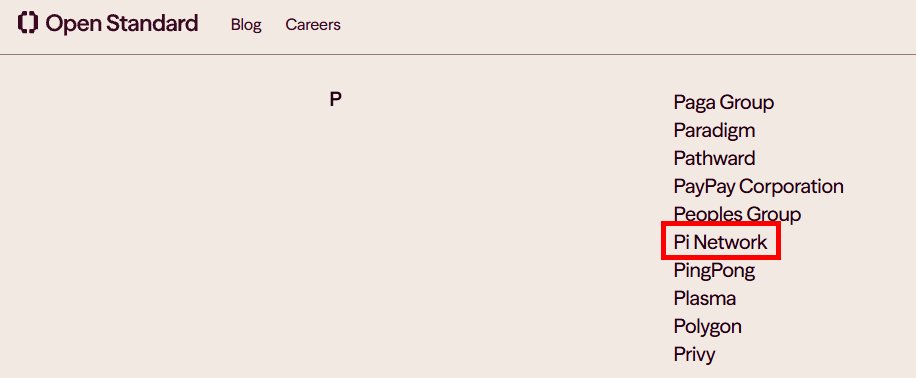
[파이 네트워크(Pi Network), 글로벌 금융 연합 '오픈 스탠다드' 파트너 합류]
https://t.co/Kw57zD7mTk
최근 공식 파트너 목록에 Pi Network가 이름을 올렸습니다.
대체 '오픈 스탠다드'가 무엇이고, 파이 생태계에 왜 엄청난 호재인지 쉽게 말씀드리겠습니다.
1. 오픈 스탠다드(Open Standard)가 뭔데?
글로벌 기업들이 힘을 합쳐 만든 '공동 달러 스테이블코인(Open USD/OUSD) 연합체'입니다.
Visa, Stripe, Shopify, Polygon 등 140여 개 글로벌 대기업 참여
특정 기업 하나가 독점하는 게 아닌, 참여 기업들이 다 함께 운영하는 중립적 금융 인프라
2.파이 네트워크에는 어떤 이점이 있을까?
A.진짜 달러 자산과 연결 (유동성 확보)
파이 코인이 'Open USD'라는 제도권 달러 스테이블코인과 직접 연결되어 실질적인 자산 가치 형성에 큰 도움이 됩니다.
B.실생활 파이 결제 생태계 완성
글로벌 유통·결제 공룡들이 참여 중인 네트워크라, 향후 파이 앱이나 DApp에서 달러 기반 결제 및 정산이 매우 쉬워집니다.
C.수익 분배 구조 혜택
오픈스탠다드는 스테이블코인 준비금 이자 수익을 참여 프로젝트에 나눠주는 구조입니다.
파이 생태계 내에서 OUSD 거래가 활성화될수록 파이 생태계 자체에 자금이 들어오게 됩니다.
D.프로젝트 신뢰도 급상승
세계적인 빅테크·메인넷 프로젝트들과 공식 파트너로 나란히 이름을 올린 것만으로도 대외적 신뢰도가 격상되었습니다.
4.한 줄 요약
"파이가 혼자 돌아가는 생태계를 넘어, 글로벌 제도권 달러 결제망과 직접 연결되는 거대한 다리를 놓았다!"
하지만 시간은 걸릴꺼다.
#PiNetwork #파이코인 #OpenStandard #OUSD #Crypto #Web3
If you’re a true Pioneer, tag the Pi Core Team and Nicolas and speak up about what Pi really needs:
1. Lock up the Core Team’s 20 billion Pi.
Without a lockup, it will be very difficult to attract major buying interest.
2. Share a long-term plan for how the Foundation’s Pi will be used.
We want to know that the Core Team is managing Pi responsibly and transparently.
3. Tell us how much of the community’s 65 billion Pi is still unmined or undistributed, and share a yearly distribution plan.
We also need to know how many fake accounts have been identified.
4. Explain what will happen to the fees accumulating in the fee pool.
5. Since Pi was listed on exchanges, its price has never had a sustained rise—it has kept falling. Its chart looks like the chart of a rug-pull project. Don’t you think excessive Pi supply is one of the main reasons?
Then shouldn’t Pi burn some of its supply, like Stellar did?
@PiCoreTeam@nkokkalis
#pi #파이
프로토콜 27에서 DEX가 열리고 어쩌고 저쩌고....
Pi 코어팀에서는 차근차근 업그레이드 하고 있는데, 먼저 설레발 치면서 본인의 예측으로 사람들을 기대하게 만들고, 선동하고, 가짜뉴스를 만들어 퍼뜨리는 사람들과 그런 사람들을 믿고 따르는 사람들...
처음 Pinetwork가 대중에 나왔을때도 그랬고, 상장 전에도 그랬고, 상장 후에도 그랬고, 지금까지 "이것만 되면, 이것이후에는...."이라는 자극적인 말로만 여러분들을 현혹하는 사람들이 많습니다.
한순간 대박낼 수 있는건 도박밖에 없습니다.
그냥 천천히 기다리고, 올바른 소식 걸러가며 보고, 스스로 판단할 수 있는 능력을 기르다보면 좋은 소식 올겁니다.
Of course, when I said Pi should upgrade to Protocol 28, following Stellar, many GCV supporters and other foolish people argued that the Core Team had said Protocol 27 was the final version.
But blockchain development never stops, and Stellar will keep upgrading too. Do they want Pi to fall behind forever? In the future, Pi could be on Protocol 50 or even 100.
The important thing is not to overhype or expect too much from every protocol upgrade unless it’s a major change on the scale of an (ex) Ethereum hard fork. Think of these as regular software updates.
It’s foolish to make a big countdown out of a protocol upgrade and hype it up as if it’s going to change the price.
#pi #파이 #piprotocol28