Amtrak's Spring Flash Sale Has Tickets Starting at $6 — When to Book
The sale end on Feb. 23.
Amtrak is making it easier to travel the country this spring with a flash sale that has at least 25 percent off "flex" fares.
The sale, which must be booked by Feb. 23, is available for travel from March 1 through May 23, Amtrak shared with Travel + Leisure. And as a bonus, the sale has no blackout dates. The sale also specifically applies to its “flex” fare, which is refundable if canceled and can be changed without a fee.
Travelers can book tickets on most Amtrak trains in either coach or Acela business class, including on the Auto Train, which makes it easier to travel up and down the East Coast with your car. The sale is not available for travel on the Capital Corridor, Keystone, Pacific Surfliner, Pennsylvanian, or San Joaquins trains.
Travel from Baltimore to New York, for example, starting at just $23 each way, or head from Boston to New York starting at just $25 each way. Shorter journeys are available for even less, like one-way tickets from Boston to Providence, which can be purchased for as low as $6.
On the West Coast, travelers can head from Los Angeles all the way up to Seattle starting at just $108 each way, or travel cross-country from Chicago to Los Angeles starting at just $119 each way.
“The timing of the 'Spring Travel Flash Sale' is perfect for those seeking a stress-free family trip, friends’ getaway or spring break escape,” Amtrak Executive Vice President and Chief Commercial Officer Eliot Hamlisch said in a statement shared with T+L. “With no shortage of destinations to visit across the country, customers can save on trips ahead of the summer travel season."
Upgrades and changes to a promotional fare are not permitted. Travelers who cancel their ticket will be subject to a 50 percent cancellation fee.
The deal comes amid the company’s first-ever points sale, which allows customers to buy Amtrak points and earn up to 30 percent more as a bonus through Feb. 29.
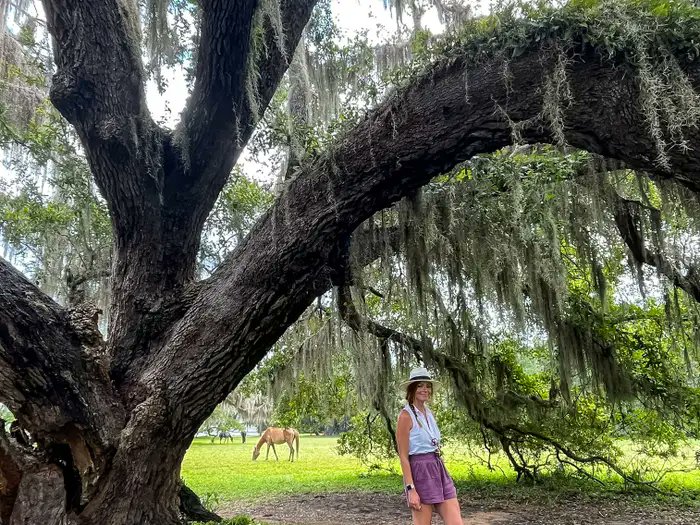
The Georgia coast is full of unique beauty.
People are sometimes surprised when I list the Georgia coast high on the list of the most beautiful places I've traveled to in the US.
Although not as obviously awe-inspiring or in-your-face as the dramatic Western vistas and mountaintops often seen as bucket-list locations, the Georgia coast has a truly unique beauty.
I love visiting Cumberland Island to admire the wild horses, walk below the live oak trees, and relax on more than 17 miles of uninterrupted and undeveloped beach.
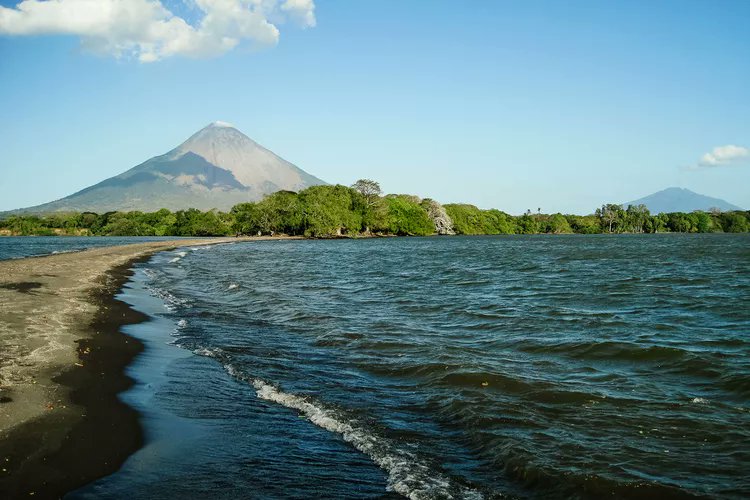
This Central American Country Is Home to Beautiful Beaches, Epic Surf, and a Rich Cultural History
How to plan the perfect Nicaragua vacation — boutique hotels, stellar surfing spots, and delicious food included.
Nicaragua is a postcard-worthy destination that harkens back to simpler travel times.
Lined with emerald-green coasts dotted with old-school fishing villages, it's a place where you can surf nearly empty lineups as if you were still in the '70s.
I've sailed around its Pacific coast in a catamaran, stopping at deserted islands to watch dolphins frolic by. I've danced salsa in a corner bar in Granada, one of the oldest colonial cities in Latin America. I've ridden motorcycles through dense jungle trails in Popoyo, had gallo pinto on the side of the Pan-American Highway, and made friends that will last a lifetime. But these experiences barely scratch the surface of why Nicaragua is one of my favorite destinations.
For starters, Nicaragua is not for everyone. It's rugged and traditional, with a bit of edge and a bloody past. But it's also home to a rich cultural heritage and friendly locals who go out of their way to get you the most delicious seafood, help you catch a wave, or show you the way around the backroads.
I first went to Nicaragua in 2015, when the country was experiencing somewhat of a golden age. A combination of affordability, an under-the-radar reputation, and the rise of surf tourism made towns such as San Juan del Sur popular. This lasted for about three short years. It was a time when things were fairly peaceful, the economy was growing, and tourism was booming. Since then, due to civil unrest and the pandemic, it has become less common to see positive headlines about the nation, but what keeps people coming back to Nicaragua — stunning nature, pristine beaches, and lively culture — is still intact.
Nicaragua is set between the Pacific Ocean and Caribbean Sea. Upon landing in the capital city of Managua, most people flock to the Pacific, where the surf is some of the most consistent in all of Central America and the cities of Leon and Granada offer deep cultural insight into this beach destination. Yet, it's on the Caribbean coast where you'll find the most untouched lands. In this area, expect to find Indigenous, Creole, and British influences in the fishing communities that live among the mangrove-filled jungle.
Best Time to Go to Nicaragua
While many tropical countries around the world count on an extremely dry and rainy season, Nicaragua has a milder version of both. The dry season here runs from November through May, though it's not as barren as its neighbor Costa Rica. Meanwhile, the rainy season, which spans April through October, brings torrential downpours (especially in October), but note that it's rare for it to rain all day every day.
The one thing that's rather consistent in Nicaragua is the temperature. According to Weather Spark, "The temperature in Managua varies so little throughout the year that it is not entirely meaningful to discuss hot and cold seasons."
One more forecast you may be interested in is the surf. According to Giant's Foot Surf, for waist- to head-high swells, visit Nicaragua between March and September. But if you're looking for larger waves, you may need to come in the middle of the rainy season — between May to August — which Giant's Foot Surf calls the nation's "prime time."
Best Things to Do in Nicaragua
No trip to Nicaragua is complete without a deep dive into the world of surf, sun, and sandboarding.
The Pacific coast of Nicaragua is lined with beaches for all surf levels. Some must-see spots include Playa Maderas, Popoyo, El Tránsito, Playa Colorado, and Playa Hermosa, and it's possible to experience all of these during a weeklong trip.
El Tránsito is a short, 90-minute drive from the Managua airport. In El Tránsito, you'll find yourself immersed in a tight-knit community of locals and about some expat families. Stay at Mandla, a boutique hotel designed by a couple from England and South Africa. Make sure to eat every item on their menu, especially the fresh oysters.
Further south, you can stop at Popoyo, where consistent offshore winds and epic waves make it one of the best places to surf in all of Central America. Malibu Popoyo, a 12-room resort tailor-made for surfing families, is perfectly perched across from the beach, and stays here come with a great surf coach and tour guide.
Next, head down to Playa Maderas for a more mellow, family-friendly beach experience ideal for beginners. If surfing is not your thing, don't worry, as these beaches also flourish with local life, seafood restaurants, and occasional live music.
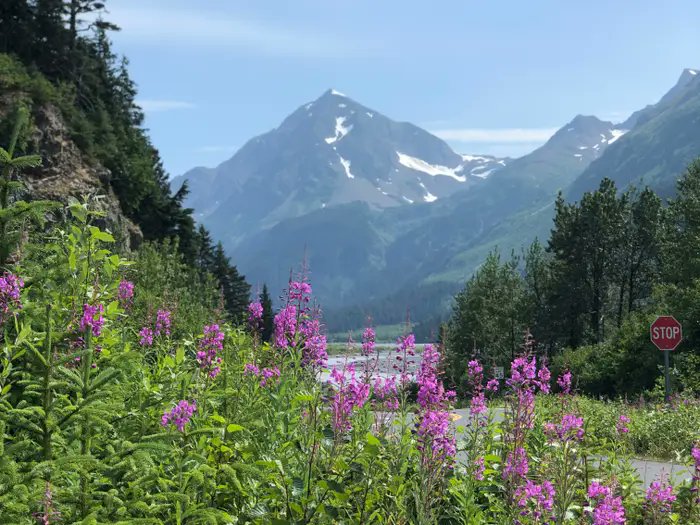
Seward, Alaska, offers both stunning views and lots to do.
I once spent a few weeks in the summer traveling solo in a van through Alaska.
Although the views throughout the state were some of the most beautiful I've ever seen, Seward was the place I never wanted to leave.
The port city is on the Kenai Peninsula and serves as the gateway to Kenai Fjords National Park.
Seward is the perfect place to enjoy the mountains and the sea.
Camp on the beach, kayak in the bay, or take a sightseeing tour to spot puffins, humpback whales, and sea otters.
This Scenic Road Trip Follows the Path of Indigenous People — With Stops at Cliff Dwellings and Petroglyphs
It passes by some of the southwest's most protected places.
The Trail of the Ancients is a modern-day drive that connects the homesites and migration routes of America’s first peoples: the Ancestral Puebloans, Utes, and Navajo who lived in the Four Corners region from about 1 C.E. to 1300 C.E. The drive is the only National Scenic Byway that was designated primarily for its archaeological sites — and oh, what archaeological sites it has. Along the way, travelers pass elaborate dwellings carved into the cliffs, underground kivas, and petroglyphs that were etched into the rock thousands of years ago.
Like the people the trail memorializes, the route knows no borders. It circumnavigates the Four Corners region and passes through four states: Colorado, Utah, New Mexico, and Arizona. (Though, Arizona’s section of the byway has not yet been designated by the U.S. Department of Transportation’s Federal Highway Administration.)
Petroglyphs at Mesa Verde National Park, Colorado, America, USA
There is no “right” way to drive the multi-state Trail of the Ancients, which the Federal Highway Administration says is 480 miles in entirety. And your start and end point will depend on where you’re coming from. But, for simplicity, we’ve attempted to put together a route that hits most of — but not all — the trail’s most iconic sites, including Mesa Verde National Park, Hovenweep National Monument, and the sandstone monoliths of Valley of the Gods.
Albuquerque, New Mexico to Chaco Canyon
For ease of access, we recommend you start your journey in Albuquerque, which has an international airport: Albuquerque International Sunport (ABQ). From the airport, head west toward the land of the Navajo Nation, where you’ll link up with New Mexico’s Trail of the Ancients Byway.
In the town of Grants, you have the option to head southwest toward El Morro National Monument, where you’ll find over 2,000 signatures, messages, and petroglyphs — many from ancestral Puebloans. Or, you can head north toward the lesser-known Casamero Pueblo, the partially excavated archaeological site of an 11th-century Ancestral Puebloan community. For simplicity, we recommend the latter, which is en route to Chaco Culture National Historical Park (better known as Chaco Canyon), a massive Puebloan ruin that is considered to be the heart of New Mexico’s Trail of the Ancients Byway.
After exploring the great expanse of Chaco Canyon, backtrack to the highway and head north to Farmington, which is a short drive from Aztec Ruins National Monument and the Salmon Ruins Museum. After exploring Farmington, make your way west to Four Corners National Monument, where the borders of Colorado, New Mexico, Arizona, and Utah meet.
Four Corners National Monument to Mesa Verde National Park
Cliff Palace is a structure made from sandstone,mortar and wooded beams by the ancestral Puebloans at Mesa Verde in Colorado
From the Four Corners National Monument, head east to hop on the Colorado section of the Trail of the Ancients. Just outside Cortez, Colorado, you’ll find Mesa Verde National Park, a world-renowned park that houses the Cliff Palace, a well-preserved Ancestral Puebloan cliff dwelling.
After spending at least a day in Mesa Verde, continue north toward the Canyons of the Ancients Visitor Center & Museum, where you’ll learn about the Canyons of the Ancients National Monument, a 174,000-acre expanse with an estimated 30,000-known and unknown sites.
Eventually, travelers on Colorado’s Trail of the Ancients Byway will pass Hovenweep National Monument, which protects a series of ancient villages that were once home to over 2,500 people.
Hovenweep National Monument to Valley of the Gods
From Hovenweep, make your way toward White Mesa and then head north toward Blanding, Utah. Before Blanding, take a left on Route 95, where you’ll pass a handful of archaeological sites. Along the road, you’ll find the Butler Wash Ruins cliff dwelling and the open kiva, tower, and dwellings at Mule Canyon. Eventually, you’ll come upon Natural Bridges National Monument, which is home to three of the world's largest natural stone bridges.
Natural Bridges National Monument in Utah
After a full day in the monument, head south toward Grand Gulch Primitive Area, a serpentine canyon system full of Ancestral Puebloan cliff ruins and rock art. The next site on the Trail of the Ancients Byway, the sandstone monoliths of Valley of the Gods, requires a drive on the tight switchbacks of Moki Dugway. If you’re not comfortable with steep, sharp turns, go back the way you came and drive around to the Valley of the Gods’ highway access point.
This Epic Cruise to the Galapagos Gets You Up Close to Penguins, Sea Turtles, and Reef Sharks
Aboard Silversea’s new Galápagos expedition ship, guest can connect with nature in an unprecedented way.
For all the natural marvels of the Galápagos — and they are truly marvelous — it is a man-made monument I think about when I try to make sense of my time there early this year. Well, part monument, part desecration. A piece of graffiti, of all things, carved into the volcanic rock at Tagus Cove, on the island of Isabela, where seafarers of all sorts have left their imprint over the past 200 years. There are scrawls made years before Charles Darwin and the Beagle landed, in 1835, and spray-paint from well after Isabela's infamous penal colonies closed down in the late 1950s.
One of the older etchings, carved into the rock in stencil-perfect all-caps sans serif, reads simply WANDERLURE. As in, I imagine, the subject or cause of wanderlust, dangling out there beyond the horizon, tantalizing us with its mystery and romance.
Wanderlure (noun). See: the Galápagos Islands, a biosphere so singular and special that, after only 19 days on land, a 26-year-old university dropout could deduce from it the origin of the species.
In the notes he kept during his visit, Darwin reported that the buccaneers who would stop at the islands in search of food and fresh water were known to collect up to 700 giant tortoises a day. (These would be kept upside down, without food or water, until they were made into soup.) Now, of course, there are protections in place for singular species such as the giant tortoise. But with carbon consumption what it is today, and with our entire planet — let alone this tiny, vulnerable ecosystem — in grave distress, I found myself wondering whether the pursuit of our various wanderlures is still a viable, ethical objective.
On the Silver Origin, the first site-specific expedition ship from Silversea my fellow shipmates and I saw the sorts of juxtapositions that set Darwin's brain awhirl — penguins swimming alongside tropical parrotfish, sea lions playing with reef sharks. We even got a glimpse of the archipelago's Wolf Volcano erupting on the equator, beneath the North Star and the Southern Cross.
And all the while, we were pampered mercilessly. Every one of the Silver Origin's 51 suites comes with butler service, and the ship itself exudes what Silversea CCO Barbara Muckermann describes as "whisper luxury" (breezy white curtains, low-slung couches, gallery-size prints by Silversea partner photographer Steve McCurry).
The ship claims to have the islands' highest guide- and Zodiac-to-guest ratios. Led by Silversea's expert naturalists, almost all of whom are Galapagueños, we saw the iguanas that inspired the 1998 Hollywood remake of Godzilla; climbed into collapsed calderas that looked like the crowns of giant ogre kings; and floated on the tide in the company of 30-odd green sea turtles. This was beyond a bucket-list trip; it was a life peak.
But does traveling to a place like the Galápagos do anything to expand our knowledge of the species we coexist with, or about ourselves, as Darwin's visit did? Do a few snorkeling sessions and hikes around great volcanic fields make us more humane, more aware, better equipped to be custodians of our home planet? I can't say.
What I do know is that during my 10 days in the islands I had at least four moments of the kind we usually describe as a religious experience — the religion here being nature. Whatever was flooding my system while I was swimming with seven-foot blacktip reef sharks off Champion Islet was intensely narcotic. I don't think I have been more "in the moment" than I was that day.
"You are an ambassador of the Galápagos now," an Ecuadoran friend told me at the end of my trip. And maybe that is the ultimate souvenir from a visit to one of your wanderlures: you are forevermore implicated, involved. A place like the Galápagos leaves a mark on you, carved in bold letters. You remain a citizen in absentia, doing what you can to protect both the myth and the marvelous reality, wherever you may be.
This Brand-new Superyacht Will Sail the Galápagos — and Bring You to Snorkel With Penguins
Aqua Expeditions' new ship sets sail in the Ecuadorian archipelago.
I never knew snorkeling with penguins was on my travel list until it happened.
I was sitting on the edge of the yacht, clad in a full-body wetsuit, trying to work up the courage to slide into the 68-degree water off the Galápagos' Santiago Island. Dipping my toe into the sea, I shivered.
"Pingüino, pingüino!" cried out one brave snorkeler who had already made the plunge. And that was all the encouragement I needed.
I was in the Galápagos Islands for the second time, and my top wish was to see the world's northernmost penguins, which had eluded me on my last trip. And this spectacular underwater encounter with the precious little birds — who bobbed at the surface amongst our group of swimmers before elegantly gliding off into the distance — happened on the third day. Three times, in fact, across two different snorkel sites off the island of Santiago. And then again the following day off an entirely different island.
On this adventure, I was traveling the Galápagos on Aqua Expeditions' brand-new Aqua Mare, the first superyacht to make permanent berth in the volcanic archipelago. Since he founded the expedition company in 2007, launching a riverboat on the Peruvian Amazon, Francesco Galli Zugaro longed to bring a ship to the Ecuadorian islands. A few years ago, he finally got his opportunity. He designed a yacht for the destination, but right when construction was set to begin, the pandemic struck. So instead of dealing with potential delays at the shipyard, Zugaro decided to purchase an existing vessel, the 163.3-foot Dr. No No, and customize it to his needs.
Though rechristened as the Aqua Mare in joining the Aqua Expeditions fleet, the yacht retains many of its original features, such as the elegant wood paneling found in the cabins and indoor communal spaces, which include a living room and bar, a dining room, and a "beach club" that's both a lounge and a prep space for snorkeling. (There are also two outdoor spaces: another dining room and a rooftop sun deck that serves as a third dining venue and has a hot tub.) Zugaro did, however, add two cabins, bringing the full capacity of the ship to 16 guests across seven staterooms, the star of which is the 861-square-foot Owner's Suite.
"The opportunity to book a cabin on a superyacht like this is very rare," Zugaro tells me over lunch on the sun deck during our sailing, noting that most yachts require full charters. "That Owner's Suite is the top suite in the Galápagos. It's beautiful, absolutely beautiful. But just to be able to book that and not have to pay for the rest of the ship — that's a nice little premium."
It makes for an interesting collection of passengers, too. While most sailings will likely have several different groups split between couples, families, and perhaps even solo travelers, mine originally had just two: me and a nine-person, three-generation family. (Zugaro and his family joined us halfway through the journey.)
At first, I was concerned about the awkwardness: how bizarre to 10th-wheel a vacationing family, particularly when we spoke different languages. But, as Zugaro later pointed out to me, everyone booking a cabin on the Aqua Mare does so knowing they will likely be sharing the ship, meaning most guests will embark with a convivial attitude. And that was absolutely true of the marvelous family with whom I traveled. It only took a few shared meals of exquisite Latin American dishes — many of them seafood-based — before we acted as if we were truly one big family. And we have quite a few "family" photos to prove it.
The Aqua Mare certainly holds up to its name regarding not only the cuisine on board, but also the activities offered to guests. We were typically in the rather, ahem, refreshing water at least twice a day, not including a few kayaking and stand-up paddleboarding excursions. (We also made landfall daily, trekking across craggy, sinister lava flows, or up the Mars-like slopes of a volcano, or along the edge of cliffs lined with pairs of waved albatross and blue-footed boobies incubating eggs or tending to young chicks — all exceptional experiences, too.)
During the aquatic adventures, I was, if you'll excuse the pun, a fish out of water among the group. Mi familia, as I soon called my shipboard companions, was a family of avid scuba divers. I, on the other hand, used to fear the abyss, though years of informal exposure therapy have yielded very positive results. "We try to push guests out of their comfort zone a little bit," Zugaro says, noting that many people, like myself, are hesitant to spend so much time in the cold water. "But that's when those 'wow moments' are created."
In the case of our snorkel off the island of Bartolomé, we were submarine clouds drifting over a sandy plain of colorful sea stars. "It's as if the sky fell into the sea," our dynamic guide Yvonne Mórtola, a Galápagos resident for nearly 40 years, remarked to me on the surface. Her favorite star, she said, is the speckled Nidorellia armata, rightfully nicknamed the chocolate-chip star for its delectable-looking brown spines. As for me, I was mesmerized by the kaleidoscopic patterns of the Pentaceraster cumingi, or Panamic cushion star.
We swam along the coastline, encountering old lava flows that tripped over one another as they snaked into the deep water, like tree roots you'd find in the Ecuadorian rainforest. Or, more fantastically, like the architecture of a lost Amazonian city as imagined on a Hollywood set. As I was inspecting a particularly intriguing lava rock formation, I noticed that the school of black-striped salemas that had been bobbing beneath me with the ebb and flow of the sea had suddenly scattered — fast.
Pingüino.
A sole penguin zipped by, followed by a string of tiny bubbles like an airplane by its contrail. I abandoned my rock to follow its hunt. After the penguin outswam me — not a very difficult task — I turned around in time to spot a whitetip reef shark nonchalantly cruising by, as if it, too, had been enjoying the show. So it goes in the Galápagos.
Our final snorkeling excursions on the expedition didn't bring us more of my beloved Galápagos penguins. They are, after all, an endangered species, with an estimated 2,000 left in the wild. But I wasn't disappointed. "Let's go play with the sea lions," smiled Yvonne as she slipped into the water, and mi familia and I followed.
This Is One of the Most Affordable Beach Towns in the U.S., Study Finds
The median home price in this Gulf of Mexico coastal town is under $200,000.
Beach living is often synonymous with a higher cost of living and expensive real estate, but according to a new report by GoBankingRates, that’s not always the case. The website ranked beach towns around the country according to factors such as the cost of groceries, healthcare, housing, utilities, transportation, and home prices.
So, if you are looking for an affordable waterfront community to call home, consider Texas, as the Lone Star state is home to six of the top 10 destinations on the list, including the town of Port Lavaca, which ranked second.
As of August 2023, the median home value in this town along Lavaca Bay was just $170,500, and the annual cost of living was 77.1, lower than the country’s average.
The town is home to a little over 11,000 residents and it is located about two hours away from four major cities — Houston, Austin, Corpus Christi, and San Antonio — making it ideal for remote workers or retirees. Winters here are milder and allow residents to spend time outdoors enjoying the area.
Saltwater fishing is a favorite pastime activity thanks to the town’s marina and several piers where anglers often line up during the day and night. Those who’d like to stay more active can also rent a kayak and explore the coastline from the water. Indianola Fishing Marina is one of the most popular spots for dining, fishing, and hanging out since it features a public boat launch and a waterfront restaurant open for breakfast, lunch, and dinner.
Bird-watching enthusiasts may have already heard the name Port Lavaca, as the town is part of the Great Texas Coastal Birding Trail, where over 400 species of birds can be observed. Grab a pair of binoculars and head to Port Lavaca Bird Sanctuary, Magic Ridge, or the Guadalupe Delta Wildlife Management Area for a chance to spot Roseate Spoonbills, Wood Storks, and different species of gulls.
Port Lavaca is also an excellent destination for beach lovers as it is just a quick 10-mile drive from Magnolia Beach Park, the only natural shell beach on the Gulf Coast. Other popular spots include Lighthouse Beach and Alamo Beach.
The town’s historic main drag is lined with businesses, some of which date back to 1917 and include Main Street Theatre, founded in the 1930s.
Other Texas towns on GoBankingRates list of most affordable beach towns are Port Arthur and Palacios. You can read the full report on gobankingrates
@richardthedildo This article provides great information on Italy's natural hot springs. I would love to visit one day.
Comment: Wow, these natural hot springs in Italy look amazing! Can't wait to visit someday.
@AngelaR58329687 This article really paints a vivid picture of the art at Galeria Mayoral! Can't wait to visit!
Random comment: The art at Galeria Mayoral seems truly mesmerizing. Can't wait to explore it!
@plumcandle This article really captures the beauty and mystery of the Scottish Highlands. I'm ready to plan a trip!
Comment: The Scottish Highlands sound like a breathtaking place to visit. I can't wait to explore!
@0572Pearl Wow, free art galleries and museums in London sound amazing! Can't wait to explore.
Wow, free art galleries and museums in London sound amazing! Can't wait to explore.
@Chungo567 This article transports me to a world of enchantment and beauty. Mirabell Palace sounds truly magical.
Comment: I would love to visit Mirabell Palace one day and experience its enchanting beauty.
@megsski I'm fascinated by the history and beauty of Golubac in Serbia. Can't wait to visit!
Comment: Wow, this article really makes me want to visit Golubac, Serbia!
@brettgervais This article is very informative and gives great insight into luxury activities in Capri.
Comment: I would love to visit Capri and experience all the luxury activities mentioned.