The jobs data coming out continues to suggest the opposite of what a lot of people had thought would happen.
Just take engineering, as the prime example of the area with greatest AI impact (and perceived risk). Most companies now have far more software projects than ever before because of AI, and effectively only engineers are going to be the ones doing that work.
You can get by for a while by being non-technical building software, but eventually someone has to understand what the thing is that got built, has to maintain it, has to fix security issues that come up, upgrade the systems beneath it, and so on. That’s all jobs.
Now apply that to a number of other job functions. AI is going to cause companies to hire more in sales because agents can let them process more leads and do more customer research. AI will cause an explosion of new marketing roles because of how much more efficient it is to launch campaigns and target. The list goes on.
AI is going to have the opposite effect that lots of people thought on jobs.
ELIMINANDO BUROCRACIA EN INSCRIPCIÓN DE SOCIEDADES. Argentina estaba enferma de trámites ridículos. Un ejemplo era lo que padecían las empresas extranjeras que querían invertir en Argentina. Luego nos preguntamos por qué el país no crecía o teníamos poca inversión extranjera. Pedíamos certificados, reformas estatutarias, declaraciones negativas, ¡traducciones certificadas de toda la historia societaria! Lo más loco es que nada de esto lo pedía la ley. Se había acumulado por décadas simplemente porque se había naturalizado que controlar estaba bien.
Empresas con décadas de historia debían traer la documentación certificada de toda su trayectoria societaria. En algunos casos ese gasto — solo en fotocopias certificadas, apostillas y traducciones — podía superar los 100.000 dólares. No para operar. Solo para registrarse.
La RG IGJ 4/2026 publicada hoy en el Boletín Oficial con firma de @chuleramirez (Alejandro Ramírez), Director de la IGJ, detona esa locura derogando el 67% del articulado del régimen anterior (29 de 41 artículos). El resto se simplifican. Quedaron los requisitos que la ley exige y los que tienen función real de control: certificado de vigencia, estatuto, designación de representante, y dos declaraciones juradas. El mismo estándar que usan países como España o Alemania.
En resumen:
Se admite el último estatuto ordenado oficial, sin requerir las copias y traducciones de todos los documentos anteriores.
Se admite documentación digital apostillada — ya no hace falta mandar originales en papel desde el exterior.
Se puede tramitar la inscripción de la empresa extranjera y la constitución de la sociedad local en un solo trámite simultáneo
A partir de la resolución, una empresa que quiere participar como socia en una sociedad argentina hoy tarda lo mismo que en cualquier país normal.
La única pregunta que nos queda por hacernos es: ¿por qué dejamos que esto persista tanto tiempo? Felicitaciones a @chuleramirez y su equipo por empezar a torcer la historia. Bien por @juanbmahiques que puso a este equipo a revolucionar la IGJ. Argentina bajo la presidencia de @JMilei está creciendo en un proceso virtuoso liderado por las exportaciones. En gran medida es por medidas como esta. Queda atrás el chamuyo de la cigarra con el que nos engañaron tanto tiempo, llegó el tiempo de construir granito por granito como la hormiga. VLLC!
Este fin de semana el GP se corre en Montreal, que además estrena Sprint.
@FranColapinto viene de un muy buen GP en Miami, y estaremos haciendo el aguante.
Por supuesto, @Globant también juega. Además del TCDS que implementamos el año pasado para mejorar la performance de todos los equipos, este año todos los fans tienen la posibilidad de seguir la carrera en la app oficial de @F1 mediante una experiencia conectada desarrollada por Globant.
https://t.co/8n1iQ7KPFd
Enorme el crecimiento de @9zTeam en estos años. Le mostramos al mundo cómo un equipo argentino puede pisar fuerte.
Y ahora se suma @DukiSSJ, otro genio que prueba que el talento que 🇦🇷tiene para ofrecer es global.
https://t.co/vzAXul91i2
BIENVENIDOS A LA 9 ERA: 9Z GLOBANT x DUKI
Un encuentro entre dos mundos que siempre hablaron el mismo idioma, @DukiSSJ se convierte en socio de 9z Globant para dar inicio a la 9 era.
#9Era 𓆰💜𓆪
I’m fully forward deployed engineering pilled specifically because AI simply is not the same as software. In software, you deliver a stable piece of technology to a customer and they adopt it and that’s that (extreme over simplification).
In AI, you’re delivering something that is constantly evolving both due to the nature of the new capabilities and best practices that emerge, but also because the underlying models change so much that they can meaningfully change the workflow as a result of their upgrades.
For this reason it’s far more logical that one vendor can share best practices across thousands of companies more efficiently than every single company can learn and manage these best practices themselves. Further, the learnings from those customers should go right back into the core product as a result.
As we go from chat systems to anyone can relatively easily adopt to agentic systems that require more meaningful efforts to manage and update, the FDE model (or equivalent) essentially becomes a core competency for anyone deploying AI at scale.
The need and opportunity for professional services and FDEs to deploy agents right now is massive.
Every tech wave offers a new era of consulting and tech services requirements. Moving from analog to digital led to a massive wave in the 90s. Moving from on-prem to cloud did the same in the 2000s. But this is going to be at a scale far greater than the others.
The reason is that agents fundamentally change the underlying workflows of an organization. Unlike most prior eras of technology, where it was a change in medium of the service being delivered (on-prem CRM to cloud CRM), agents rewire the business process itself. And unlike upgrading a tech system, business processes are full of idiosyncrasies.
Every industry will have its own variants, and every department within those industries will have variants as well. Not to mention the bespoke difference between firms. Bringing agents to marketing in CPG will look different from marketing in healthcare. Bringing agents to sales in a B2B software company will look different from a car dealership.
And none of the change is easy technically. You need to first modernize your infrastructure and data and make sure it’s ready for agents; access controls, entitlements, and permissions need to be mapped in a way that works for agents and people; you need to make sure agents have the right context to work with; you need to consistently eval and maintain the agents when there are model upgrades; and you need to drive the change management of the process itself to figure out which parts the people do and what agents do.
That’s an insane amount of technical and domain-specific process work to be done to make this all happen. Huge opportunity for new service providers, as well as internally teams and roles to emerge, to help drive this change.
We made grep really fast. fast-grep on the Linux kernel (81k files, M1 Pro): 6–25× faster than ripgrep, 2–10× faster than ugrep , faster than every indexed grep we measured. Sub-200ms per query after a one-time index build. 🧵
Un hito para el ajedrez argentino que nos llena de orgullo. @faustioro ya es Gran Maestro, el segundo más joven de la historia. Felicitaciones, Fausti!! Talento + esfuerzo siempre da resultado. Eso es el mérito.
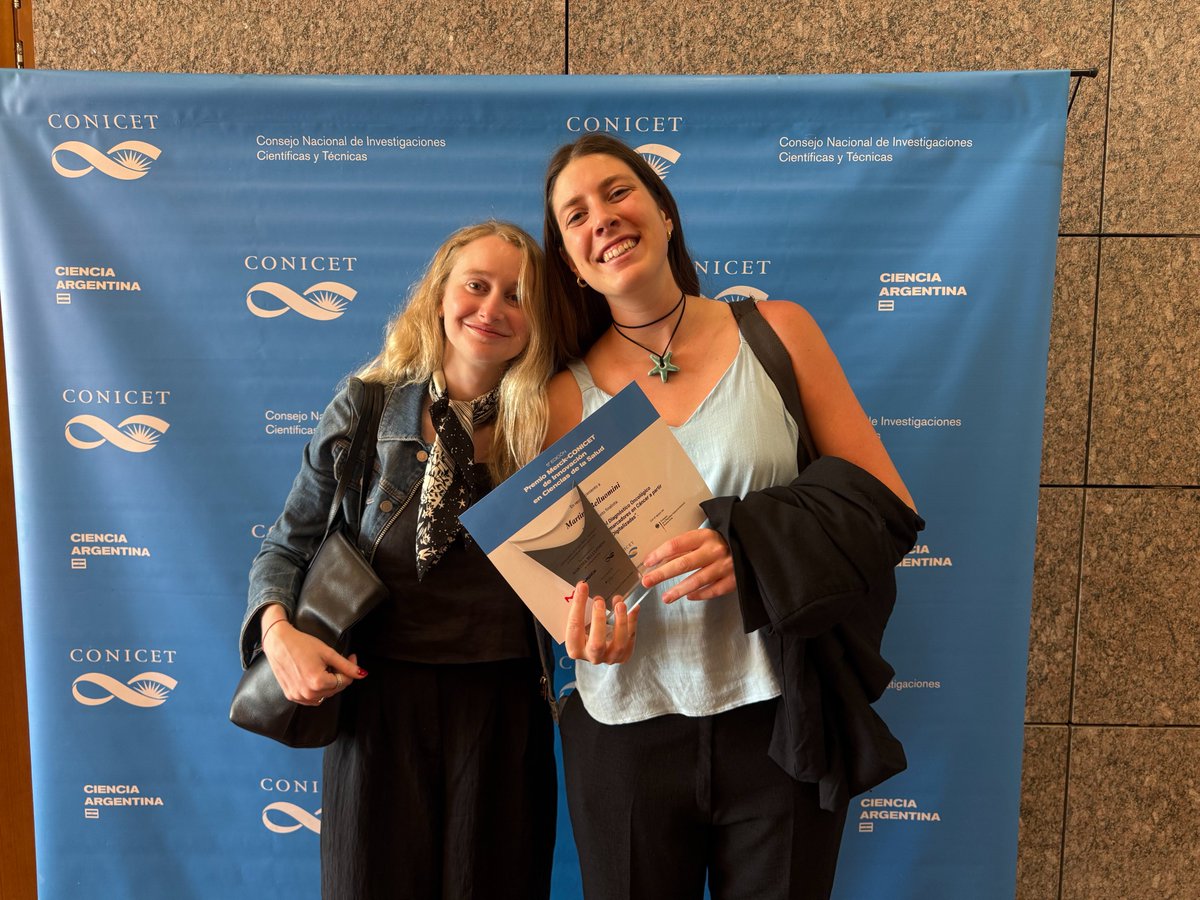
DOS BIOINGENIERAS CREARON UNA IA QUE PASA DE DETECTAR MUTACIONES DE CÁNCER EN UNA BIOPSIA EN UN MES A CINCO MINUTOS
Ana Gorodisch y Martina Belluomini son de Buenos Aires. Se recibieron de bioingenieras en el ITBA en 2023. Para su tesis de grado desarrollaron un algoritmo de inteligencia artificial que analiza imágenes de biopsias tumorales y detecta mutaciones genéticas invisibles a simple vista. En 2024, lo presentaron en el congreso de la American Society of Clinical Oncology. Ahí vieron que la necesidad era real y que nadie estaba desarrollando algo similar localmente.
En 2025 fundaron Kuvia. La tecnología toma la imagen de una biopsia tumoral, que ya se obtiene de rutina en cualquier paciente oncológico, y detecta en cinco minutos los biomarcadores que definen el mejor tratamiento, sin insumos adicionales. Hoy ese proceso puede tardar hasta un mes y no está disponible en todos los centros médicos.
Desarrollaron un producto para detectar un biomarcador clave en el cáncer de colon y endometrio, entrenado con los primeros datos de patología digital del país y en validación en más de cinco instituciones. Una de ellas es Biogenar, un laboratorio de anatomía patológica ubicado en Buenos Aires.
Fueron seleccionadas en Transformar Salud, la iniciativa de la Fundación Garrahan y Roche, para desarrollar una IA orientada a cáncer pediátrico. Y el Harvard Health Systems Innovation Lab destacó su solución entre los desarrollos globales de IA en salud.
Hoy son cuatro en el equipo: Ana como CEO, Martina como CTO y dos data scientists. Colaboran con un laboratorio de diagnósticos en Estados Unidos y están en conversaciones para llegar a Brasil.
"Queremos usar nuestra tecnología no solo para generar diagnósticos más rápidos y económicos, sino también para desarrollar nuevos diagnósticos que hoy no existen"
Every generation thinks the next machine will replace humanity.
The tractor.
Electricity.
The computer.
The internet.
Now AI.
But history says something different.
When the cost of intelligence drops, human ambition expands.
That’s the part most people miss.
The recent a16z article on the “AI Job Apocalypse” made one thing very clear:
AI is not deleting work.
It’s reallocating work. (https://t.co/1LseIZltyh)
Routine tasks shrink.
Higher leverage work grows.
The spreadsheet didn’t eliminate finance.
The internet didn’t eliminate business.
The smartphone didn’t eliminate communication.
They created entirely new industries.
AI will do the same.
The winners in this era will not be the people fighting AI.
It will be the people using AI to amplify judgment, creativity, speed, and execution.
One person with AI can now:
- build a company faster
- launch products faster
- learn faster
- create content faster
- solve problems faster
We are entering an age where intelligence becomes abundant.
And when intelligence becomes abundant, execution becomes the new scarcity.
That changes everything.
The most optimistic part?
A teenager with a laptop now has capabilities that once required entire corporations.
That is not dystopian.
That is empowering.
Yes, some jobs will disappear.
Every technological revolution reshapes labor.
But new industries are already emerging:
AI operators.
AI strategists.
AI workflow architects.
Human-AI collaboration designers.
Autonomous business builders.
The future belongs to people who adapt early.
Not people who panic early.
AI is not the end of human value.
It’s the beginning of a new operating system for civilization.
And the people who learn to work with intelligence instead of competing against it will build the next generation of companies, wealth, and breakthroughs.
The industrial revolution multiplied physical power.
AI multiplies cognitive power.
That’s a far bigger shift.
Source : @a16z https://t.co/wLYnXTrx7L
Antes los chicos faltaban al colegio para escuchar emprendedores. Hoy tienen su propio espacio: Endeavor Sub20.
15.000 alumnos de escuelas públicas y privadas en un estadio, listos para inspirarse y darle forma a su futuro.
Si no pudiste venir, o sos del interior, te invito a ver la transmisión en vivo 👇
https://t.co/8fPMYe9dti
#EndeavorSub20 @EndeavorArg@endeavor_global
.@FranColapinto se ganó el cariño y la admiración de todo el país. Mérito de su humildad, esfuerzo de años y talento. Se merecía este épico abrazo argentino. Felicitaciones a @maghico22 y a Fede Lauria 👏🏻👏🏻👏🏻
If you read this and don’t understand why it’s happening it’s an opportunity to reset your understanding of how the real world works.
The real world will need a ton of help actually getting agents going in the enterprise. Companies have legacy tech stacks they need to modernize, data in tons of fragmented tools, knowledge that isn’t captured or digitized, and change management needed to actually utilize agents effectively. And they have to do all this while still running their business day-to-day, unlike startups.
This is why there is so much opportunity for companies (software or services) to actually deploy agents in specific domains and workflows. This remains a big opportunity for both existing services providers but also tons of new startups as well. Every new technology wave produces a new era of consulting firms that can deliver on that technology.
It’s also why the FDE model is going to be alive and well for a long time because companies will want to have their vendor actually help drive the change management and implementation for their new workflows.
The people aren’t going away. Far from it.
La IA va a cambiar muchas cosas. Pero no va a cambiar esto: Las personas que entienden problemas reales y saben resolverlos siempre tendrán trabajo.
Lo demás es ruido.
Comparte si crees que a algún padre le puede servir.
"¿Qué debería estudiar mi hijo?" Es la pregunta que escucho cada vez más frecuentemente.
Y la mayoría de las respuestas que circulan están completamente equivocadas.
Abro hilo. 🧵
Resumen para padres que no tienen tiempo: No optimicen para una carrera. Optimicen para una mente.
Que piense bien. Que combine habilidades. Que domine la tecnología en lugar de huirle.
Y sobre todo: que elija algo que le apasione. La motivación es la ventaja competitiva más duradera.